The 100 Most Iconic Band T-Shirts of All Time, Ranked
April 16, 2026 · 20 min read
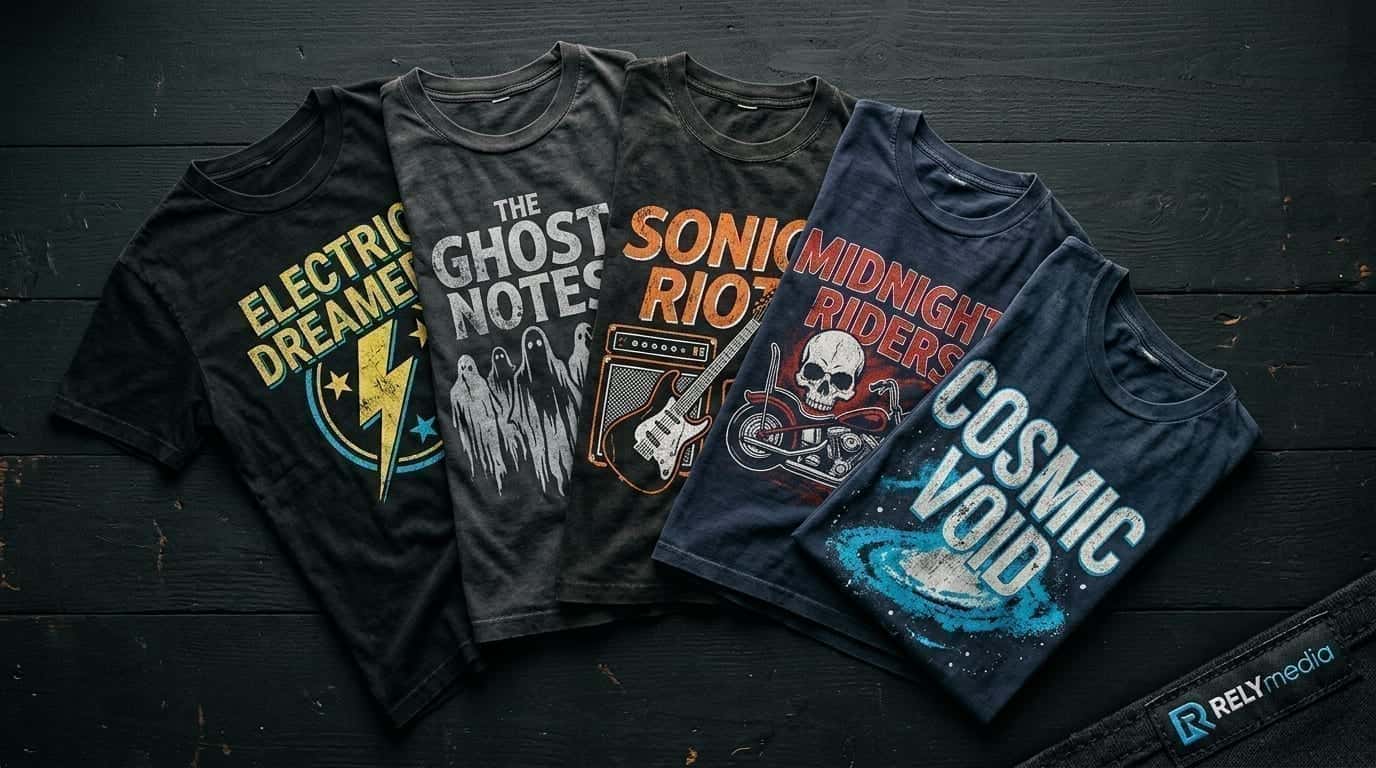
Band t-shirts aren't just fabric and ink. They're wearable history. Spot someone rocking a Joy Division “Unknown Pleasures” tee across a crowded room, and you instantly know something real about them. That's the power of iconic band t-shirts - they communicate identity, rebellion, nostalgia, and fandom without a single word.
This list ranks the 100 most iconic band t-shirts of all time, judged on four pillars: design staying power, cultural symbolism, historical significance, and raw recognizability. From classic rock t-shirts to vintage band tees, punk art aesthetics to hip hop streetwear influence - every genre, every era gets its due.
Let's count them down.
By the RELYmedia editorial team · Updated November 2, 2026
What Makes a Band T-Shirt Truly Iconic?
Before the countdown, here's what separates a legendary shirt from a forgettable one:
| Factor | What It Means |
|---|---|
| Design | Bold logo, striking artwork, or minimalist band logos that burn into memory |
| Cultural Timing | Released at a pivotal moment in music history |
| Wearability | Still looks sharp decades later |
| Story | Every timeless shirt has one worth telling |
| Fan Loyalty | Drives continued demand through nostalgia and identity expression |
Band merchandise trends come and go. But the shirts on this list? They became cultural symbols - representing the counterculture movement, rebellion, individuality, and a music-driven lifestyle all at once.
A Brief History of Band Merchandise

Rock and roll fashion didn't start with a business plan. It started with fans wanting to carry a piece of something that genuinely mattered to them.
- 1960s - Brian Epstein helped The Beatles pioneer official pop merch. T-shirts were almost an afterthought back then
- 1970s - Stadium rock turned tour tees into serious revenue. Led Zeppelin and the Rolling Stones led the charge into branded apparel marketing
- 1980s - Punk art aesthetics and heavy metal t-shirts made DIY screen printing an art form. Raymond Pettibon's Black Flag bars logo changed everything overnight
- 1990s - Grunge band shirts and hip hop logo tees exploded into mainstream fashion. Kurt Cobain's Nirvana smiley face shirt became a generation's uniform
- 2000s-2010s - The internet resurrected vintage band tees. Urban Outfitters commodified them. Purists fumed loudly
- Now - Viral merchandise design and artist brand identity push band merch into luxury territory. A genuine vintage concert t-shirt fetches thousands on resale markets today
The 100 Most Iconic Band T-Shirts - Full Countdown
A note on licensing: band names, logos and album artwork belong to the bands and their rights holders. RELYmedia cannot print band names or artwork without the rights holder's permission, so use these shirts as inspiration and make the final design your own. If you play in a band, we can print merch from original artwork your band owns.
Cult Classics Worth Knowing (#100-#81)
Talking Heads, “Stop Making Sense” Jonathan Demme's 1984 concert film gave us one of the most cerebral band tees ever made. David Byrne's oversized suit became visual shorthand for the entire new wave movement. The shirt captures that same restless, brilliant energy - music graphic design at its most intellectual.
Minor Threat, “Out of Step” Raymond Pettibon's artwork - a sheep breaking from the flock - is punk fashion identity made permanent. This hardcore punk shirt defined subculture clothing trends for decades. It's now a genuine fan-based collectibles territory, with originals selling for serious money.
Pink Floyd, “Back Catalog” Not as famous as the prism shirt, but deeply loved by serious collectors. A masterclass in album cover art t-shirts done right - understated, artistic, and unmistakably Pink Floyd.
Ween, “Boognish” Dean Ween and Gene Ween created one of rock's most bizarre yet beloved symbols. The Boognish symbol is cult-classic visual identity at its finest - instantly recognizable to devotees, utterly mysterious to everyone else. That exclusivity is the whole point.
Blondie Debbie Harry's image made this shirt iconic. It sits perfectly at the crossroads of rock-and-roll and disco-era fashion, capturing Blondie's genre-defying identity better than any album cover ever managed.
Gorillaz, “DARE” Damon Albarn and Jamie Hewlett's animated band produced music and graphic design that belonged on gallery walls. The DARE shirt proves that music-inspired illustrations can carry an entire cultural moment on their own.
The Allman Brothers Band, “Eat a Peach” Duane Allman died before this album was released. Wearing this shirt means understanding that weight. It's visual storytelling wrapped in Southern rock mythology - and one of the most emotionally resonant classic rock t-shirts on this entire list.
The Cramps, “Bad Music for Bad People” Gothic rock imagery meets psychobilly swagger. The Cramps never chased mainstream approval, and this shirt screams exactly that. It remains a cornerstone of retro band merch culture.
The Strokes Logo Minimalist band logos executed perfectly. The Strokes' logo shirt became the unofficial uniform of the early 2000s indie rock revival - proof that sometimes less is more.
Bauhaus, “Bela Lugosi's Dead” Gothic rock imagery doesn't get darker or more elegant. This shirt is a cornerstone of subcultural clothing trends that still ripple through alternative rock apparel today.
The Used, “In Love and Death” Emo band merch hit an artistic peak with this release. The Used's visual identity during this era captured the raw, theatrical essence of early 2000s alternative music history.
Beastie Boys, “License to Ill” The first rap album to top the Billboard 200 deserved iconic merchandise. This shirt blended hip-hop streetwear influence with rock band t-shirts in a way nobody had attempted before.
Never Mind the Bollocks, Here's the Sex Pistols Jamie Reid's ransom-note typography is the definitive statement of punk art aesthetics. This shirt didn't just represent music - it represented a complete rejection of everything that came before it.
Oasis Logo Liam and Noel Gallagher's band produced one of Britpop's most recognizable pieces of visual branding in music. The Oasis logo shirt remains a staple of classic band shirt collections on both sides of the Atlantic.
Jimi Hendrix, “The Jimi Hendrix Experience” Are You Experienced changed music forever. The shirt carries that same revolutionary weight - music merchandise apparel honoring the guitarist who redefined what the instrument could do.
Arctic Monkeys Logo Sheffield's finest produced one of indie rock's sharpest pieces of band logo design. Clean, confident, and effortlessly cool - the Arctic Monkeys logo shirt is essential indie rock merch.
Nirvana, “Come As You Are” Before the smiley face dominated, this grunge band shirt captured Nirvana's earlier, murkier aesthetic. It's a favorite among serious vintage band tee collectors who know their history.
AFI, “Decemberunderground” AFI's gothic punk visual identity peaked here. The Decemberunderground era produced some of the most striking emo band merch of the mid-2000s - deeply loved by dedicated fans.
Pink Floyd, “The Division Bell” Storm Thorgerson's facing metal heads remain one of rock's most haunting images. This shirt represents the final chapter of one of the greatest visual storytelling traditions in music history.
Mötley Crüe Heavy metal t-shirts don't get more unapologetically excessive. Mötley Crüe's visual identity - all skulls, fire, and chaos - completely defined 80s hair-band t-shirt culture.
Rising Icons: Shirts That Defined Movements (#80-#61)
Run the Jewels Logo El-P and Killer Mike's hand gesture logo is one of the most brilliant pieces of visual branding in music from the past two decades. Simple, subversive, instantly recognizable - fan engagement through merch done perfectly.
Sonic Youth, “Goo” Raymond Pettibon's artwork strikes again. This shirt blurs the line between rock-poster-style graphics and fine art. A must-have for any serious music merchandise apparel collector.
Social Distortion, “Skelly” Mike Ness and Jeff “Rat” Atkinson's skeleton character became Social Distortion's entire visual identity. Skelly appears on tattoos as often as t-shirts. That's brand recognition operating at its deepest level.
Sex Pistols, “God Save the Queen” Wearing this shirt in 1977 Britain was a political act. Jamie Reid's design remains the most confrontational piece of punk fashion identity ever printed on cotton.
Daniel Johnston, “Hi, How Are You?” Kurt Cobain wore this shirt on MTV. Overnight, Daniel Johnston's hand-drawn frog became internationally famous. A perfect real-world case study in how an artist's brand identity spreads virally through music fan culture.
Tool Logo Tool built one of heavy metal t-shirts' most cerebral visual identities. Tool's merchandise has always rewarded close attention - symbolic band imagery hiding layers of meaning beneath a deceptively simple surface.
Pearl Jam, “Alive” The early Pearl Jam shirts captured the grunge aesthetic clothing at its most authentic. Raw, honest, deeply connected to the music - everything grunge band shirts should be.
The Who, “Union Jack” Peace Sign British Invasion fused with the counterculture movement. This shirt turned a national flag into a symbol of rebellion and individuality - and influenced rock-and-roll fashion for generations afterward.
Descendents, “Milo” Hardcore punk's most lovable mascot. Milo has appeared on countless collectible music t-shirts and remains a genuine fan-favorite decades after his creation.
Kendrick Lamar, “Damn.” Kendrick's Pulitzer Prize-winning album produced merchandise that moved from hip-hop streetwear influence to genuine art-world recognition - a landmark moment in music branding strategies.
A Tribe Called Quest, “The Low End Theory” Alternative hip hop's finest hour, translated into wearable form. This shirt captures the essence of The Low End Theory perfectly - intellectual, soulful, and culturally essential.
Madonna, “True Blue” Pop's greatest chameleon produced some of the MTV era's most recognizable music, lifestyle, and fashion. The True Blue shirt remains a touchstone of 80s pop culture symbolism.
TLC, “CrazySexyCool” TLC's visual identity during the CrazySexyCool era was genuinely revolutionary. This shirt captured three distinct personalities in one unforgettable design - music fan culture at its most celebratory.
Smashing Pumpkins, “Zero” Billy Corgan's Zero shirt became the defining image of Mellon Collie and the Infinite Sadness era. It's the Smashing Pumpkins Siamese Dream t-shirt's edgier sibling - grunge aesthetic clothing with a theatrical twist.
The Cure, “Boys Don't Cry” Gothic rock imagery filtered through pop sensibility. The Cure's Boys Don't Cry shirt remains a staple of alternative rock apparel collections and a touchstone of nostalgic music fashion.
Bad Brains Hardcore punk meets reggae in one of music history's most culturally significant bands. The Bad Brains shirt represents the collision of punk fashion identity and music-driven lifestyle that few bands have matched.
Motörhead, “War Pig” aka “Snaggletooth” Joe Petagno designed Snaggletooth in 1977. That tusked, horn-wearing skull became Motörhead's permanent visual identity - one of heavy metal t-shirts' most ferocious and beloved images.
A Tribe Called Quest, Graffiti Logo The graffiti logo shirt represents hip hop logo tees at their most artistically pure. ATCQ's visual storytelling through clothing helped define what alternative hip hop looked like to the world.
Motörhead Logo Alongside Snaggletooth, the Motörhead logo itself deserves separate recognition. Joe Petagno's typography remains one of the most aggressive and instantly recognizable designs on classic rock t-shirts.
N.W.A, “Straight Outta Compton” This shirt didn't just represent music - it represented a community, a struggle, and a defiant declaration. Hip hop logo tees don't get more historically significant. Wearing it in 1988 meant something profound. Wearing it now still does.
Making merch for your own band?
We print shirts from original artwork your band owns, not other bands' logos or album art. Send your design and we will quote it.
The Upper Echelon: Shirts That Shaped Pop Culture (#60-#21)

My Chemical Romance, “Three Cheers for Sweet Revenge” The vampire aesthetic meets emotional rawness. This shirt defined emo band merch for an entire generation - theatrical, dark, and deeply personal.
Selena Quintanilla Selena Quintanilla's merchandise represents Tejano music's greatest cultural ambassador. Her shirts transcend music merchandise apparel - they're symbols of cultural pride, identity expression, and enduring love.
N.W.A, “The World's Most Dangerous Group” Bold, confrontational, unapologetic. This shirt extended N.W.A.'s visual storytelling beyond Straight Outta Compton into something even more deliberately provocative.
Green Day, “Dookie” The Dookie era launched Green Day into the mainstream. This shirt captured the chaotic energy of their breakthrough perfectly - punk rock fashion with a pop sensibility that millions embraced.
AC/DC, “Highway to Hell” Before the logo dominated everything, the Highway to Hell tour shirt captured AC/DC at their most dangerous-feeling. Classic rock t-shirts don't get more electrifying.
Journey, “Japan 81” Don't Stop Believin' was already a phenomenon by 1981. This tour shirt documents a pivotal moment in classic rock music history - and remains one of the most sought-after vintage band tees among serious collectors.
Dave Matthews Band, “Fire Dancer” Opie Ortiz's fire dancer became one of jam band culture's most recognizable images. Dave Matthews Band merchandise built genuine fan loyalty through consistent, beautiful visual storytelling.
Run-DMC Logo Heavy black block letters, as plain as a street sign. The Run-DMC logo shirt became one of hip hop's most recognized pieces of merch, worn with the same untied sneakers the group rapped about on “My Adidas” in 1986.
Bad Religion Logo The crossbuster symbol - a cross with a diagonal line through it - is punk art aesthetics compressed into a single, perfect image. Winston Smith's influence on Bad Religion's visual identity remains one of punk's greatest design achievements.
My Chemical Romance, “The Black Parade” Emo band merch peaked here. The Black Parade era produced theatrically brilliant alternative rock apparel that Gerard Way envisioned as a complete world, and the shirt was its flag.
Michael Jackson, “Silhouette” Even a silhouette was enough. Michael Jackson's physical presence was so iconic that his outline alone became one of music merchandising's most recognizable images.
Phish Logo Jam band culture's second great visual identity. The Phish logo shirt represents music-fan culture at its most devoted - worn by Phishheads who've followed the band through decades of touring.
Aerosmith, “Aeroforce One” Classic rock t-shirts don't get more patriotically theatrical. The Aeroforce One shirt merged American iconography with rock band merchandise in a way that felt genuinely original.
The Fugees, “The Score” Lauryn Hill, Wyclef Jean, and Pras Michel created one of the 1990s' greatest albums. The Score shirt captures hip hop's most artistically ambitious moment of that decade.
Def Leppard, “Pyromania” The Pyromania era made Def Leppard global superstars. This shirt documents '80s hair-band t-shirt culture at its most commercially triumphant.
Led Zeppelin, “Zeppelin Hindenburg” The image of the burning Hindenburg airship became one of classic rock's most dramatic visual statements. Led Zeppelin's merchandise consistently matched the epic scale of their music.
NSYNC Boy band era nostalgia doesn't get more powerful. NSYNC shirts represent the late-1990s pop culture moment with pinpoint accuracy - and they're now genuinely collectible music t-shirts.
Grateful Dead, “Skeleton and Roses” Jam band culture has no greater visual symbol. The Grateful Dead's skeleton imagery represents the purest expression of fan loyalty in music history - worn by Deadheads who built their entire lives around the band.
Woodstock, “1969” Not a band shirt technically - but no list of iconic music merchandise apparel is complete without it. The Woodstock 1969 shirt represents the entire idealistic promise of the counterculture movement in a single image.
Johnny Cash, “Tennessee Three” Johnny Cash's visual identity was built on simplicity and authenticity. The Tennessee Three shirt captures classic country music's most magnetic personality - and remains a staple of music lifestyle fashion.
Metallica, “Ride the Lightning” Thrash metal's visual language got a masterclass here. The Ride the Lightning shirt remains one of heavy metal t-shirts' most collected and respected designs - raw power translated perfectly into graphic form.
Iron Maiden, “Killers” Derek Riggs' Eddie character is one of music history's greatest visual creations. The Killers shirt shows Eddie at his most menacing - heavy metal t-shirts elevated to genuine art.
Spice Girls Girl power translated into some of the 1990s' most joyful music merchandise apparel. Spice Girls shirts represent the boy-band era's female counterpart - and they're experiencing a serious nostalgic music-fashion revival right now.
Queen, “Freddie Mercury” Freddie Mercury's Live Aid performance is the greatest rock concert moment ever. The shirt capturing his image carries that electricity permanently - visual storytelling honoring music's most magnetic frontman.
The Velvet Underground & Nico Logo Andy Warhol's banana. Four words that explain everything. One of the most influential pieces of album cover art t-shirts ever produced - proof that visual storytelling can permanently define a band's legacy.
Slayer Heavy metal t-shirts don't come more ferocious. The Slayer logo - all jagged edges and controlled chaos - pushed gothic rock imagery to its most aggressive extreme and never looked back.
Frankie Goes to Hollywood, “Frankie Say Relax” ZTT Records' marketing genius turned a slogan into a cultural phenomenon. This shirt belongs in any serious discussion of music marketing's most effective moments - viral merchandise design predating the internet.
The Who, Arrow Logo Pete Townshend's arrow logo distilled The Who's explosive energy into a single graphic. It remains one of classic rock's most kinetic pieces of visual branding.
Dead Kennedys Logo Jello Biafra's band produced one of punk rock fashion's most politically charged visual identities. The DK logo shirt remains a staple of punk art aesthetics collections worldwide.
Michael Jackson, “Thriller” The best-selling album of all time produced one of music's most recognizable pieces of merchandise. The Thriller shirt transcends music-fan culture entirely - it's pure pop-culture symbolism at its most universal.
Johnny Cash, “Cash” a.k.a. “San Quentin Prison” Jim Marshall's photograph of Cash at San Quentin captured something primal - a superstar choosing solidarity with the forgotten. This shirt is music lifestyle fashion fused with genuine moral weight.
Prince, “Purple Rain” Purple Rain remains one of the greatest albums and films ever made. The shirt captures Prince's singular artistic vision - music merchandise apparel honoring someone who genuinely couldn't be compared to anyone else.
Guns N' Roses, “Appetite for Destruction” Robert Williams' original artwork was so controversial that it got banned. The replacement cross-and-skulls design became one of rock's most iconic album cover art t-shirts. Appetite for Destruction is a landmark in music visual branding.
Green Day, “American Idiot” Green Day's political awakening produced their greatest album and their most powerful merchandise. The American Idiot heart-grenade image is alternative rock apparel at its most confrontational.
Grateful Dead, “Marching Bears” Dancing Bears - or Marching Bears - became one of jam band culture's most beloved and widely reproduced images. Grateful Dead merchandise represents the gold standard of fan engagement.
Led Zeppelin, “Zoso Symbol” Jimmy Page's personal runic symbol became one of classic rock's greatest mysteries. The Zoso shirt rewards curiosity - symbolic band imagery that means something different to everyone who wears it.
Blink-182 Logo Travis Barker, Mark Hoppus, and Tom DeLonge's smiley arrows logo captured pop punk's irreverent spirit perfectly. The Blink-182 logo shirt became one of the 2000s' most ubiquitous pieces of band logo shirts.
Nine Inch Nails Logo Trent Reznor's NIN logo - those interlocking letters - is one of industrial rock's greatest visual achievements. The Nine Inch Nails logo shirt conveys controlled aggression without any additional elements.
Notorious B.I.G., “Crown” The crown image captured Biggie Smalls' entire mythology in a single symbol. This shirt represents hip hop's royalty culture - iconic music merchandise honoring one of rap's greatest voices.
David Bowie, “Aladdin Sane” Brian Duffy's lightning bolt photograph is one of music history's greatest images. The Aladdin Sane shirt represents artistic influence at its most elevated - fashion, art, and music colliding into something genuinely timeless.
The Top 20: Shirts That Became Bigger Than Music Itself
Led Zeppelin, “Icarus” The Icarus imagery - borrowed from William Blake - gave Led Zeppelin's merchandise a mythological weight that perfectly matched their music. It remains one of the most beautiful and enduring designs among classic rock t-shirts.
Joy Division, “Unknown Pleasures” Peter Saville took a pulsar wave from the Cambridge Encyclopedia of Astronomy and created one of rock's most enduring images. It appeared on a Comme des Garçons runway. It's on more bodies today than ever before. The Joy Division Unknown Pleasures shirt is a legendary album cover art translated into perfect wearable form.
Sublime, “Sun” Bradley Nowell's band created one of alternative rock's most recognizable logos. The Sublime sun shirt captures the band's reggae-infused, California-drenched sound in a single image - music merchandise apparel that radiates genuine warmth.
N.W.A, “Straight Outta Compton” Movie Logo The 2015 film reignited demand for N.W.A merchandise worldwide. This version of the Straight Outta Compton shirt introduced hip hop's most important story to a new generation - viral merchandise design meeting music history.
The Beatles Logo, a.k.a. “The Drop-T” Brian Epstein and the band's early visual identity team created something that's remained instantly recognizable for over 60 years. The Beatles' Drop-T logo shirt is the foundation of all subsequent music merchandise.
Black Flag Logo Raymond Pettibon's four bars are one of the most replicated punk logos in history. The Black Flag logo shirt represents hardcore punk's DIY aesthetic at its absolute purest - no frills, no compromise, no apology.
Wu-Tang Clan Logo Ronald “Mathematics” Bean designed the Wu-Tang “W” - and it became one of hip hop's most powerful pieces of visual storytelling. Supreme collaborated with it. Marc Jacobs referenced it. The Wu-Tang Clan logo shirt is brand recognition operating at its absolute peak.
The Beatles, “Abbey Road” Iain Macmillan's photograph needs no explanation. The Abbey Road crossing is the most famous moment in music history, and the shirt remains a cornerstone of classic rock t-shirt collections worldwide.
Metallica Logo The Metallica logo - those jagged, lightning-bolt letters - is one of thrash metal's greatest visual achievements. The Metallica band merch collection built around this logo remains the gold standard of heavy metal t-shirts globally.
Ramones Logo The presidential seal logo, designed to look like an official government emblem, is one of music history's greatest jokes - and greatest designs. The Ramones logo shirt has appeared on Gucci runways, in Supreme drops, and on virtually every high street on earth.
Red Hot Chili Peppers Logo Anthony Kiedis and the band's asterisk logo became one of alternative rock's most recognizable symbols. The Red Hot Chili Peppers logo shirt has remained in continuous heavy rotation since the early 1990s - genuine music merchandise staying power.
Kiss Logo Gene Simmons and Paul Stanley's lightning bolt “SS” lettering is one of rock's most recognizable pieces of visual branding. The Kiss logo shirt transcends generations - equally beloved by the fans who saw them in 1977 and teenagers discovering them today.
The Grateful Dead, “Steal Your Face” a.k.a. “Lightning Skull” The lightning bolt skull is jam band culture's most iconic symbol. Deadheads wear the Steal Your Face shirt as a badge of community, identity, and shared experience - music fan culture at its most tribal and beautiful.
Misfits, “Skulls” The Misfits skull imagery is one of punk rock fashion's most enduring visual legacies. Originally a horror-obsessed hardcore band, the Misfits eventually saw their skull shirt appear on high-fashion runways - the ultimate subcultural clothing trend going mainstream.
Bob Marley Bob Marley's image on a t-shirt transcends music merchandise entirely. It's a symbol of peace, resistance, and spiritual freedom worn by hundreds of millions of people worldwide who may never have heard every track on Exodus. Iconic doesn't begin to cover it.
Run-D.M.C. Run-D.M.C. didn't just make hip hop - they made hip hop fashion. Their Adidas-and-leather aesthetic, captured on merchandise, permanently merged hip hop streetwear influence with mainstream culture. This shirt represents one of the great cultural earthquakes in music history.
AC/DC Logo Gerard Huerta's lightning bolt logo is one of rock and roll fashion's greatest achievements. Clean, aggressive, instantly recognizable across every continent. The AC/DC logo t-shirt remains one of the best-selling pieces of rock band merchandise in history - and shows zero signs of slowing down.
Pink Floyd, “The Dark Side of the Moon” Storm Thorgerson and Hipgnosis created something that transcends music merchandise - it's fine art. The prism-and-spectrum image is the most recognized piece of iconic album artwork in history. The Pink Floyd prism t-shirt sits permanently on the shortlist of music's greatest visual achievements. Over 50 million copies of the album have been sold. The shirt matched every single one.
Nirvana, “Smiley Face” Logo Kurt Cobain's smiley face - tongue out, X'd eyes - perfectly encapsulates early-90s irony and Gen X identity expression. Simple. Devastating. Timeless. It remains the defining image of grunge band shirts and one of the most reproduced music logos in history. Marlon Heimerl's original design became the face of a generation's disillusionment - worn proudly by people who felt exactly that way.
The Rolling Stones' “Tongue and Lips” a.k.a. “Lick” Logo John Pasche designed it in 1970 for £50. Mick Jagger briefed him to capture youth, rebellion, and something vaguely sexual. What emerged - that red tongue on stark white - became the most recognized band logo on earth. It's on an estimated 50 million+ shirts worldwide. It's graced Gucci runways, been tattooed on millions of bodies, and been parodied more times than anyone can count. No other piece of music merchandise apparel comes close. The Rolling Stones tongue logo shirt isn't just #1 on this list - it's the reason lists like this exist.
How to Spot a Fake Vintage Band Tee

Vintage band t-shirts fetch serious money. Fakes flood the market constantly. Here's what every collector needs to check:
| Feature | Authentic Vintage | Modern Fake |
|---|---|---|
| Construction | Single-stitch hem | Double-stitch hem |
| Tags | Screen Stars, Hanes Beefy-T, Fruit of the Loom (era-specific) | Generic or reproduction tags |
| Print texture | Cracked, faded, ink on the fabric | Smooth, plasticky, ink IN fabric |
| Fabric weight | Paper-thin, impossibly soft | Heavier, stiffer feel |
| Color fading | Natural, uneven, oxidized | Artificially distressed |
| Price | $80-$800+ depending on rarity | Suspiciously cheap |
Pro tips from serious collectors:
- Cross-reference tour dates printed on shirts against documented tour histories
- Check copyright dates on tags - they should match the era
- Research the specific concert or album release date
- Buy from reputable dealers specializing in vintage rock t-shirts, men's, and women's collections
- Platforms like Grailed and Depop have active vintage band tees communities worth joining
Best Iconic Band T-Shirt Outfit Ideas

Knowing which shirts are iconic is one thing. Wearing them well is another. Here's how to style band tees without looking like you just raided a tourist trap:
- Classic Pairing — Vintage band tee + high-waisted straight jeans + white sneakers. Works for: Ramones, Nirvana, and the Rolling Stones shirts
- Elevated Grunge — Oversized band tee + leather jacket + combat boots + black jeans. Works for: Metallica, Nine Inch Nails, Joy Division shirts
- Hip Hop Streetwear — Band tee tucked into baggy cargo pants + chunky sneakers + chain. Works for: Wu-Tang, N.W.A, Run-D.M.C. shirts
- Festival Ready — Cropped band tee + high-waisted shorts + platform boots. Works for: Grateful Dead, Sublime, Phish shirts
- Smart Casual — Band tee under blazer + slim trousers + loafers. Works for: Beatles, Pink Floyd, Bowie shirts
Where to Buy Vintage Band Tees
Finding authentic vintage band t-shirts requires knowing where to look:
- Grailed - Best for rare band t-shirts and verified sellers
- Depop - Strong selection of 90s band t-shirts and 80s band t-shirt finds
- eBay - Massive inventory, but requires careful authentication
- Etsy - Good for vintage band tee shirts, women's collections
- Local thrift stores - Still the best place to find unexpected vintage rock t-shirts, men's treasures at reasonable prices
- Record fairs - Vendors often carry old tour shirts and concert shirts from the 80s alongside vinyl
- Backstage Originals - Specialist dealer in authenticated vintage concert t-shirts
Want shirts with your own design?
RELYmedia prints custom t-shirts from artwork you own or are licensed to use. We cannot reproduce band logos or album art without the rights holder's permission.
Best 80s Band T-Shirts: Rock, Metal, New Wave and Hip Hop
The 1980s already have a big presence in the countdown: Iron Maiden's “Killers,” Def Leppard's “Pyromania,” Metallica's “Ride the Lightning,” “Thriller,” “Purple Rain,” “Appetite for Destruction” and Run-D.M.C. These are the 80s band t-shirts that didn't make the 100 but belong in any serious conversation about the decade.
| 80s Band T-Shirt | Why It Works |
|---|---|
| Bruce Springsteen, “Born in the U.S.A.” (1984) | Annie Leibovitz's cover shot of Springsteen from behind, in a white tee and jeans with a red cap in his back pocket, against the stripes of the flag. A t-shirt picture of a t-shirt-and-jeans outfit. |
| U2, “The Joshua Tree” (1987) | Anton Corbijn's stark black-and-white desert photography. It reads as serious and grown-up, which is why it still works on a plain black or cream tee. |
| Van Halen, “1984” | Margo Nahas's painting of a cherub sneaking cigarettes, usually paired with the winged VH logo. Cheeky, instantly placed in its year. |
| Duran Duran, “Rio” (1982) | Patrick Nagel's painting of a smiling woman in flat color. It is the defining image of new wave and MTV-era pop. |
| The Smiths, “The Queen Is Dead” (1986) | A tinted film still of Alain Delon from the 1964 film L'Insoumis. The Smiths built their whole look on single-image film-still sleeves, and this is the best known. |
| New Order, “Power, Corruption & Lies” (1983) | Peter Saville, the designer behind Unknown Pleasures (#19), paired a Fantin-Latour painting of roses with a color-coded alphabet. A flower shirt with a hidden code. |
| Megadeth, “Peace Sells... but Who's Buying?” (1986) | Vic Rattlehead, the mascot whose visor, clamped mouth and capped ears spell out see no evil, hear no evil, speak no evil. Thrash merch at its most memorable. |
| Pixies, “Doolittle” (1989) | Vaughan Oliver's sleeve with the haloed monkey, a nod to “Monkey Gone to Heaven.” A favorite of anyone who came to alternative rock through the 90s bands Pixies influenced. |
| Public Enemy Crosshairs Logo (1987) | A silhouetted B-boy caught in a rifle sight, designed by Chuck D. One of the strongest political logos in music, and still simple enough to read from across a room. |
| Bon Jovi, “Slippery When Wet” (1986) | The title written in water drops on a black plastic bag. The peak of 80s arena rock in one wet graphic. |
| The Police, “Synchronicity” (1983) | Strips of tinted photographs of the three members over bold color bands. The band's final studio album, and the shirt looks as busy and bright as the decade. |
| Depeche Mode, “Music for the Masses” (1987) | The red megaphone imagery from the album and tour. Synth-pop proving it could fill stadiums. |
If you are buying original 80s band shirts rather than reprints, expect thin, drapey fabric: 50/50 cotton-polyester blends were common in the decade, which is why genuine shirts from the era feel so soft and hang so loosely. Check the tag and the single-stitch hem against the fake-spotting table above before paying vintage prices.
The Best Tour Shirts Ever Made
A tour shirt is different from a logo shirt. It belongs to a specific run of dates, it usually has those dates printed on the back, and it only existed while the tour did. Some of these bands appear in the countdown for other designs; these are the specific tours whose shirts collectors chase.
| Tour Shirt | Why Collectors Want It |
|---|---|
| The Rolling Stones, 1972 American Tour | Nicknamed the STP tour (Stones Touring Party). It came right after the tongue logo debuted on Sticky Fingers in 1971, so the shirts catch the logo in its first years. |
| Bob Dylan, Rolling Thunder Revue (1975–76) | A traveling caravan show with guests including Joan Baez. The shirts feel more like a folk festival souvenir than rock merch, which is exactly their appeal. |
| Pink Floyd, The Wall Live (1980–81) | The full show was staged in only four cities: Los Angeles, Uniondale (New York), Dortmund and London. Gerald Scarfe's marching hammers made one of the most menacing tour graphics ever printed. |
| Iron Maiden, World Slavery Tour (1984–85) | The Powerslave tour, with Eddie as a pharaoh and a famously long list of dates on the back. It is a different shirt from the “Killers” design in the countdown, and just as collected. |
| Metallica, Damage, Inc. Tour (1986–87) | The Master of Puppets tour. Bassist Cliff Burton died in a bus crash in Sweden during the tour in September 1986, which gives shirts from the early legs real historical weight. |
| Queen, Magic Tour (1986) | Queen's last tour with Freddie Mercury, ending at Knebworth Park in August 1986. Any genuine shirt from this run is a piece of rock history. |
| Michael Jackson, Bad World Tour (1987–89) | His first solo world tour. The Bad-era look of buckles and black leather still reads instantly. |
| Guns N' Roses, Use Your Illusion Tour (1991–93) | A two-and-a-half-year world tour with shirts built around the Use Your Illusion album art. The definitive early-90s stadium rock shirt. |
| U2, Zoo TV Tour (1992–93) | A tour built around banks of TV screens and media satire. The shirts carried the same flashing slogans and channel-surfing graphics. |
| Kanye West, Yeezus Tour (2013–14) | Artist Wes Lang drew the skulls and Americana imagery. The merch sold like fashion, and tour shirts have been designed as streetwear ever since. |
| Taylor Swift, The Eras Tour (2023–24) | The highest-grossing concert tour of all time, passing $2 billion. Its merch lines became part of the event, and the shirts are already being kept as future vintage. |
What makes one tour shirt worth more than another: original “dateback” printing with a full city list, a short or cancelled tour (fewer shirts were ever made), crew and staff shirts that were never sold to the public, and condition. Unofficial lot shirts sold outside venues, a big part of Grateful Dead culture, have their own collector market too.
Iconic T-Shirt Designs Beyond Bands: The Most Famous T-Shirts Ever
Band shirts are only part of the story. These famous t-shirts came from tourism campaigns, films, fashion shows and protest, and each one changed what a printed tee could say. (Frankie Goes to Hollywood's “Frankie Say Relax” is already in the countdown at #34.)
| Iconic Shirt Design | The Story |
|---|---|
| The plain white tee (1950s) | Marlon Brando in A Streetcar Named Desire (1951) and James Dean in Rebel Without a Cause (1955) turned an undershirt into something you wear on its own. Every graphic tee starts here. |
| Smiley face (1963) | Harvey Ball drew it for an insurance company, State Mutual Life Assurance, and was paid $45. He never trademarked it, which is why it ended up on everything, from 1970s badges to the acid house shirts of the late 1980s. |
| Che Guevara portrait | Alberto Korda's 1960 photograph, reworked by Irish artist Jim Fitzpatrick into a high-contrast poster in 1968. Most Che shirts copy that two-tone version. |
| I ♥ NY (1977) | Milton Glaser designed it for a New York State tourism campaign and did the work for free; he said the first sketch was made in the back of a taxi. The state still owns the trademark. |
| Katharine Hamnett slogan tees (1984) | Oversized block-letter slogans like CHOOSE LIFE, worn by Wham! in the “Wake Me Up Before You Go-Go” video. Hamnett wore her own “58% Don't Want Pershing” shirt to meet Margaret Thatcher the same year. |
| Obey Giant (1989) | Shepard Fairey's Andre the Giant sticker project, started as an art student, grew into the OBEY clothing line. Street art that became a t-shirt brand. |
| Bart Simpson, “Underachiever” (1990) | The “Underachiever and proud of it” shirt was banned by some US schools at the peak of early Simpsons mania. Few cartoon shirts have caused that much fuss. |
| Supreme Box Logo (1994 onward) | White Futura type in a red box, borrowed from the style of artist Barbara Kruger. The logo tee that turned limited drops into a resale market. |
| Keep Calm and Carry On | A 1939 British government poster that was barely used, then rediscovered in 2000 at Barter Books in Alnwick. It became one of the most copied shirt slogans of the 2000s. |
| Vote for Pedro (2004) | The handmade-looking shirt from Napoleon Dynamite. A movie prop that became a real best-seller. |
| Dior, “We Should All Be Feminists” (2016) | Maria Grazia Chiuri's first Dior collection put the title of Chimamanda Ngozi Adichie's essay on a plain white tee, and a slogan shirt walked a luxury runway. |
The common thread: a single idea, readable in a second, printed big. That is the same test the best band shirts pass, and it is a good rule if you are designing a shirt of your own.
Related Guides
More apparel guides: can polyester go in the dryer (Does Polyester Shrink? Tested in the Wash and Dryer), and t shirt brands (T-Shirt Brands: 15 Best for Printing and Company Apparel).
How to Wear Men's Band Shirts (and Pick the Coolest Ones)
The outfit ideas above cover the looks. This is the practical side of men's band shirts: fit, sizing and what to wear them with so the shirt looks deliberate rather than slept in.
- Fit at the shoulders first: the shoulder seam should sit at the edge of your shoulder, not halfway down your arm
- Sleeves should end around mid-bicep. Hem length should land around your belt line or just below if you wear it untucked
- Vintage sizing often runs a size small compared with modern cuts. Ask for the pit-to-pit measurement (armpit to armpit, laid flat) and compare it with a shirt you already own
- Layer with an open flannel, chore coat, denim jacket or leather jacket. Plain outer layers let the graphic do the talking
- Pair with dark straight or slim jeans or chinos, and boots or plain leather sneakers
- Avoid two loud graphics at once. A band tee plus a patterned overshirt fights for attention
- Faded black shirts look best with dark denim. Bright, crisp prints suit washed denim or olive chinos
- Wash inside out in cold water and hang dry. Heat is what cracks and fades a print fastest
As for the coolest band shirts: the coolest one is a band you actually listen to. A less obvious design from a band you love (a single, an old tour, a small-run local show) will always look better than the logo everyone else is wearing.
Ready to put your logo on merch for your own band?
Fill in your details and a RELYmedia specialist will come back to you with a custom quote. Fast turnaround, no obligation.
- ⚡Same-day response on business days
- 🎨Free design assistance included
- 🚚Rush order & fast delivery available
- 💰Price beat guarantee on every order
The T-Shirt as Time Capsule
Every shirt on this list tells a story. The Rolling Stones' tongue captures an era. Joy Division's waveform carries a tragedy. The Ramones seal holds an entire philosophy. The Wu-Tang W built an empire. The Pink Floyd prism bent light into legend.
These aren't just graphic band tees. They're artifacts of music history, fan culture, and human identity - wearable narratives sitting at the intersection of artistic influence, cultural symbolism, and pure nostalgia.
The best iconic band t-shirts don't just represent a band. They represent a version of yourself you wanted the world to see.
So - which one's in your closet right now?
Shop custom t-shirts
See all custom t-shirts
American Apparel Unisex Heavyweight Cotton T-Shirt
$8.90 - $10.90
View product
Custom Adult Unisex Cotton Short Sleeve T-Shirt MOQ 10pcs
$2.67 - $9.01
View product
Bella Canvas® Unisex Cotton T-Shirts
$9.44 - $10.73
View product
Cotton T-Shirt: Gray
$20.00
View product
Cotnwell Men's Full Color 180g 100% Cotton T-Shirt
$5.23 - $8.27
View product
CloudHuggie Youth Full Color 230g 100% Cotton T-Shirt
$6.88 - $10.89
View product
Best Seller Custom Cotton T-Shirts - Men's & Ladies
$3.21 - $4.78
View product
Cotton T-shirt
$6.65 - $8.91
View product
Frequently asked questions
What makes a band T-shirt truly iconic?
A band T-shirt becomes iconic when it lasts beyond short-lived merchandise trends and turns into a recognizable cultural symbol. The strongest designs combine staying power with cultural symbolism, historical significance, and immediate recognizability. These shirts often represent broader ideas like counterculture, rebellion, individuality, and a music-driven lifestyle, not just a band name.
What are some of the most iconic band T-shirts of all time?
A few of the most iconic designs include The Rolling Stones “Tongue and Lips” logo, Joy Division’s “Unknown Pleasures” waveform, Pink Floyd’s “Dark Side of the Moon” prism, and Nirvana’s smiley face logo. Other widely recognized classics include the Ramones seal logo, AC/DC’s lightning-bolt logo, and the Wu-Tang Clan “W.”
Why are band T-shirts so popular?
Band T-shirts work as wearable history and visual shorthand for the music and identity you connect with. Seeing a specific shirt can instantly signal genre, era, or subculture, like grunge, punk, classic rock, or hip hop. The most enduring shirts also carry nostalgia and cultural meaning, expressing fandom without needing any explanation.
What is the most recognized band logo T-shirt?
The most recognized band logo is The Rolling Stones’ “Tongue and Lips” (also called the “Lick”) design. It was created in 1970 by John Pasche after Mick Jagger asked for youth, rebellion, and something vaguely sexual. The logo became the most recognized band mark globally and has appeared widely across fashion and pop culture.
Which Nirvana band T-shirts are considered iconic?
Two Nirvana designs are highlighted as especially notable: the “Come As You Are” shirt, tied to the band’s earlier, murkier grunge aesthetic, and the Nirvana “Smiley Face” logo. The smiley face, with tongue out and X’d eyes, is framed as the defining image of grunge band shirts and a major symbol of Gen X identity expression.
Where can I find good quality band t-shirts?
For current bands, buy from the artist's official store or tour merchandise so the design is licensed and the band is paid. For vintage band t-shirts, Grailed, Depop and specialist dealers such as Backstage Originals offer the best combination of quality and authentication.
Shop this
Need merch for your own band? We print them.
Bulk pricing, three free mockups, real quotes back the same business day.