Bulk Custom Shirts — How to Order, Pricing Guide
August 2, 2026 · 17 min read
Ordering bulk custom shirts sounds simple until you’re staring at a blank order form, unsure whether to choose ring-spun cotton or a tri-blend, screen printing or DTG, and whether 150 shirts will actually be enough for your event. Sound familiar?
Whether you’re outfitting a corporate team, planning a charity run, or trying to customize family reunion shirts that everyone will actually wear, the process has more moving parts than most people expect. Get it right, and you end up with branded apparel your group is proud to wear. Get it wrong,g and you’ve got a box of shirts in the wrong sizes, faded prints, and missed deadlines.
This guide walks you through everything — how to buy custom shirts in bulk, what drives custom t-shirt pricing, which printing method is best for your order, and how to avoid mistakes that cost groups time and money. Let’s get into it.
Who Actually Orders Bulk Custom T-Shirts?
More people than you’d think. When most folks hear “bulk order t-shirts custom,” they picture Fortune 500 companies ordering thousands of polo shirts. The reality is far more diverse.
Common use cases include:
- Corporate teams needing branded company shirts, employee shirts, and staff uniforms for onboarding or company events
- Nonprofits searching for affordable custom screen-printed shirts with all-inclusive pricing for fundraiser events and volunteer teams
- Schools are ordering school uniforms, club T-shirts, and school spirit shirts for students and staff.
- Sports teams and athletic clubs need team uniform shirts and performance shirts for leagues and tournaments.
- Event organizers are pulling together trade show shirts, conference shirts, festival merchandise, and concert merchandise.
- Families looking to customize family reunion shirts that bring everyone together with personalized text and unique shirt designs.
- Businesses launching clothing lines, merch collections, and corporate giveaways.s
- Charities running charity runs, walkathons, and awareness campaigns need volunteer shirts fast.
The need to buy bulk custom t-shirts crosses industries, budgets, and group sizes. What unites all these buyers is one thing: they want quality apparel, consistent branding, and a smooth ordering process.
Why Bulk Ordering Makes Business Sense
Here’s the core economics of it. When you bulk-buy custom t-shirts, the fixed costs of production — screen preparation, artwork prep, color separation, pre-treatment solution — are spread across every unit in your order. The more shirts you print, the lower the cost per shirt.
Beyond cost savings, a single bulk order guarantees color consistency and print consistency across every garment. Order in batches, and you risk slight color variations between runs. Order once in the right quantity,y and every shirt looks identical — from the first to the last.
RELYmedia works with clients of all sizes — from small nonprofits placing their first group apparel order to large organizations shipping thousands of branded shirts nationwide. Ready to get started? Contact RELYmedia today for a custom quote.
Step-by-Step: How to Buy Custom Shirts in Bulk
Step 1 — Define Your Order Requirements
Before you pick a single garment or upload any artwork, nail down the basics. Think of this as your bulk order checklist — the foundation that shapes every decision that follows.
Ask yourself:
- Is this for employee onboarding kits, promotional apparel, event shirts, or team uniform shirts?
- What’s your event date — and when do you realistically need shirts in hand?
- How many people are in your group, and do you have their individual size data yet?
- Will you need individual names, player numbers, employee names, or department identifiers on any shirts?
Work backward from your distribution date. Solid deadline planning accounts for artwork approval, standard production, quality control, and shipping. Always build in buffer time — at least five to seven business days beyond your estimated delivery deadline. Rush production is available but carries a cost Premium. Pre-order planning keeps your custom shirt pricing in check and eliminates last-minute panic.
Use a group order form or a shareable order link to collect individual-sized data early. Waiting until the last week creates chaos. Also, to confirm garment availability and stock with your supplier before locking in your design, inventory shortages can derail even the best-planned orders.
💡Pro tip: Order 10–15% more shirts than your projected headcount. Last-minute participants, sizing exchanges, and replacement shirts are almost guaranteed with large-group orders.
Step 2 — Choose Your Garment
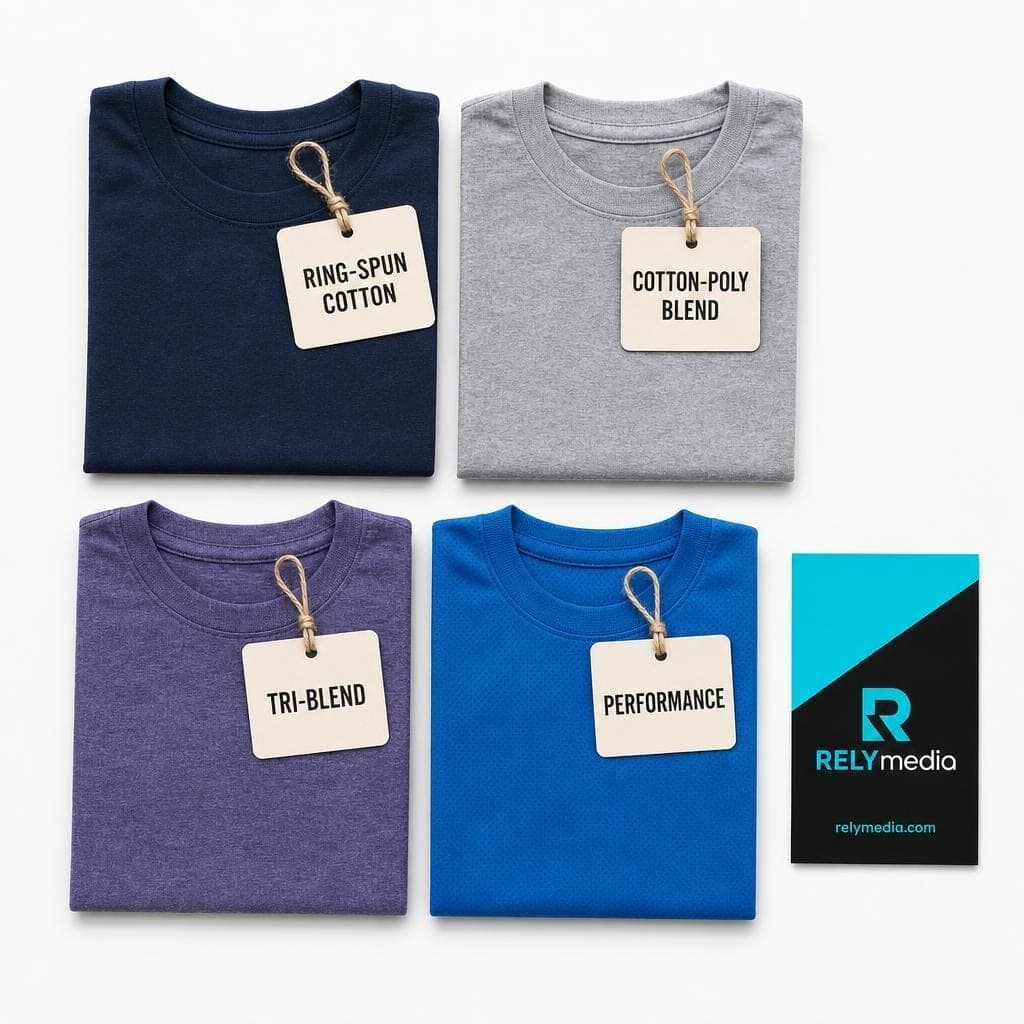
Garment selection is where many bulk orders quietly go wrong. The blank apparel you choose affects how your design prints, how comfortable the shirt feels, and how long it lasts through repeated wash cycles.
Shirt style options:
- Crewneck T-shirt — the universal choice for most group orders
- V-neck T-shirt — popular for women’s sizing and fashion-forward groups
- Long-sleeve shirt — ideal for cooler events or fall/winter uniforms
- Short-sleeve shirt and sleeveless shirt for warm-weather events
- Tank top and pocket tee for casual or recreational use
Fit options: Standard, Modern, Athletic, Relaxed, Classic, and Fashion. Each serves a different audience. A corporate team usually wants standard or modern fit. A sports team needs athletic fit for freedom of movement. Lifestyle brands often lean toward oversized fit for that relaxed streetwear look.
Fabric options and what they mean:
| Fabric Type | Best For | Feel |
|---|---|---|
| 100% Cotton / Preshrunk Cotton | Everyday wear, screen printing | Breathable, classic |
| Ring-spun / Combed Ring-spun Cotton | Premium retail-quality tees | Softer, smoother |
| Cotton Jersey | Lightweight everyday shirts | Comfortable, flexible |
| Cotton-Polyester Blend | Durability + comfort balance | Slightly stretchy |
| Tri-blend Fabric | Fashion-forward, soft-style shirts | Ultra-soft, drapes well |
| Moisture-wicking Performance Fabric | Athletic shirts, outdoor events | Breathable, fast-drying |
| Organic Cotton Shirts | Eco-conscious brands, nonprofits | Natural, sustainable |
Fabric weight matters too. Heavyweight T-shirts feel more Premium and hold prints beautifully — look for options with solid stitching quality, double-needle stitching at the seams, and taped neck and shoulders for shape retention. Lightweight shirts breathe better in warm conditions. Side-seamed shirts offer a more tailored fit than tubular shirts, which run wider and boxier. Neither is wrong — it depends entirely on your use case.
Pay attention to fabric softness, hand feel, and breathability when ordering blank samples. Shrink resistance is another factor worth checking — preshrunk cotton and ring-spun options handle repeated washing far better than standard cotton blanks. Some shirts also feature tear-away labels or tagless construction, which makes inside-neck printing and custom neck labels much cleaner.
Always cover your full range: adult, youth, women’s T-shirt, extended, tall, and unisex sizes. Use the supplier’s size chart and reference garment measurements — including chest, shirt length, and shirt width — to accurately guide your group’s size collection.
Not sure which garment suits your group? RELYmedia’s team provides dedicated apparel consultation to help you make the right call. Reach out now.
Step 3 — Prepare Your Design and Artwork
Artwork quality directly affects print quality. Low-resolution files produce blurry, pixelated prints. The right file format makes the difference between a sharp, vibrant result and an expensive disappointment.
What your supplier needs:
- Vector artwork (AI, EPS, SVG files) — scalable graphics that print crisply at any size; always outline your fonts before submitting
- Raster artwork (PNG, JPEG) — acceptable at 300 DPI minimum at actual print size; avoid image compression that creates compression artifacts
- Transparent background on PNG files — prevents unwanted color boxes around your design.
- PDF artwork — another widely accepted print-ready format for complex layouts
Font outlining prevents font substitution errors during prepress review. Small text and fine-line artwork need careful attention — what looks sharp on screen can lose legibility at print size. Bold typography with strong design contrast reads best across different garment colors. An uncluttered design with clean layout and intentional layout choices always prints better than a cluttered one.
Think carefully about print placement before you submit. The front print and the left-chest print are the most common. Right-chest printing, back shirt printing, sleeve printing, upper-back printing, nape printing, and inside-neck printing all add visual interest — but also affect decoration cost. Some orders call for full-front printing or full-back printing for maximum visual impact, while others use oversized printing for a bold streetwear aesthetic. Pocket print placement works well for subtle logo work on casual styles.
For orders requiring shirt-by-shirt personalization — individual names, player names, jersey numbers, department names, or variable artwork — flag this upfront. Variable data printing requires additional planning in the production workflow. It’s common for sports team apparel, employee shirts, and department-specific corporate orders.
Use RELYmedia’s online design studio — a full T-shirt design maker — to build your artwork from scratch or upload your logo directly. You’ll get a digital shirt mockup and a realistic shirt preview so you can see exactly how your custom T-shirt design will look before a single shirt is printed. Always review and approve the digital proof before production begins. That proof is your last checkpoint — check artwork alignment, design scale, print dimensions, bleed area, spacing, and margins carefully before you sign off.
Step 4 — Select Your Printing Method
The right decoration method depends on your design complexity, fabric type, and order quantity. Here’s a straightforward breakdown.
Printing Methods — Which One Fits Your Bulk Order?
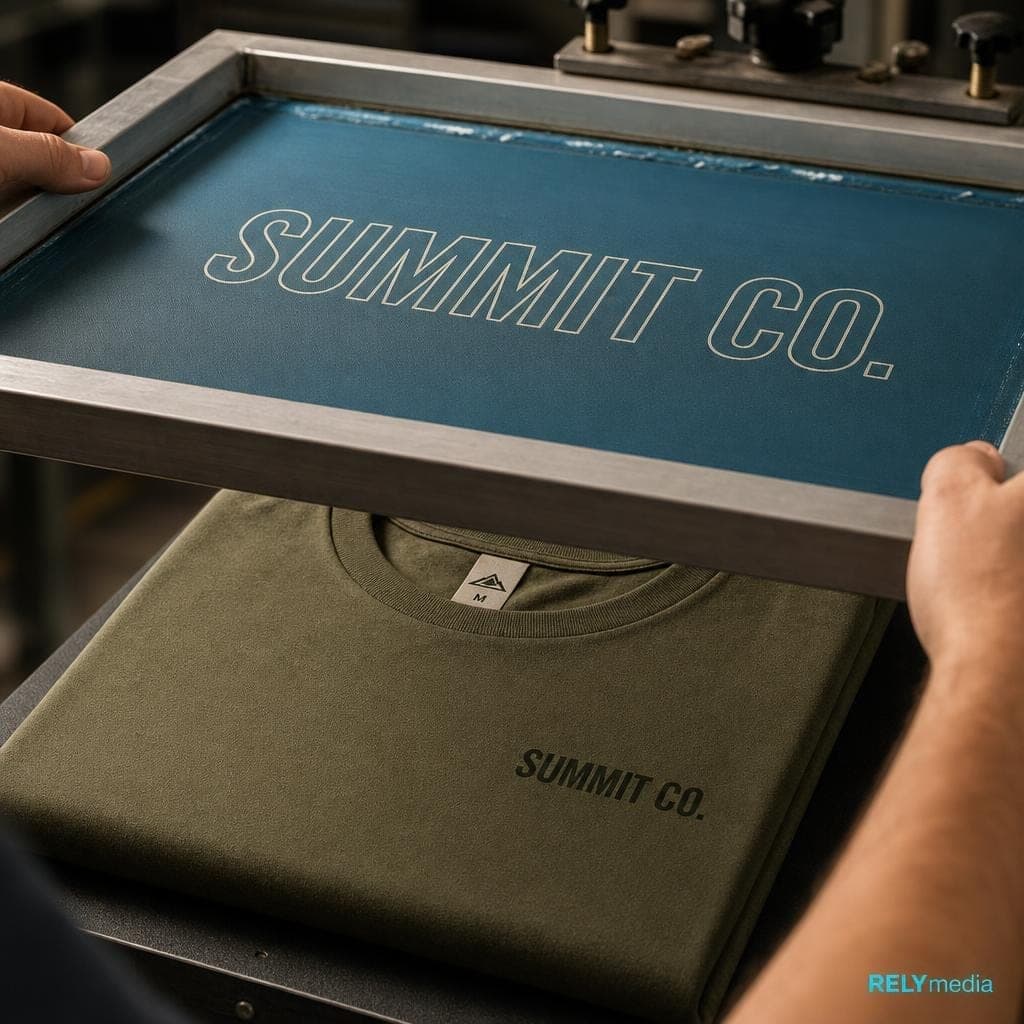
Screen Printing — The Bulk Standard
Screen printing — also called silkscreen printing or silk-screen printing — is the dominant method for bulk custom T-shirt printing and large print runs. It’s the most cost-efficient decoration technique at volume, delivering vibrant, long-lasting results that hold up through years of washing.
How it works: Each ink color gets its own mesh screen stencil coated with photo emulsion. A squeegee applies precise squeegee pressure to push plastisol ink or water-based ink through the screen onto the garment, one color at a time. Flash curing between colors prevents smearing. Heat curing locks the design permanently into the fabric.
Best for:
- High-volume orders and large print runs
- Bold graphics, single-color printing, spot-color printing
- Limited-color designs and monochrome logos
- 100% cotton and cotton-heavy blends
- Underbase printing and white underbase for dark garment printing
Screen printing delivers exceptional print durability, wash resistance, fade resistance, and crack resistance. It handles dark garment printing and light garment printing equally well with the right ink opacity and underbase approach. Plastisol printing produces vibrant, high-opacity colors with excellent ink coverage. Water-based printing gives a softer hand feel and more breathable finish — popular for fashion-forward retail-quality tees.
Direct-to-Garment (DTG) Printing
DTG shirt printing works like a large inkjet printer — it jets water-based ink directly onto fabric without screens or transfer paper.
Best for:
- Short print runs and low quantity custom shirts
- Photo-realistic designs, detailed artwork, and full-color designs
- Subtle gradients, halftone printing, and complex illustrations
- Cotton garments require a pre-treatment solution for dark fabrics
The result is a soft-hand print that feels integrated into the fabric. No screen setup required makes it ideal for small batches, test prints, and sample approval runs before a larger bulk order.
Direct-to-Film (DTF) Transfers
DTF transfers are one of the most versatile decoration methods available today. A design is printed onto transfer paper with specialized ink, then applied to the garment via heat press.
Best for:
- Complex full-color printing on dark garments
- Cotton, polyester, tri-blend, and performance fabric — essentially any fabric type
- Small to medium print runs with detailed or multicolor designs
- Digital transfers requiring vivid colors and stretch-resistant printing
Embroidery
Embroidery stitches thread directly into the fabric, producing a textured finish with a Premium feel. It’s the top choice for branded apparel, corporate shirts, and workwear shirts. Puff embroidery adds a raised three-dimensional effect — popular for headwear and chest logos on heavyweight shirts.
Best for: Left-chest print logos, heavyweight T-shirts, polo shirts, and any situation where garment durability and upscale presentation are the priority. Bulk embroidered shirts carry a higher per-unit cost than screen-printed equivalents but deliver a perceived quality that justifies the investment for corporate merchandise and Premium branded apparel.
Dye Sublimation
Sublimation ink turns into a gas at high temperatures and infuses directly into synthetic fabric. The result is a vibrant, scratch-proof, wash-resistant print — perfect for all-over printing on performance shirts and athletic apparel.
⚠️Note: Dye sublimation only works on polyester fabric. Cotton garments will scorch at sublimation temperatures. Best reserved for sports team apparel, festival shirts, and performance-driven clothing lines.
Specialty Ink Printing
Beyond standard methods, specialty ink printing options expand your creative range. Metallic ink adds a shimmering finish to logos and text. Puff ink creates a raised, three-dimensional effect. High-density ink builds up layers of ink for a tactile, textured finish. Glow-in-the-dark ink and reflective ink work well for safety apparel and novelty merchandise.
Quick Printing Method Comparison
| Method | Best For | Fabric Type | Ideal Run Size |
|---|---|---|---|
| Screen Printing | Bold, simple designs | Cotton/blends | 24+ units |
| DTG | Full-color, detailed | Cotton | Small batches |
| DTF | Complex designs | Any fabric | Small–medium |
| Embroidery | Logos, Premium look | Most fabrics | Any quantity |
| Sublimation | All-over prints | Polyester | Any quantity |
| Specialty Inks | Unique finishes | Cotton/blends | 24+ units |
RELYmedia offers all major decoration methods under one roof.
Tell them what you need, and they’ll recommend the right approach for your order. Get a free consultation.
What Shapes Custom T-Shirt Pricing?
Understanding custom shirt pricing removes the guesswork and helps you budget accurately. Several factors work together to determine your final per-unit cost.
Order Quantity and Bulk Pricing Tiers
The single biggest lever in custom t-shirt pricing is quantity. Bulk pricing works in tiers — cross a certain threshold and your per-unit cost drops meaningfully. If your group needs 45 shirts but the next pricing tier kicks in at 50, ordering five extra shirts may actually reduce your total spend.
Low-cost custom t-shirts become more achievable the larger your order grows. Low-price custom t-shirts in smaller quantities are still possible — you just trade a higher per-unit cost for a lower total spend. Reorder schedules and recurring uniform orders often unlock additional long-term savings, too. Planned repeat shirt orders almost always deliver better per-unit value than emergency reorders.
Garment Selection and Fabric Weight
Classic cotton T-shirts cost less per unit than soft-blends, retail-qualities, or performance shirts. Heavyweight T-shirts carry a slightly higher base garment cost than lightweight shirts. Extended sizes and tall sizes typically add a small per-unit Premium. Organic cotton shirts may cost more upfront, but they strongly appeal to eco-conscious organizations and nonprofits.
Design Complexity and Color Count
- Single-color printing — most affordable; one screen, minimal ink cost
- Multicolor printing — each additional ink color adds a screen and setup cost
- Full-color printing — highest setup complexity; best handled with DTG or DTF for smaller runs
- Four-color process printing (CMYK printing) — used for photographic prints and gradient printing
- Pantone color matching (PMS color matching) — ensures precise brand color consistency; may carry a small additional charge
- Custom ink colors — mixed to exact specifications for brand-critical work
Additional print locations multiply the decoration cost. A front print, back print, and sleeve print cost significantly more than a single left-chest print. Simulated process printing for photo-realistic designs costs more than standard spot-color work. Keep your budget in mind when finalizing print placement decisions.
Decoration Type and Finishing Options
Embroidery costs more per unit than screen printing for the same design area. However, for corporate shirts and premium-branded merchandise, the upscale result often justifies the spend. Inside-neck printing, custom neck labels, private labeling, woven labels, printed labels, hang tags, and branded packaging are optional finishing elements that elevate the final product — particularly for retail merchandise, employee onboarding kits, and clothing lines.
Fulfillment add-ons like individual packaging, polybagging, folding and bagging, size labeling, order sorting, department sorting, and team sorting add time and cost but simplify distribution planning significantly — especially for large corporate orders shipping to multiple locations.
Turnaround Time
Standard production keeps your affordable custom screen-printed shirts pricing in check. Rush production and rush shipping are available when deadlines tighten — but both carry a cost Premium. Build your production timeline and artwork approval deadline into your planning calendar early to avoid needing expedited shipping. For orders going to multiple shipping addresses or split shipping destinations, factor in additional logistics time.
RELYmedia offers fast turnaround times without hidden fees. All-inclusive custom shirt pricing means no surprises when the invoice arrives. Request your quote today.
Low Quantity Custom Shirts — Small Orders Still Work
Not every group needs 500 shirts. Low-quantity custom shirts are completely viable — and increasingly popular for test prints, department-specific shirts, small club orders, and first-time buyers who want to get approval before scaling up.
DTG and DTF methods make short print runs economical without sacrificing print quality. No-minimum shirt printing gives buyers total flexibility for individual shirt customization and mixed-design orders. Low-price custom t-shirts in smaller quantities do carry a higher per-unit cost — that’s the straightforward economics of setup costs spread across fewer units. However, for the right use case, it’s absolutely the smarter move.
Think of it this way: a small test run before a larger bulk-buy custom t-shirt order costs a little more per shirt but saves you from an expensive mistake on a 300-piece run. Mixed-color orders and mixed-size orders are also possible at smaller quantities — making it easy to test color options and garment selections before committing to mass production.
Getting Your Size Breakdown Right
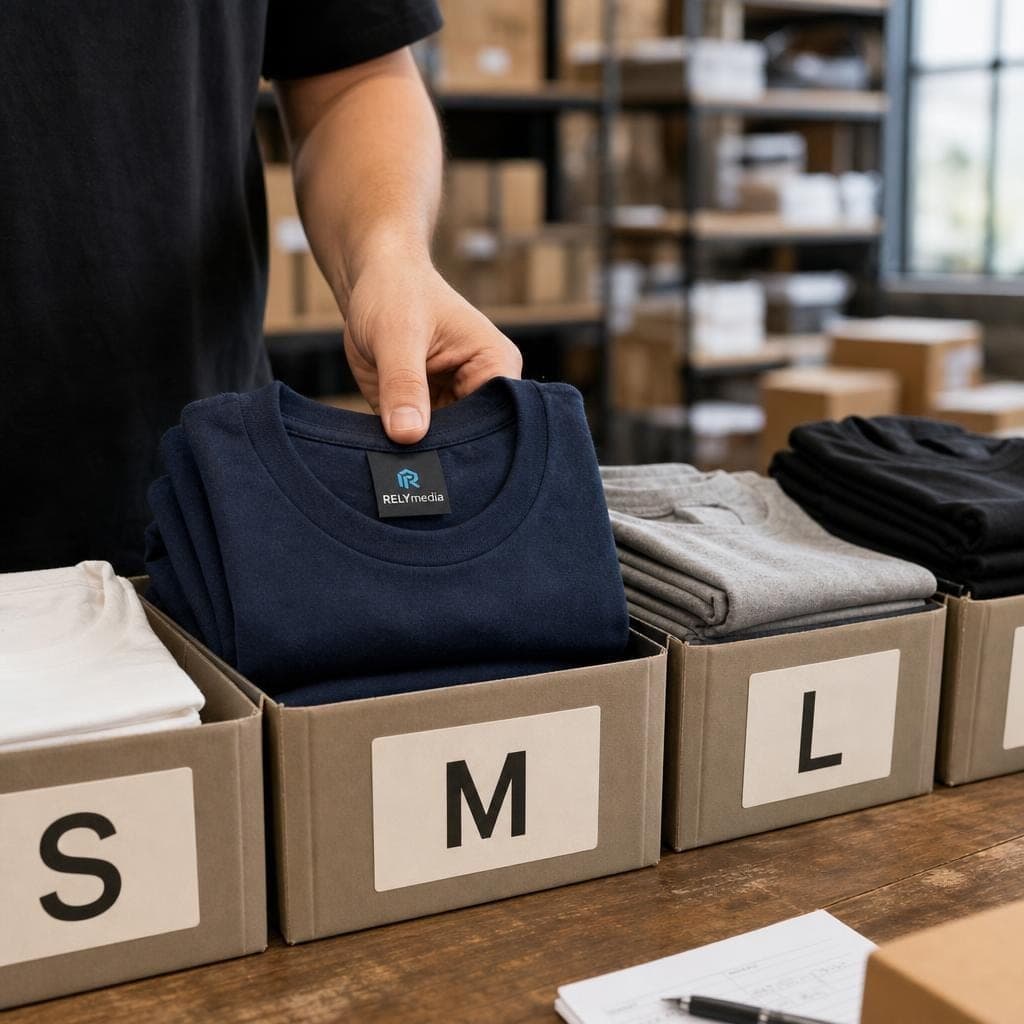
Size distribution is the most overlooked step in bulk shirt ordering. Get it wrong, and you end up with 40 extra smalls and nothing in XL — a painful and costly problem to fix after delivery.
How to Collect Size Data from Your Group
Send a group order form with a clear size chart as early in the process as possible. Reference garment measurements — chest measurements, shirt length, shirt width, and body measurements — alongside the chart so people can self-select with confidence. For mixed adult groups, the typical size ratio leans toward medium, large, and XL. However, every group is different.
Account for youth sizes, women’s T-shirt sizing, extended sizes, and tall sizes if your audience is diverse. Clarify the difference between unisex sizing and women’s sizing up front — a unisex large fits very differently from a women’s large. Making that distinction clear in your group order form prevents a flood of sizing exchanges after delivery.
Individual size selection via a shareable order link is the cleanest method for large groups. Each person selects their own size — and, if you’re running a mixed-color order, their individual color — without requiring a coordinator to chase down responses manually.
How Many Extra Shirts Should You Order?
Add 10–15% above your expected attendance or projected headcount. That buffer covers:
- Last-minute participants who registered after the deadline
- Sizing exchanges when someone gets the wrong fit
- Replacement shirts for damaged items during distribution
- Future needs without triggering a costly small repeat order
For recurring uniform orders and seasonal orders, establish a reorder schedule and discuss reorder assistance with your supplier up front. Planned repeat orders almost always cost less per unit than emergency reorders placed under rush production timelines.
RELYmedia’s team helps you plan your quantity breakdown, size distribution, and reorder schedule from day one. Start your bulk order here.
Quality Control — What to Review Before Production Starts
Quality control isn’t just what happens at the end — it starts the moment you submit your artwork. A professional custom printing service runs a multi-stage production review to catch issues before they become expensive problems.
Before approving production, verify:
- Digital proof — does the design look exactly right in terms of print placement, artwork alignment, color registration, and design scale?
- Ink color vs. garment color contrast — does your design stand out clearly against the shirt color? Check vibrant print colors against both dark garments and light garments.
- Quantity breakdown and size verification — do the numbers match your original group order form exactly?
- Print dimensions — is the design sized correctly for each shirt size, including youth and extended sizes?
- Color verification — are all Pantone colors, custom ink colors, and garment color selections confirmed?
Request pre-production samples for large runs. Inspect fabric weight, color retention, garment specifications, stitching quality, and print consistency before mass production begins. A thorough final inspection covers print quality inspection, garment inspection, placement verification, and order accuracy from start to finish.
Track your order through production scheduling, production completion, and all the way to doorstep delivery. Order tracking gives you full visibility — especially critical when you’re working against a tight event deadline.
Customer artwork support and graphic design assistance are available through RELYmedia’s production support team. If your files need artwork cleanup, logo cleanup, or artwork refinement to become truly print-ready, their team handles it before anything goes to press.
RELYmedia’s quality control process covers every order — from artwork verification through final inspection. See how it works.
Caring for Your Custom-Printed Shirts
Great shirts last longer when you care for them properly. Share these garment care instructions with your group after distribution — decoration protection starts with the first wash.
Print care best practices:
- Machine wash cold — protects ink adhesion and color retention through repeated wash cycles
- Wash shirts inside out — shields the print and embroidery from friction during washing
- Tumble dry low or air-dry shirts — low-heat drying protects print durability; high heat accelerates fade
- Non-chlorine bleach only — standard bleach causes discoloration, especially on dark garments and saturated colors
- Never iron directly over prints or embroidery — heat damages decoration, breaks ink adhesion, and leaves marks on textured finishes.
- Follow ironing restrictions — if ironing is necessary, use a pressing cloth between the iron and the garment.t
Following these steps significantly extends the life of your custom apparel. Screen-printed shirts washed inside out in cold water consistently outlast those thrown in hot cycles. Embroidered pieces retain their shape, texture, and color far longer when washed gently. These aren’t just care tips — they’re what separates a shirt that lasts three years from one that fades after ten washes.
Personalization Options — Beyond the Standard Bulk Order
Not every shirt in a bulk order needs to look identical. Individual shirt customization has become one of the most requested features for corporate apparel, sports team uniforms, and employee onboarding kits.
Common personalization options include:
- Individual names and employee names are printed on the back or chest
- Player numbers and jersey numbers for sports team apparel and tournament shirts
- Department identifiers and department names for large corporate orders, sorted by team
- Personalized text for family reunion shirts — names, roles, or memorable phrases
- Variable data printing — each shirt receives unique information while maintaining consistent branding
Variable artwork requires additional production workflow planning and typically involves higher per-unit costs than standard bulk production. However, for sports teams, corporate departments, and family reunion groups, the value of personalization far outweighs the added cost. Discuss your personalization needs during your initial apparel consultation so your supplier can factor it into the production timeline.
Custom neck labels, inside tag printing, and private labeling round out the personalization picture — giving your finished shirts a polished, retail-quality feel that generic blank apparel simply can’t match.
Why RELYmedia for Your Bulk Custom T-Shirt Order
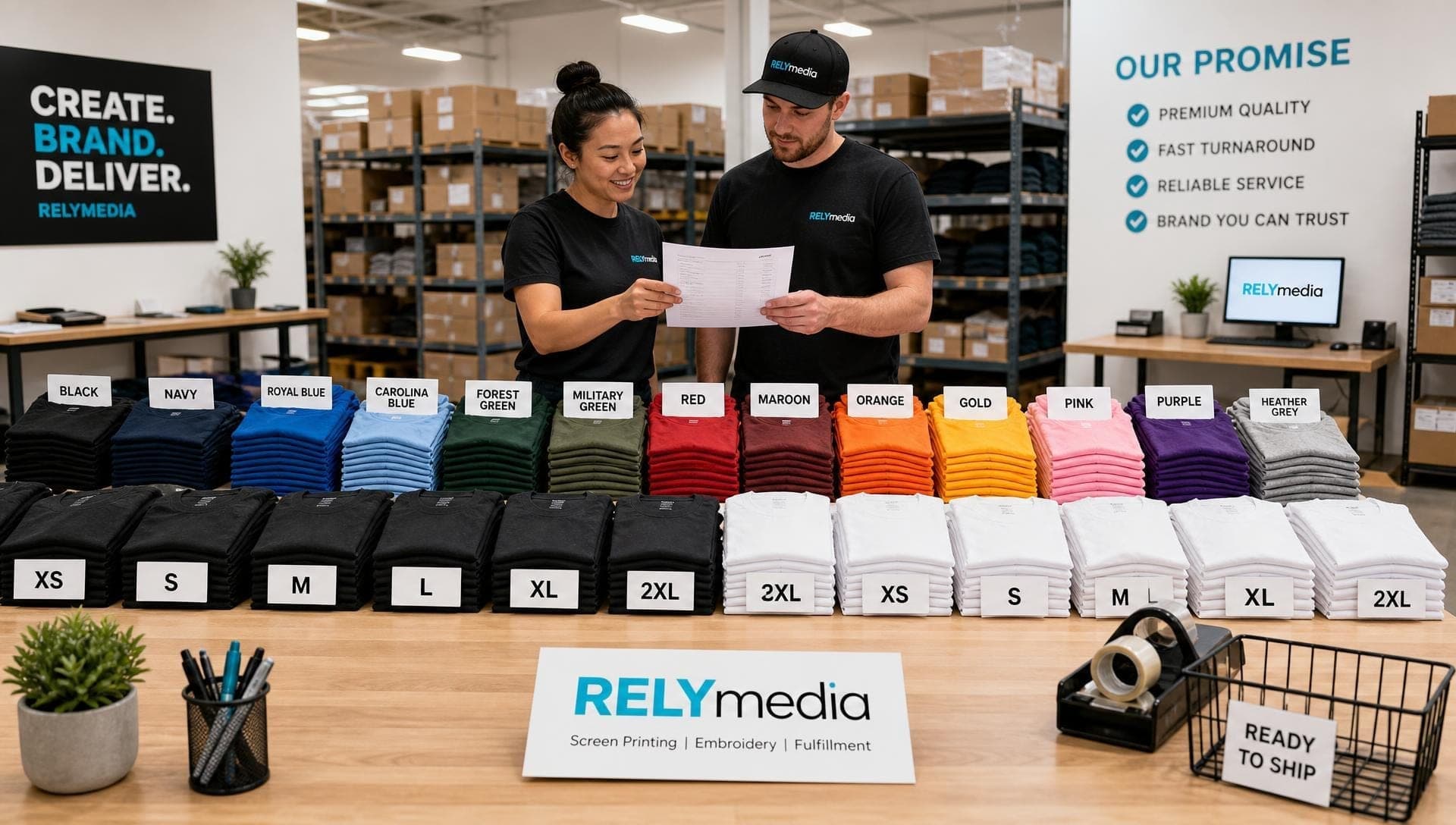
RELYmedia is a US-based promotional products and branding solutions company headquartered in Eagan, Minnesota. They’ve built a reputation on one thing: delivering exactly what clients need, on time, without compromising on quality.
When you buy bulk custom t-shirts through RELYmedia, you get:
- All-inclusive custom shirt pricing — no hidden fees, no surprise charges, transparent per-unit costs
- Fast turnaround times — built for clients working against real event deadlines
- Industry-leading customer service — dedicated order support from artwork submission through final delivery
- Full decoration capabilities — screen printing, DTG, DTF, embroidery, dye sublimation, specialty ink printing, and more
- End-to-end order management — garment selection, design consultation, apparel consultation, quality control, and fulfillment
- Streamlined ordering process — group order forms, shareable order links, and individual size selection tools that make large orders manageable
- Hundreds of five-star reviews — built on reliability, accuracy, and on-time delivery
- Nationwide delivery — serving businesses, schools, nonprofits, and organizations across the entire US
RELYmedia works with all types of clients. Nonprofits need affordable, custom screen-printed shirts with all-inclusive pricing. Corporations need large-scale employee onboarding kits. Schools need bulk custom t-shirts for clubs and sports programs. Families want to customize family reunion shirts that actually look great. Whatever your order size — from low-quantity custom shirts for a small department to high-volume T-shirt printing for a nationwide event — RELYmedia delivers consistent, professional results every time.
Ready to place your bulk custom shirt order?
Contact RELYmedia today to get a custom quote tailored to your group, budget, and deadline.
Ready to print your team's name on premium apparel?
Fill in your details and a RELYmedia specialist will come back to you with a custom quote — fast turnaround, no obligation.
- ⚡Same-day response on business days
- 🎨Free design assistance included
- 🚚Rush order & fast delivery available
- 💰Price beat guarantee on every order
Conclusion
Ordering bulk custom shirts doesn’t have to be complicated. When you know the process, it’s actually straightforward: define your needs, select the right garment, prepare clean artwork, choose the right printing method, collect your size data, plan for personalization, review your digital proof, and place your order with enough lead time to breathe.
The groups that get it right plan early, order a buffer above their headcount, and work with a professional shirt printing partner who handles the details so they don’t have to. From low-priced custom t-shirts for small organizations to large-scale bulk apparel production for corporations, the right partner makes all the difference.
That’s exactly what RELYmedia does. Fast turnaround times. Transparent custom t-shirt pricing. Industry-leading customer service. End-to-end support from the first conversation to doorstep delivery. Whether you need custom merch for a festival, branded company shirts for a product launch, or team uniform shirts for the upcoming season, RELYmedia has you covered.
Don’t leave your next bulk order to chance. Work with RELYmedia — the trusted partner for bulk custom shirts across the US. Get your free quote today.
Define your requirements and deadline before anything else
Match garment and printing method to your quantity and design
Collect size data early with a shareable group order link
Approve the digital proof before production starts
Our Customer Feedback


Mike Larson
 (5)
(5)Unbelievable Turn-around
We are stunned with how quickly we received our order. It turned out perfect, and all of our interactions with staff have been fantastic. Thank you so much!
Jana
(5)Great customer service and on-time delivery with product as advertised!
The product arrived exactly as advertised and on time. This company was very easy to work with, and the price was great!
Sarah
(5)Quick Turn-Around and Immediate Communisaton
I've ordered a couple times from RELY. My initial order was not time sensitive so we had time to get it correct. We went back and forth with proofs until I felt comfortable. When I had a question, the sales team was very responsive. When it came to my re-order, I needed it fast. They responded and got it to me right on time.
Rob
(5)Fabulous experience, great suggestions from the staff!
The sales staff had great suggestions and were very helpful in the process to, in the end, get exactly what was necessary for our use!
Emily
(5)Great service!
Everything went well as anticipated, and as planned. Service was superb & shipment was expedited in a speedy fashion! Thank you for your service!
Freddy
(5)Thumbdrives
2nd time I have ordered from these guys and they have a good product for the price. The delivery time was as said with no troubles. Would recommend and will be reordering again.
Patty
(5)This is a top notch company. Awesome as what they do. Highly recommend.
If you are looking for a company that says what they do and then do what they say - RELYmedia is for you!!! We have done a couple critical orders with RELYmedia and they were ahead of schedule and the items were perfect. We will be utilizing their talents again!!!
Blanca
(5)Very responsive,
All my inquiries were handled in a very timely fashion. My contact was courteous and helpful. Items ordered were received very quickly. Thanks for the superior service!
Andrew
(5)Overall great experience.
They are friendly and knowledgeable. They are well priced, and ship fast.
Trusted By