Sweatshirt Styles Explained: Every Type, Fit, Fabric, and Feature
August 6, 2026 · 13 min read
A sweatshirt looks simple until you compare two side by side. One feels soft, keeps its shape, and displays a clean logo. The other pills, shrinks, or places artwork across a pocket. That difference comes from style, sweatshirt fit, fabric weight, construction, and decoration.
This sweatshirt guide explains the main sweatshirt styles, sweatshirt types, materials, features, fits, and custom options. It helps you choose the right sweatshirt for work, events, teams, schools, or everyday fashion.
RELYmedia works with organizations that need custom apparel on real deadlines. The best sweatshirt is not always the most expensive. It is the garment that fits the wearer, setting, climate, artwork, budget, and care needs.
What Is a Sweatshirt?
A sweatshirt is a long-sleeved knit garment made for warmth, comfort, and casual layering. Most use cotton, polyester, or a cotton-poly blend, plus ribbed cuffs, a ribbed waistband, reinforced seams, and a soft interior.
What is a sweatshirt compared with a sweater? A sweater is made with knitted yarn, often wool or cashmere. A sweatshirt uses fleece, French terry, or another sweatshirt fabric. Sweatshirts without hoods are usually called crewnecks.
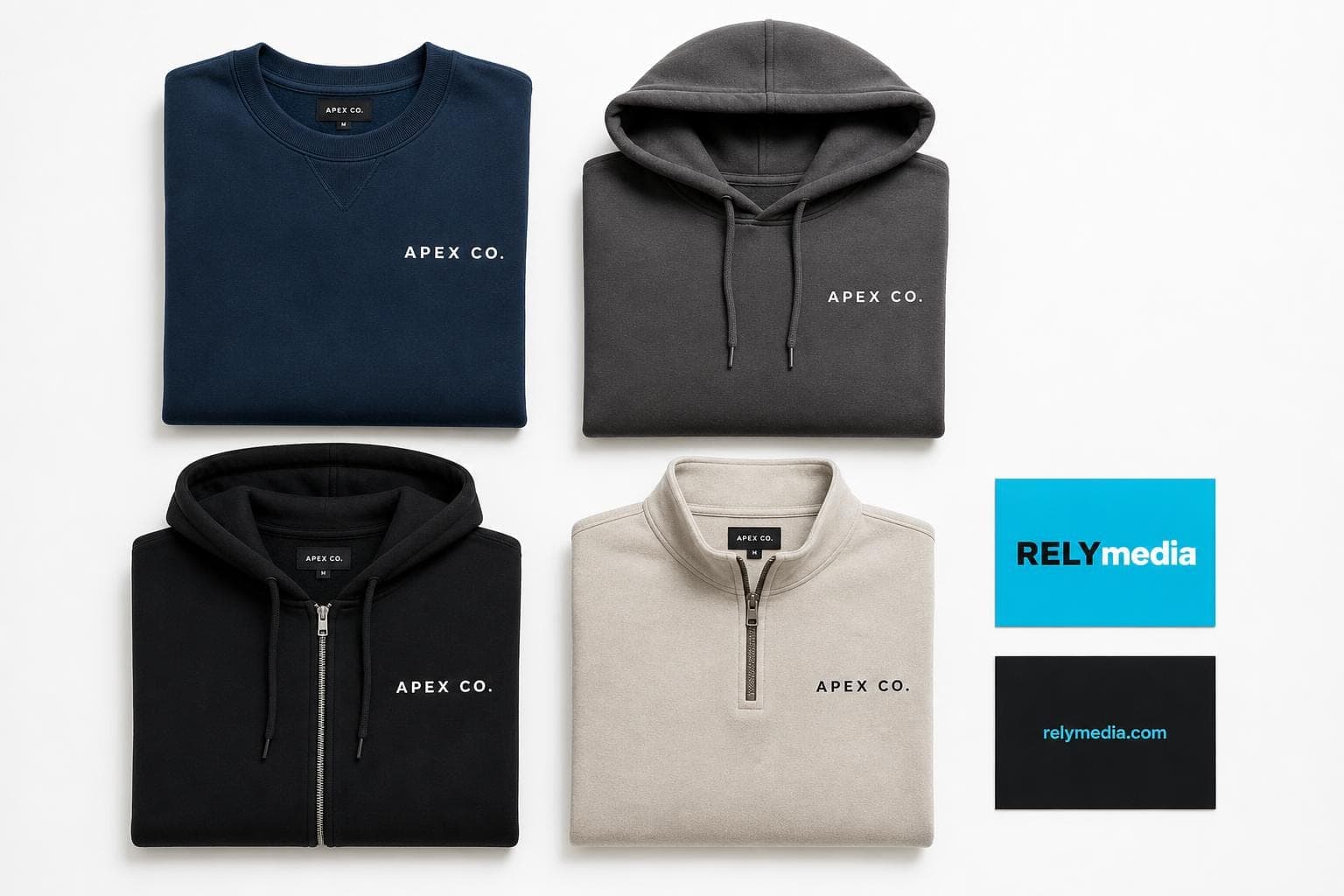
A hoodie is a hooded sweatshirt with a hood, drawstrings or drawcord, and often a kangaroo pocket. A quarter zip adds a partial zipper and raised collar. A zip-up hoodie uses a full-length zipper.
Sweatshirt Origins and Modern Use
Sweatshirts began as athletic-inspired apparel and a softer alternative to heavy wool training clothes. They later moved into college clothing, workwear, casual wear, athleisure, streetwear, and fashion apparel.
Today, sweatshirts serve as:
- A comfortable layering piece
- A cold-weather essential
- Promotional apparel
- Team apparel
- Company apparel
- Event merchandise
- Everyday leisurewear
- Business casual clothing
That flexibility keeps the sweatshirt a wardrobe staple and iconic fashion staple.
Main Sweatshirt Styles
Crewneck Sweatshirt
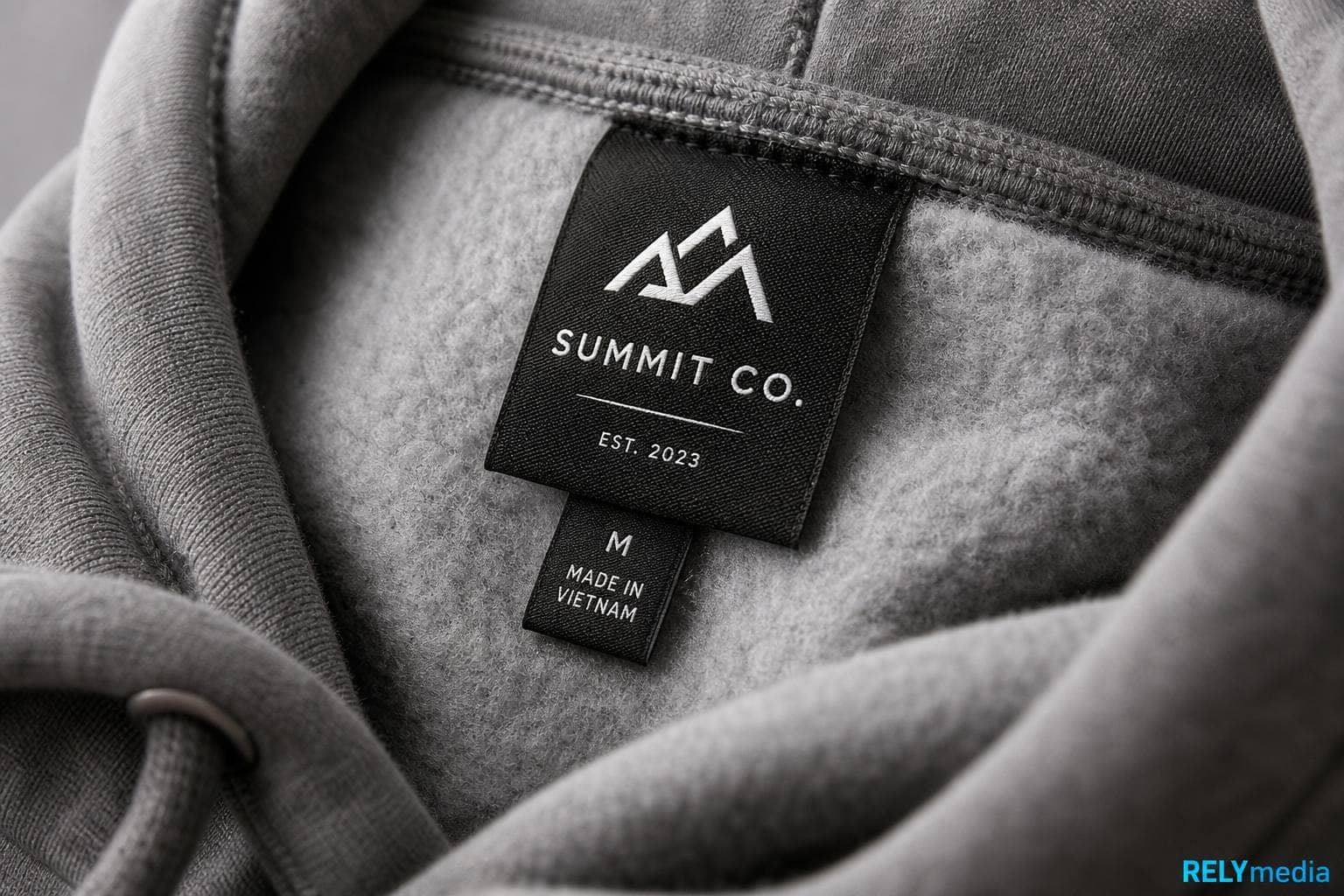
The crewneck sweatshirt has a classic neckline, no hood, and no zipper. Traditional versions use rib-knit cuffs, a fitted waistband, and sometimes a V-notch below the collar.
The classic crewneck design offers an uninterrupted print area. Screen printing, DTF printing, embroidery, back prints, sleeve prints, and chest logos work well. A modern crewneck feels polished, while a relaxed crewneck supports laid-back style.
Choose one for school apparel, business uniforms, corporate apparel, sports team apparel, or everyday essentials. It layers easily under jackets without adding hood bulk.
Pullover Hoodie
A pullover hoodie is a hooded pullover with a pouch or kangaroo pocket. It may include a jersey-lined adjustable hood, drawcord, ribbed cuffs, and ribbed waistband.
This everyday hoodie offers warmth, premium comfort, and casual streetwear appeal. A heavyweight hoodie provides winter warmth, while a lightweight hoodie suits transitional clothing and workout layering.
The front pocket limits print placement. Wide chest artwork fits better than tall artwork. Large designs often work best as a back print.
Zip-Up Hoodie
A zip-up hoodie, full-zip hoodie, or zip-front hoodie uses a full-length zipper and separate front panels. Most include side pockets and an adjustable hood.
This structured zip hoodie suits active lifestyles, work-to-weekend clothing, and changing temperatures. Wearers can open it for temperature control.
Use a chest logo, sleeve print, or back print. Printing across the zipper may split details. A YKK zipper improves long-lasting performance.
Quarter-Zip Sweatshirt
A quarter-zip sweatshirt combines a partial zipper with a raised collar, bridging sportswear and business casual style.
It suits golf, corporate, and training apparel, as well as polished outfits. Embroidery usually works better than large prints because it supports a tailored appearance.
Some designs add a chest pocket, raglan sleeves, technical fabric, or moisture-wicking performance for a practical performance layer.
Specialty Sweatshirt Types
Different types of sweatshirts now serve specific fashion and performance needs:
- Cropped sweatshirt: A shorter body creates a fashionable cut.
- Cropped hoodie: Combines a cropped shape with a hood.
- Short-sleeve sweatshirt: Adds structure without heavy warmth.
- Short-sleeved hoodie: Works for gym wear and basketball warmups.
- Hoodie dress: Extends below the hips for a relaxed silhouette.
- Oversized hoodie: Uses a roomy fit and dropped shoulder.
- Fleece pullover: Focuses on warm fleece lining and comfort.
- Performance pullover: Adds moisture control and flexible movement.
Choose these different kinds of sweatshirts to solve a real need, not simply follow a trend.
Sweatshirt Fits and Cuts
Sweatshirt fits affect comfort, mobility, print appearance, and sizing. Compare garment measurements before ordering.
| Fit | Shape | Best use |
|---|---|---|
| Regular fit | Straight cut with balanced room | Daily casual wear |
| Classic fit | Traditional, comfortable silhouette | Uniforms and groups |
| Relaxed fit | Extra room through body and sleeves | Casual layering |
| Slim fit | Narrower shape with less excess fabric | Modern casualwear |
| Fashion fit | Retail-inspired, tailored appearance | Premium casualwear |
| Semi-fitted | Shaped without feeling tight | Polished branding |
| Loose fit | Wide body and loose profile | Relaxed fashion |
| Oversized fit | Dropped shoulder and oversized silhouette | Urban fashion |
| Women's fit | Contoured silhouette and tapered waist | Shaped styling |
| Unisex fit | Gender-neutral fit and straight proportions | Organization apparel |
| Tall fit | Longer body length and sleeves | Taller wearers |
| Youth fit | Smaller proportions and youth sizing | Schools and teams |
How do unisex sweatshirts fit? They often follow a standard men’s size block. Some women size down, while fans of the oversized hoodie trend may size up. Chest width and body length remain more reliable than labels.
RELYmedia recommends testing one sample before a large custom sweatshirt order. It can reveal tight cuffs, short sleeves, weak recovery, or poor custom logo placement before mass production.
Sweatshirt Materials and Fabrics
Cotton
Cotton offers softness and breathable comfort for daily wear. Combed cotton removes shorter fibers, resulting in a smoother surface. Ring-spun cotton adds strength and softness. Airlume cotton appears in some premium apparel.
Heavyweight cotton feels substantial, but untreated cotton may shrink.
Polyester and Cotton Blends
Polyester supports durability, wrinkle resistance, quick-drying apparel, and color retention. A cotton blend combines everyday comfort with better shape stability.
Cotton-poly blends work well for printed clothing, embroidered apparel, and durable everyday wear. Recycled polyester fibers may reduce reliance on new material, though impact depends on sourcing and production.
Tri-Blend and Stretch Materials
Tri-blend fabric usually combines cotton, polyester, and rayon. It creates a soft-touch fabric, lightweight knit, and contemporary fit.
Elastane or spandex adds stretch, flexibility, and unrestricted mobility. These fibers often appear in performance knit, golf apparel, and movement-friendly apparel.
Sustainable and Specialty Materials
Organic cotton apparel, recycled fabrics, composite fabric, and low-impact materials support sustainable clothing goals. Still, one label cannot prove full sustainability.
Consider responsible sourcing, eco-friendly manufacturing, garment longevity, dyeing, transport, and care. A durable sweatshirt may beat a low-quality “green” product that wears out quickly.
Common Sweatshirt Fabric Types
- Fleece uses a brushed interior fleece that traps warm air. Brushed cotton interior or brushed fleece provides insulation and a plush fabric interior.
- French terry has a smooth face and loopback fabric inside. It offers breathable knit fabric, moisture management, and all-season clothing potential.
- Sponge fleece creates a soft, lofty feel often used in premium fleece hoodies and fashion-forward hoodie styles.
- Sherpa provides strong thermal insulation and winter warmth. It feels cozy, but it adds weight and bulk.
- Performance fabric uses textile engineering for moisture-wicking, quick-dry performance, stretch, and temperature regulation.
- Composite fabric combines materials in targeted areas. For example, a garment may use flexible side panels with a warmer main body.
Understanding Fabric Weight
Fabric weight shapes comfort, structure, print results, and seasonal use.
Lightweight fabric
Best for indoor use, mild weather, and casual performance layering.
Midweight fabric
A balanced choice for seasonal layering and all-day comfort.
Heavyweight fabric
Best for cold-weather clothing, workwear, and a structured silhouette.
Weight alone does not prove quality. Dense midweight fabric may outperform loose heavyweight fabric. Check recovery, pilling, hems, and seams.
Sweatshirt Features Worth Checking
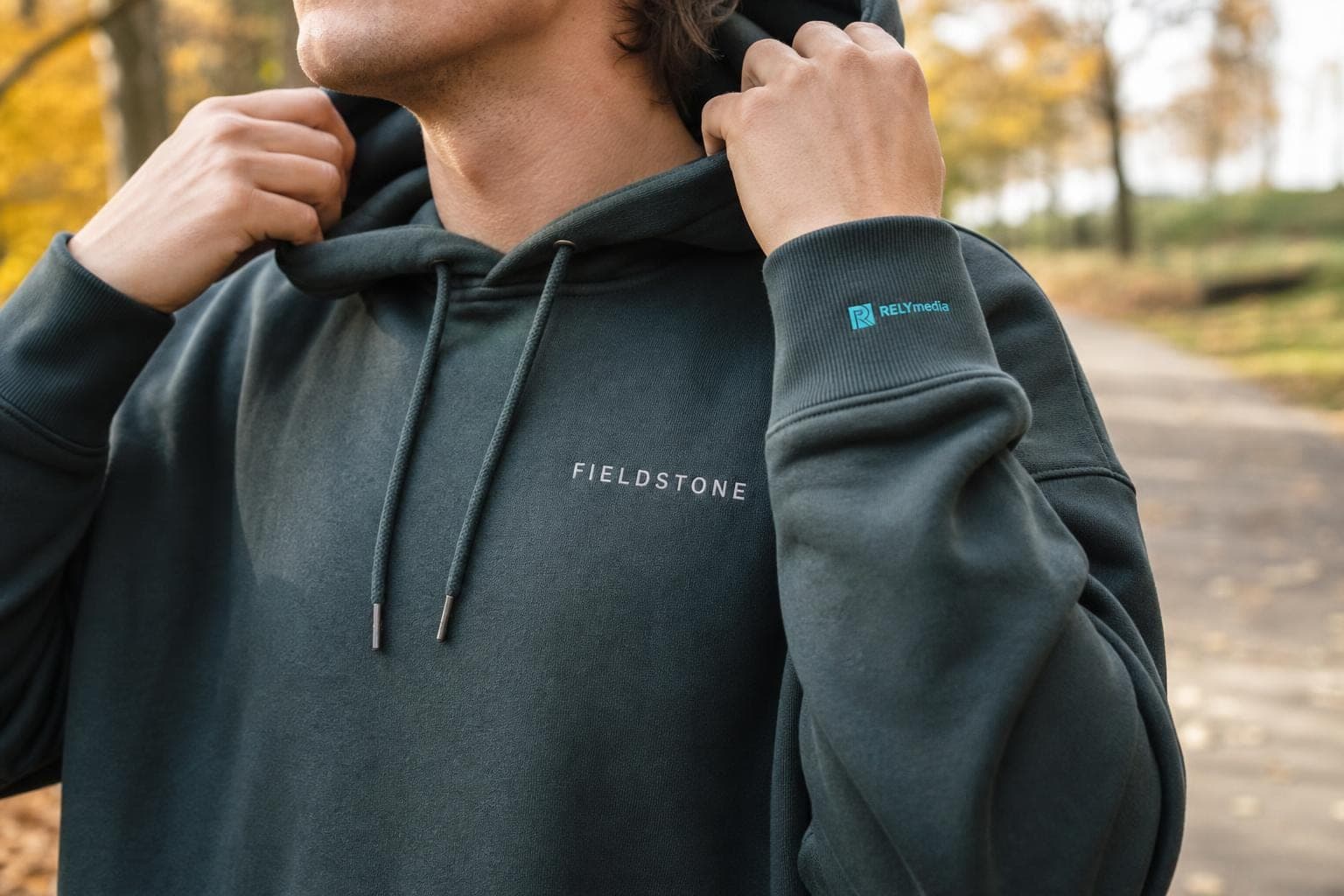
Small features often reveal quality craftsmanship.
Look for:
- Double-needle stitching
- Coverstitched seams
- Reinforced collar
- Durable seam construction
- Low-pill fabric
- Secure drawstrings
- Smooth zipper movement
- Deep front or side pockets
- Ribbing that returns to shape
- Consistent garment-dyed color
- A hood with useful depth
- Strong hand warmer pocket stitching
Raglan sleeves support flexible movement. Drop shoulder construction creates a relaxed silhouette. A tapered waist produces a more flattering fit.
Sweatshirt Customization and Decoration
A custom sweatshirt succeeds when the garment and decoration method work together.
| Method | Best use | Key concern |
|---|---|---|
| Screen printing | Bold designs and larger orders | Seams and pocket placement |
| DTF printing | Detailed, colorful artwork | Heat settings and fabric texture |
| Direct-to-film printing | Short runs and complex graphics | Surface smoothness |
| Embroidery | Chest logos and premium branding | Design weight |
| Sleeve print | Names, dates, or secondary branding | Arm seams |
| Hood print | Fashion and event merchandise | Visibility when worn |
| Back print | Large promotional designs | Hood overlap |
Custom apparel projects fail for simple reasons. A pocket cuts through artwork. A zipper splits a word. Heavy embroidery pulls on lightweight fabric. Fine lines disappear into fleece.
RELYmedia helps clients compare custom hoodie options, sweatshirt fabrics, print placement, order size, and turnaround. That planning protects the design and budget.
Choose the garment and decoration together. A great logo cannot rescue the wrong sweatshirt.
Need branded clothing people will keep wearing?
Contact RELYmedia for custom apparel solutions built around your audience, artwork, budget, and deadline.
How to Choose the Right Sweatshirt
Start with the wearer and setting. Ask:
- Will people wear it indoors or outdoors?
- Do they need winter layering options?
- Is unrestricted mobility important?
- Will the garment face frequent washing?
- Does the design need a large print area?
- Do you need inclusive sizing or extended sizing?
- Is the goal premium everyday apparel or affordable hoodies?
- Does the order require fast production?
- Are sustainable textiles a priority?
For staff uniforms, prioritize durability and comfort. For event merchandise, balance cost with stylish comfort. For executive gifts, consider premium fleece fabric and embroidery. For athletic performance, choose breathable fabric, moisture control, and flexible movement.
Consider a company ordering 200 hoodies for an outdoor fall event. A lightweight hoodie may lack warmth, while a heavyweight sweatshirt may feel bulky. A midweight cotton-poly pullover often balances comfort, printing, and seasonal use.
Sweatshirt Care and Maintenance
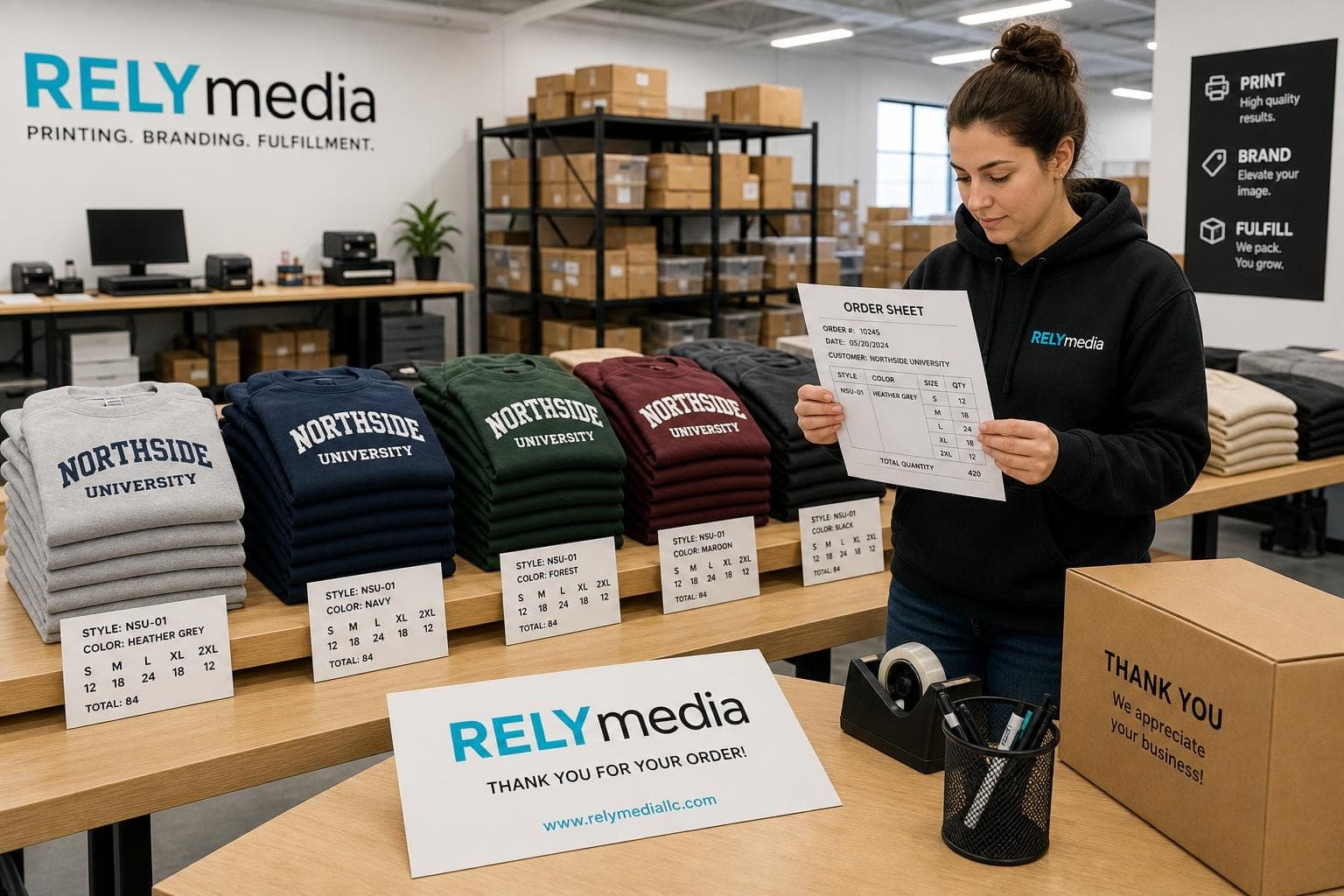
Proper garment care protects fabric quality, printed designs, embroidery, softness, and fit.
Follow these steps:
- 1Read the care labels.
- 2Turn the garment inside out.
- 3Use a cool water wash.
- 4Choose gentle washing.
- 5Avoid harsh bleach.
- 6Use low-temperature drying.
- 7Hang dry premium garments when practical.
- 8Use a laundry bag for delicate embroidery.
- 9Fold heavy sweatshirts for proper clothing storage.
High heat can cause shrinkage, weaken stretch fibers, and damage apparel decoration. Gentle washing helps maintain softness, preserve printed designs, and extend garment life.
Ready to print your team's name on premium apparel?
Fill in your details and a RELYmedia specialist will come back to you with a custom quote — fast turnaround, no obligation.
- ⚡Same-day response on business days
- 🎨Free design assistance included
- 🚚Rush order & fast delivery available
- 💰Price beat guarantee on every order
Frequently Asked Questions
What Is a Crewneck Sweatshirt?
A crewneck sweatshirt is a hoodless sweatshirt with a round neckline. It usually has long sleeves, ribbed cuffs, and a ribbed waistband.
What Is the Difference Between a Sweatshirt and a Crewneck?
“Sweatshirt” names the full product category. A crewneck is one sweatshirt style within that category.
What Is Sweatshirt Fabric Called?
Common sweatshirt fabrics include fleece, French terry, sponge fleece, sherpa, and performance knit.
Which Sweatshirt Material Is Best?
Cotton feels natural. Cotton-poly blends improve durability. French terry works for breathable comfort. Heavy fleece provides warmth. The best sweatshirt material depends on climate, use, fit, and care.
Which Style Is Best for Custom Printing?
Crewnecks offer the largest flat surface. Pullover hoodies support back prints and wide chest designs. Quarter zips and full-zip hoodies often look best with embroidery.
Conclusion: Find the Right Custom Sweatshirt
The right sweatshirt combines style, fit, fabric, construction, decoration, and purpose. A crewneck provides clean versatility. A pullover hoodie offers warmth and everyday comfort. A zip-up hoodie supports flexible layering. A quarter zip delivers polished casual style.
Material choices also matter. Cotton brings softness, polyester adds durability, French terry breathes, and fleece provides warmth. Quality seams, useful pockets, stable ribbing, and thoughtful sizing create long-lasting apparel.
RELYmedia helps businesses, schools, teams, nonprofits, and organizations create personalized sweatshirts, custom hoodies, promotional merchandise, and branded apparel while protecting deadlines and quality. The goal is not merely printing a logo. It is creating apparel people enjoy wearing.
Ready to compare sweatshirt styles and build a stronger apparel program?
Contact RELYmedia today for dependable service, custom branding, and a solution tailored to your project.
Our Customer Feedback


Mike Larson
 (5)
(5)Unbelievable Turn-around
We are stunned with how quickly we received our order. It turned out perfect, and all of our interactions with staff have been fantastic. Thank you so much!
Jana
(5)Great customer service and on-time delivery with product as advertised!
The product arrived exactly as advertised and on time. This company was very easy to work with, and the price was great!
Sarah
(5)Quick Turn-Around and Immediate Communisaton
I've ordered a couple times from RELY. My initial order was not time sensitive so we had time to get it correct. We went back and forth with proofs until I felt comfortable. When I had a question, the sales team was very responsive. When it came to my re-order, I needed it fast. They responded and got it to me right on time.
Rob
(5)Fabulous experience, great suggestions from the staff!
The sales staff had great suggestions and were very helpful in the process to, in the end, get exactly what was necessary for our use!
Emily
(5)Great service!
Everything went well as anticipated, and as planned. Service was superb & shipment was expedited in a speedy fashion! Thank you for your service!
Freddy
(5)Thumbdrives
2nd time I have ordered from these guys and they have a good product for the price. The delivery time was as said with no troubles. Would recommend and will be reordering again.
Patty
(5)This is a top notch company. Awesome as what they do. Highly recommend.
If you are looking for a company that says what they do and then do what they say - RELYmedia is for you!!! We have done a couple critical orders with RELYmedia and they were ahead of schedule and the items were perfect. We will be utilizing their talents again!!!
Blanca
(5)Very responsive,
All my inquiries were handled in a very timely fashion. My contact was courteous and helpful. Items ordered were received very quickly. Thanks for the superior service!
Andrew
(5)Overall great experience.
They are friendly and knowledgeable. They are well priced, and ship fast.
Trusted By