Types of Camo: All Major Camouflage Patterns Explained
August 6, 2026 · 11 min read
Camo used to mean one thing: hide. Now it's everywhere you look. You'll spot camouflage on runways, work sites, hunting stands, and city sidewalks. The pattern that once helped soldiers vanish now helps brands get noticed.
This guide breaks down every major type of camo — the colors, the history, and the smartest ways to use each one on custom apparel. Whether you run an outdoor brand, a tactical team, or your own shop, you'll leave knowing which camouflage pattern best suits your branded apparel. Let's start with the basics and then walk through every major design.
What Is Camo? A Quick Definition
Camo is short for camouflage. It's a print built to break up an outline so the wearer blends into a background. Blotches, pixels, and earth tones trick the eye into missing shapes it would normally catch. That's the core of camouflage technology — disrupt the shape, and you disrupt detection.
So is camo a pattern or a color? It's a pattern. “Camo green” and tan are common camo colors, but the layout is the star. Terrain camouflage mimics a specific environment — forest, desert, or snow — while modern camo clothing often prioritizes style over concealment. Today the camo print does double duty: real hiding for some, bold fashion for others.
The Purpose of Camo: From Concealment to Culture
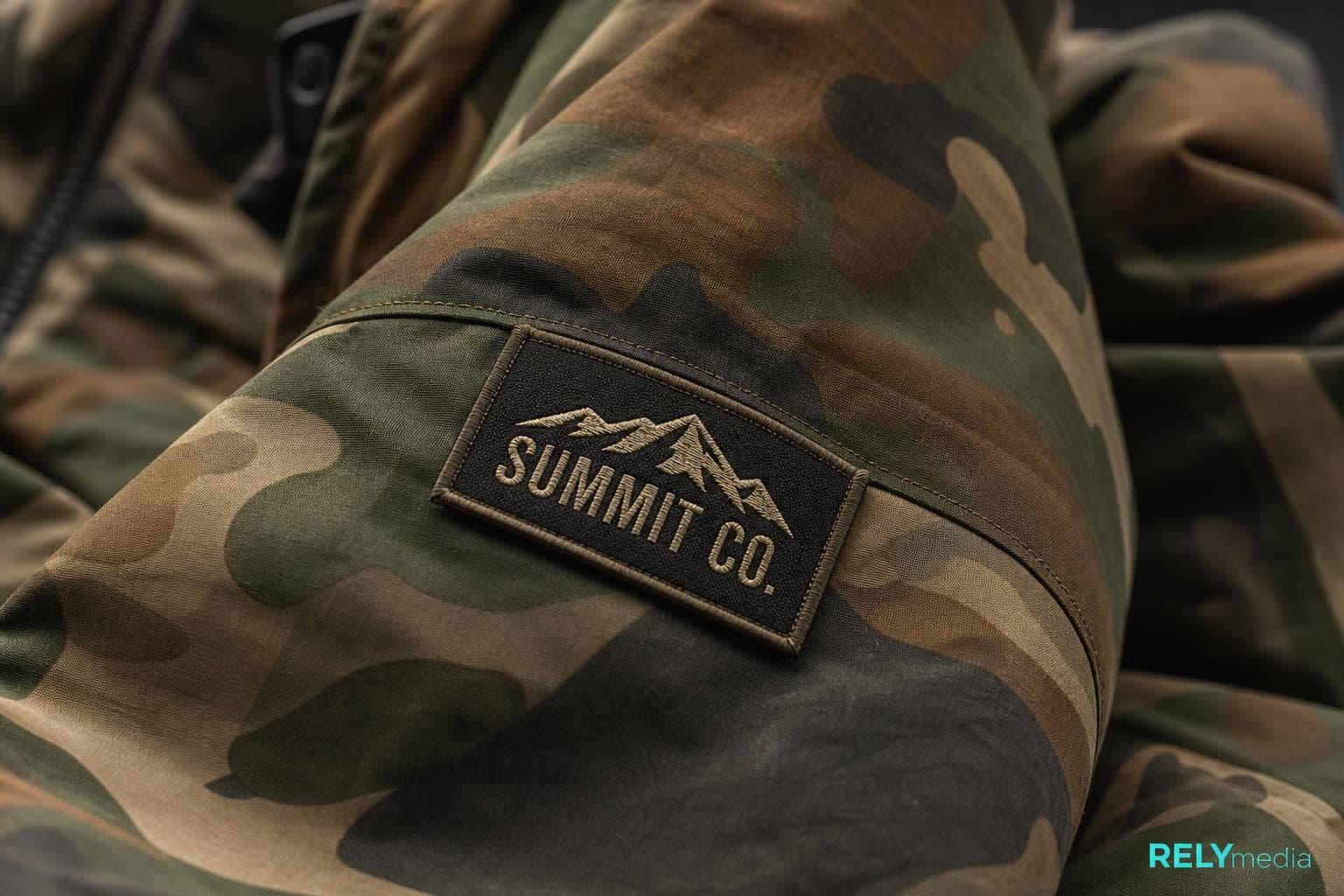
Military camouflage started as pure function. Armies wanted soldiers who were hard to see. Hunters wanted the same edge over deer and ducks.
Then culture caught up. Americans first wore camo as a civilian style in the 1960s, often as a Vietnam War protest. Its popularity has come in waves ever since. The latest wave rides the return of '90s baggy fits and a love of rugged workwear.
Now camouflage fashion is more about identity than hiding. Casual brands use it for an ironic, rugged look. Fashion designers remix it in fresh colors and unexpected fabrics. Veterans and hunters see tradition and pride in the same print. That mix of camouflage history and street appeal makes camo rare — a set of camouflage designs and camouflage styles that mean something different to everyone who wears them.
What Colors Are Used in Camouflage?
Every camo color scheme copies a place. Match the palette to the ground, and the wearer disappears. Here's the quick logic behind the main camouflage color schemes.
- Earth tones — greens, browns, and tan for forests and fields.
- Sand and beige — light, washed-out colors for deserts.
- Grayscale — black, white, and gray for concrete cities.
- Snow whites — white and pale gray for winter terrain.
- Bold colors — pink, blue, and neon for pure fashion, not hiding.
Knowing these color schemes helps you pick a pattern that fits both your audience and your logo.
Types of Camo Patterns and Their Uses
Ready for the main event? Here are the major types of camouflage at a glance, then a closer look at each design.
| Pattern | Colors | Origin | Best For |
|---|---|---|---|
| Woodland | Green, brown, black, tan | US military, 1981 | Outdoor brands, uniforms, streetwear |
| Desert | Tan, beige, brown | US military, 1980s–90s | Warm-weather crews, promo gear |
| Urban | Gray, black, white | Modern tactical use | Streetwear, event merch |
| Digital | Pixelated blocks | Canada, 1997 | Branded workwear, casual wear |
| MultiCam | Seven blended tones | US, early 2000s | Hunting, performance gear |
| Realtree / Mossy Oak | Photorealistic foliage | 1980s hunting brands | Hunting clubs, outdoor apparel |
| Snow | White, gray, muted black | WWI origins | Winter crews, seasonal gear |
| Fashion / Colorful | Bold, bright shades | 1990s streetwear | Youth brands, high-visibility jobs |
Woodland Camo
This is the print most people picture first. Green, brown, and black shapes sit in a leafy, organic layout. The US military made the M81 woodland pattern standard in 1981, and units wore it well into the 2000s. This forest camouflage still feels timeless.
Best for: outdoor brands, hunting gear, uniforms, and vintage-inspired streetwear. It reads classic, rugged, and a little grungy.
Desert Camo
Desert camo trades greens for sand. The first US desert pattern — the six-color “chocolate chip” — hit the field in the early 1980s and got heavy use in the Gulf War. Soldiers found it too busy, so the three-color DCU replaced it by the mid-1990s.
Best for: outdoor work crews and warm-weather promo apparel. It carries a minimal, sun-faded military nod.
Urban Camo
Urban camo swaps nature for concrete. This urban camouflage uses grayscale tones built to blend into city blocks. Civilians love the urban pattern because it looks modern and clean.
Best for: streetwear brands, event merch, and sports teams that want an edgy, monochrome vibe.
Digital Camo
Digital camo looks pixelated on purpose. Computer algorithms blur the color edges so shapes break up better. Canada's military deployed the first true digital pattern, CADPAT, in 1997. Field studies pegged it as roughly 40% harder to detect at 200 meters than plain olive drab — proof pixelated camouflage works.
Best for: tactical-inspired gear, tactical-inspired clothing, branded workwear, and casual wear with a modern edge. Pixel camouflage might be the most recognizable print in casual fashion today.
MultiCam
MultiCam solves one problem: most patterns only work in one place. Crye Precision built this tactical camouflage in the early 2000s with seven blended tones. It's true multi-environment camouflage, holding up across terrain and lighting.
Best for: hunting apparel, outdoor performance apparel, and serious tactical apparel. This performance clothing anchors tactical clothing that feels functional, modern, and subtle.
Realtree & Mossy Oak
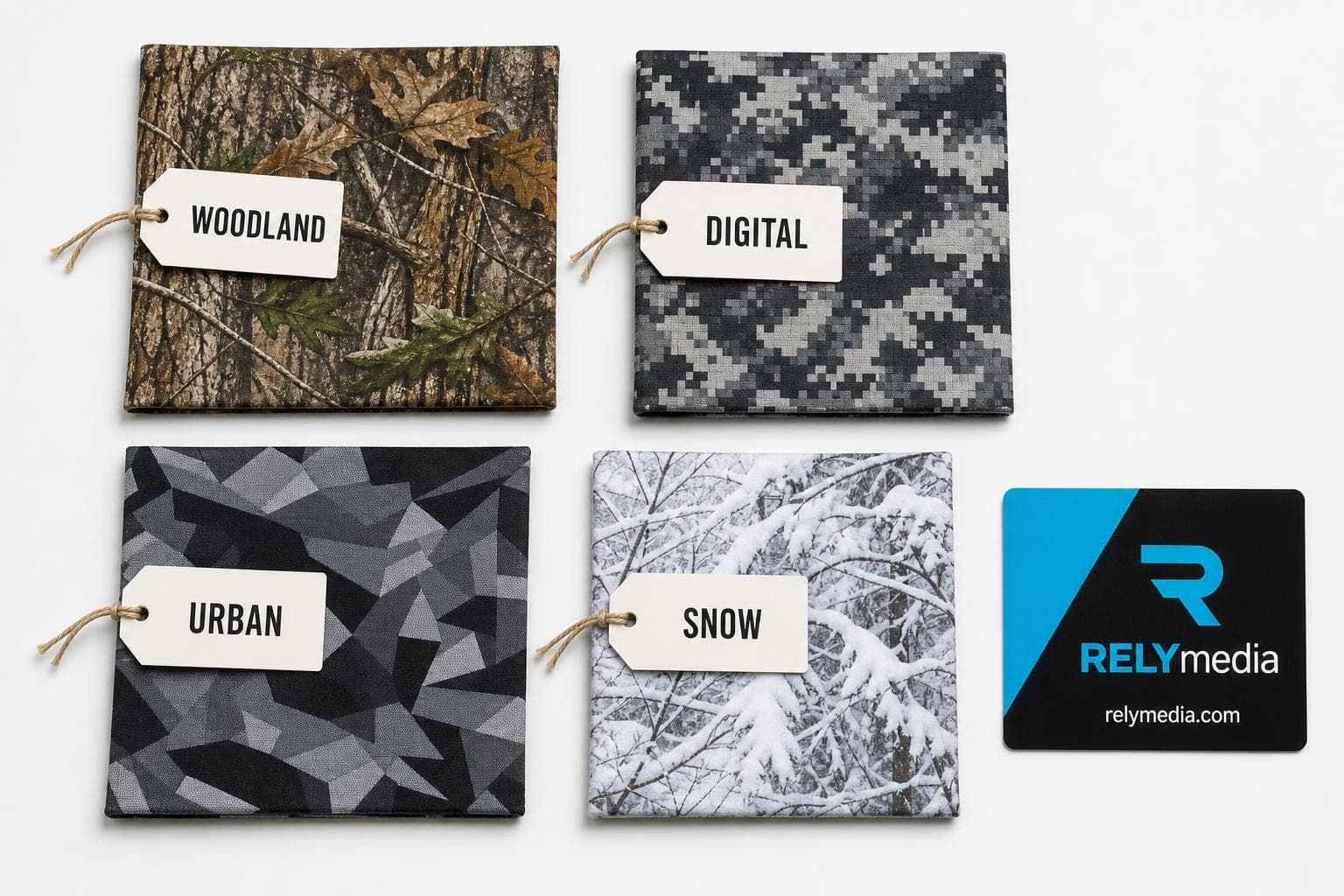
These are the hunter's patterns. Instead of abstract blotches, this hunting camouflage uses photorealistic camouflage — real branches, leaves, and bark. Both launched in the 1980s from hunting-focused brands.
Best for: hunting clubs, outdoor brands, and lifestyle apparel. You'll find them in a hunter's closet far more than on a city street — the heart of hunting clothing, outdoor clothing, and outdoor gear built for the outdoor lifestyle.
Snow Camo
Snow camo blends into winter. This winter camouflage pattern uses white, gray, and muted black to mimic snow-covered ground. Troops used early white overalls as far back as World War I.
Best for: winter sports teams, snow work crews, and seasonal promo gear. Clean and distinctive.
Fashion & Colorful Camo
Fashion camo flips the whole idea. It keeps the classic shapes but swaps earth tones for pink, blue, or neon. Colorful camo won't hide you — it does the opposite. It leans hard into camouflage aesthetics.
Best for: youth brands, event merch, and jobs that need high-visibility apparel. Playful, bold, and made to be seen.
Is Camo Still in Style?
Short answer: yes. Camo keeps cycling back, and right now it's riding high.
The current wave pairs military-inspired fashion with '90s nostalgia. Streetwear labels lean on it for youth fashion and rugged style. Modern streetwear collections revive faded woodland prints as vintage-inspired apparel and vintage-inspired fashion. Camo rides fashion trends without ever fully leaving. Even utility fashion and functional fashion borrow the look. It slots neatly into modern fashion because it flexes.
One person sees tradition. Another sees a bold graphic. That range keeps it fresh season after season — and it's why camo apparel stays a smart bet for custom merchandise and everyday casual wear.
How to Customize Camo Apparel
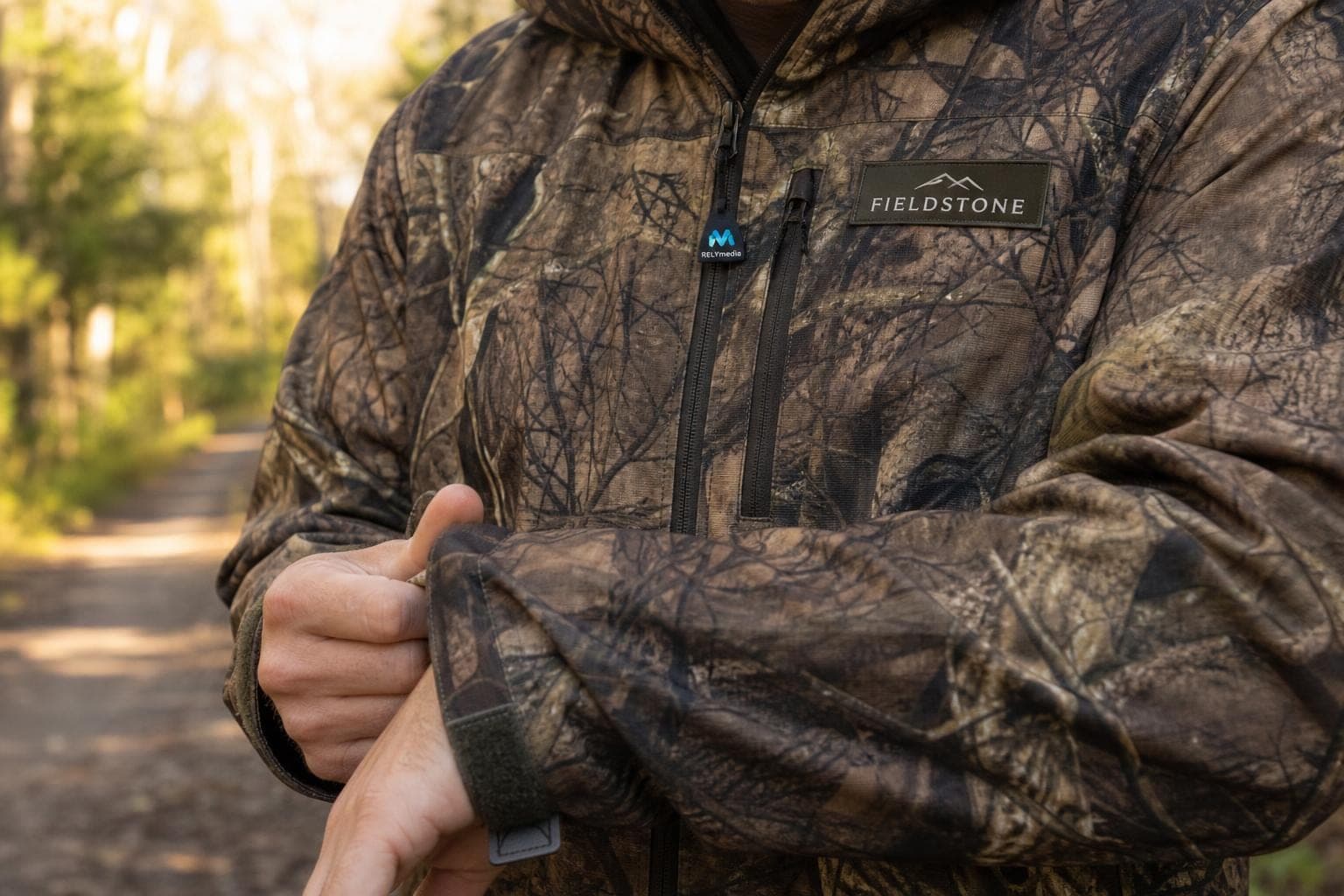
Camo is loud by nature. The trick of apparel customization is putting your brand on top without losing it in the print. The common mistake? Adding a busy logo to an already-busy pattern — the two fight and both lose. Smart camo customization and custom branding keep your logo sharp on custom camouflage apparel.
Decoration Options
Busy print needs simple, high-impact garment decoration. These apparel decoration techniques work best:
- Embroidery — custom embroidery adds texture and contrast that lasts, and embroidered logos sit proud of the fabric.
- Patches — they sit right on top of the pattern, so nothing gets swallowed.
- Screen printing — this garment printing method lays down bold, high-contrast graphics fast.
For line-based apparel graphics, keep the lines thick and the idea simple. Filled-in graphic overlays beat thin, detailed ones every time. Whether you choose apparel printing, logo embroidery, or camouflage printing, contrast saves the design. Good print customization and clean custom printing treat the camo as a backdrop, not a competitor — the same rule holds for custom embroidered apparel and embroidered apparel of every kind.
Getting the Contrast Right
Contrast is everything. Busy earth tones will bury a plain black or gray logo. A sharp yellow or orange, though? That pops right off the fabric and boosts logo visibility.
So use high-contrast logos and clean borders. Smart camouflage logo design and careful logo customization let your brand color fight the camo — and win. Solid clothing branding always starts with contrast.
Logo Placement Ideas
Where you put a logo matters as much as how it looks. Smart spots include:
- Chest — the go-to, since it usually lands on a calmer part of the print.
- Sleeves — great for small logos, flags, or secondary branding.
- Yoke — just below the back collar, visible from behind without clutter.
- Accessory zones — hat sides or hoodie panels that dodge the busiest print.
Popular Camo Garments
Camo shows up on almost everything now. The most popular custom garments include:
- Custom hoodies — camo hoodies are the streetwear staple.
- Camo jackets — the classic, still the boldest choice.
- Camo T-shirts — easy everyday branding.
- Camo hats — small logos land clean on the front or side.
- Camo backpacks — rugged and practical.
Different camouflage fabrics also change the feel, from soft fleece to tough workwear cotton.
When to Use Camo in Branded Apparel
Camo isn't right for every brand. For the right one, it's a bold way to shake up your custom apparel and branded merchandise. It tends to land well for these groups:
- Veteran groups and military groups — camouflage uniforms and military apparel make a natural nod to service and tradition.
- Workwear and trades — rugged apparel, durable clothing, utility clothing, and functional apparel suit field crews and work crews. Custom workwear and durable workwear give outdoor teams a tough, unified look. Branded workwear and rugged outdoor clothing read as outdoor workwear built to last.
- Corporate and team accounts — corporate apparel, team apparel, custom team uniforms, company uniforms, and promotional uniforms all work in muted camo. Add event merchandise for a launch or trade show.
- Streetwear and promo gear — casual brands and modern streetwear tap instant youth appeal. Promotional gear, promotional branding, and outdoor merchandise ride the trend.
- Hunting, fishing, and outdoor clubs — hunting clubs, nature groups, sports teams, tactical teams, and outdoor enthusiasts already wear this style. Branded outdoor apparel and hunting merchandise feel authentic to them.
- Event organizers — memorable merch that stands out in a crowd.
How to Choose the Right Camo Pattern
Picked camo for your next custom garments? Now narrow the field. Four quick questions get you there:
- 1Match the vibe to your audience. Tactical crowd? Try MultiCam or digital. Practical hunters? Realtree or Mossy Oak. Style-first? Go woodland or colorful.
- 2Factor in season and location. Snow camo won't help in the Southeast. Desert tones look odd in New England.
- 3Align with your logo colors. Muted urban camo may complement a clean logo better than a rich, detailed print. Let your camouflage color schemes support your brand identity.
- 4Tweak your logo to pop. Love a pattern but the logo clashes? Switch to alternate brand colors or go monochrome.
Design Custom Camo Apparel With RELYmedia
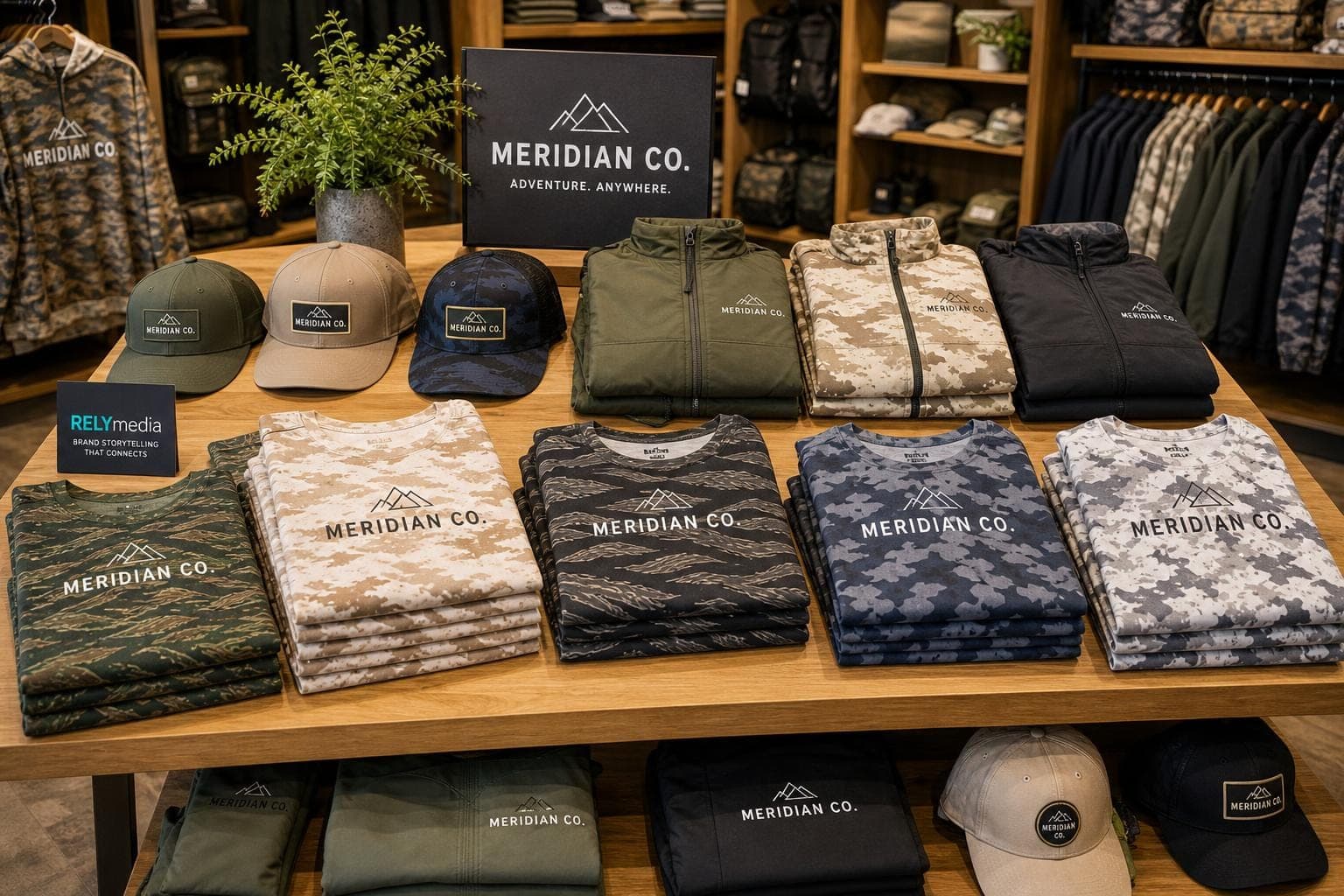
Once you've picked your pattern, you need a partner who can print it right. That's where RELYmedia comes in. As a US-based promotional products and branding solutions company, RELYmedia turns camo into standout custom merchandise for businesses of every size.
You get real apparel branding solutions: custom apparel design, camouflage logo design, and print customization tuned to your visual identity. From custom clothing and personalized apparel to branded camouflage gear and custom printed apparel, every custom garment design supports your brand identity and visual branding. RELYmedia handles custom promotional products, outdoor promotional apparel, and custom camouflage clothing with fast turnaround and quality that holds up — backed by hundreds of five-star reviews. Tight deadline? RELYmedia delivers without cutting corners.
Looking for camouflage branding ideas, custom logo apparel, or personalized camouflage clothing? From promotional apparel and promotional clothing to custom camouflage merchandise, the team covers camouflage apparel printing and merchandise printing end to end.
Ready to build your camo lineup?
Reach out to RELYmedia for camo-friendly styles, free mockups, and expert customization advice.
Ready to print your team's name on premium apparel?
Fill in your details and a RELYmedia specialist will come back to you with a custom quote — fast turnaround, no obligation.
- ⚡Same-day response on business days
- 🎨Free design assistance included
- 🚚Rush order & fast delivery available
- 💰Price beat guarantee on every order
Camo Patterns FAQ
What's the most popular camo pattern?
Woodland camo. Its green-and-brown look is the print most people picture, and it crosses easily from uniforms to streetwear.
What's the difference between MultiCam and woodland?
Woodland uses bold green and brown shapes for forests. MultiCam blends seven softer tones to work across many environments.
Is digital camo still used?
Yes. Pixelated patterns remain common in tactical gear and casual apparel, though militaries now mix in blended designs like MultiCam.
What colors go with camo?
High-contrast shades work best. Orange, yellow, and white make logos pop against busy earth tones.
What's the best camo pattern for hunting?
It depends on your terrain. Realtree and Mossy Oak shine in the woods, snow camo suits winter hunts, and MultiCam flexes across mixed ground.
Is camo a color or a pattern?
A pattern. It uses colors like green and tan, but the shapes are what define it.
Final Thoughts on the Types of Camo
Camo has traveled a long road — from military history to the hunting stand to the streetwear rack. The pattern that once hid soldiers now helps brands get noticed. That's the beauty of it.
Once you know the types of camo, choosing one gets easy. Match the pattern to your people, your season, and your logo. Then let the print do the talking.
Whether you're outfitting a crew, a team, or a full customer base, the right camo tells a story and sets you apart.
Start your custom camo order with RELYmedia today and make an impression that lasts.
Our Customer Feedback


Mike Larson
 (5)
(5)Unbelievable Turn-around
We are stunned with how quickly we received our order. It turned out perfect, and all of our interactions with staff have been fantastic. Thank you so much!
Jana
(5)Great customer service and on-time delivery with product as advertised!
The product arrived exactly as advertised and on time. This company was very easy to work with, and the price was great!
Sarah
(5)Quick Turn-Around and Immediate Communisaton
I've ordered a couple times from RELY. My initial order was not time sensitive so we had time to get it correct. We went back and forth with proofs until I felt comfortable. When I had a question, the sales team was very responsive. When it came to my re-order, I needed it fast. They responded and got it to me right on time.
Rob
(5)Fabulous experience, great suggestions from the staff!
The sales staff had great suggestions and were very helpful in the process to, in the end, get exactly what was necessary for our use!
Emily
(5)Great service!
Everything went well as anticipated, and as planned. Service was superb & shipment was expedited in a speedy fashion! Thank you for your service!
Freddy
(5)Thumbdrives
2nd time I have ordered from these guys and they have a good product for the price. The delivery time was as said with no troubles. Would recommend and will be reordering again.
Patty
(5)This is a top notch company. Awesome as what they do. Highly recommend.
If you are looking for a company that says what they do and then do what they say - RELYmedia is for you!!! We have done a couple critical orders with RELYmedia and they were ahead of schedule and the items were perfect. We will be utilizing their talents again!!!
Blanca
(5)Very responsive,
All my inquiries were handled in a very timely fashion. My contact was courteous and helpful. Items ordered were received very quickly. Thanks for the superior service!
Andrew
(5)Overall great experience.
They are friendly and knowledgeable. They are well priced, and ship fast.
Trusted By