What is a beanie? | How to wear a beanie
August 6, 2026 · 14 min read
You've seen them on ski slopes, city sidewalks, and college campuses. You've probably worn one yourself without ever asking what makes it a “beanie” instead of just... a hat. So let's settle it once and for all.
A beanie is a brimless, close-fitting cap that hugs your head and typically covers your ears. That's the short answer. But there's a lot more to this humble piece of winter headwear than a dictionary definition can capture, from its blue-collar roots to the dozen or so ways you can wear one today. Grab a cup of coffee. We're about to cover everything.
What Is a Beanie?
Here's the beanie definition in plain terms: a soft, brimless cap made from knit or woven fabric, designed to fit snugly around the head and ears. No stiff brim, no structure, just a stretch-fit hat that molds to your head shape.
People call beanies by plenty of other names, too. You might hear:
- Skull cap
- Skully
- Stocking cap
- Ski hat
- Wooly hat
- Knit cap
- Knit hat
- Warm hat
- Insulated hat
All of these point to the same basic idea: a cold-weather hat you pull over your head for warmth, whether you're treating it as pure outdoor apparel or as a genuine fashion accessory for everyday wear. Older generations sometimes used the terms “dinky” or “calot,” though you won't hear those much anymore. And if you've ever wondered about the correct spelling, it's “beanie,” not “binnie” or “benea” (both common misspellings that pop up in searches).
According to Merriam-Webster, a beanie is officially defined as a small, round, tight-fitting skullcap, a definition that's held steady for decades even as the styles built around it have multiplied.
Is a Beanie a Hat or a Cap?
Technically, a beanie counts as both. It's a type of hat because it covers the head, and it's also classified as a cap because it lacks a brim. Think of “cap” as the category and “beanie” as one specific style of casual headwear within it. So yes, a beanie is a hat. It's also, more precisely, a fashion hat and outdoor headwear rolled into one. Both answers are correct, and neither one is wrong.
Beanie Meaning: Where Does the Name Come From?
Ever wonder why it's called a “beanie” and not something else entirely? The answer traces back to early 20th-century American slang. Back then, people used the word “bean” as a casual stand-in for “head.” That's actually where the term “bean ball” came from in baseball, a pitch thrown dangerously close to a batter's head. Etymonline traces the word's first documented use to around 1940, describing it simply as a small, close-fitting hat.
Since this snug little cap traced the exact shape of the head, folks started calling it a beanie. Simple as that. No committee decided it. No brand invented it. Language just evolved that way, one nickname at a time.
The History of the Beanie
So when were beanies invented, exactly? Nobody nailed down a specific date, but the beanie's popularity took off in the early 1900s among American workers, well before it became part of casual fashion or streetwear.
Here's who wore them first:
| Group | Why They Wore Beanies |
|---|---|
| Coal miners | Kept dirt and grime out of their hair |
| Offshore fishermen | Blocked wind and cold on the water |
| Factory and assembly line workers | Prevented hair from catching in machinery |
| College freshmen | Worn them as a fraternity and college tradition |
Factory floors loved the beanie for one simple reason: the lack of a brim meant nothing to snag on equipment. That practical advantage made it standard workwear long before it became a trendy piece of everyday fashion.
By the mid-20th century, college fraternities adopted a version they called the “freshman beanie,” a small, often brightly colored cap new students wore as a rite of passage tied to campus and college traditions. That custom faded over the decades, but it cemented the beanie's place in American culture well beyond the factory floor, eventually crossing over from strict cold-weather activities into a genuine winter fashion staple.
What Are Beanies Made Of?
Beanie fabric has come a long way since the wool caps of the early 1900s. Today, you'll find beanies made from:
- Wool fabric — the original material, still popular for its natural warmth and durable fibers
- Acrylic yarn — soft, affordable, and easy to dye in bold colors
- Cotton fabric and cotton blends — breathable cotton options that stay lightweight and comfortable in milder weather
- Fleece material (polyester fleece) — cozy, moisture-wicking fabric that dries quickly and resists wind
Some beanies step it up with Thinsulate insulation or a sewn-in fleece lining, adding a soft lining and an extra layer of insulation for genuinely cold days. Others use a textured or ribbed knit, which adds visual interest along with a bit of extra stretch thanks to a stretchable knit construction. If you live somewhere winters bite hard, a Thinsulate-lined beanie is worth the extra few dollars. I've tested both a basic acrylic beanie and a Thinsulate-lined one on the same 20-degree morning, and the difference in head warmth after twenty minutes outside was obvious. The lined version retained heat far longer, while the plain acrylic cap let cold air creep in around the seams.
Under the hood, most beanies rely on either a knitted textile (looped yarn, like a sweater) or a woven textile (interlaced threads, like felt). Knitted versions stretch more and hug the head better, which is why nearly every modern beanie you'll find uses some kind of knit construction, whether that's a natural fiber like wool or synthetic fibers like acrylic and polyester. Manufacturers often blend durable fibers with lightweight fabric to strike a balance between warmth and comfort, so the cap doesn't feel heavy after a few hours of wear.
How to Wear a Beanie the Right Way
There's no single “correct” way to wear a beanie, but there is a proper fit for your style and hair type. Most people wear it cuffless and high on the forehead so it won't slide off mid-day. From there, you've got options for head positioning, cuff style, and overall silhouette.
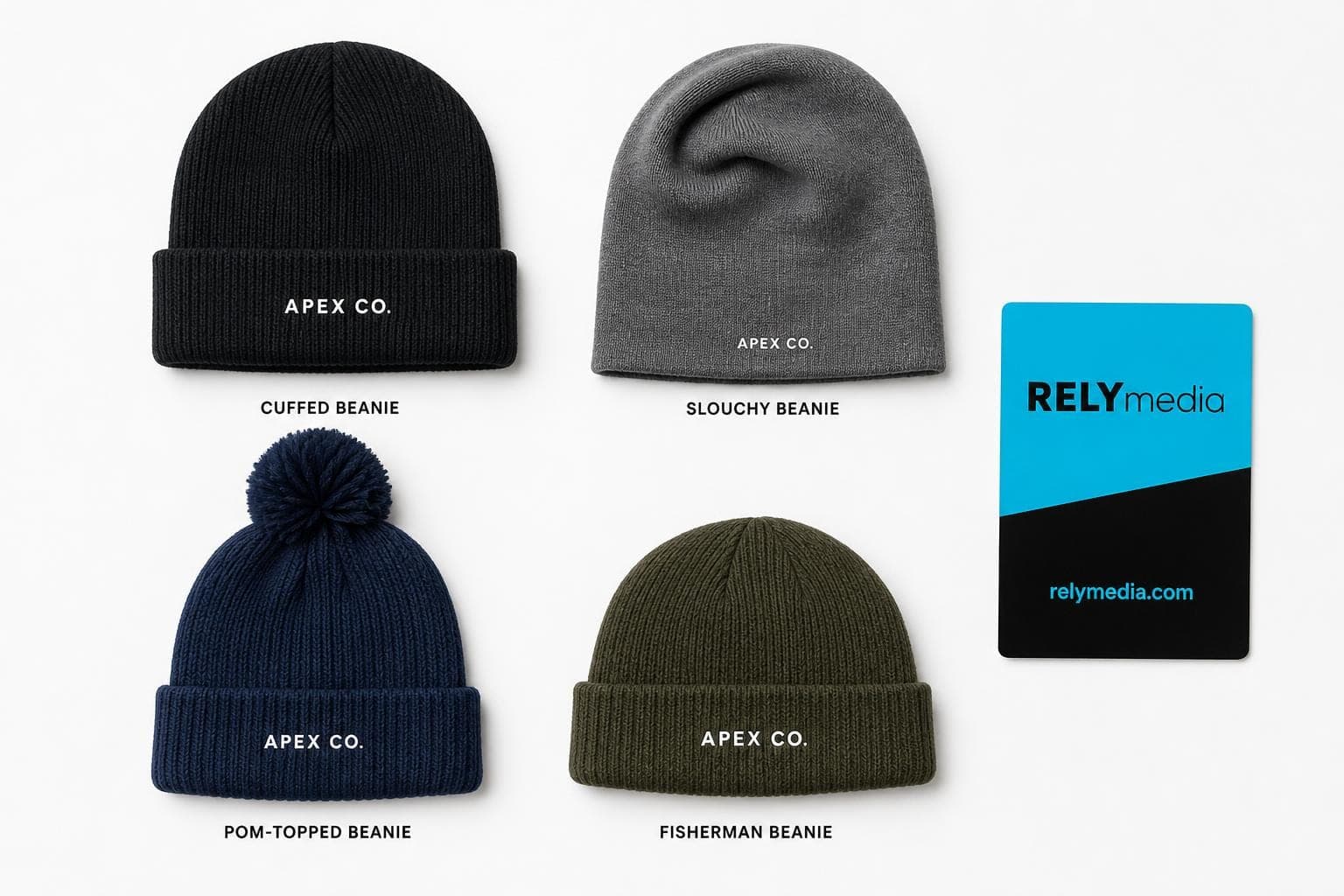
Different Ways to Wear a Beanie
| Style | How It Looks |
|---|---|
| Standard/cuffless beanie | No cuff, covers ears fully for maximum warmth |
| Single-cuff beanie | One folded, rolled cuff, often showcasing a logo or design |
| Double-cuff beanie | Two rolled cuffs stacked for a thicker, sportier look |
| Fisherman beanie | Double-rolled cuff, worn high with ears exposed |
| High-top/peaked beanie | Worn above the ears with a peak, elf-hat style |
| Robin Hood beanie | Cuffed only in back, angled so the cuff vanishes up front |
| Slouchy/oversized beanie | Uncuffed, relaxed-fit, with extra fabric bunched behind the head |
| Pom beanie/bobble hat | Any style topped with a pom-pom for extra flair |
| Visor beanie | Combines a soft knit body with a small visor for sun protection |
Each style changes the whole vibe of an outfit. A slouchy, rolled beanie reads casual and relaxed, closer to street style. A fitted beanie with a single, clean cuff and a logo looks polished enough for a work event or trade show booth. If you're after a snug fit with almost no give, a fitted beanie with minimal stretch does the job; if you'd rather things stay loose and easy, a relaxed-fit beanie is the better call.
Whichever way you wear it, aim for a comfortable fit that doesn't pinch at the temples. A flattering fit sits snug without leaving a red mark across your forehead by the end of the day. Most people default to wearing a beanie above the ears in mild weather and pull it down to wear it over the ears once temperatures drop, so that the same cap can flex between a snug and a slouchy fit depending on the day. Just make sure the exposed ears stay covered whenever the wind chill picks up.
How to Wear a Beanie With Short Hair
Short hairstyles and beanies go together better than most people expect. Push the beanie slightly back on your head so the front-top section of your hair peeks out, providing a bit of forehead coverage without completely hiding your hairline. Angling it back just a touch gives your face framing some breathing room instead of flattening it completely.
Got short curls? Don't hide them. The mix of exposed curls against a snug knit cap creates a sharp, effortless contrast that works for pretty much anyone, regardless of hair texture.
How to Wear a Beanie With Long Hair
Resist the urge to stuff long hairstyles inside the cap. It ruins the smooth, snug silhouette that makes a beanie look good in the first place. Instead, let your hair fall naturally out from under the hat for natural hair framing, as it would with any other hat. Wearing the beanie over the ears is perfectly fine here, since long hair already adds an extra layer of neck warmth.
How to Wear a Beanie With Curly or Thick Hair
Curly and thick hair both benefit from a slightly looser, relaxed fit. Cramming tight curls or thick hair under a snug cuffed beanie can flatten your volume and cause frizz once you take it off. A slouchy or high-top style gives curls room to breathe without flattening your shape, and it works just as well for fine, thin, or straight hair that needs a little extra lift.
A bit of hair styling before you put the beanie on goes a long way, too. A quick finger-comb or light product on straight hair keeps things smooth once the cap comes off, while curly or textured hair usually looks better left alone until after you've taken the beanie off for the day. Fine hair benefits from the lightest possible fabric for hair coverage, since anything too snug can leave a flattened line that takes a while to bounce back from.
How to Choose the Right Beanie for Your Face Shape
Not every beanie style flatters every face, and that's worth knowing before you buy one in bulk for a team or event.
| Face Shape | Best Beanie Style |
|---|---|
| Wide forehead | Chunky-knit or standard beanie |
| Long face | Bobble hat or pom beanie (balances proportions) |
| Round face | Slouchy or oversized beanie for added height |
| Square jawline | Fisherman or high-top style |
| Unsure? | Turn-back cuff beanie — the most versatile, easy to adjust throughout the day |
One quick rule of thumb: pulling a beanie too far forward elongates your face. If that's not the look you're going for, keep it slightly farther back for better overall head positioning.
Benefits of Wearing a Beanie
A beanie does more than just look good. Depending on the material and fit, it can offer real functional comfort and protection:
- Heat retention and thermal insulation — wool and Thinsulate-lined beanies trap heat effectively in freezing temperatures
- Sweat absorption and moisture management — cotton beanies help manage sweat during summer or workouts
- Sun protection and UV protection — a beanie shields the scalp from harsh rays, especially helpful for people with thinning hair
- Scalp protection and friction reduction — smooth, cotton-lined beanies can reduce friction that contributes to traction alopecia and friction alopecia, two forms of hair loss linked to constant rubbing or tension on the scalp.
- Wind protection and breathability — a well-made beanie blocks wind chill while still letting some airflow through, avoiding that stuffy, overheated feeling
- Visibility and safety — reflective-stripe beanies improve visibility for anyone working or exercising outdoors in low light
That last point matters more than people realize. If you or your team spend time outdoors during dawn or dusk, whether hiking, skiing, snowboarding, camping, trekking, or just walking the dog, a reflective safety beanie isn't just a style choice. It's a smart, low-cost upgrade for outdoor recreation and winter sports alike, and it doubles as solid cold-weather protection for outdoor activities like winter hiking or mountain trips where visibility and warmth both matter.
On the health side, a beanie made with the right lining can genuinely help with scalp care. If you or someone you know is dealing with bald spots, hair thinning, or early-stage baldness, a soft cotton- or silk-lined beanie supports scalp health by reducing scalp irritation and hair breakage caused by rough synthetic fibers rubbing against the skin all day. It's not a cure for hair loss prevention on its own, but it's a small, protective headwear choice that won't make things worse.
Popular Beanie Styles and Trends
Beanie fashion trends shift a bit year to year, but a few styles have real staying power as stylish headwear and stylish accessories in their own right:
- Chunky-knit beanies — thick yarn, bold texture, currently one of the most requested styles for custom orders
- Cable-knit beanies — a braided, crossed-stitch pattern that reads as classic and put-together
- Double-knit beanies — two fabric layers knitted together for extra durability and warmth
- Ribbed or textured knit beanies — added stretch and a slightly dressier look
- High-top beanies — a taller, structured crown that's grown popular alongside the wider streetwear revival
- Baby beanies — smaller, softer versions designed for newborns, popular for hospital gift shops and baby-shower giveaways
Regardless of which cut you pick, the underlying knit fabric determines how the hat behaves. A tight-knit fabric holds its shape and looks a bit more tailored, while a looser knit stretches more and drapes into that slouchy look people love for casual, off-duty days.
How to Care for Your Beanie
Treat your beanie gently, and it'll outlast a season or two of rough handling.
- 1Hand washing in cold water with a mild detergent whenever possible, since this is gentler than machine washing.
- 2If you're using a washing machine, place the beanie in a mesh laundry bag (the kind used for delicate items) and run a delicate cycle on cold water.
- 3Skip the dryer. Let it air-dry flat instead to prevent shrinking, stretching, and snagging along the seams.
Air drying matters more than people assume. Heat from a dryer can shrink certain fabrics and damage embroidered or printed logos over time, which is a real problem if you're managing branded merchandise for an entire team or event. Good fabric care and clothing maintenance habits like these go a long way toward fabric preservation, especially for beanies you plan to wear season after season.
Custom Beanies as a Promotional Product
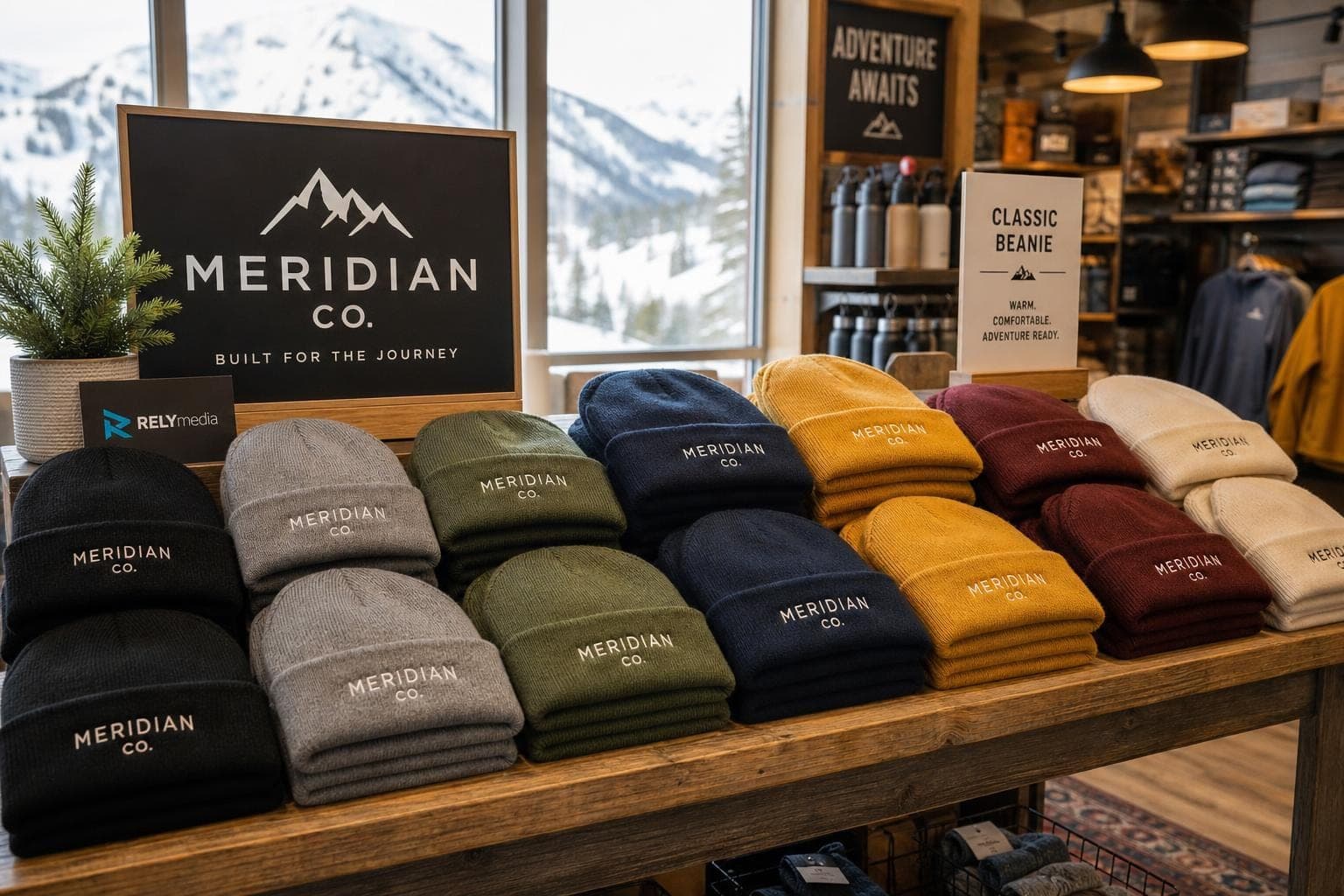
This is where a simple winter accessory turns into a genuine marketing tool.
Why Beanies Work as Branded Merchandise
Beanies check every box a promotional apparel item needs to hit: they're useful, they're worn in public for months at a time, and they put your company logo at eye level. Unlike a pen that gets buried in a drawer, a beanie gets worn on a chairlift, at a bus stop, and around campus. That's sustained, walking brand awareness and brand recognition that most logo apparel simply can't match.
Compared to other promotional giveaways, a well-made beanie also builds brand identity more effectively, since it's tied to a season people genuinely look forward to. That's a big part of why bulk ordering and bulk purchase for wholesale apparel and wholesale beanies spike every fall, as retail apparel teams and corporate branding departments stock up before the first cold snap hits. For companies weighing personalized apparel options, a custom-branded beanie usually beats generic corporate gifts and promotional merchandise in terms of visibility per dollar spent, since it's worn outdoors in front of dozens of people each day rather than sitting on a desk.
RELYmedia, a promotional products and branding company based in Eagan, Minnesota, has built its reputation on exactly this kind of practical, high-visibility branded merchandise. With fast turnaround times and a track record of hundreds of five-star reviews, RELYmedia helps organizations turn everyday items like beanies into consistent, wearable advertising for their next promotional campaign or business promotion push.
Who Should Use Promotional Beanies
Custom beanies make sense for a wide range of organizations:
- Colleges, universities, and schools (enrollment events, campus tours, school fundraisers, college promotions, and traditions)
- Ski resorts and outdoor adventure companies
- Restaurants and bars
- Hospitals (baby beanies for gift shops)
- Nonprofits and fundraising organizations (fundraising merchandise, school merchandise)
- Sports teams and arenas (giveaway nights, customer giveaways, employee gifts, and employee apparel)
- Airports, zoos, theme parks, and arcades
- Any business running trade show giveaways, event marketing, or a broader custom merchandise strategy
How to Personalize Your Beanie Order
Ordering custom beanies through RELYmedia's online ordering system is refreshingly simple. Pick your style from their full product selection, enter your quantity and ZIP code, then choose your color, imprint location, and customization style, whether that's knitting-friendly embroidery, custom embroidery, custom printing, decorative patches, or a debossed faux leather patch. This kind of apparel customization and product personalization is what separates a generic wholesale product from something that actually represents your brand.
You can handle the artwork upload yourself or send your digital artwork over later, and RELYmedia's graphic design team can help clean it up if needed, right down to a debossed patch or other custom artwork detail. Either way, you won't pay a dime until you've approved a digital proof of your custom logo apparel, and a graphic account manager is available to help refine the artwork.
A few practical details worth knowing before you order from this apparel supplier:
Free delivery
Free shipping on every beanie style
Free setup
Setup is free on most styles
Low minimum
Minimum order quantity starts at just 6 units
Rush production
Available if you're working against a deadline
Online customization tools
Preview your logo before you commit
Ready to put your logo on a product people actually want to wear?
Explore RELYmedia's custom beanie collection and get a digital proof started today.
Beanies Across the Seasons and Your Lifestyle
A beanie isn't strictly a deep-winter accessory anymore. It's become one of those everyday comfort pieces that moves with you through the whole cold-weather calendar.
- Winter season and snow season: A thicker, insulated fabric beanie handles freezing temperatures, windy weather, and snow gear duty on the slopes, and it belongs on any winter essentials checklist.
- Fall and shoulder-season wear: A lighter cotton or acrylic beanie adds just enough outdoor warmth without overheating during a crisp afternoon walk, especially useful once cold-weather mornings start creeping in.
- Travel wardrobe: A packable knitted hat takes up almost no space in a bag, making it a staple of winter travel and any trip where weather protection matters but luggage space doesn't allow for bulky winter accessories.
- Active and outdoor living: From winter hiking and mountain trips to everyday errands, a beanie fits an active lifestyle without looking like dedicated adventure gear.
This kind of cozy fashion has also found a home in casual lifestyle settings well beyond outdoor comfort. Holiday apparel lines lean heavily on beanies each year; cable-knit and pom styles show up constantly as knitted accessories and cozy accessories, and mountain lifestyle brands treat the beanie as a core piece of their winter wardrobe rather than an afterthought. The right beanie also helps with temperature regulation and moisture control on active days, offering breathable comfort and thermal warmth without the bulk of a heavier hat, plus a touch of lightweight comfort that makes it easy to forget you're even wearing one. Whether you're layering it under a hood for extra wind protection or wearing it solo with a jacket, it's one of the few pieces of trendy winter wear that works in practically any cold-weather dressing situation and fits comfortably into any winter lifestyle without a second thought.
Beanie vs. Other Winter Hats: What Sets It Apart
It helps to see where the beanie sits alongside its winter-wear cousins, since people often lump all knitted hats into one bucket.
| Hat Type | Key Difference from a Beanie |
|---|---|
| Trapper hat | Has ear flaps and often real or faux fur; bulkier than a beanie |
| Bucket hat | Has a brim all the way around; suited to sun, not snow |
| Balaclava | Covers the full face and neck; a beanie leaves the face open |
| Newsboy cap | Structured with a small brim and a rounded crown; not stretchy like a knitted hat |
A beanie wins out over most of these for one simple reason: it's the most versatile piece of layered clothing you own. It slides under a hood, pairs with a scarf, and adds almost no bulk, which is exactly why it remains a go-to across cold-weather clothing collections year after year.
Ready to print your team's name on premium apparel?
Fill in your details and a RELYmedia specialist will come back to you with a custom quote — fast turnaround, no obligation.
- ⚡Same-day response on business days
- 🎨Free design assistance included
- 🚚Rush order & fast delivery available
- 💰Price beat guarantee on every order
Frequently Asked Questions About Beanies
What is a beanie hat?
A beanie hat is a brimless, snug-fitting cap, usually knit or woven, worn over the head and ears for warmth or style.
Is a beanie a cap or a hat?
Both. So if you've ever asked, “Is a beanie a hat, is a beanie a cap, or is a beanie considered a hat,” the answer is yes across the board. A beanie is a specific style of cap, and a cap is a subcategory of hat, so it's correct to call it either one, and it absolutely counts as a hat.
When was the beanie invented?
There's no exact date of invention on record, but beanies became widely worn among American laborers, including coal miners and factory workers, in the early 1900s. That's the honest answer to who invented beanies, too. No single inventor gets the credit.
Why are beanies called beanies?
The name comes from early 1900s American slang, where “bean” was used casually to mean “head.”
What is the beanie's origin?
Its roots trace back to blue-collar workwear in the early 1900s, long before it crossed over into mainstream fashion.
How do you put on a beanie?
Pull it down over your head starting from the front, then adjust the back and sides until the fit feels snug but not tight. That's really all there is to it.
How do you wear a beanie correctly?
Most people wear a beanie high on the forehead, uncuffed, letting hair fall naturally from the sides. From there, the correct way to wear a beanie comes down to personal preference and hair length. There isn't one single proper way to wear a beanie; there's a way that fits you.
What does a beanie look like?
Picture a rounded, brimless cap that hugs the head closely, sometimes with a folded cuff around the bottom edge and occasionally topped with a small pom-pom.
How do you spell beanie?
B-E-A-N-I-E. Common misspellings include “binnie” and “benea,” but “beanie” is the only correct spelling.
What's the difference between a beanie and a knit cap?
Not much. “Knit cap,” “stocking cap,” and “beanie” are largely used interchangeably in the US, though “knit cap” technically refers to the knitting method rather than the style itself.
Conclusion
A beanie isn't just a cold-weather afterthought. It's a piece of headwear with real working-class history, genuine functional benefits, and enough style variety to suit practically anyone's winter wardrobe. Whether you're picking one out for a snowy commute or sourcing hundreds of them for a company giveaway, understanding the fit, fabric, and styling options makes all the difference.
If your organization wants to put a logo on something people will actually wear all season long, RELYmedia makes the process simple and fast.
Backed by a reputation that hundreds of five-star reviewers trust. Get your custom beanie order started with RELYmedia today and turn a simple winter hat into your next great branding win.
Our Customer Feedback


Mike Larson
 (5)
(5)Unbelievable Turn-around
We are stunned with how quickly we received our order. It turned out perfect, and all of our interactions with staff have been fantastic. Thank you so much!
Jana
(5)Great customer service and on-time delivery with product as advertised!
The product arrived exactly as advertised and on time. This company was very easy to work with, and the price was great!
Sarah
(5)Quick Turn-Around and Immediate Communisaton
I've ordered a couple times from RELY. My initial order was not time sensitive so we had time to get it correct. We went back and forth with proofs until I felt comfortable. When I had a question, the sales team was very responsive. When it came to my re-order, I needed it fast. They responded and got it to me right on time.
Rob
(5)Fabulous experience, great suggestions from the staff!
The sales staff had great suggestions and were very helpful in the process to, in the end, get exactly what was necessary for our use!
Emily
(5)Great service!
Everything went well as anticipated, and as planned. Service was superb & shipment was expedited in a speedy fashion! Thank you for your service!
Freddy
(5)Thumbdrives
2nd time I have ordered from these guys and they have a good product for the price. The delivery time was as said with no troubles. Would recommend and will be reordering again.
Patty
(5)This is a top notch company. Awesome as what they do. Highly recommend.
If you are looking for a company that says what they do and then do what they say - RELYmedia is for you!!! We have done a couple critical orders with RELYmedia and they were ahead of schedule and the items were perfect. We will be utilizing their talents again!!!
Blanca
(5)Very responsive,
All my inquiries were handled in a very timely fashion. My contact was courteous and helpful. Items ordered were received very quickly. Thanks for the superior service!
Andrew
(5)Overall great experience.
They are friendly and knowledgeable. They are well priced, and ship fast.
Trusted By