

Custom Sticky Notes: How the Adhesive Works and What to Order
July 17, 2026
Sticky notes end up on monitors, filing cabinets, walls and the inside covers of notebooks. That is what makes a printed pad a useful giveaway: the person who uses it sees your logo every time they write a reminder. It only works if the notes stay where they are put.
This guide explains how sticky note adhesive holds, why some surfaces work better than others, which sizes are common, and what to ask for when you order custom sticky notes.
By the RELYmedia editorial team · Updated November 2, 2026
How Sticky Notes Work: The Science Behind the Stick

Pressure-Sensitive Adhesive and Van der Waals Forces
The strip on the back of a sticky note is a pressure-sensitive adhesive. It does not dry or cure like glue. It bonds when you press it on, because the soft adhesive flows into close contact with the surface and molecular attractions such as van der Waals forces hold the two together. Those forces are weak and short-range, so the bond is strong enough to hold a sheet of paper and weak enough to let go when you peel it.
Why Sticky Note Adhesive Is Strong Yet Removable
The adhesive started as a failed experiment. In 1968, 3M chemist Spencer Silver was trying to make a very strong adhesive and instead made a low-tack one that could be stuck and restuck. His patent for acrylate copolymer microspheres (granted in 1972) describes small, tacky, elastic spheres rather than a flat film. Because only part of each sphere touches the surface, the contact area stays small, and that limited contact is what lets the note come off cleanly.
How Long Is a Sticky Note Adhesive Effective?
On a clean, smooth surface, a note can stay put for a long time. What wears the adhesive out is reuse and dirt. Every time a note is peeled off and pressed on again, the strip picks up dust, skin oils and paper fibers, which leave less clean adhesive to make contact. A note that gets moved around a project board several times a day loses its grip sooner than one that is placed once.
Which Surfaces Sticky Notes Hold Best On

The same pressure-sensitive adhesive behaves differently depending on what it is pressed onto. Smoothness, surface energy and cleanliness all change how much of the adhesive actually touches the surface.
| Surface | How notes usually hold | Why |
|---|---|---|
| Glass, plastic monitor bezels | Well | Smooth and non-porous, so the adhesive makes full contact |
| Painted metal (filing cabinets) | Well | Smooth, hard finish; holds best when clean |
| Painted drywall | Fair | Light texture and dust reduce contact |
| Wood, especially raw or textured | Poorly | Grain and pores leave gaps under the adhesive |
| Corkboard, fabric partitions | Poorly | Porous and uneven; a pushpin works better |
Press the note on firmly along the whole adhesive strip, and peel it off sideways rather than straight up. Both habits keep the strip flat and clean, so it holds longer.
For walls, doors, wood and other vertical or textured surfaces, high-tack notes are the better choice. 3M introduced Post-it Super Sticky Notes in 2003 with a stronger glue for vertical and non-smooth surfaces, and many promotional pads are offered with a similar high-tack or full-adhesive option.
From Hymn Book Bookmark to Office Staple
Silver's adhesive had no clear use for years. In 1974 his 3M colleague Art Fry, tired of paper bookmarks falling out of his church choir hymnal, put the adhesive on small pieces of paper. 3M test-marketed the product as “Press 'n Peel” in four cities in 1977 with poor results, renamed it Post-it Notes, and launched it across the United States in 1980.
Post-it Canary Yellow and the Color Trademark Story
The famous yellow was an accident too: the lab next door happened to have yellow scrap paper. Today both the Post-it name and the Canary Yellow color are registered 3M trademarks, which is why other makers sell “sticky notes” rather than “Post-its”. Post-it is one of several brands people use as a generic word; see our list of brand names used generically.
Common Sticky Note Sizes
The classic sticky note is 3 x 3 inches. Most suppliers offer a handful of standard sizes around it, and custom pads can often be cut to a shape. Pick the size by how the notes will be used:
| Size | Typical use |
|---|---|
| 1.5" x 2" | Short reminders, page markers, small giveaway pads |
| 3" x 3" | The standard note; fits a monitor edge and most desk dispensers |
| 3" x 4" or 4" x 3" | More room for a logo plus a lined writing area |
| 4" x 6" | Lists and meeting notes; good for a large logo or a calendar |
What to Specify When You Order Custom Sticky Notes

Two pads can look identical in a product photo and behave very differently on a desk. Ask about these points before you order:
- 1Adhesive grade: standard repositionable, high-tack, or a full-adhesive back. Choose high-tack if the notes will go on walls, wood or monitors handed out at a trade show.
- 2Size and shape: a standard size from the table above, or a die-cut shape such as a house, a tooth or a speech bubble.
- 3Sheet count per pad: more sheets keep the pad in use for longer.
- 4Imprint: one or two spot colors, or full color; and whether every sheet is printed or only some of them.
- 5Writing space: a logo in one corner leaves room to write; a full-bleed design looks bolder but is harder to use.
- 6Packaging: plain pads, cubes, or pads in a cover or a desk caddy with a pen.
- 7A sample or a proof, so you can check the print and the stick before the full run.
Best Uses for Promotional Sticky Notes
Sticky notes are low cost per piece and get used every day, which makes them a good fit for trade show tables, real estate and insurance mailers, school and clinic reception desks, and new-hire welcome kits. Pair them with custom notebooks for a desk set, or browse custom sticky notes by size and adhesive.

Put your logo on sticky notes people keep on their desk
Compare sizes, adhesive options and imprint colors, then request a quote.
Ready to put your logo on branded sticky notes?
Fill in your details and a RELYmedia specialist will come back to you with a custom quote. Fast turnaround, no obligation.
- ⚡Same-day response on business days
- 🎨Free design assistance included
- 🚚Rush order & fast delivery available
- 💰Price beat guarantee on every order
Shop custom sticky notes
See all notepads & sticky notes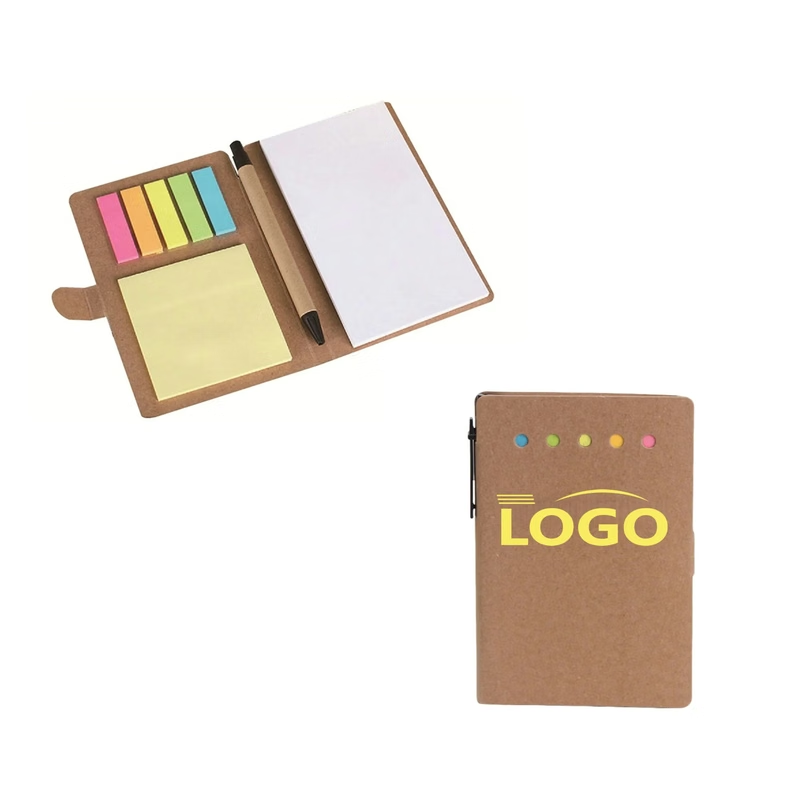
2-In-1 Sticky Notes And Notepad
$1.14 - $3.14
View product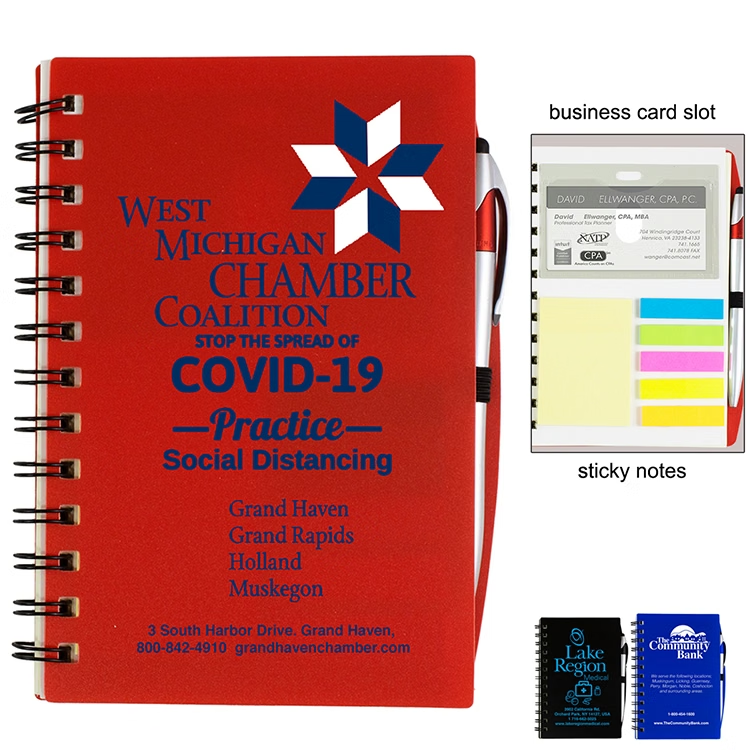
Allegheny Stylish Spiral Sticky Notes, Flags and Pen Notebook
$2.54 - $2.86
View product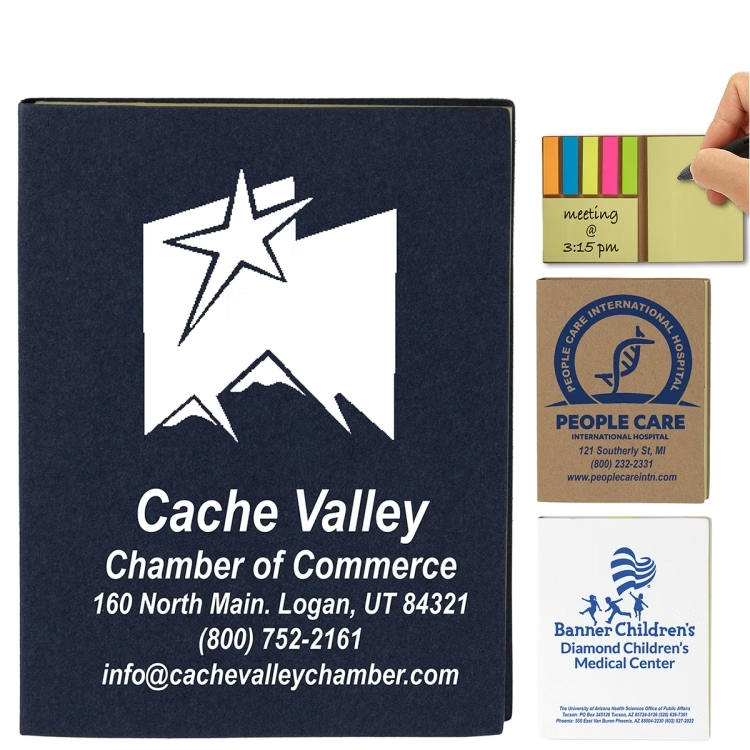
LOOMIS Small Eco Inspired Cover Sticky Notes & Flags
$0.92 - $1.11
View product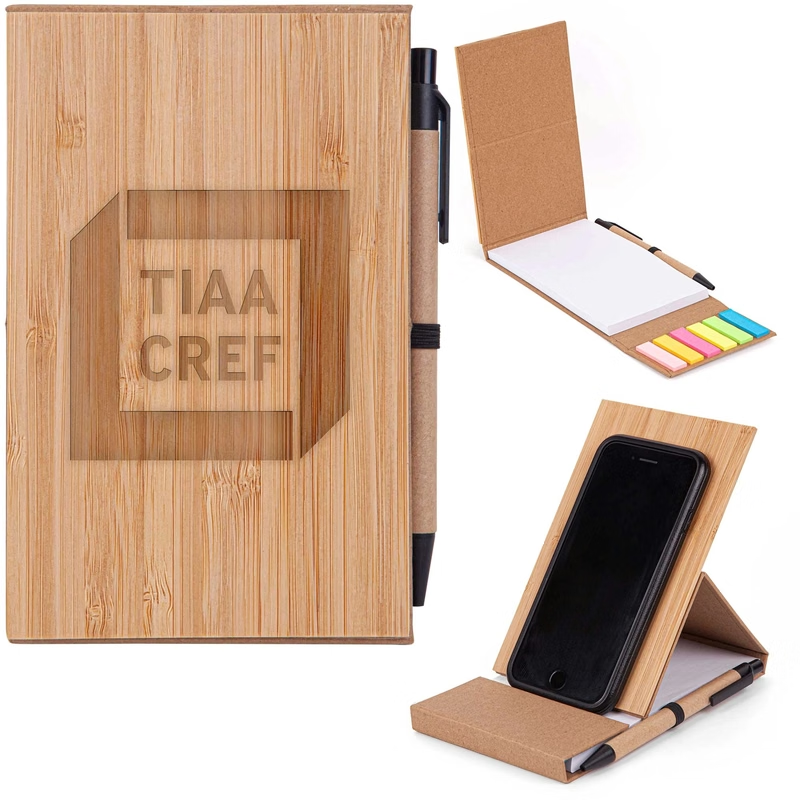
4x6 Bamboo Phone Holder Notepad & Pen Set with Sticky Notes
$4.55 - $5.12
View product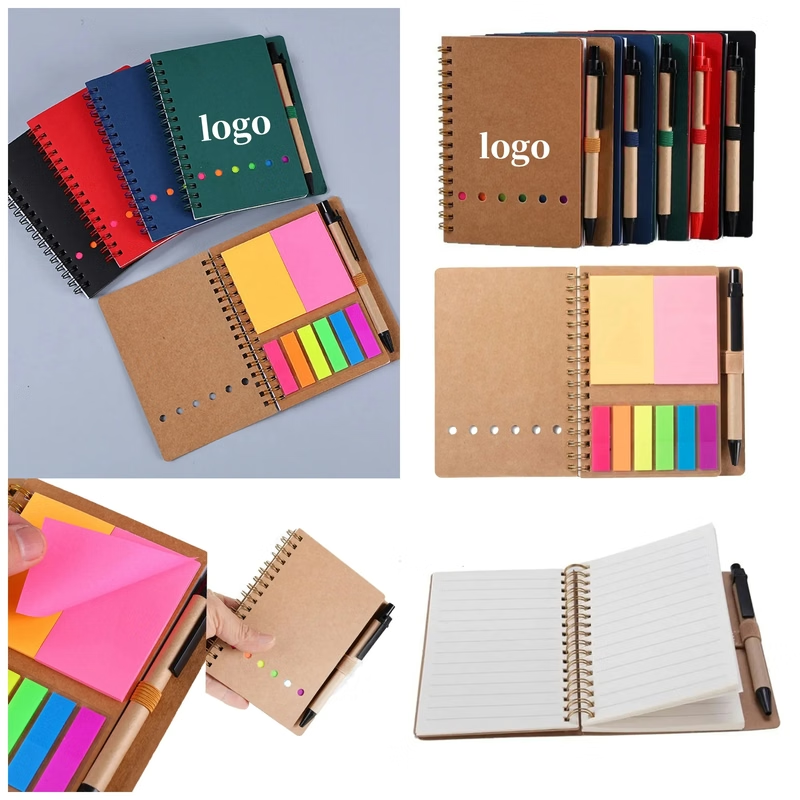
4.73 x 5.9 Spiral Notebook Notepad with Pen Sticky Notes
$1.08 - $6.88
View product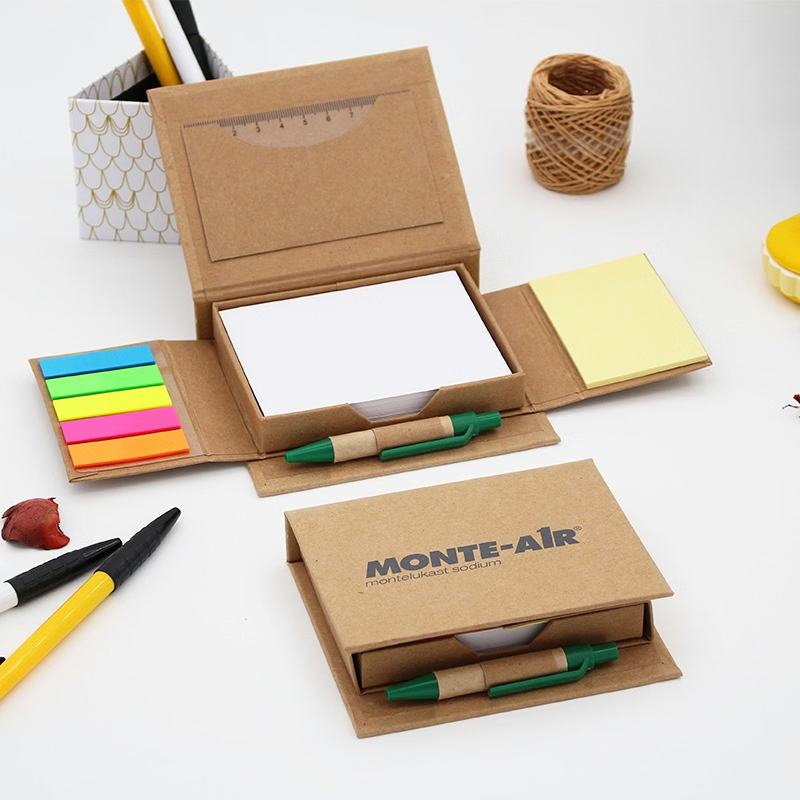
100 Pages Kraft Sticky Notes Portable Memo Pad With Pen
$1.04 - $2.28
View product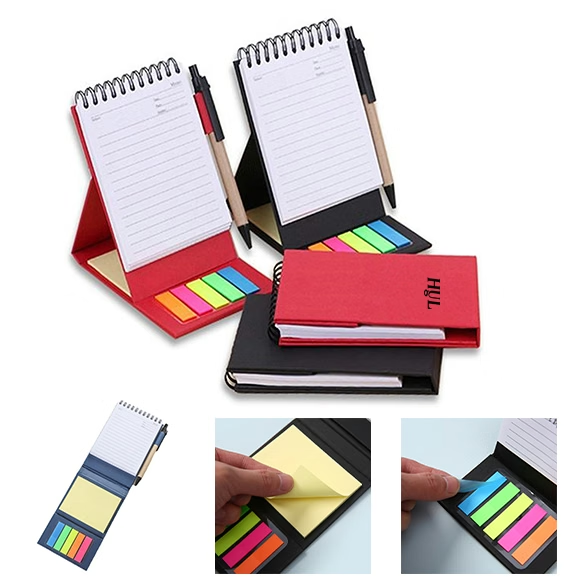
3D Pop-Up Sticky Notes Creative Kraft Coil Combo
$1.35 - $3.04
View product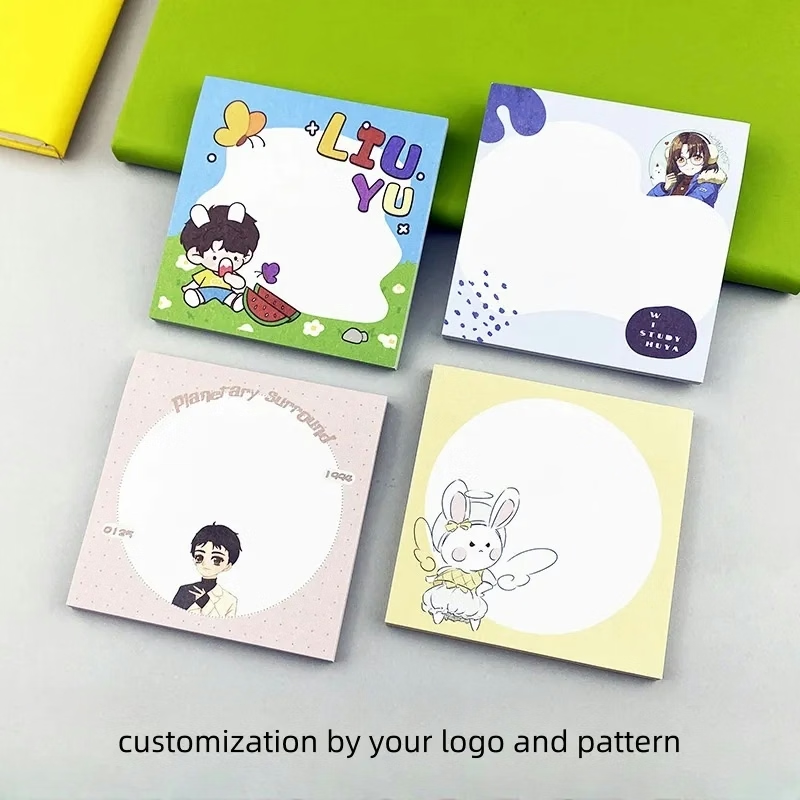
3 x 3 Customized Sticky Notes
$0.40 - $1.54
View product
Frequently asked questions
Can you print a full-color logo on sticky notes?
Yes. Branded pads are commonly printed in one or two spot colors or in full color. Ask whether every sheet is printed or only some, and keep the logo to one area if you want people to have room to write.
Why do my sticky notes keep falling off the wall?
Painted walls are slightly textured and often dusty, so the adhesive touches less of the surface. Press the note on firmly along the whole strip, peel it off sideways, and use high-tack notes for walls, doors and other vertical surfaces.
What is the standard size of a sticky note?
The classic Post-it Note is 3 x 3 inches. Other common sizes are 1.5 x 2, 3 x 4 (or 4 x 3) and 4 x 6 inches. For a promotional pad, 3 x 3 and 3 x 4 leave room for a logo and a writing area.
Who invented the sticky note?
3M chemist Spencer Silver created the low-tack adhesive in 1968 while trying to make a strong one. His colleague Art Fry came up with the idea of using it on bookmarks and notes in 1974, and 3M launched Post-it Notes across the United States in 1980.
Is Post-it a trademark?
Yes. Post-it is a registered 3M trademark, and so is the Canary Yellow color of the original notes. That is why other makers sell sticky notes or self-stick notes rather than Post-its.
Can sticky notes be made in custom shapes?
Many promotional sticky notes can be die-cut to a shape such as a house, a speech bubble or a product outline. Shaped pads cost more than standard rectangles and squares, so ask for a quote on both before you decide.
Shop this
Need branded sticky notes? We print them.
Bulk pricing, three free mockups, real quotes back the same business day.


