1000mAh to 120000mAh: What’s the Best Capacity for a Power Bank?
October 27, 2026 · 10 min read
Power bank numbers look simple, but they tell only part of the story. A 5,000 mAh portable charger, 20,000 mAh battery pack, and 120,000 mAh system serve very different needs.
The best power bank capacity depends on your device, daily routine, charging needs, power output, portability, and travel plans.
This guide explains power bank sizes from 1,000 mAh to 120,000 mAh. You’ll also learn what 10,000 mAh means, expected charges, key power bank specifications, and when larger stops being practical.
What Does Power Bank Capacity Mean?
Power bank capacity tells you how much electrical charge the internal rechargeable battery can store. Manufacturers usually show battery capacity in mAh, short for milliamp-hours.
More mAh usually means more stored energy, not faster charging.
Three capacity terms matter:
- Rated capacity: the number printed on the power bank.
- Actual capacity: the amount of energy the internal lithium-ion battery can deliver under real-world conditions.
- Usable capacity: the energy that reaches your device after conversion loss.
A 10,000 mAh power bank does not send all 10,000 mAh into your phone. Heat, voltage changes, electronics, and cables create energy loss. That is why claimed capacity and usable power differ.
What Does 10000 mAh Mean?
The meaning of 10,000 mAh is simple: the battery has a nominal capacity of 10,000 milliamp-hours.
For energy comparisons, watt-hours are often clearer:
Wh = (mAh ÷ 1,000) × battery voltage
At a nominal voltage of 3.7 V, 10,000 mAh equals about 37 Wh before losses. This explains the difference between a 10000 mAh power bank's actual capacity and its usable capacity.
How Many Charges Can a Power Bank Provide?
A simple estimate is:
Estimated full charges = usable capacity ÷ device battery capacity
Suppose a battery bank delivers 7,000 mAh of usable energy. If your phone battery has a capacity of 3,500 mAh, that suggests it can provide about two full charges.
Real results vary with temperature, device use, battery efficiency, and charging technology.
5000 mAh Power Bank: How Many Charges?
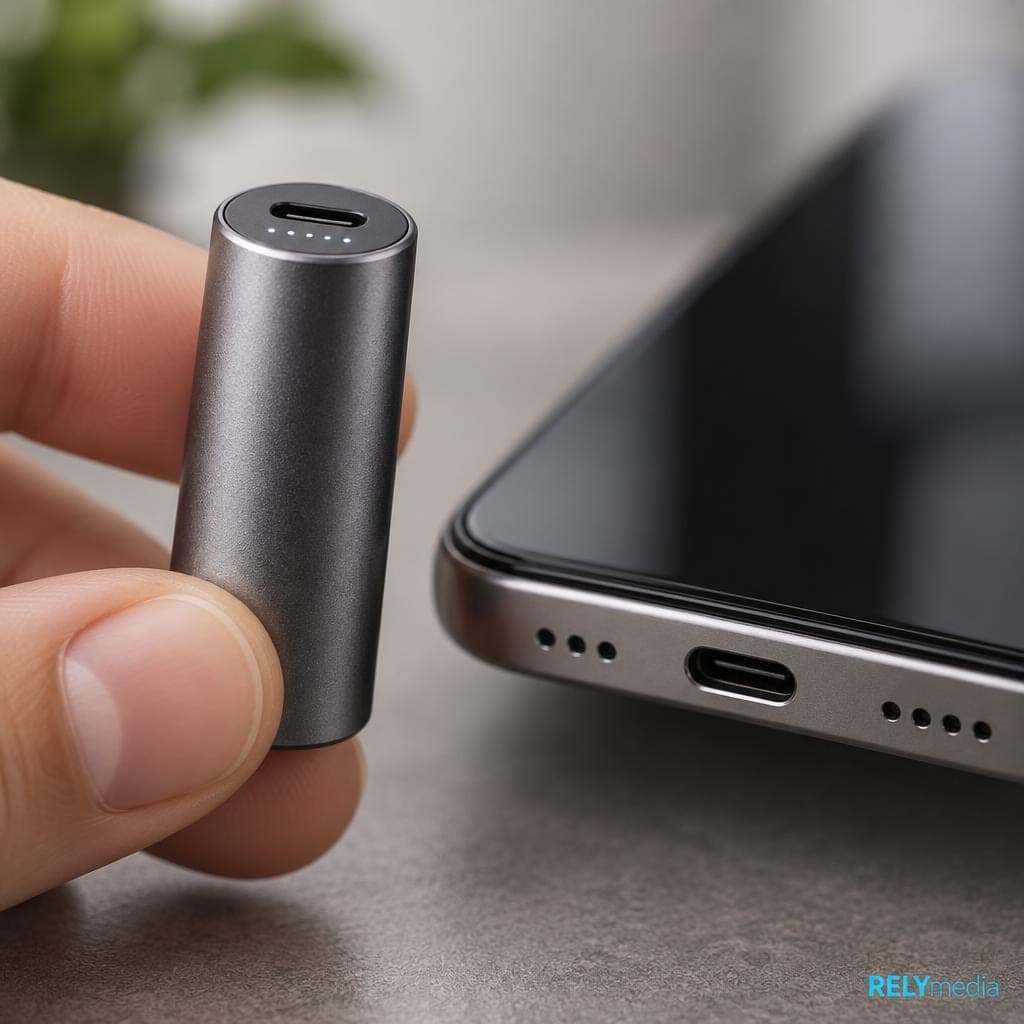
For a 5000 mAh power bank, how many charges? Think roughly one full charge or less for many modern phones.
A 5,000 mAh small power bank suits:
- emergency charging
- daily commuters
- light everyday charging
- regular phone use
- compact travel kits
Its strength is portability. Heavy phone users may prefer more backup power.
10000mAh Power Bank: How Many Charges?
People often search for "10000mAh how many charges," "how many charges is 10000mAh," or "10000 mAh power bank how many charges."
For many smartphones, a 10,000 mAh portable power bank provides about 1.5 to two full charges after normal energy loss.
So, how much can a 10,000 mAh power bank charge? Start with device battery size and conversion efficiency. This capacity provides useful battery backup without adding too much bulk.
15000 mAh Power Bank: How Many Charges?
For a 15000 mAh power bank, how many charges can I expect? Several phone charges, depending on battery size and efficiency. This range suits travelers, heavy phone users, and long workdays.
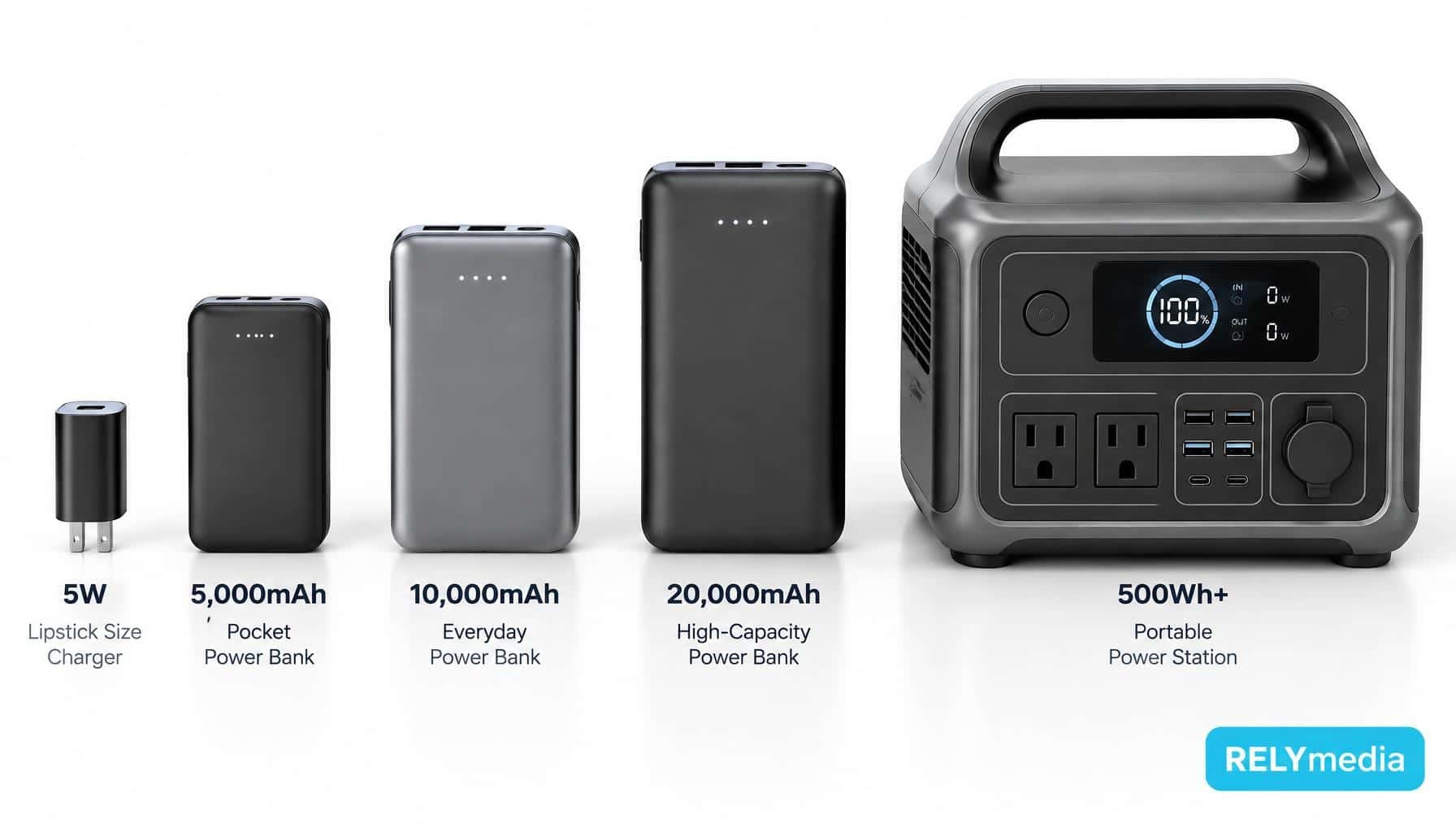
Power Bank Sizes From 1000mAh to 120000mAh
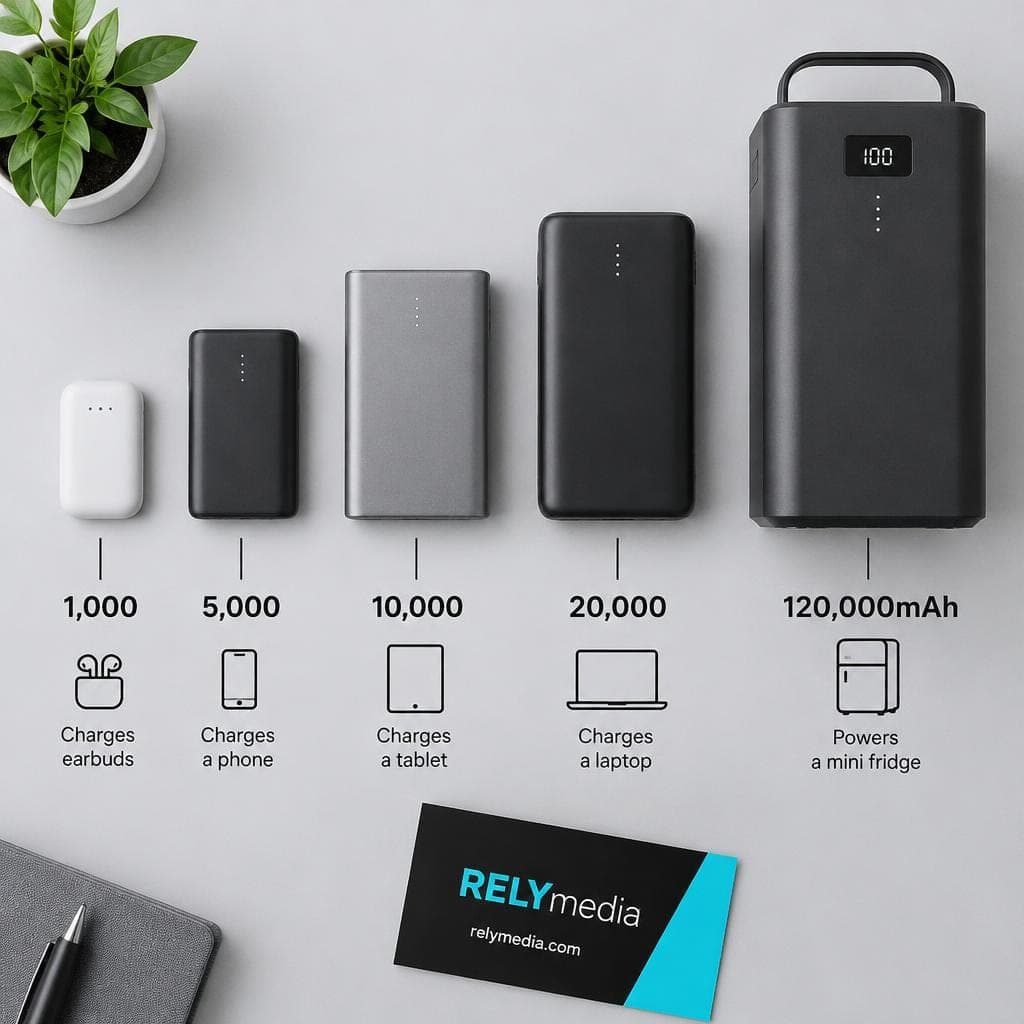
Different sizes of power banks solve different problems.
| Power bank capacity | Best fit | Main trade-off |
|---|---|---|
| 1,000 mAh | Small top-ups | Very limited charging capacity |
| 4,000–5,000 mAh | Emergency phone charging | Usually one charge or less |
| 7,000 mAh | Daily use | Moderate reserve |
| 10,000 mAh | Everyday and travel use | More weight than mini chargers |
| 12,000–15,000 mAh | Heavy phone use | Larger size |
| 20,000 mAh | Tablets, multiple devices, some laptops | Heavier and slower to recharge |
| 20,000+ mAh | Travel, camping, extended backup | Reduced portability |
| 120,000 mAh | Specialized high-capacity systems | Often closer to a portable power station |
1000 mAh Power Bank
A 1000 mAh backup battery gives a small top-up, making it better for tiny devices or emergencies.
4000 mAh to 5000 mAh Power Banks
This low-capacity power bank range favors lightweight design and portability over extended battery life.
7000 mAh Power Bank
A 7,000 mAh medium-capacity power bank is well-suited for commuting, regular phone use, and occasional travel charging.
10000 mAh Power Bank
The 10000 mAh vs 5000 mAh decision comes down to priorities. A 5,000 mAh unit favors compact design. A 10,000 mAh unit favors longer battery backup.
For 5,000 mAh vs 10,000 mAh, choose lower weight or extra phone charging.
12000 mAh to 15000 mAh Power Banks
A 12000 mah or 15,000 mAh unit gives heavy users more usable power without reaching 20,000 mAh.
20000 mAh Power Bank
A 20,000 mAh high-capacity power bank can support charging a phone, a tablet, and some laptops.
Laptop charging also requires compatible ports, protocols, cables, and power output.
Multiple charging ports support simultaneous charging, though total output may be shared.
20000+ mAh and 120000 mAh Power Banks
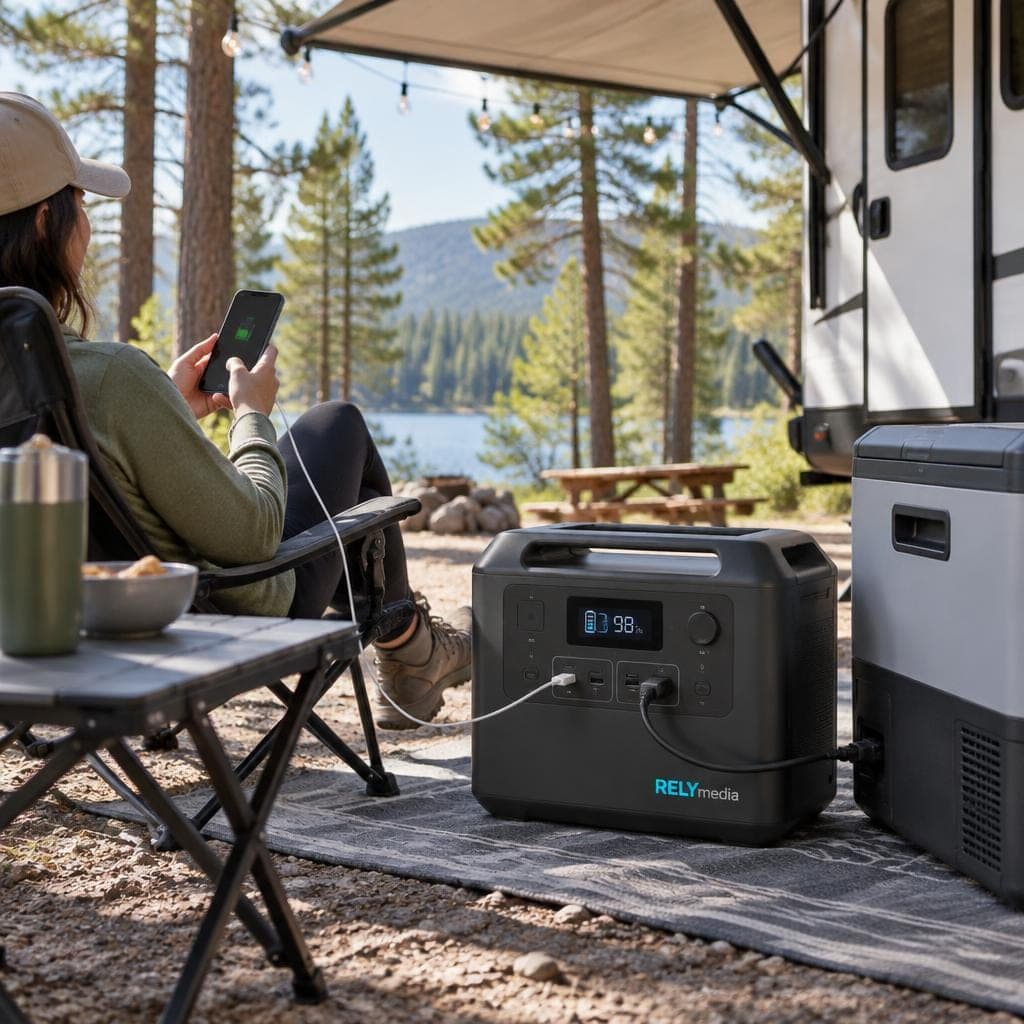
A 120000 mAh system may resemble a portable generator or power station. Some can run an appliance, such as a mini-fridge, when the output rating supports it.
Planning an outdoor campaign or emergency kit?
RELYmedia can help you choose branded backup power that fits the real use case.
5000mAh vs 10000mAh: Which Capacity Is Better?
| Factor | 5,000 mAh | 10,000 mAh |
|---|---|---|
| Portability | Excellent | Good |
| Power bank weight | Lower | Higher |
| Phone charging | Limited | Longer |
| Daily use | Excellent | Excellent |
| Travel | Short outings | Better for longer days |
| Backup charging | Basic | More flexible |
Choose 5,000 mAh for compact size. Choose 10,000 mAh for stronger battery backup.
For promotions, a portable design that people carry can earn more brand exposure.
Quick Decision Guide
For most adults, the easiest choice is not the largest battery. Match the charger to how you live. Daily commuters often do well with 5,000 to 10,000 mAh. Travelers who rely on maps, boarding passes, video, and messaging may prefer a 10,000-20,000 mAh capacity. Campers and remote workers may need higher capacity, especially when charging several electronic devices.
Think about charging frequency too. If you recharge the power bank every night, a smaller model may be enough. If you need several days of backup power, more energy capacity becomes useful. Also check whether the portable charger supports the fast-charging standard your phone, tablet, or laptop uses.
A good rule is simple: buy enough capacity for your normal worst-case day, then stop. Extra capacity adds size, weight, cost, and recharge time. The right power bank should solve a real charging problem without creating a new carrying problem.
That balance usually gives the best everyday value.
What Is a Good mAh for a Power Bank?
The best mAh capacity for a power bank depends on the device.
- 5,000 mAh: emergency power and light daily charging.
- 10,000 mAh: everyday charging for many smartphone users.
- 12,000–15,000 mAh: heavy phone use and longer travel days.
- 20,000 mAh: tablet charging, multiple devices, and compatible laptops.
- 20,000+ mAh: camping, extended backup power, and demanding charging needs.
So, what is a good mAh for a power bank? For phones, 5,000 to 10,000 mAh is a sensible starting range.
How Much Watt Power Bank Is Good for Mobile Phone Use?
Capacity and wattage answer different questions.
mAh measures stored charge. Watts measure charging power.
A higher watt rating can support faster charging only when the phone, cable, charging port, and charging technology are compatible.
USB Power Delivery lets compatible USB-C devices negotiate power. USB-IF says modern USB PD can scale up to 240W, though phones need far less.
A 120W power bank listing describes potential charging speed, not battery endurance.
Power input matters too, as it affects recharge time when using a suitable wall charger.
Power Bank Specifications That Matter Beyond mAh
Good power bank specifications cover more than just capacity.
Look for:
- Power output: maximum charging power for connected devices.
- Power input: how quickly the bank can recharge.
- Charging speed: affected by protocol, cable, and device support.
- Charging ports: USB port, USB-C, and other supported connections.
- Multiple charging ports: useful for charging multiple devices simultaneously.
- Device compatibility: phones, tablets, laptops, and other portable devices.
- Battery chemistry: commonly a rechargeable lithium-ion battery.
- Battery efficiency: the fraction of stored energy that is available for use.
- Charging cycles: a factor in long-term battery life.
- Safety details: clear manufacturer specifications and protections.
- Size and weight: essential for on-the-go charging.
Large capacity cannot fix poor charging performance, and fast power delivery cannot replace energy storage.
What Is the Largest Capacity Power Bank?
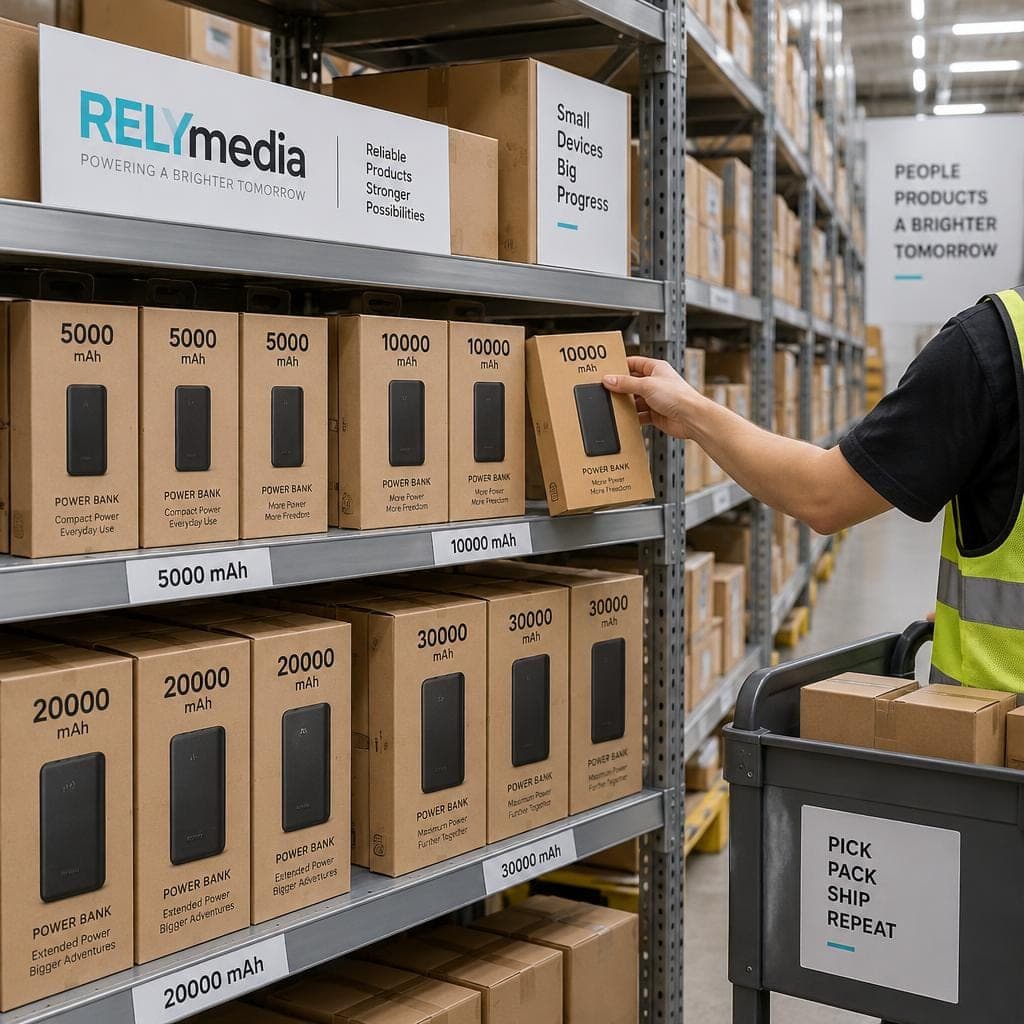
Searches for the largest power bank, largest mAh power bank, biggest capacity power bank, highest capacity power bank, largest power bank charger, biggest battery bank, or largest battery pack often surface enormous products.
A pocket charger, large battery pack, and portable power station belong to different classes.
For the highest-mAh portable charger or most-mAh power bank, compare watt-hours, output, weight, and recharge time. The biggest portable battery fails if you never carry it.
Can You Travel With a High-Capacity Power Bank?
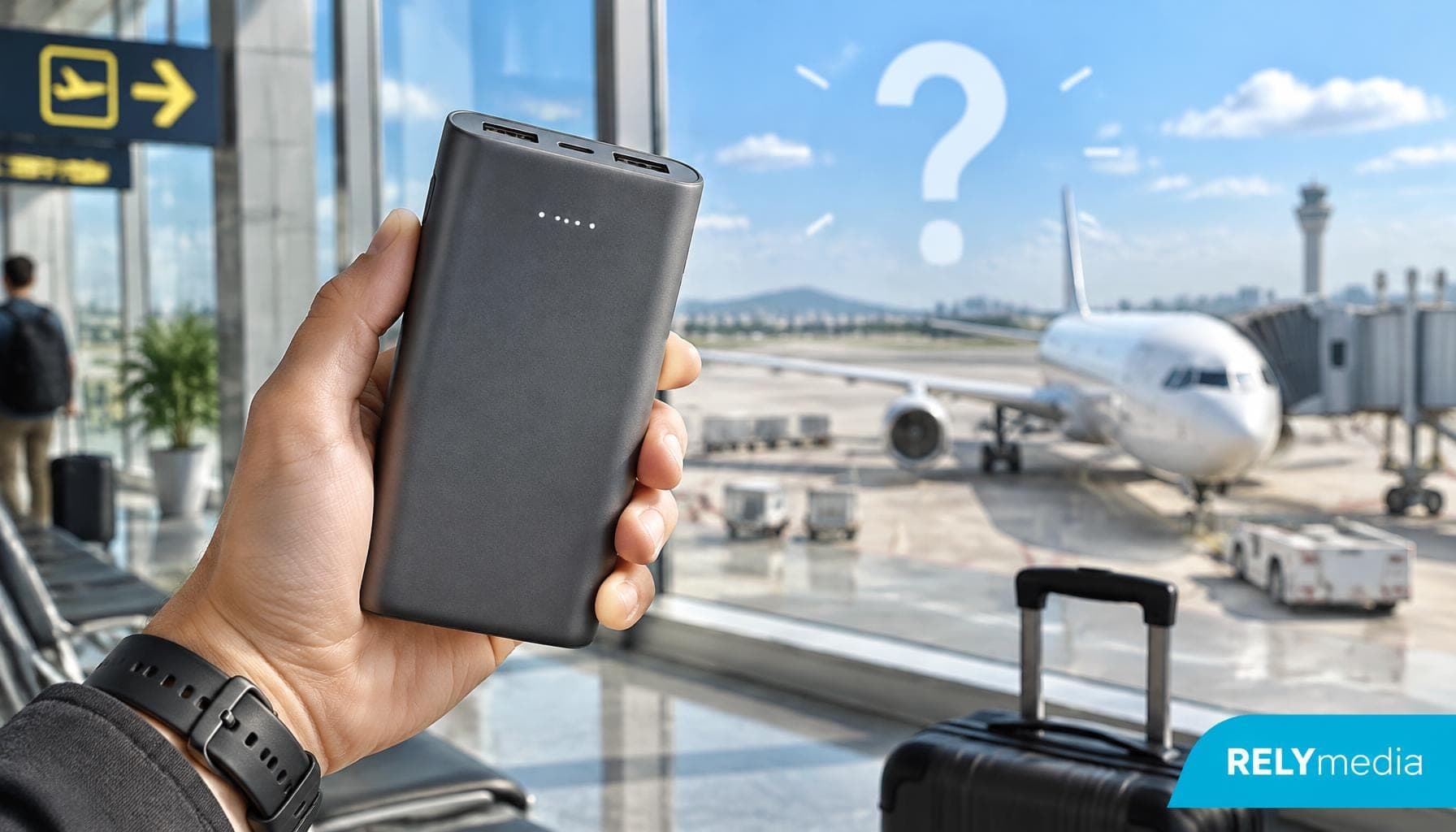
The FAA requires power banks to be in carry-on baggage. Up to 100 Wh is generally allowed; 101–160 Wh needs airline approval, and above 160 Wh is forbidden on passenger aircraft. Airlines may be stricter.
Use this formula:
Wh = (mAh ÷ 1,000) × volts
At a nominal 3.7 volts:
- 10,000 mAh ≈ 37 Wh
- 20,000 mAh ≈ 74 Wh
- 120,000 mAh ≈ 444 Wh
Check the marked Wh rating and airline policy before traveling.
How to Choose the Right Power Bank Capacity
Use this power bank selection checklist:
- Check your device battery capacity.
- Decide how many full charges you need.
- Allow for charging efficiency and conversion loss.
- Match power output to device requirements.
- Check power input and recharge time.
- Review the charging cable and port types.
- Compare power bank size and power bank weight.
- Confirm device compatibility.
- Consider daily charging, travel, camping, or emergencies.
- Check current airline limits before flying.
Ready to print your team's name on premium apparel?
Fill in your details and a RELYmedia specialist will come back to you with a custom quote — fast turnaround, no obligation.
- ⚡Same-day response on business days
- 🎨Free design assistance included
- 🚚Rush order & fast delivery available
- 💰Price beat guarantee on every order
Shop custom power banks and chargers
See all power banks & charging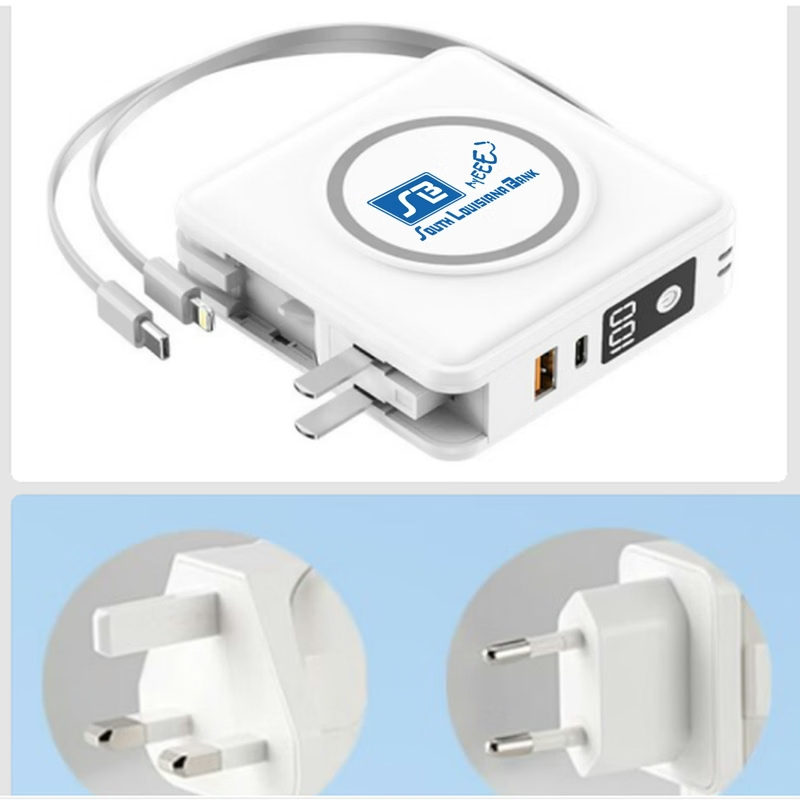
10,000 mAh Wireless Fast Charging Power Bank and 5IN1 Travel Charger w/Intl
$48.25 - $53.66
View product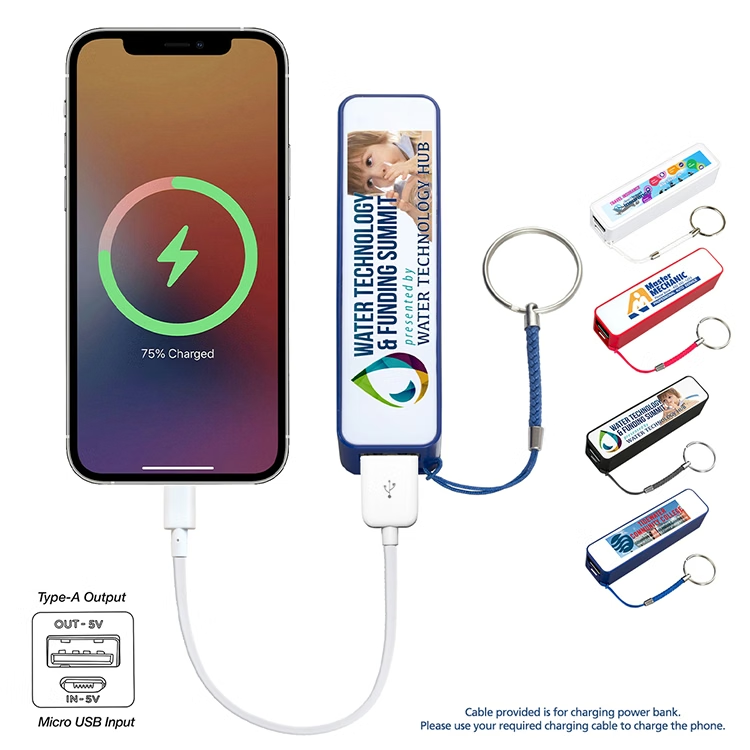
In Charge PB200 UL Listed 2200 mAh Portable Lithium Ion Power Bank Charger PB1004
$7.03 - $7.91
View product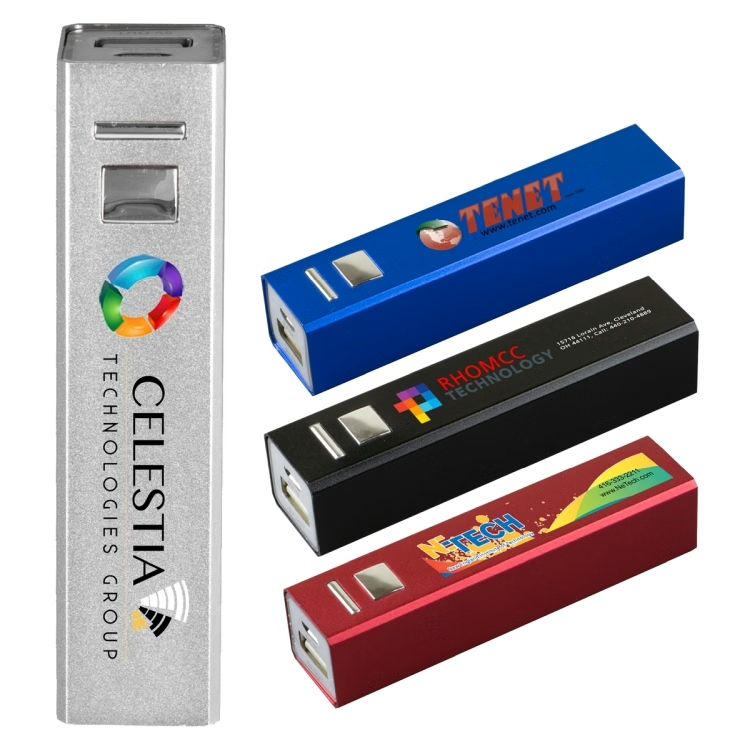
In Charge Alloy UL Listed Aluminium 2200 mAh Lithium Ion Portable Power Bank Charger
$7.57 - $8.85
View product10,000 mAh Energizer® Mag-N-Kick™ Wireless Charger Power Bank And Phone Stand
$34.39 - $52.31
View product10,000 mAh Wireless Charger Power Bank
$25.59 - $44.77
View product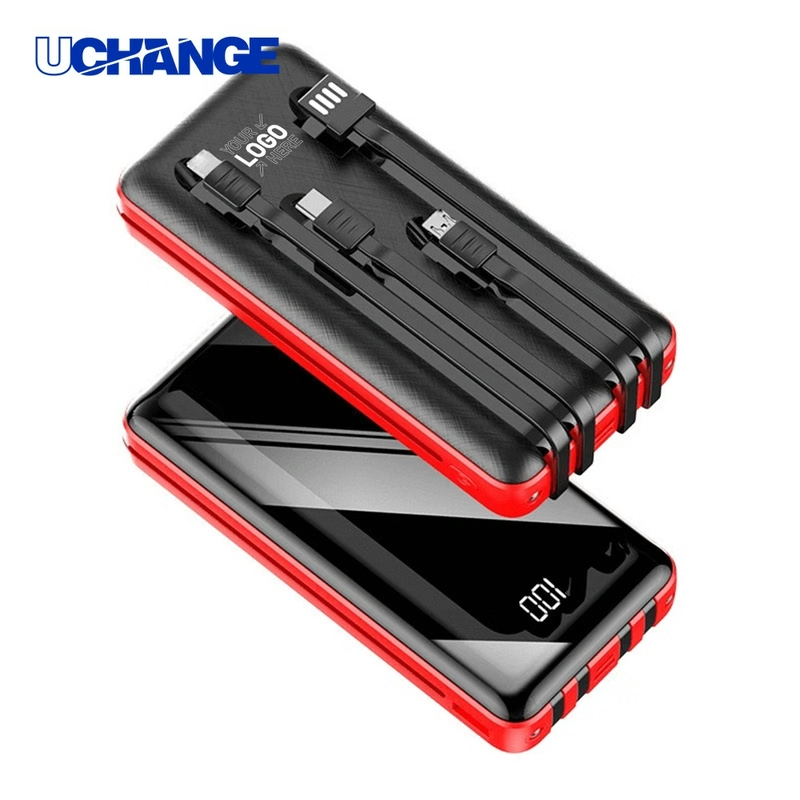
10,000mAh Portable Charger Power Bank with Dual Flashlight
$7.63 - $12.53
View product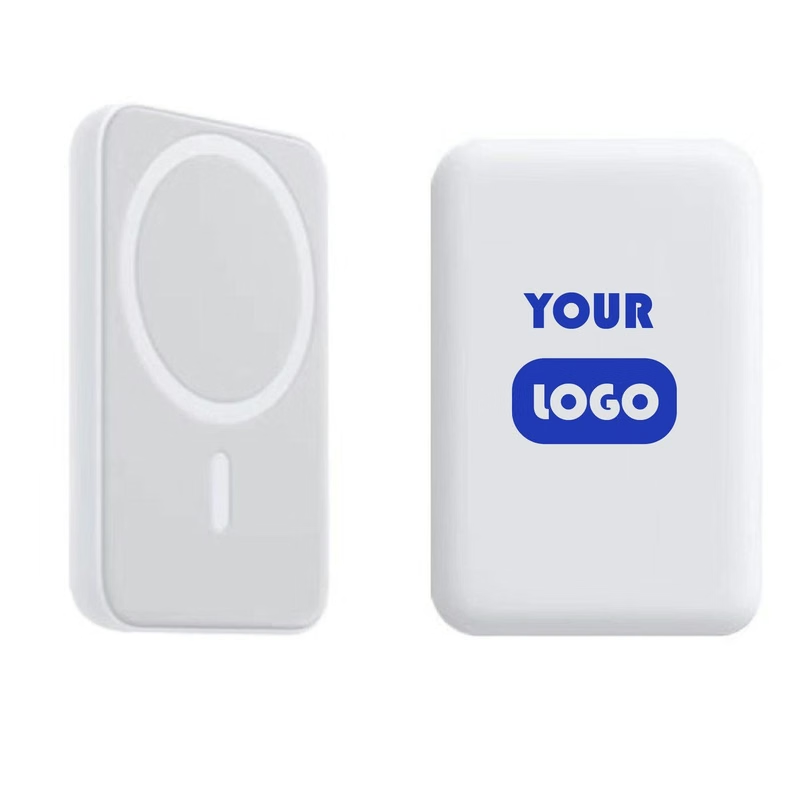
10,000 mAh Wireless Charging Power Bank
$11.58 - $25.35
View product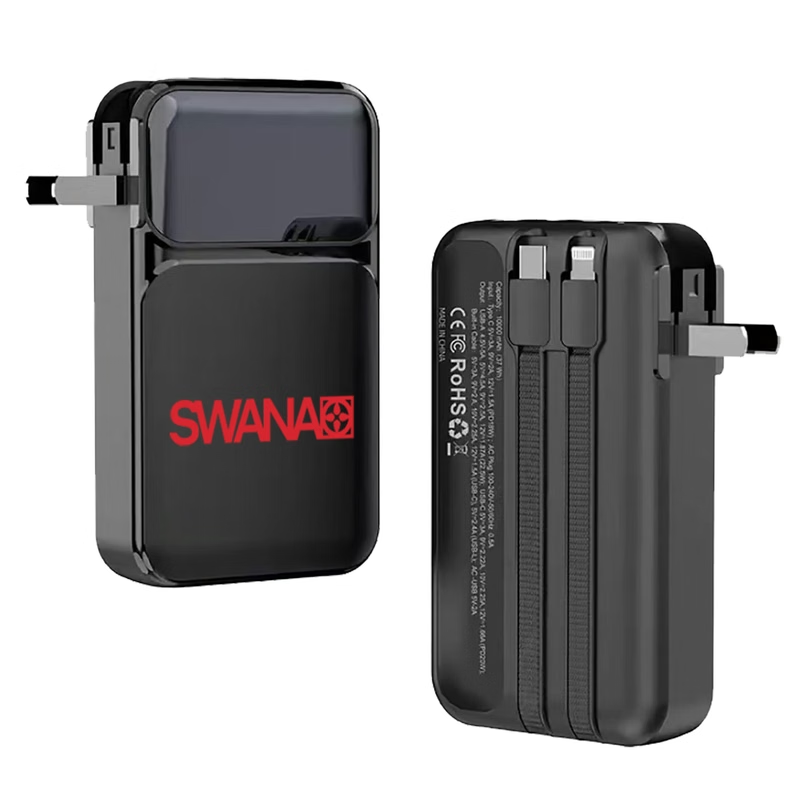
10,000 mAh Portable Charger w/Built In Wall Plug Power Bank
$27.43 - $32.36
View product
Frequently Asked Questions
How Many mAh Does It Take to Charge an iPhone?
iPhone battery size varies by model. Compare battery capacity with usable capacity, then allow for energy loss.
How Much Can 10000 mAh Charge?
For many smartphones, 10,000 mAh provides roughly 1.5 to two full charges after losses.
What Is a Good mAh for a Portable Charger?
For everyday smartphone charging, 5,000 to 10,000 mAh strikes a balance between capacity and portability.
Does Higher mAh Mean Faster Charging?
No. mAh describes energy capacity. Charging speed depends on power output, power delivery, cable support, charging technology, and device compatibility.
Can a Power Bank Charge Multiple Devices?
Yes, when it has multiple charging ports. Simultaneous charging may split the available output among the connected devices.
Does a Larger Power Bank Take Longer to Recharge?
Usually. More energy capacity takes longer to refill, while higher power input can reduce charging time.
Conclusion: Choose Capacity Around Real Life
The best capacity matches your device, routine, charging needs, and portability expectations.
A 5,000 mAh charger suits emergencies. A 10,000 mAh power bank balances daily use and portability. A 15,000- or 20,000-mAh battery pack is suitable for travel, tablets, multiple devices, and some laptops. Higher capacities trade portability for energy storage.
RELYmedia helps businesses turn useful promotional products into lasting brand touchpoints through strong service, fast turnaround, and quality-focused solutions.
Ready to put your brand on a charging product people can use every day?
Connect with RELYmedia to find the right custom power bank for your campaign.
Shop this
Need custom power banks? We print them.
Bulk pricing, three free mockups, real quotes back the same business day.