Best Power Banks (2026): My Picks After Testing Over 100
October 27, 2026 · 10 min read
A dead phone can ruin a commute, a business trip, a conference, or a long travel day. The right power bank solves that problem reliably without adding a brick to your bag.
The best power banks in 2026 balance battery capacity, charging speed, wattage, portability, safety, and device compatibility. Bigger numbers do not automatically mean better performance. A compact 10,000 mAh portable charger can beat a bulky high-capacity battery pack when it charges quickly, fits your pocket, and supports the devices you actually carry.
This guide compares portable power for phones, tablets, laptops, gaming devices, travel, and everyday carry. It also explains usable capacity, USB-C Power Delivery, safety, and airline limits.
The best portable charger is the one you trust enough to carry every day.
Best Power Banks of 2026 at a Glance
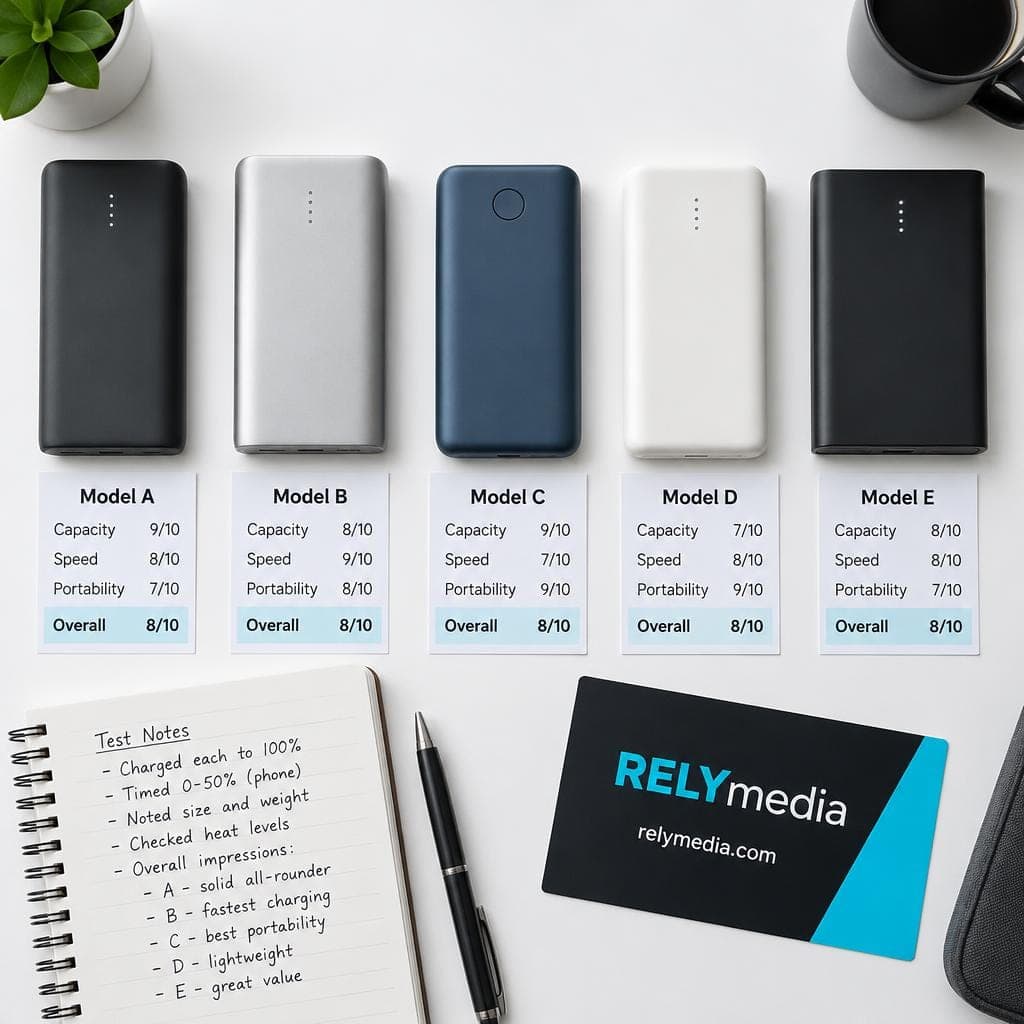
| Pick | Capacity | Maximum Output | Best For |
|---|---|---|---|
| Anker Laptop Power Bank 25K | 25,000 mAh | 165W total | Best overall |
| Anker Nano Power Bank 10K | 10,000 mAh | 45W | Compact everyday charging |
| Anker MagGo Power Bank 10K | 10,000 mAh | 15W wireless | Magnetic wireless charging |
| Shargeek 170 | 24,000 mAh | 170W | High-capacity multi-device charging |
| Anker Fusion Power Bank 10K | 10,000 mAh | 30W | Built-in cable and wall charging |
Best Overall Power Bank: Anker Laptop Power Bank 25K
The Anker Laptop Power Bank 25K gives demanding users a strong mix of high-output charging. It has a 25,000 mAh capacity, delivers up to 165W total, and can provide up to 100W through its USB-C ports. It also charges four devices at once.
Two built-in USB-C cables reduce travel clutter. One retracts into the case, while the second doubles as a carry loop. There is also another USB-C port and a USB-A port for older charging accessories.
At 21 ounces, it is not a lightweight power bank. The extra weight is suitable for charging laptops, tablets, gaming devices, as well as for multi-device charging. Its smart display also improves battery monitoring.
Anker states that conversion losses can reduce usable capacity by roughly 30% to 45%. That is normal battery behavior, not necessarily a defect. Stored energy passes through cells, circuitry, cables, and voltage conversion before reaching your device.
Why This High-Capacity Power Bank Works
- 25,000 mAh stated capacity
- 165W maximum combined output
- 100W USB-C charging support
- Four-device simultaneous charging
- Built-in and retractable charging cables
- USB-A support for legacy devices
- Smart charging display
- Strong laptop, phone, tablet, and gaming compatibility
Best Compact Power Bank: Anker Nano 10K
The Anker Nano 10K is a better everyday carry choice when portability matters more than maximum capacity. It has a 10,000 mAh capacity and supports 45W USB-C output. Its retractable 2.3-foot USB-C cable frees up even more space in your bag.
At about 3.21 by 1.99 by 1.42 inches and 0.51 pounds, this compact power bank fits easily into bags and larger pockets. Its smart display shows battery status and power flow.
Maximum shared output drops, so three connected devices do not each receive 45W.
Best Wireless Power Bank: Anker MagGo 10K
Wireless power prioritizes convenience. The Anker MagGo 10K combines 10,000 mAh capacity with Qi2-certified magnetic wireless charging up to 15W. A foldable stand and magnetic alignment make it useful at desks, airports, hotels, and conferences.
Its USB-C port handles faster wired charging when efficiency matters. Anker rates the battery at 38.5 Wh and estimates that it delivers about 6,000 to 7,000 mAh to connected devices.
Wireless charging generates more heat and wastes more energy than a wired connection. Still, magnetic attachment can be worth the trade-off when you want cable-free smartphone charging.
For business programs, magnetic wireless charging is well-suited to executive gifts and technology events where convenience matters more than maximum battery capacity.
Best High-Capacity Power Bank: Shargeek 170
The Shargeek 170 targets users who need serious mobile power. Its rechargeable battery has a capacity of 24,000 mAh (86.4 Wh) and a maximum combined output of 170W. Two USB-C ports and one USB-A port support three-device fast charging.
Each USB-C port can deliver up to 140W under supported conditions. The unit also accepts up to 140W input for faster battery recharge.
Its IP66 water-resistance rating adds protection for outdoor charging, camping, fieldwork, and travel. A smart display reports remaining battery, charging performance, and abnormal temperature warnings.
This rugged power bank weighs about 680 grams. It is overkill for casual phone charging, but the capacity-to-output balance makes sense for laptops, tablets, portable electronics, and power-hungry mobile devices.
Best Power Bank With Built-In Cables
Built-in charging cables solve a small but common problem: carrying a charged battery and forgetting the cord.
For daily use, prioritize a durable built-in USB-C cable, a useful length, secondary ports, and enough output for your devices. USB-C now covers a broad charging ecosystem.
Retractable cables keep a bag cleaner, though moving parts add another potential wear point. Anker says the retractable cable on its Nano model was tested through 20,000 pull-and-swing cycles.
Power Bank Buying Guide: What Actually Matters?
A good power bank buying guide should help you match the battery to your charging needs, rather than chase the largest specifications.
Choose the Right Battery Capacity
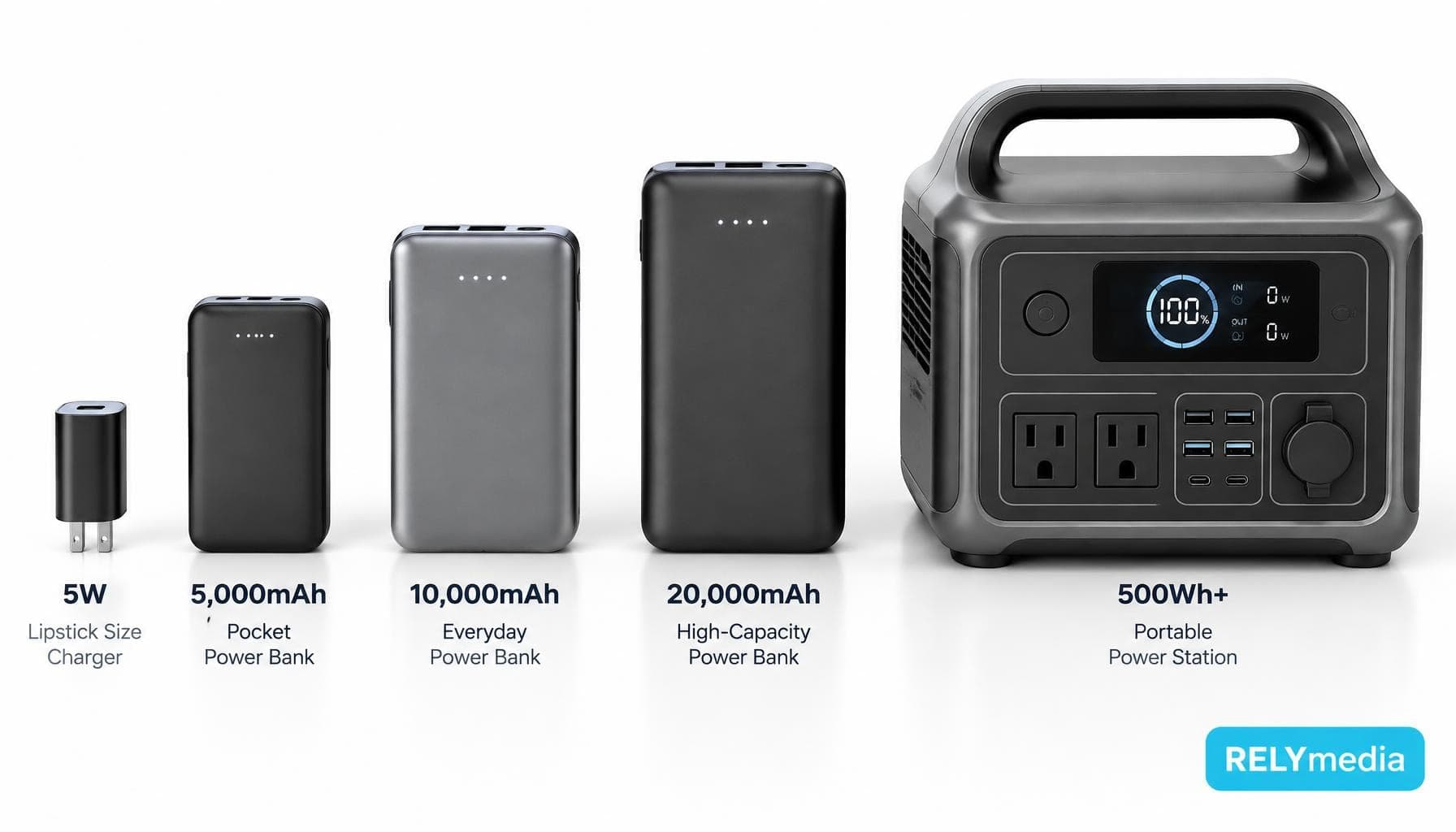
| Capacity | Practical Use |
|---|---|
| 5,000 mAh | Emergency charger, light daily use |
| 10,000 mAh | Everyday smartphone charging and short travel |
| 20,000 mAh | Tablets, multiple devices, longer trips |
| 25,000–27,000 mAh | Laptops, gaming, heavy travel, high-capacity charging |
A 5,000 mAh mini power bank favors pocket-friendly design. A 10,000 mAh battery balances portability and charge count. Larger batteries suit multiple connected devices.
Understand mAh, Wh, and Wattage
These measurements answer different questions.
- mAh describes battery capacity.
- Wh describes stored energy.
- Watts describe charging power.
- Input power affects battery recharge time.
- Output power affects device charging speed.
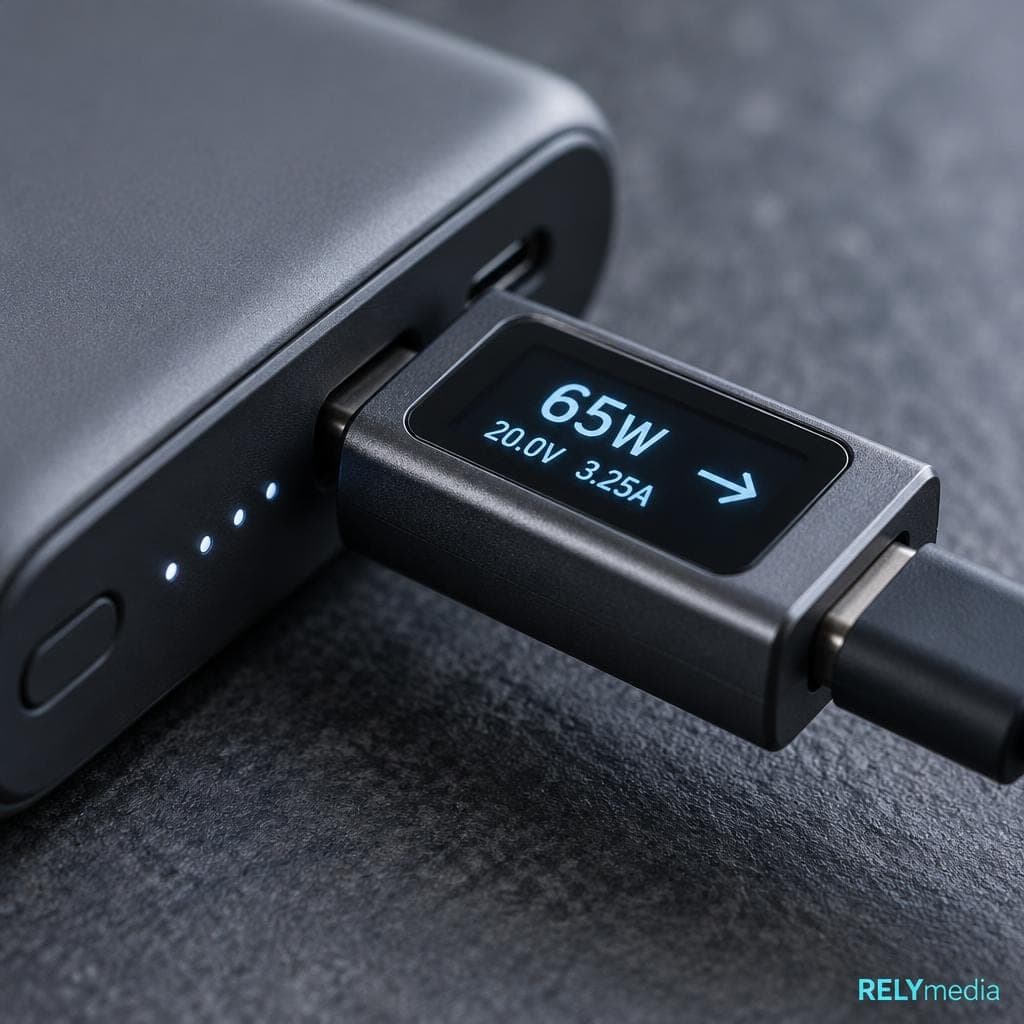
A large capacity does not guarantee fast charging. Likewise, a 100W USB-C power bank will not force 100W into a smartphone that accepts less power.
Look for USB-C Power Delivery
USB-C Power Delivery helps compatible chargers and devices negotiate appropriate voltage and power levels. It matters for modern phone charging, tablet charging, and especially laptop charging.
Check each USB-C port rating, total output, and multi-port behavior. Some fast-charging power banks reduce their output when charging simultaneously.
Consider Wired and Wireless Charging
Wired charging usually offers better charging efficiency, lower heat, and faster power transfer. Wireless charging improves convenience.
A magnetic power bank improves alignment, while phone cases, temperature, and coil placement can affect real-world performance.
Power Bank Safety and Battery Health
Lithium-ion batteries pack substantial energy into a compact design. Good battery management therefore matters.
Look for charging protection against overcurrent, overvoltage, overtemperature, and short circuits. Stop using a battery that swells, leaks, smells unusual, becomes abnormally hot, or shows serious physical damage.
Heat speeds battery aging. Avoid leaving rechargeable batteries in hot cars or direct sunlight. Some warmth during fast charging is normal. Persistent excessive heat is not.
For outdoor use, consider shock resistance, water resistance, protected ports, and a documented IP rating. RELYmedia recommends UL-certified or UL-listed models for business programs.
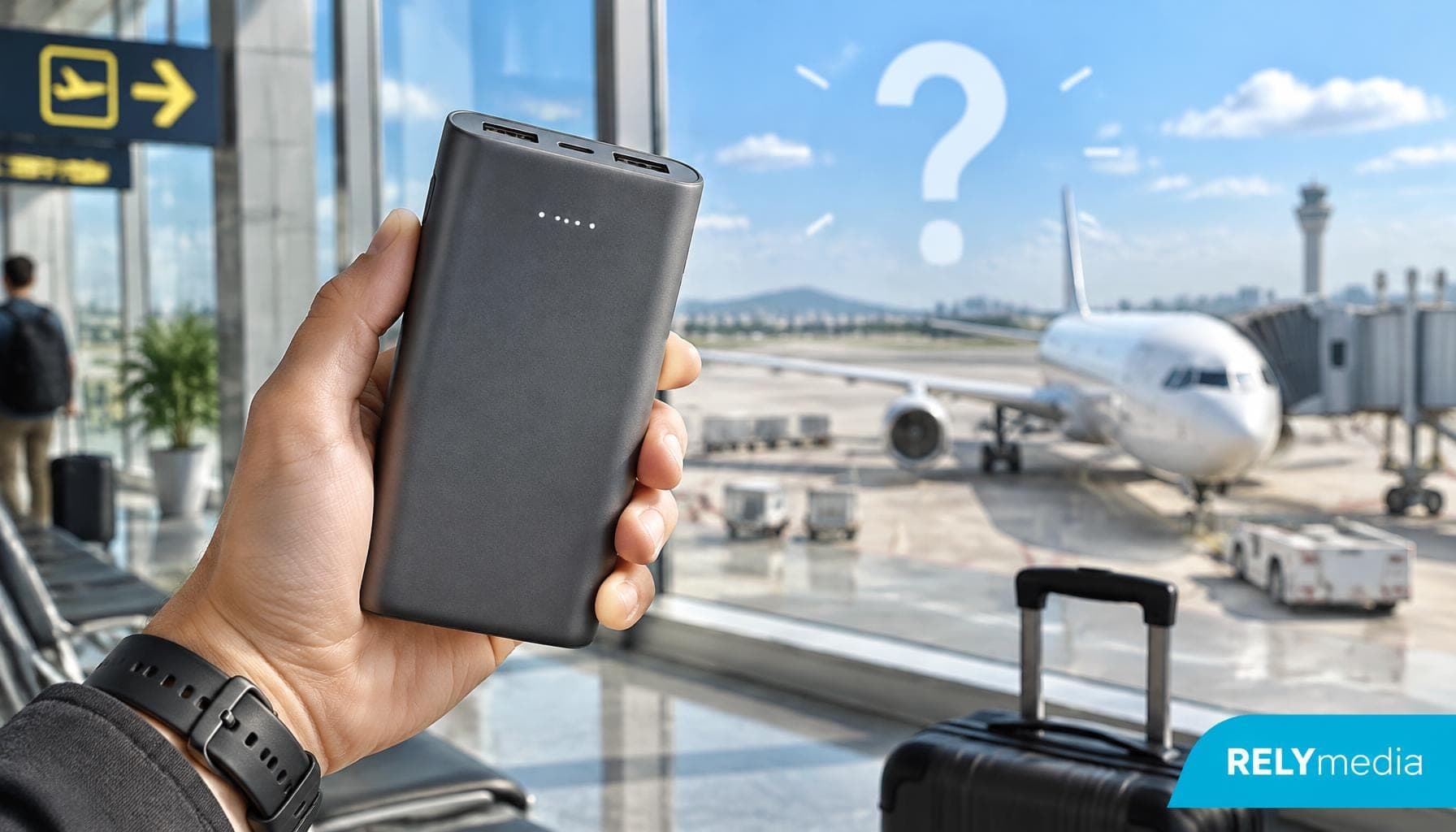
Can You Take a Power Bank on a Plane?
Yes, but U.S. flight regulations treat a portable charger as a spare lithium battery.
The FAA says power banks must travel in carry-on baggage, not checked luggage. Rechargeable lithium-ion batteries with capacities from 0 to 100 Wh are generally allowed. Batteries from 101 to 160 Wh require airline approval, while batteries above 160 Wh are prohibited on passenger aircraft. Airlines can set stricter rules.
Use this formula when a battery does not clearly show watt-hours:
Wh = (mAh ÷ 1,000) × voltage
For example, 10,000 mAh at 3.85V equals 38.5Wh. The FAA uses the same voltage-times-amp-hours calculation.
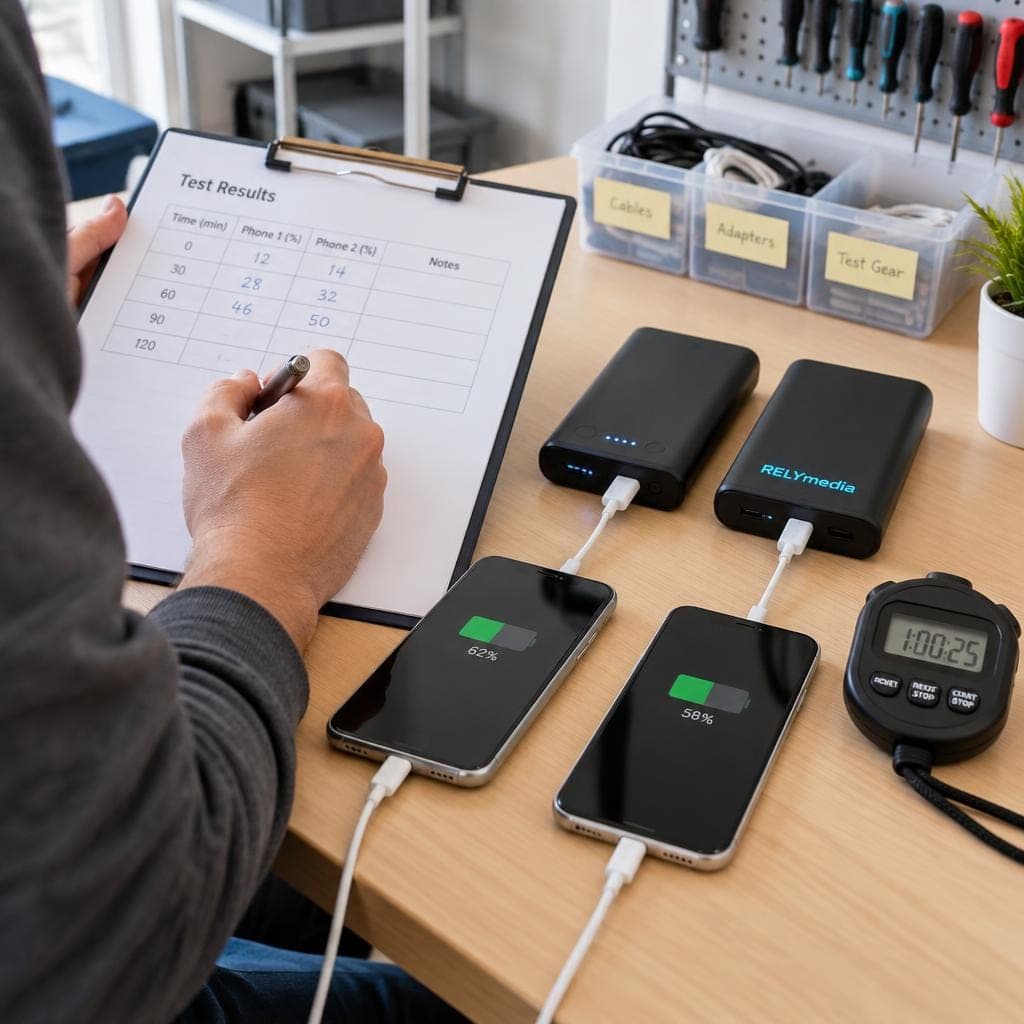
How to Evaluate Real-World Charging Performance
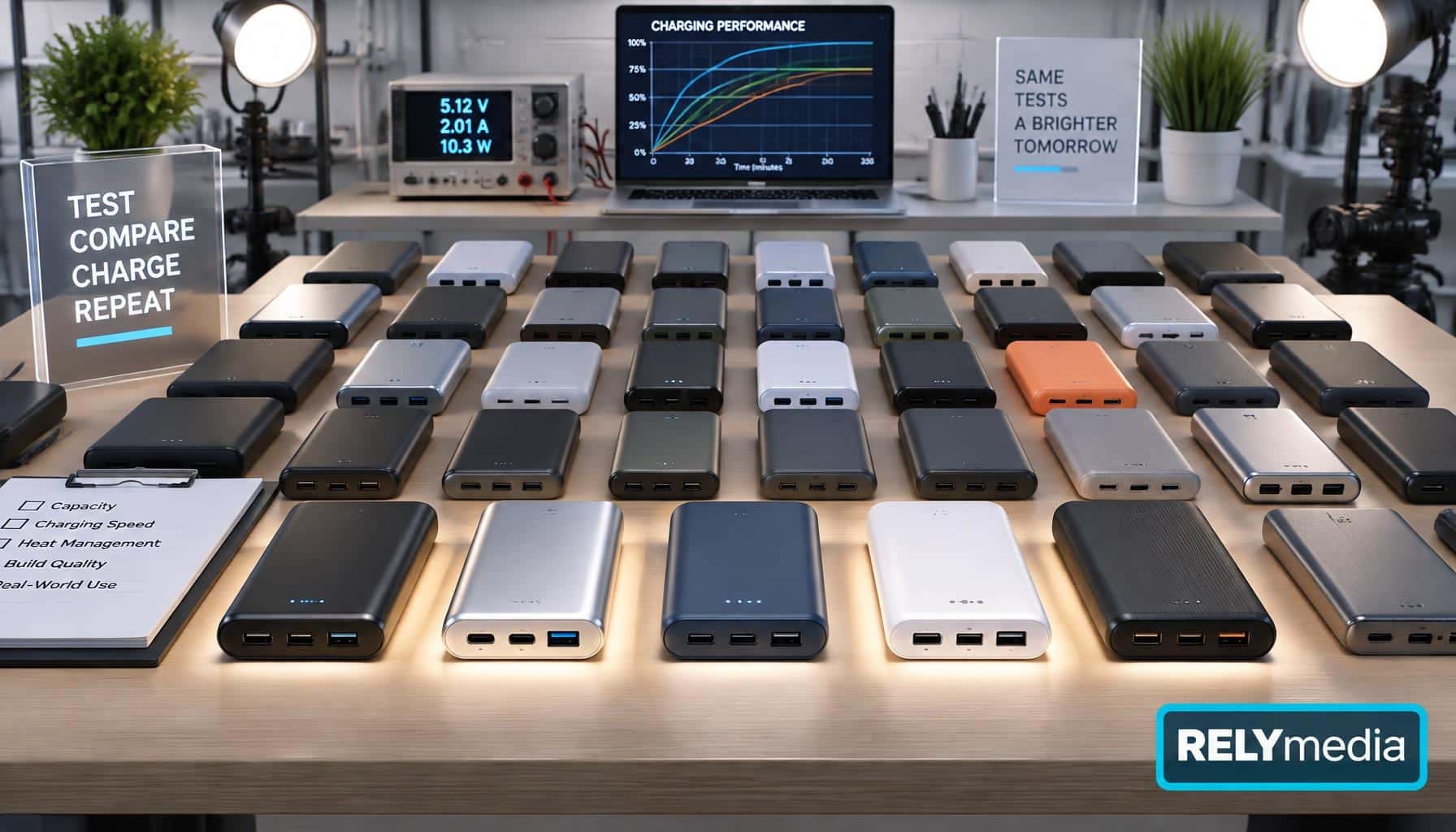
Headline specifications tell only part of the story. Strong product testing should measure repeatable results.
Track:
- usable battery capacity
- charging speed
- sustained power output
- power bank recharge time
- battery temperature
- multi-device power distribution
- cable and port durability
- wireless charging efficiency
- device compatibility
- long-term battery reliability
For a useful charging test, start the same device at the same percentage. Use the same cable and temperature conditions. Record time, wattage, heat, and remaining battery.
Then repeat the test with two or three devices. This reveals whether maximum output collapses during simultaneous device charging.
Long-term testing matters too. Battery performance changes with charge cycles, heat, travel, and daily handling. A good external battery should remain predictable.
Power Banks to Avoid
Avoid a portable battery when its specifications create more questions than answers.
Warning signs include:
- unrealistic capacity claims
- unclear charging protocols
- missing safety information
- excessive heat
- weak ports or loose connectors
- poor charging performance
- extremely slow battery recharge
- vague warranty coverage
- high weight without useful capacity
- misleading multi-port wattage claims
Cheap power banks are not automatically unsafe. However, unknown battery cells, weak battery management, and poor quality control increase uncertainty.
Custom Power Banks for Business and Promotional Use

A promotional charger works when people use it repeatedly. That makes practical specifications more important than novelty.
RELYmedia offers custom power banks, wireless chargers, charging cables, magnetic options, and branded mobile accessories. Its catalog spans compact models up to 20,000 mAh, with printing and laser engraving available.
For employee or event programs, 5,000 to 10,000 mAh offers useful portable power without excess weight. Premium gifts can justify faster USB-C charging or wireless technology.
Turn portable power into useful brand visibility.
Request a RELYmedia quote and free digital proof for your next custom charging project.
Ready to print your team's name on premium apparel?
Fill in your details and a RELYmedia specialist will come back to you with a custom quote — fast turnaround, no obligation.
- ⚡Same-day response on business days
- 🎨Free design assistance included
- 🚚Rush order & fast delivery available
- 💰Price beat guarantee on every order
Shop custom power banks and chargers
See all power banks & charging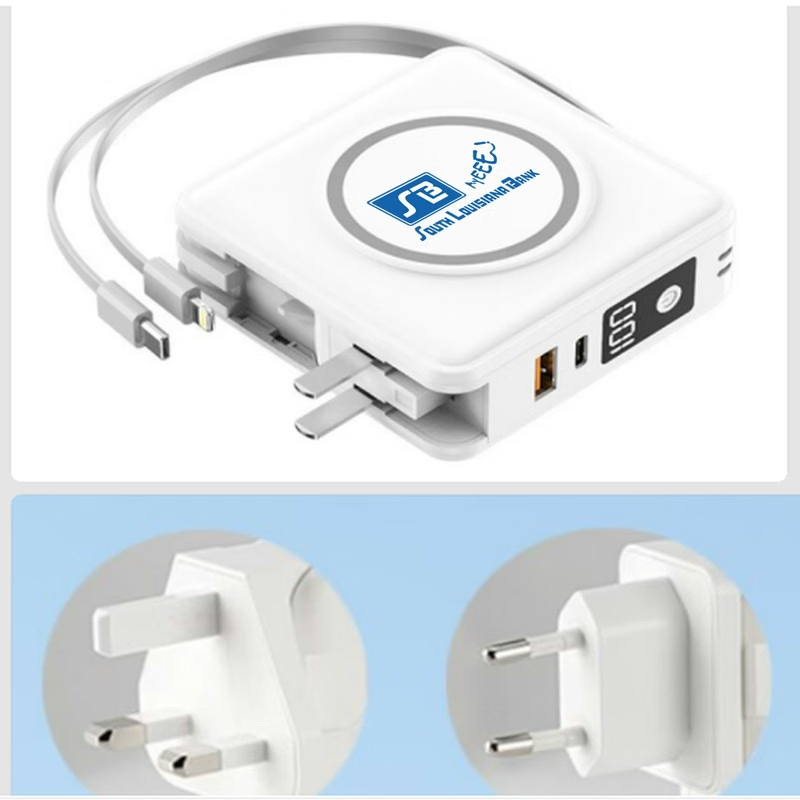
10,000 mAh Wireless Fast Charging Power Bank and 5IN1 Travel Charger w/Intl
$48.25 - $53.66
View product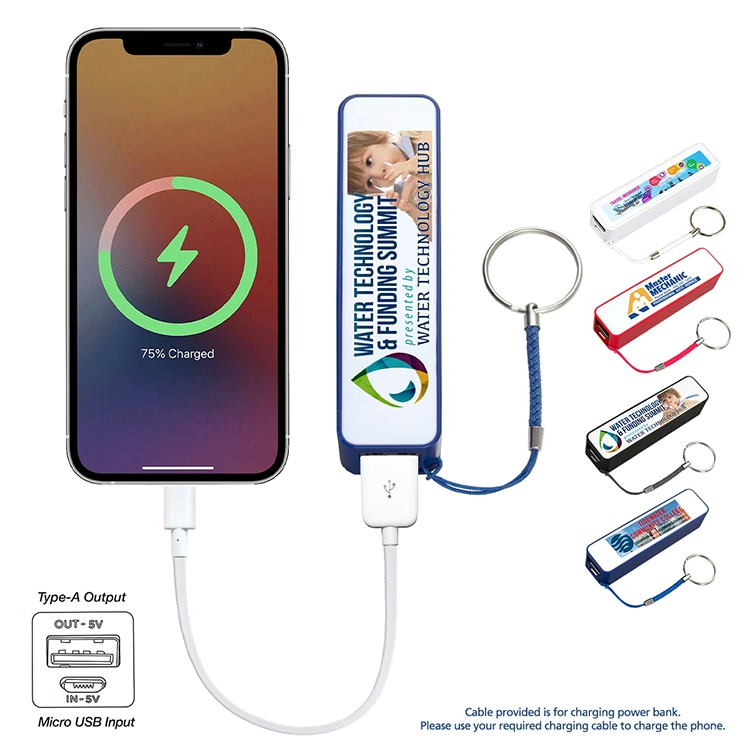
In Charge PB200 UL Listed 2200 mAh Portable Lithium Ion Power Bank Charger PB1004
$7.03 - $7.91
View product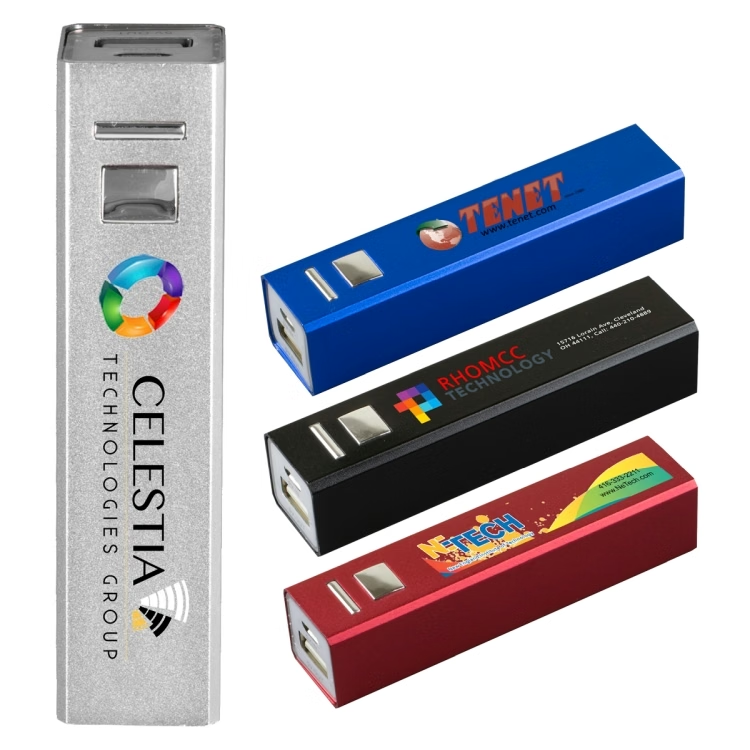
In Charge Alloy UL Listed Aluminium 2200 mAh Lithium Ion Portable Power Bank Charger
$7.57 - $8.85
View product10,000 mAh Energizer® Mag-N-Kick™ Wireless Charger Power Bank And Phone Stand
$34.39 - $52.31
View product10,000 mAh Wireless Charger Power Bank
$25.59 - $44.77
View product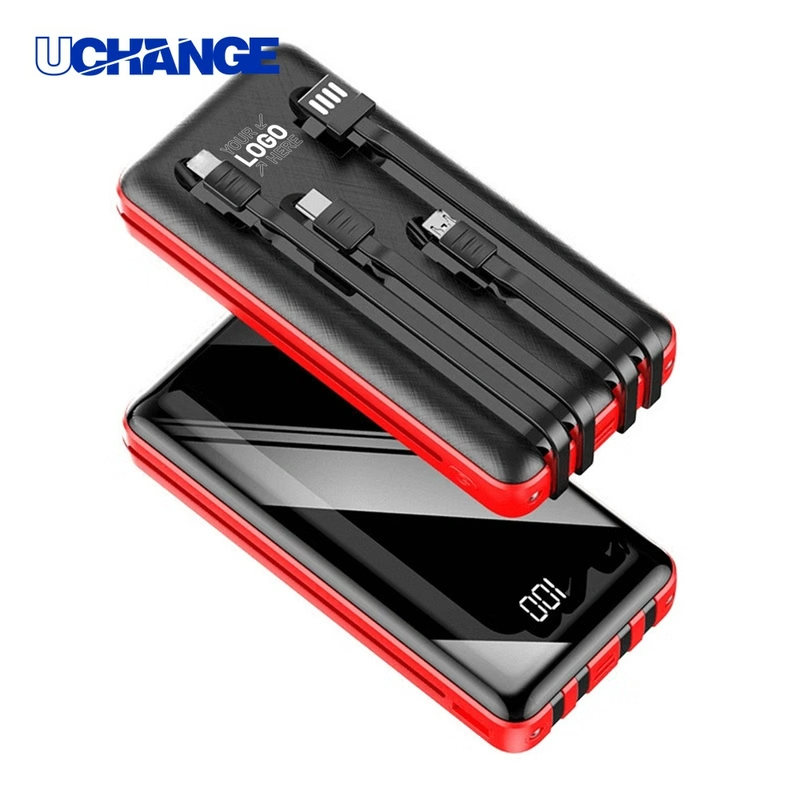
10,000mAh Portable Charger Power Bank with Dual Flashlight
$7.63 - $12.53
View product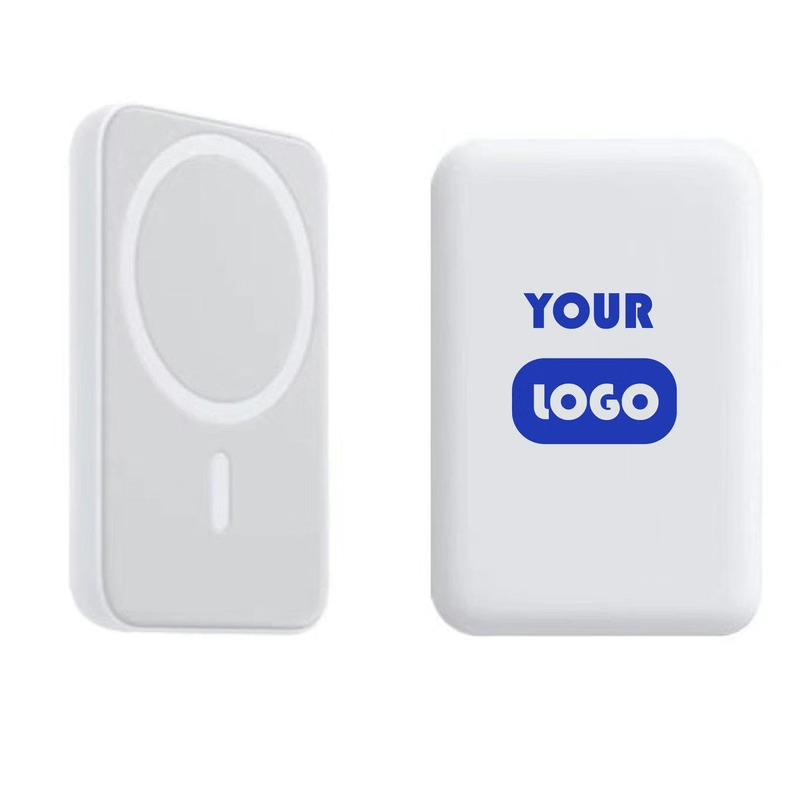
10,000 mAh Wireless Charging Power Bank
$11.58 - $25.35
View product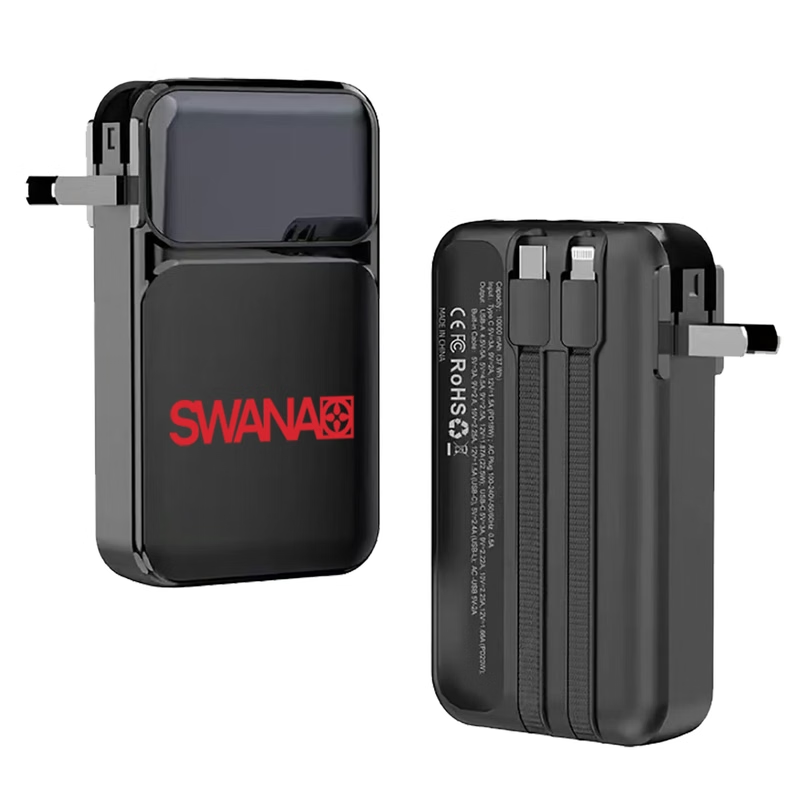
10,000 mAh Portable Charger w/Built In Wall Plug Power Bank
$27.43 - $32.36
View product
Power Bank FAQs
What Does mAh Mean for Portable Chargers?
Milliamp-hours describe battery capacity. Higher mAh usually means more stored energy, though charging efficiency and voltage conversion reduce usable capacity.
Is a 10,000 mAh Power Bank Good?
Yes. A 10,000 mAh portable battery offers a practical balance of capacity, size, weight, and everyday mobility for most smartphone users.
Can a Portable Power Bank Charge a Laptop?
Yes, when the USB-C PD output meets the laptop's power requirements. Check both the laptop charger's rating and the power bank's specifications.
What Is Pass-Through Charging?
Pass-through charging lets a battery pack receive power while charging another device. Support varies by model, and thermal management matters during this process.
Why Is My Power Bank Charging Slowly?
Common causes include a low-output wall charger, a weak cable, an incompatible charging standard, high battery temperature, or reduced output when multiple devices are charging.
How Long Do Portable Chargers Last?
Rechargeable battery life depends on cell chemistry, charge cycles, storage conditions, temperature, and charging habits. Capacity gradually declines as lithium batteries age.
Conclusion: Choosing the Best Power Bank in 2026
The best power bank should match your actual devices, routine, and charging requirements.
Choose a small power bank when portability comes first. Pick 10,000 mAh for balanced daily charging. Move toward 20,000 mAh or more when laptops, tablets, gaming devices, or long trips demand backup power.
Then examine USB-C connectivity, Power Delivery, wattage, usable capacity, charging efficiency, safety features, battery durability, size, weight, and travel restrictions. Those details matter more than a giant number printed on the package.
For organizations, useful technology creates repeated brand exposure. RELYmedia helps businesses choose custom charging products around audience, budget, quantity, deadlines, and branding goals.
Ready to choose a custom portable charging solution?
Contact RELYmedia for product recommendations, pricing, and a free digital proof.
Shop this
Need custom power banks? We print them.
Bulk pricing, three free mockups, real quotes back the same business day.