Does Polyester Shrink? What Heat Does to Polyester and Blends
August 6, 2026 · 9 min read
You pulled a performance tee out of the dryer and it looks smaller. Did the polyester shrink, or is it the cotton in the blend?
The short version: polyester holds its size far better than cotton, rayon or wool, and what little it can shrink comes from heat, not water. Below are the temperatures that matter, how common blends behave, and what this means if your shirts carry a printed logo.
By the RELYmedia editorial team · Updated November 2, 2026
Why Polyester Resists Shrinking
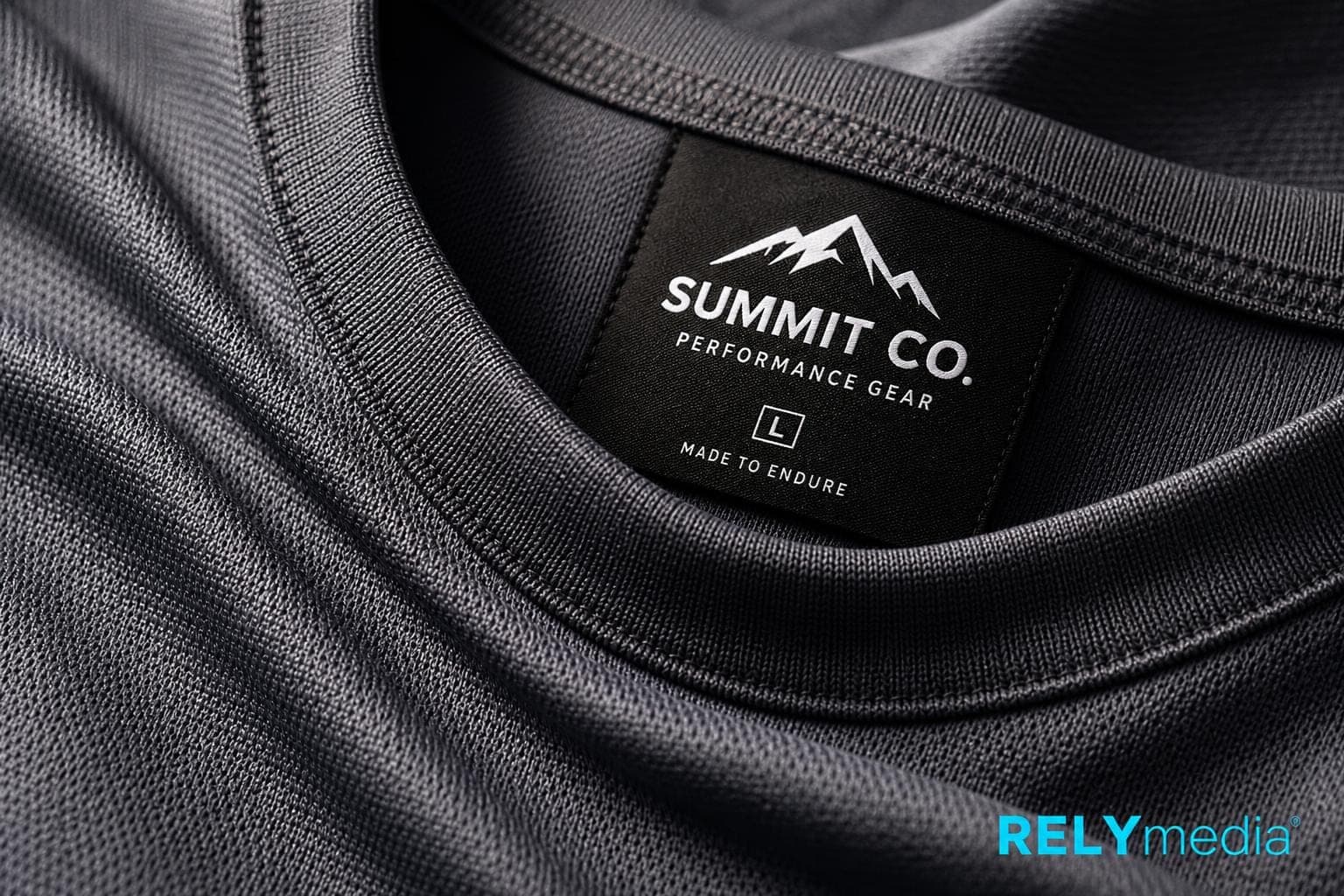
Most apparel polyester is polyethylene terephthalate (PET), the same polymer used in plastic drink bottles. It is melted, spun into fibers, then knit or woven into cloth. The fibers absorb very little water, so they do not swell and relax in the wash the way cotton fibers do. That swelling and relaxing is what makes cotton shrink.
PET is also thermoplastic: heat softens it and cooling locks it in a new shape. According to the PET reference data, the polymer starts to soften (its glass transition) at roughly 67 to 81 °C (153 to 178 °F) and melts above about 250 °C (482 °F). Mills use that behavior on purpose. They heat-set polyester fabric under tension at high temperature so the fibers remember that size.
Polyester only shrinks when new heat gets close to the temperature used to set it during production.
A cold or warm wash never gets near that point. A very hot dryer drum, a hot iron or a heat press can, and that is where the small amount of shrinkage people notice comes from.
When Polyester Does Shrink
Water alone will not shrink polyester. Heat does the damage, and the closer it gets to the fiber’s softening range, the more risk you take.
| Heat source | Shrink risk | Why |
|---|---|---|
| Cold or warm wash | Very low | Water stays far below the softening range |
| Hot wash | Low | Hot tap water still sits below most heat-set temperatures |
| High-heat tumble dry | Moderate | Long exposure to hot drum and air, garment tumbling loose |
| Iron on cotton or linen setting | High | Plate heat can glaze, shrink or melt the fibers |
Past a point the problem is no longer shrinkage. Polyester that gets too hot can glaze (turn shiny), pucker or melt, and that damage cannot be undone.
Check a Garment Yourself
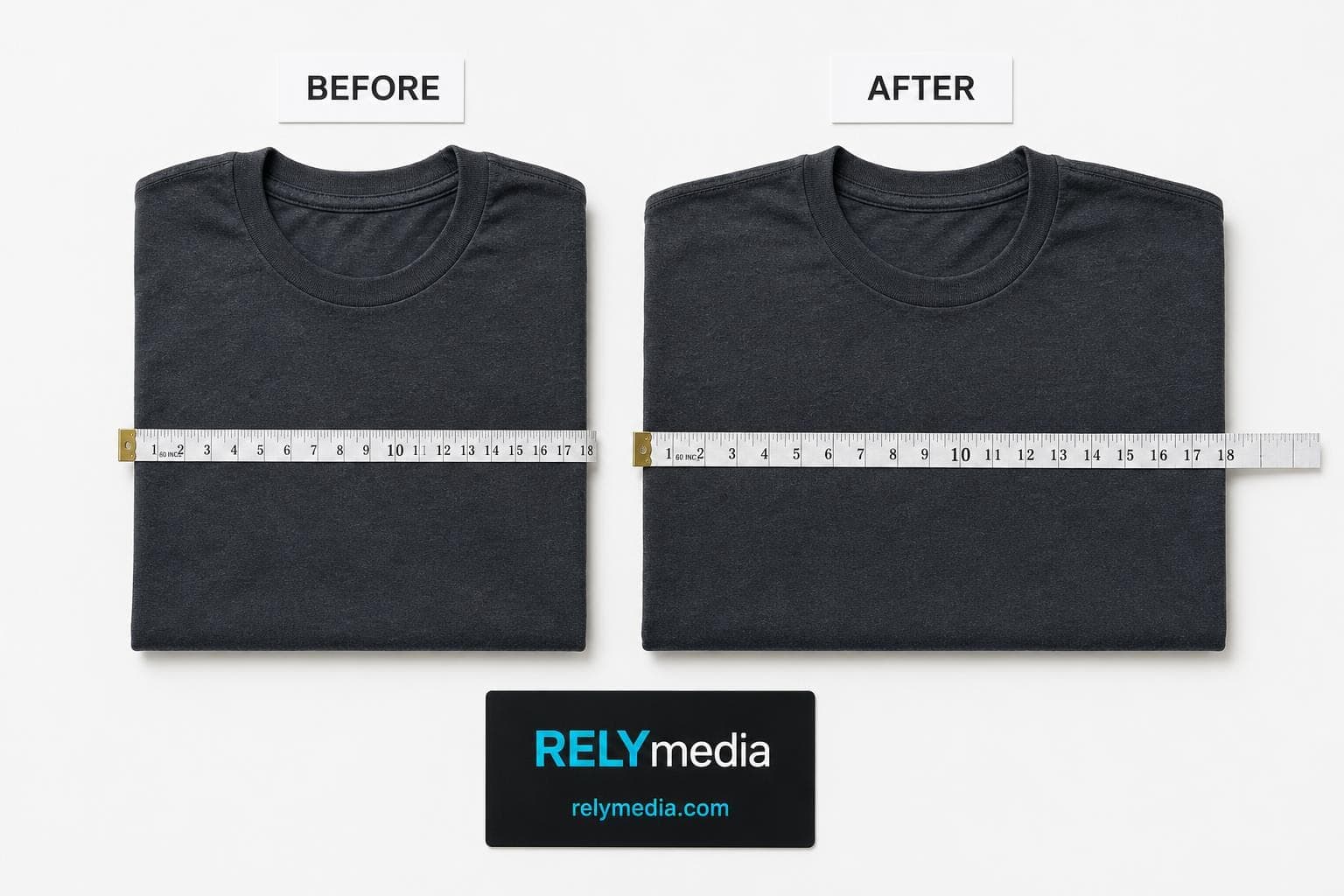
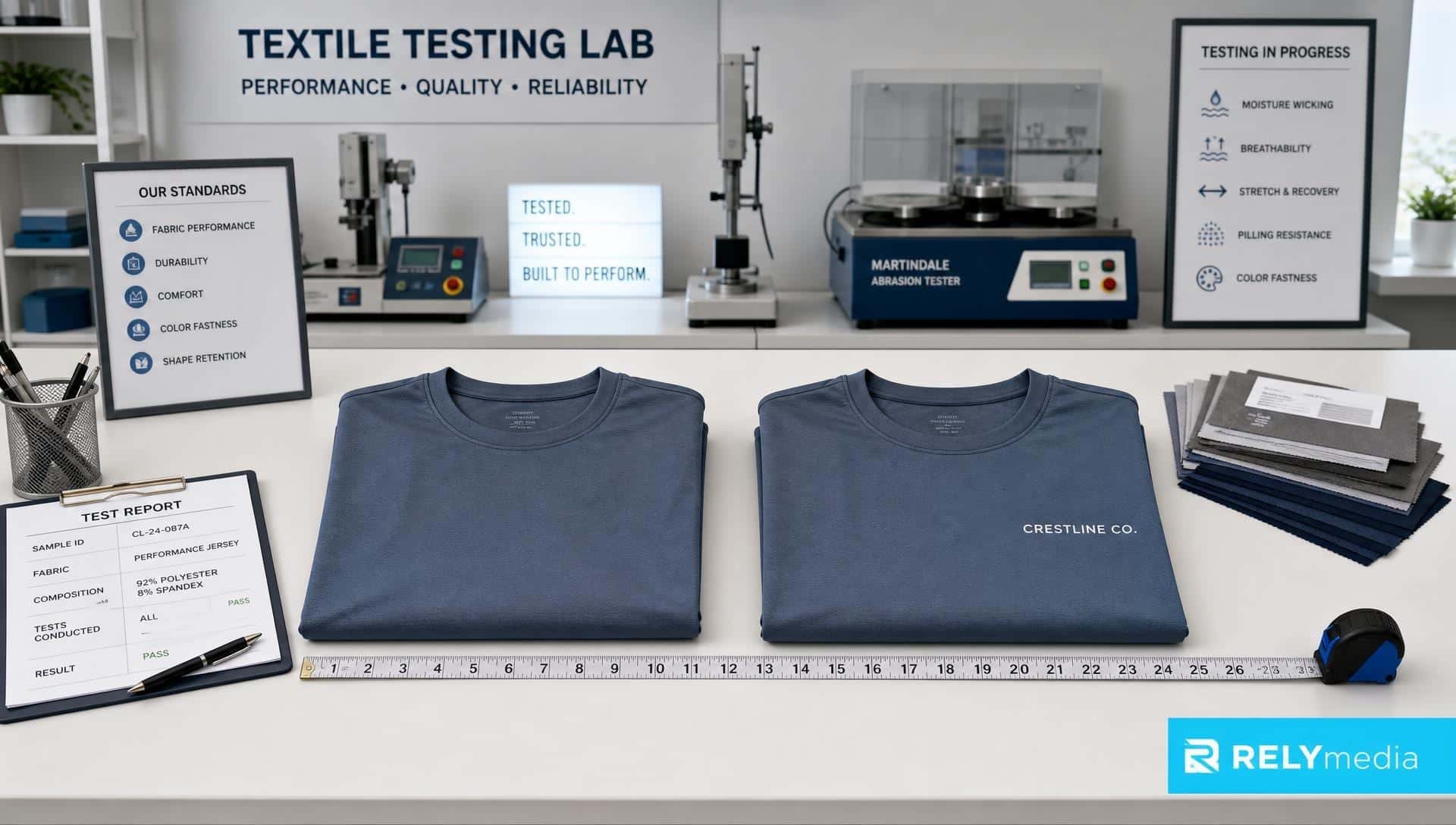
Shrinkage varies by knit, finish and blend, so the reliable answer for a specific shirt is to measure it. This is a simplified version of how textile labs check dimensional change:
- 1Lay the shirt flat and measure chest width (armpit to armpit) and body length (high point of the shoulder to the hem).
- 2Wash and dry it on the settings you actually plan to use.
- 3Let it cool and rest flat for a few minutes, then measure the same two points again.
- 4Divide the change by the original measurement and multiply by 100 to get the percent of shrinkage.
Repeat after three to five cycles if you want a fair picture, because some garments relax or shrink a little more over the first few washes.
Do Polyester Blends Shrink? (Cotton, Spandex & More)
Most printed tees and hoodies are blends, and blends behave differently because the other fiber changes the result.
Cotton-Polyester Blends
The cotton content shrinks, not the polyester. More cotton means more potential shrinkage, so a blend lands somewhere between the two fibers. The table ranks common blends by cotton share. It is a relative guide, not a measured percentage.
| Blend | Cotton share | What to expect |
|---|---|---|
| 65/35 poly-cotton | 35% | Closest to pure polyester of the common blends |
| 50/50 cotton-poly | 50% | Some shrink if dried hot, mostly from the cotton |
| 60/40 cotton-poly | 60% | Cotton leads, so treat it more like a cotton tee |
| 80/20 cotton-poly | 80% | Behaves close to pure cotton |
| Tri-blend (poly, cotton, rayon) | Varies | Rayon also shrinks easily, so wash cool and dry low |
Polyester-Spandex & Elastane Blends
Spandex (also sold as Lycra or elastane) adds stretch. A common mix is 95% polyester and 5% spandex. These blends hold their size well, but high heat breaks down spandex over time, so the garment can lose its snap-back and look baggy. Cool washes and low or no dryer heat protect it.
Polyester-Rayon Blends
Rayon is semi-synthetic and shrinks much more readily than polyester. A polyester-rayon blend shrinks more than pure polyester but less than pure rayon. When in doubt, air dry.
Recycled polyester is the same PET polymer as virgin polyester, so it responds to heat the same way. Care for it exactly like standard polyester.
How to Shrink Polyester on Purpose (If You Want To)
If a polyester shirt runs big, heat is the only lever, and the change you get is small and hard to predict.
- 1Wash in the hottest water the care label allows.
- 2Tumble dry on high for a full cycle.
- 3Check the fit and measure. Repeat once at most.
Do not try to force it with an iron or a heat press. You are far more likely to glaze or melt the fabric than to take off a size. If the garment is a blend, most of whatever shrinkage you get will come from the cotton or rayon.
How to Wash & Dry Polyester So It Keeps Its Shape
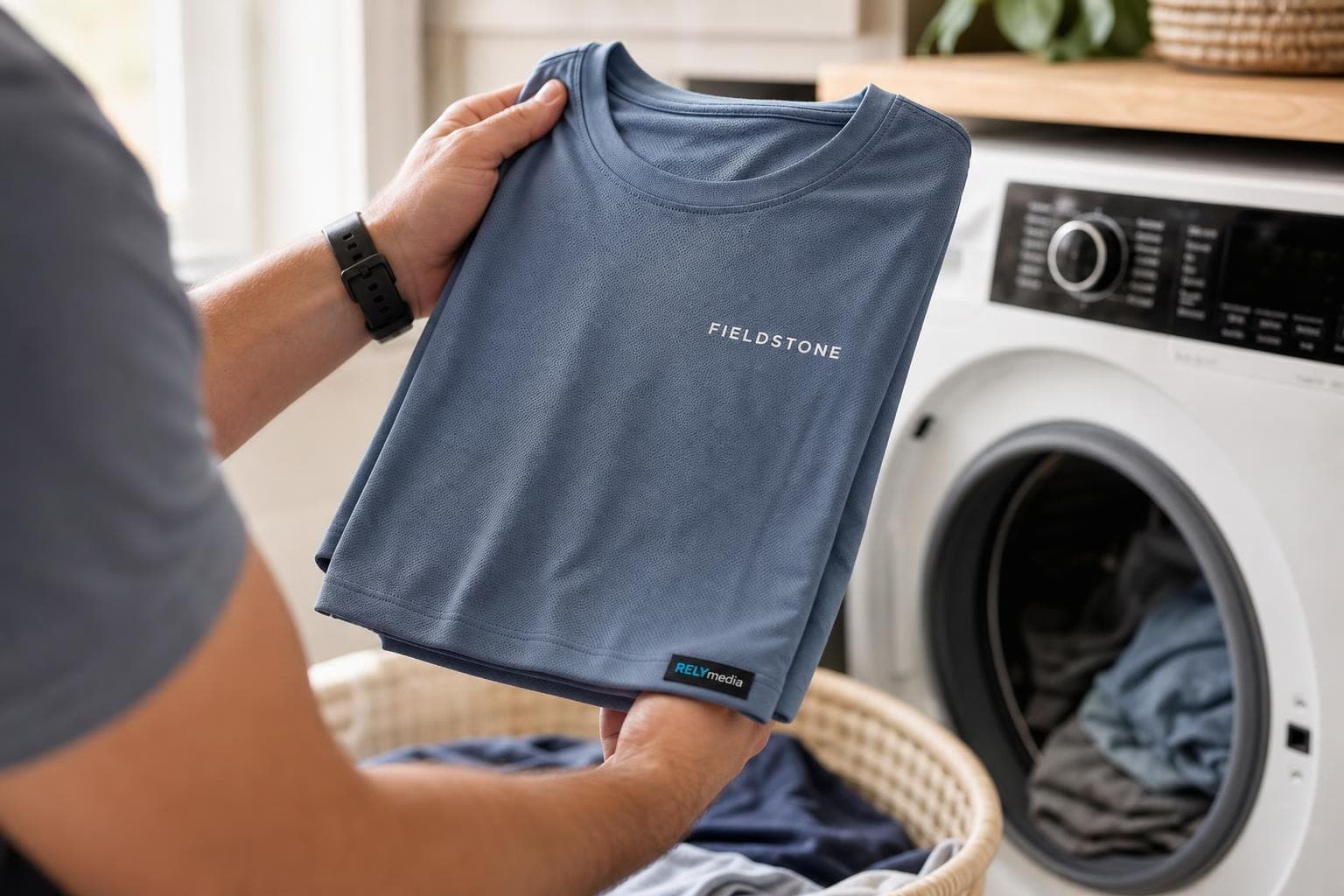
Start with the care label. In the US, the FTC’s Care Labeling Rule requires the label to warn you when regular hot water, a hot dryer or a hot iron would harm the garment, so a “tumble dry low” line is there for a reason.
Washing Polyester
Machine wash cold or warm
Polyester gets clean in cool water, and it keeps cotton in blends from shrinking.
Use the permanent press cycle
It has a cool-down and a gentler spin for synthetics.
Turn shirts inside out
This guards printed logos and reduces snags and pilling.
Skip fabric softener
It coats moisture-wicking fabric and slows the wicking.
Drying Polyester
- Use low heat (one dot on the tumble-dry symbol) or the air-dry setting.
- Avoid high heat. It is the most common cause of shrinkage and glazing.
- Hang drying is safest, and polyester dries quickly anyway.
- Remove promptly so the garment does not sit in a hot drum.
Ironing & Steaming Polyester Safely
The dots on an iron symbol stand for maximum soleplate temperatures: one dot is 110 °C (230 °F), two dots 150 °C (302 °F) and three dots 200 °C (392 °F), according to the care symbol system used on labels. Polyester belongs on the one or two dot (synthetic) setting, with a press cloth between the iron and the fabric, and never directly on a print. A garment steamer releases wrinkles without the melt risk.
Polyester vs. Cotton, Wool & Other Fabrics
Cotton shrinks more than polyester because its fibers absorb water and swell. Wool can felt and shrink badly with heat and agitation. Rayon and linen also move more in the wash. Polyester is the most size-stable of the common apparel fibers, which is why it dominates athletic and team wear.
| Advantages | Disadvantages |
|---|---|
| Resists shrinking | Can hold odor |
| Dries quickly | Less breathable in tight, cheap knits |
| Wrinkle-resistant | Sensitive to high heat |
| Durable and strong | Not biodegradable |
| Holds color well | Can feel less soft than cotton |
PET was patented in 1941 by John Rex Whinfield and James Tennant Dickson of the Calico Printers’ Association in Manchester, England, and DuPont began producing its Dacron polyester fiber in the US in 1950.
What This Means for Printed Polyester Apparel
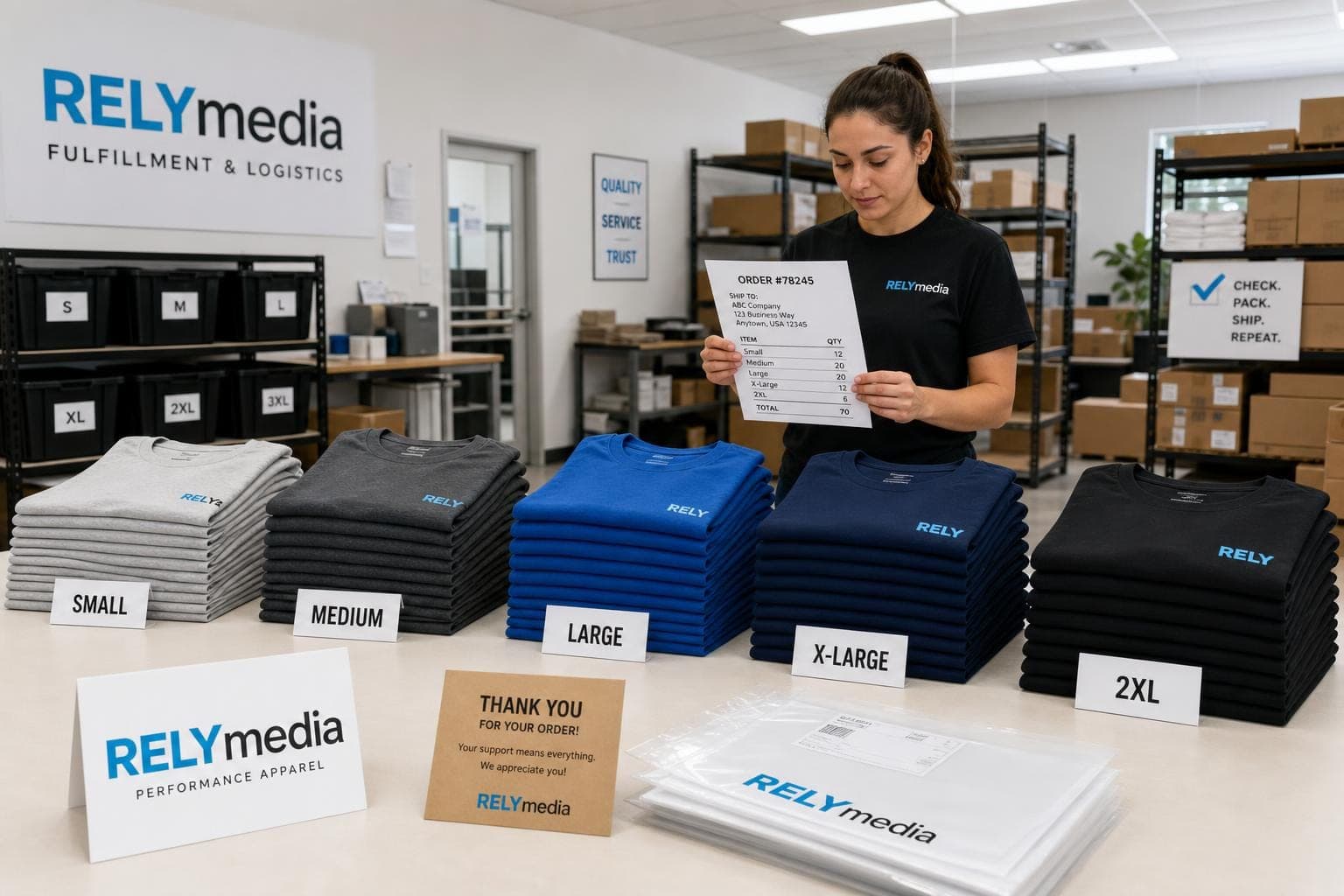
Because polyester holds its size, a printed logo stays where you put it and a team’s shirts still fit after a season of washing. The bigger risk with polyester is not shrinkage but heat during decoration.
Dye Migration
On polyester, poly-cotton blends and tri-blends, too much heat at the flash, cure or post-cure stage can make the fabric’s dye gas off into the ink. A white or light logo on a red or dark polyester shirt then turns pink or gray, and the change is permanent. SanMar’s decorator white paper on dye migration recommends low-cure inks with bleed-blocking properties, which generally cure at 290 to 320 °F and some as low as 250 °F, plus a gray or black blocker base when migration is aggressive and letting garments cool before stacking them.
The Best Printing Method for Polyester
| Method | Best For | Watch out for |
|---|---|---|
| Dye sublimation | Full-color designs on white or light 100% polyester | Does not work on cotton or dark garments |
| Screen printing | Bold logos, larger runs | Needs low-cure, low-bleed ink on polyester |
| DTF transfers | Detailed, multi-color art on blends and darks | Press temperature and time must suit polyester |
| Embroidery | Polos, jackets, caps | Use backing so thin knits do not pucker |
Dye sublimation turns the ink into a gas that bonds with the polyester fibers, so the design becomes part of the fabric and will not crack or peel. It only works on high polyester content and light colors. For dark or blended shirts, screen printing with low-cure ink or a DTF transfer is the usual choice. Browse custom athletic wear for polyester performance shirts that take these methods well.
Ready to outfit your team?
Send the garment, color, quantity and logo through the quote form below.
Ready to put your logo on custom polyester tees?
Fill in your details and a RELYmedia specialist will come back to you with a custom quote. Fast turnaround, no obligation.
- ⚡Same-day response on business days
- 🎨Free design assistance included
- 🚚Rush order & fast delivery available
- 💰Price beat guarantee on every order
Shop custom team shirts
See all custom t-shirts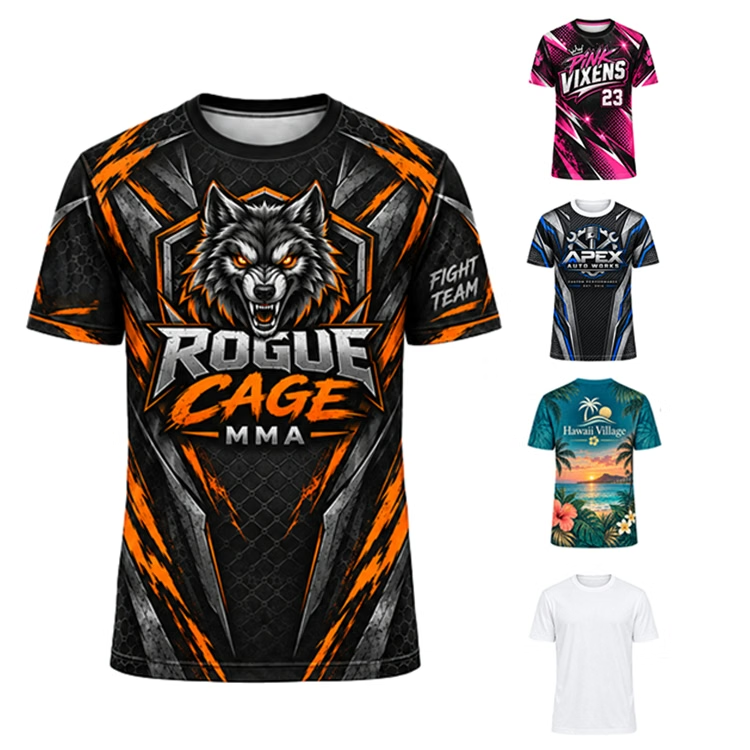
Malibu Full Color Sublimated Performance T-Shirt
$14.59 - $22.32
View product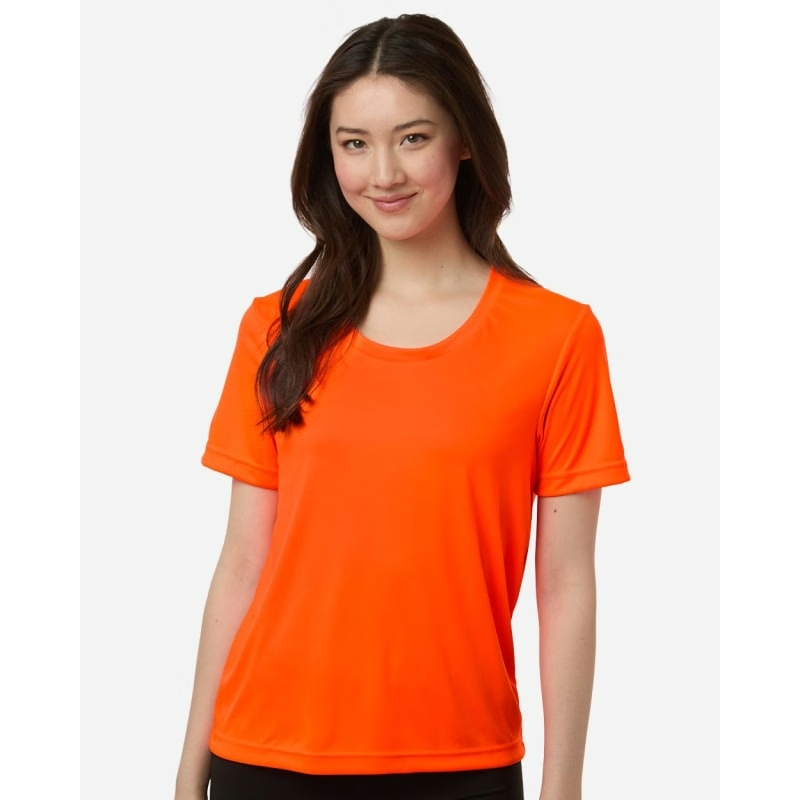
CORE365 Women's Capital Performance T-Shirt - CE10W
$7.72 - $9.72
View product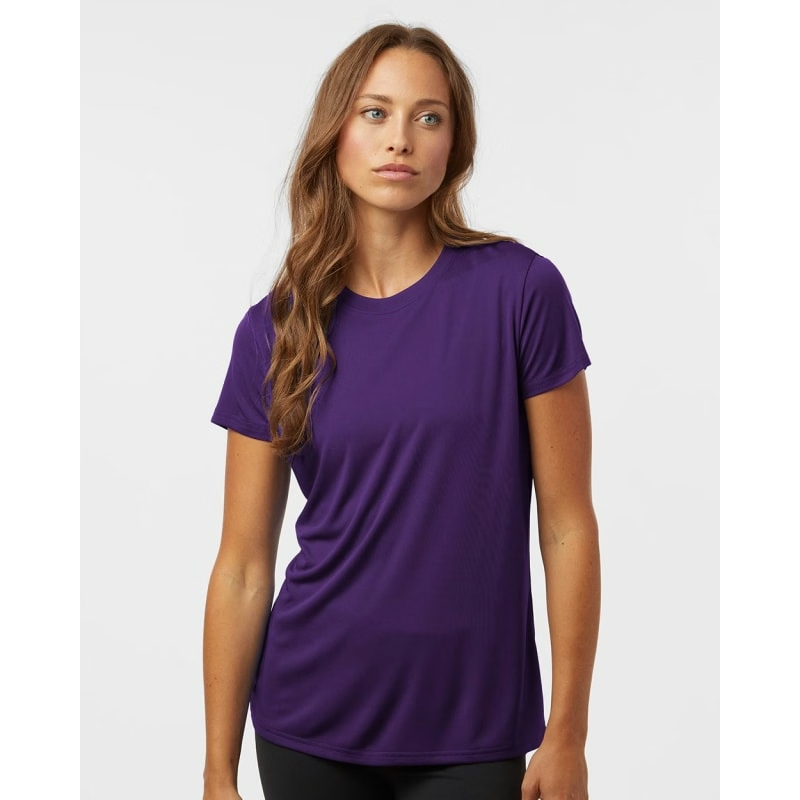
AllPro Women's Pro-Lock Performance T-Shirt - 48000L
$10.32 - $12.32
View product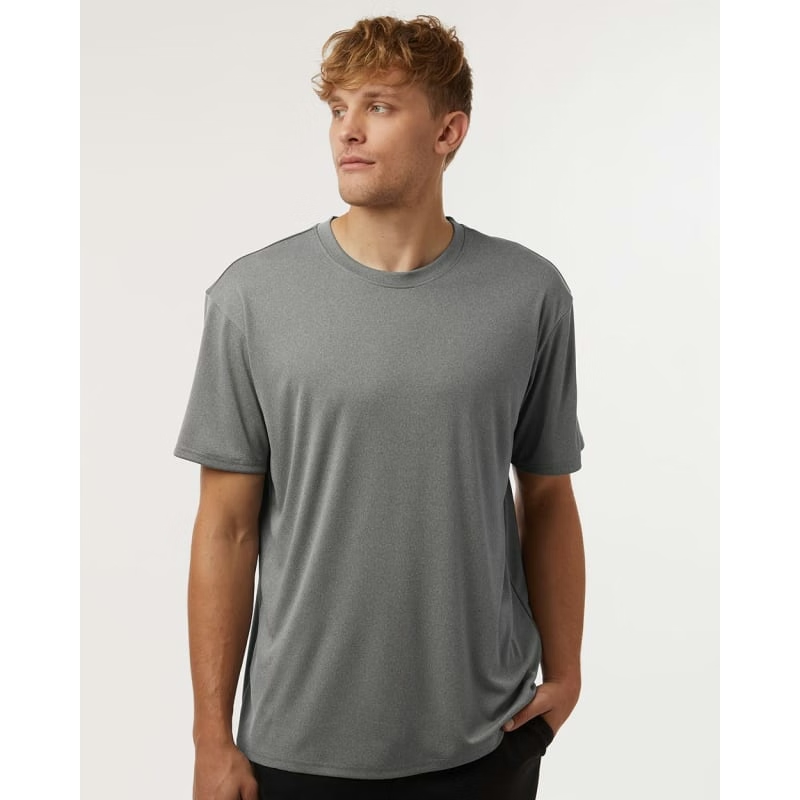
AllPro Men's Pro-Lock Performance T-Shirt - 48000
$11.36 - $13.36
View product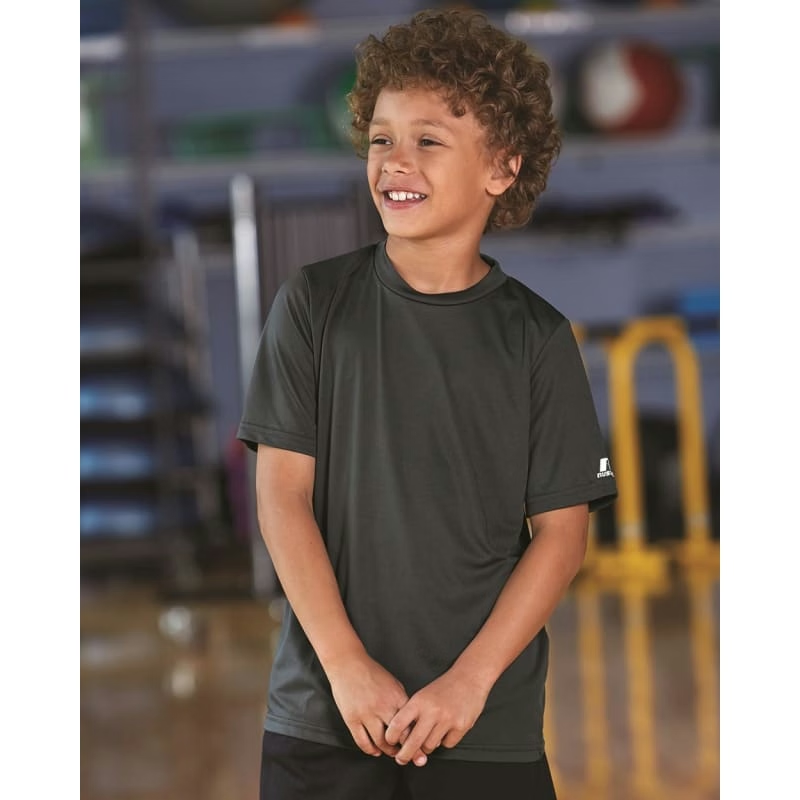
Russell Athletic Youth Core Performance T-Shirt - 629X2B
$24.50 - $26.50
View product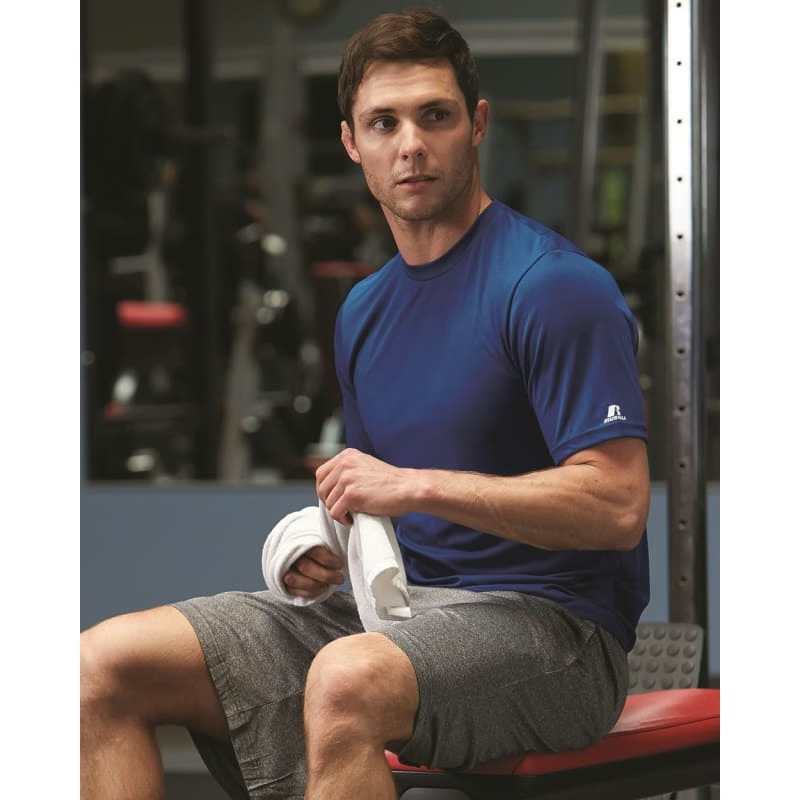
Russell Athletic Unisex Core Performance T-Shirt - 629X2M
$28.46 - $30.46
View product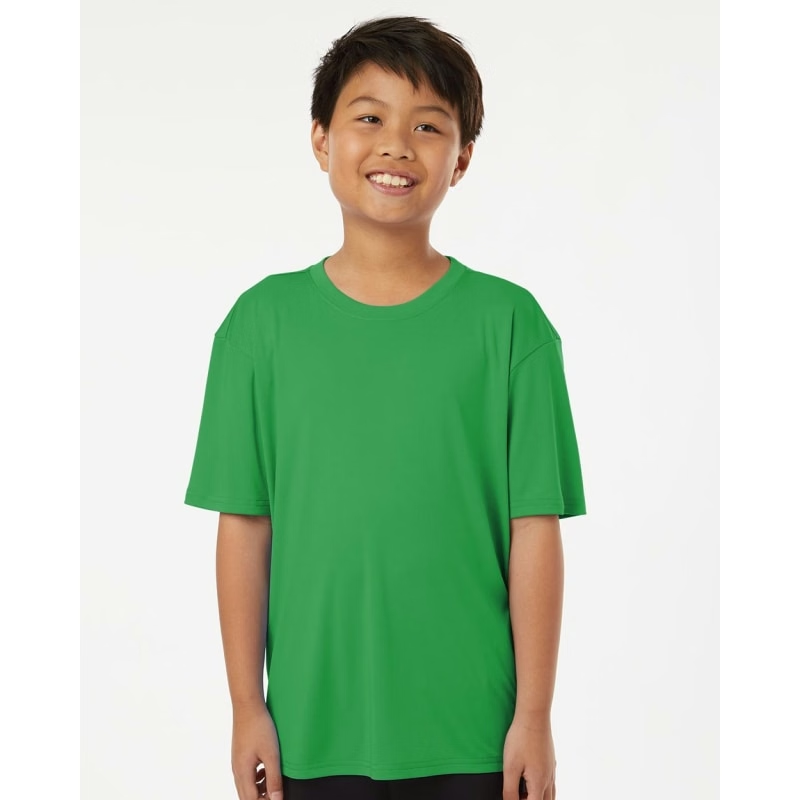
AllPro Youth Pro-Lock Performance T-Shirt - 48000Y
$9.28 - $11.28
View product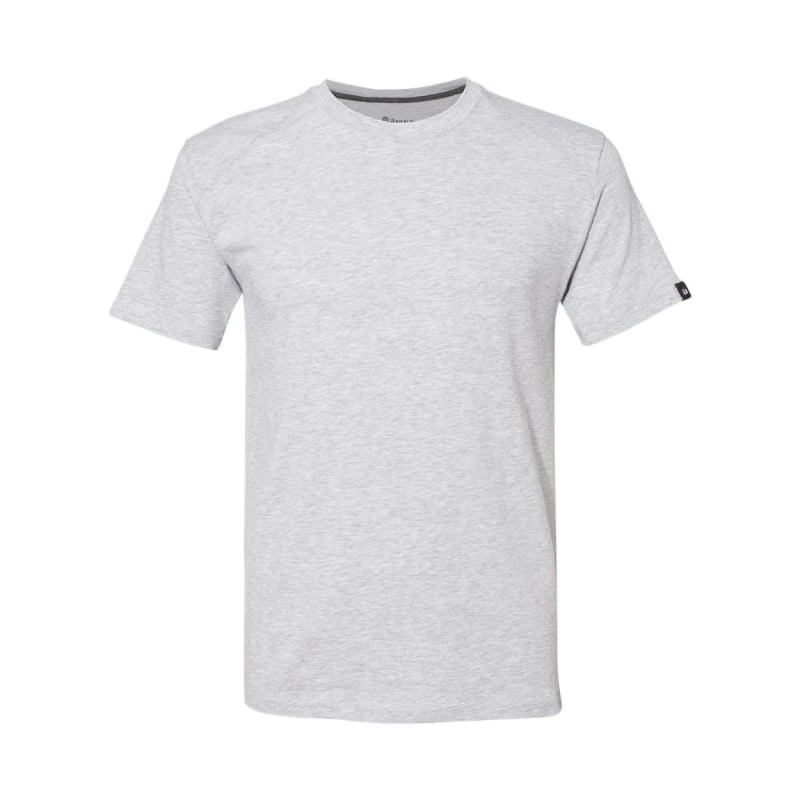
Badger Men's FitFlex Performance T-Shirt - 1000
$28.42 - $30.42
View product
Frequently asked questions
Can 100% polyester go in the dryer?
Yes, on low heat. The tumble-dry symbol with one dot means reduced heat, which is the right setting for polyester. High heat is the main cause of the small shrinkage polyester can show, and very high heat can glaze or pucker the surface. Taking garments out as soon as the cycle ends also helps, because they keep heating while they sit in a hot drum.
Does 60/40 cotton/polyester shrink?
It can, and the cotton is responsible. With 60% cotton, the shirt behaves more like a cotton tee than a polyester one, so a hot wash and a high-heat dry can take it down noticeably. Wash it cool and dry it low. If you are choosing a blank for a printed run and want the most stable fit, a polyester-heavy blend such as 65/35 poly-cotton holds its size better.
What iron setting is safe for polyester?
The low synthetic setting, marked with one dot (110 °C / 230 °F) or two dots (150 °C / 302 °F) on care labels. Use a press cloth, keep the iron moving, and never iron directly over a screen print, transfer or vinyl. A steamer is the safer choice for wrinkles.
Why did the white logo on my red polyester shirt turn pink?
That is dye migration, not a washing problem. During printing, too much heat from the flash or curing dryer can release the fabric dye into the ink, tinting light colors. It happens at the decorator, it is permanent, and it is prevented with low-cure, low-bleed inks, blocker bases and careful heat control rather than with laundry settings.
Does recycled polyester shrink more than regular polyester?
No meaningful difference is expected. Recycled polyester is the same PET polymer, usually made from post-consumer bottles, so it softens at the same temperatures and needs the same care: cool wash, low dryer heat, low iron.
Shop this
Need custom polyester tees? We print them.
Bulk pricing, three free mockups, real quotes back the same business day.