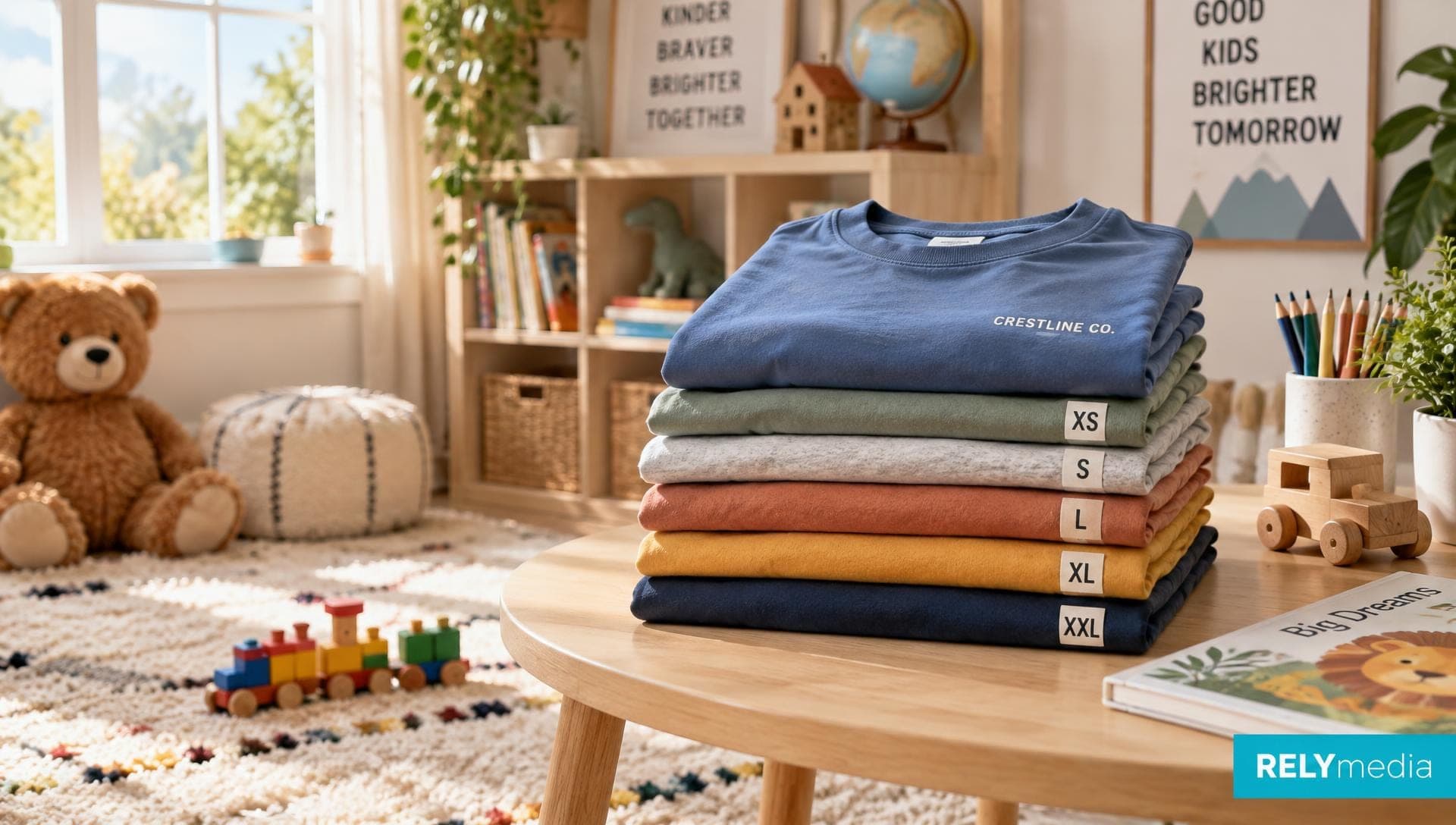
Youth T-Shirt Size Chart and Custom Kids Apparel Size Guide
September 28, 2026 · 9 min read
Ordering custom kids' apparel sounds simple until you actually sit down with a size chart. One kid's “medium” fits like a tent. Another kid's “medium” barely clears their belly button. If you've ever opened a box of custom youth t-shirts and heard a parent say, “This is one's way too big,” you already know why a solid kids' apparel size guide matters more than most people expect.
At RELYmedia, we've helped schools, sports leagues, and small businesses across the country order custom kids' clothing that actually fits the kids wearing it. This guide breaks down youth apparel sizing, toddler apparel sizing, and everything in between, so your next bulk order lands right the first time.
Why Kids' Sizing Works Differently Than Adult Sizing
Adult clothing sizes stay fairly predictable. A medium fits a medium-build adult, give or take an inch. Kids' clothing sizes don't work that way, and growth spurts are the reason.
A seven-year-old can gain three inches in a single summer. Body proportions shift constantly during childhood — legs lengthen, shoulders widen, and the “chubby toddler” build gives way to a leaner youth frame within a year or two. Youth development doesn't follow a straight line, so age-based sizing is a starting point, not a guarantee.
That's exactly why a good youth apparel size guide relies on actual body measurements rather than just a birthday.
Toddler Size Chart (2T–5T)
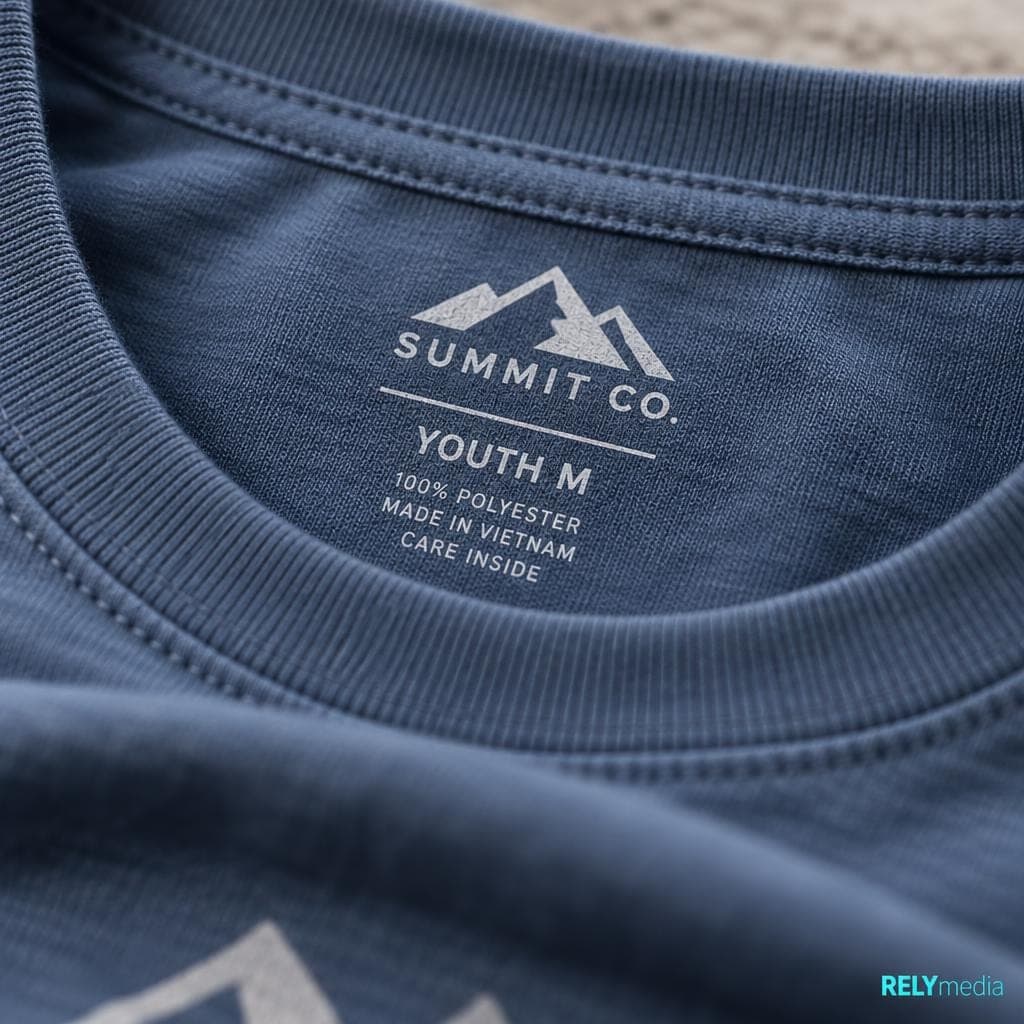
Toddler apparel covers roughly ages one through five, and it's cut differently than youth clothing. Toddler clothes account for rounder bellies, shorter arms and legs, and often a diaper or pull-up underneath.
What the “T” Actually Means
The “T” in 2T, 3T, 4T, and 5T simply stands for toddler, and the number is a rough age match. It's a helpful shorthand, but toddler growth varies so much that a “3T” on one child might swim on a same-age friend.
| Toddler Size | Approximate Age | Chest (inches) | Height (inches) |
|---|---|---|---|
| 2T | 2 years | 21–22 | 33–36 |
| 3T | 3 years | 22–23 | 36–39 |
| 4T | 4 years | 23–24 | 39–42 |
| 5T | 5 years | 24–25 | 42–45 |
A 3T child size doesn't always match a 3-year-old exactly, so always check chest and height together, not just the number on the tag.
Youth Size Chart (XS–XL)
Youth clothing sizes generally start around age four or five and stretch into the preteen years. Kids in this range have a leaner build and no diaper bulk, so youth sizing is cut closer to the body than toddler clothing.
Matching Youth Sizes to Age and Measurements
Here's a youth T-shirt size chart that translates letter sizes, numeric sizes, and ages into sizes you can actually order.
| Youth Size | Numeric Equivalent | Age Range | Chest (inches) | Height (inches) |
|---|---|---|---|---|
| Youth XS | 4–5 | 4–5 years | 23–24 | 43–46 |
| Youth Small | 6–8 | 6–8 years | 27–28 | 48–52 |
| Youth Medium | 10–12 | 10–12 years | 29–30 | 54–58 |
| Youth Large | 14–16 | 13–14 years | 31–33 | 59–63 |
| Youth XL | 18–20 | 14–16 years | 34–36 | 64–66 |
So if you've ever wondered what size a youth medium T-shirt is or what 10/12 means in youth shirts, this is your answer key. A youth small shirt typically fits a 6-to-8-year-old, while a youth large fits closer to early teens.
When to Transition from Youth to Adult Small
Once a child is about 5 feet tall with a 34–36-inch chest, youth XL often runs tight, and it's worth trying an adult small instead. Custom youth apparel and adult apparel aren't scaled versions of each other, so don't assume a youth XL and an adult small share the same cut.
How to Measure Kids for Custom Apparel
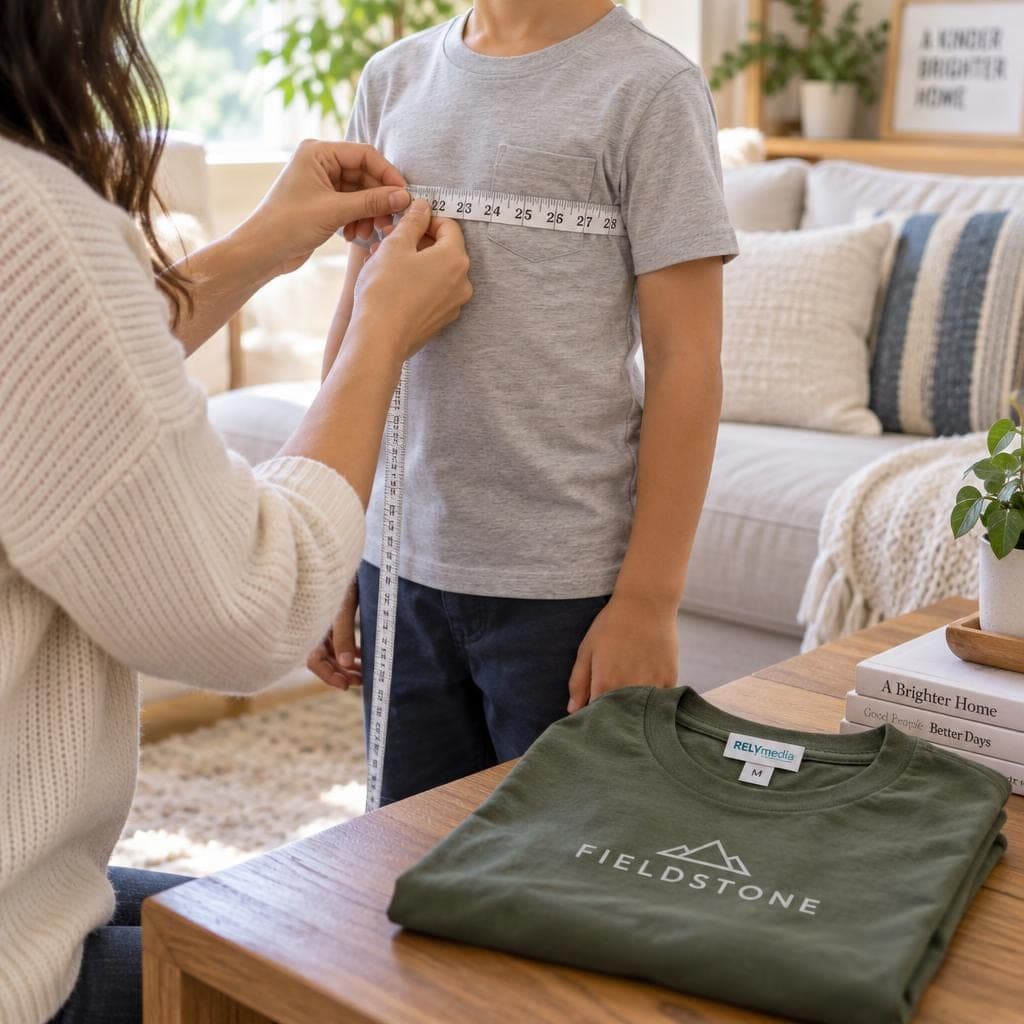
Guessing a size based on age alone leads to returns and reorders. A flexible tape measure and two minutes solve most sizing headaches.
Chest Measurement
Wrap the tape measure under the arms, around the fullest part of the chest, keeping it snug but not tight.
Length Measurement
Measure from the top of the shoulder, near the neck, down to wherever you want the shirt or hoodie to end.
Sleeve Measurement
With the arm slightly bent, measure from the center back of the neck out to the wrist for accurate sleeve length.
Tips for Measuring an Active Kid Without a Meltdown
- Turn it into a quick game — have them stand "like a superhero" for ten seconds
- Measure over a thin shirt, not bulky clothing, for accurate body measurements
- Take measurements at the same time of day, since kids fidget less right after a meal
- If the child squirms too much, measure a well-fitting shirt they already own instead
Boys' vs. Girls' Fit: What Actually Changes
Most youth t-shirts and hoodies are cut unisex, but a few differences show up once you look closely. Girls' cuts often taper slightly at the waist and sit a touch shorter in the body, while boys' cuts tend to run straighter through the torso. Youth polo shirts and school apparel sometimes offer separate boys' and girls' fits, especially for uniforms, so check the product description before assuming one size chart covers both.
Boys' sizing and girls' sizing also diverge more noticeably once kids approach the preteen years, since body proportions start shifting toward adult patterns earlier for some kids than others. If your group includes a wide age range, ordering a small run of both cuts in the middle sizes gives everyone a comfortable option instead of forcing one fit on the whole roster.
Choosing the Right Fabric for Kids' Apparel
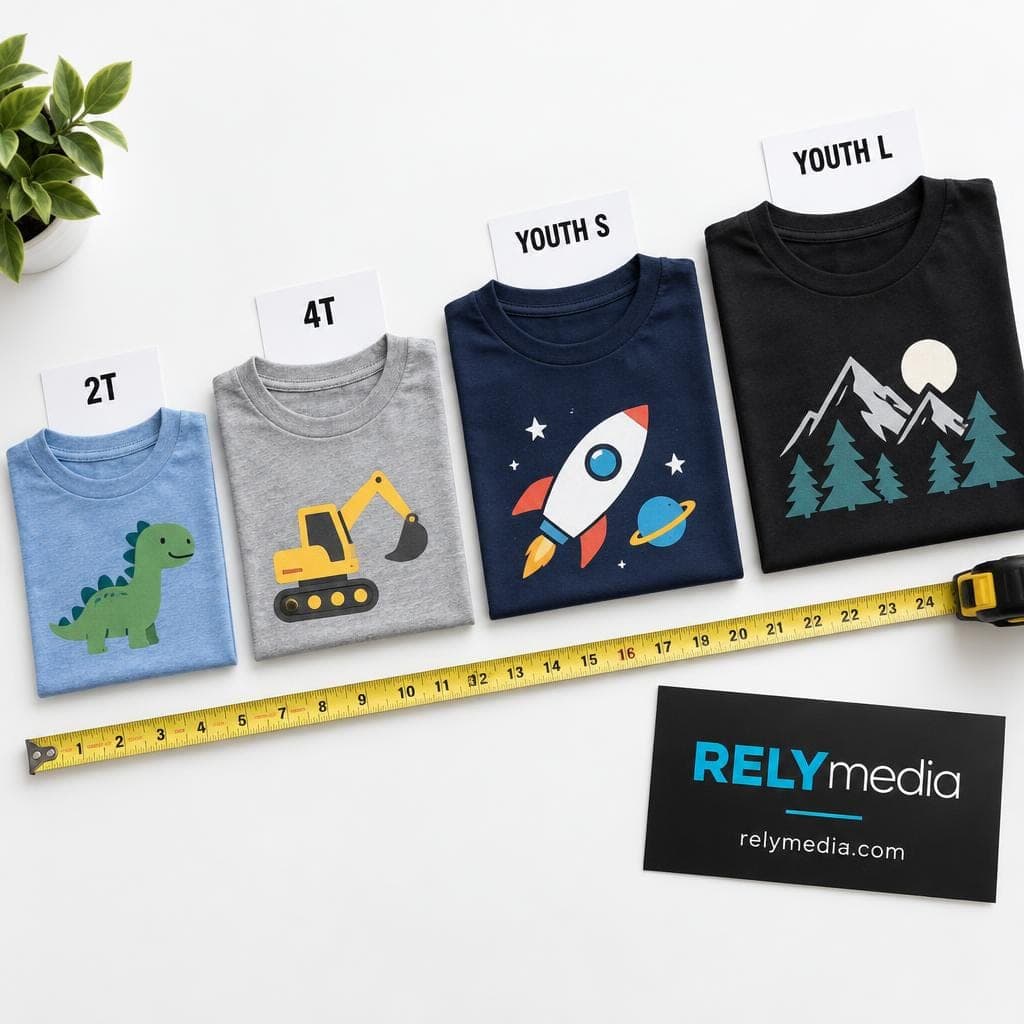
Fit and fabric go hand in hand, and this part is skipped more often than it should be.
- Cotton apparel feels soft and breathable but can shrink slightly after the first wash — sizing up a little helps offset this
- Cotton blend and poly-cotton blend fabrics resist shrinkage better while staying comfortable for all-day wear
- Moisture-wicking fabric and performance t-shirts suit active kids, sports practice, and gym days
- Fleece hoodie and heavyweight fleece options trade breathability for warmth, ideal for cooler months
- Details like air jet yarn, pill-resistant fabric, and a tearaway label or removable tag add comfort and durability that parents actually notice
- Sustainable cotton blends and reinforced stitching add durability without sacrificing softness, which matters for anything worn to recess and back
- Look for wrinkle resistance and a soft finish on dress shirts and polos, since those get less gentle handling once they're in a kid's backpack
Garment shrinkage is normal with natural fibers. Washing in cold water and air-drying when possible helps a properly sized shirt fit well for longer. Quality craftsmanship and premium construction cost a little more upfront, but they mean fewer reorders when a shirt survives an entire school year of wear.
Beyond the size chart itself, a few small features add up to comfortable everyday wear. Moisture management keeps active kids dry during athletic clothing use, tag-free comfort and removable labels stop that all-too-familiar itching at the back of the neck, and durable construction on a drawstring-free hoodie means it holds up to backpacks, playgrounds, and everything in between. Lightweight, breathable clothing matters just as much for a kids' activewear order as the size itself, since a perfectly sized shirt in the wrong fabric still ends up uncomfortable by recess.
Common Sizing Mistakes to Avoid
Even careful parents and organizers run into the same handful of sizing traps. Here's how to avoid sizing mistakes before they turn into a reorder.
- Sizing purely by age. A size selection based only on age ignores how much kids vary within the same age group. Always cross-check with a chest measurement.
- Skipping the fit comparison. A classic fit and a relaxed fit from two different brands can differ by a full inch at the same labeled size, so don't assume sizing standards match across brands.
- Ignoring growth room. For fast-growing kids, sizing up one level gives a few extra months of wear before the shirt gets retired.
- Forgetting the activity. A relaxed-fit tee might work for a fundraiser shirt, but a snugger performance cut suits youth team jerseys and sports uniforms better.
- Trusting old measurements. Toddler development moves fast — remeasure every few months rather than reusing last year's numbers.
Getting fit and sizing recommendations right the first time saves money on shipping and reprinting, and avoids the awkward conversation about why Little League jerseys don't fit half the team.
Popular Custom Kids Apparel Styles
Once you've nailed down the size, the next decision is style. Here's where most bulk orders land.
Custom Youth T-Shirts
The most common order for classrooms, clubs, and fundraisers. Custom t-shirts print cleanly with front-print or back-print designs, and a classic fit keeps sizing predictable.
Custom Kids Hoodies & Sweatshirts
Kids' hoodies and youth sweatshirts work well for spirit wear and cooler-weather events. Look for a drawstring-free hood on younger sizes for added safety.
Custom Youth Polos
Youth polo shirts suit school uniforms, award ceremonies, and any event calling for a slightly dressier look than a tee.
Custom Kids Activewear
Kids' activewear made from moisture-wicking, lightweight fabric keeps young athletes comfortable during practice and on game day alike.
Who Orders Custom Kids Apparel
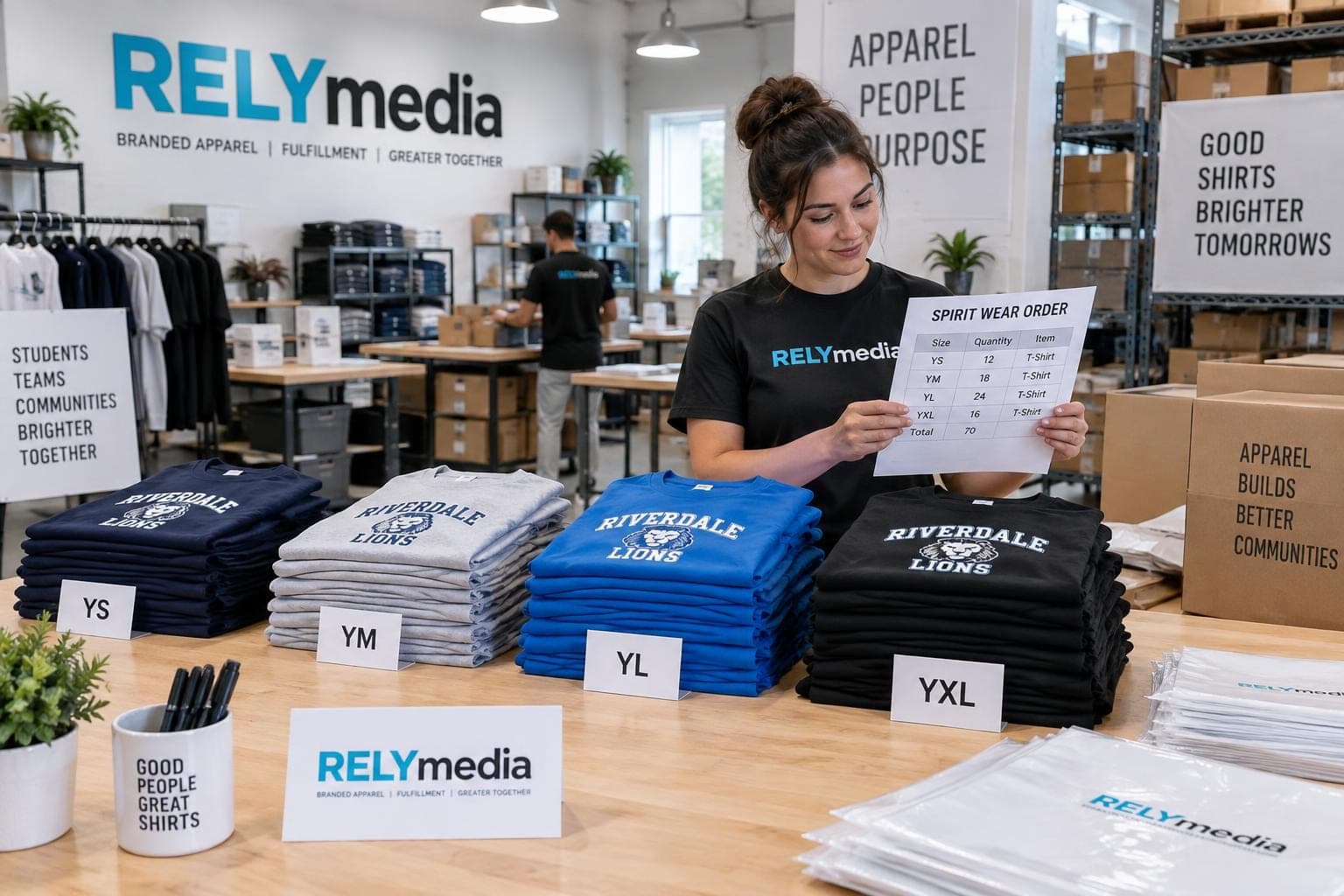
Custom kids' apparel appeals to a broader audience than most people expect. Parents and guardians order personalized kids' shirts for a birthday, a family reunion, or a first-day-of-school photo. Teachers and coaches lean on classroom shirts and team apparel to build spirit before the big game or the class trip. Elementary and middle schools turn to custom school apparel for field day and spirit week, while youth organizations, community groups, and after-school programs order event apparel for fundraisers or weekend outings. Nonprofit organizations count on nonprofit apparel to raise both money and awareness at once, and sports teams need uniforms that can withstand a full season of practices and games.
Whatever the group, the process is similar: buy kids' clothing in bulk, order custom apparel from a dependable youth clothing supplier, and skip the markup that comes with buying one shirt at a time from a children's clothing store. Wholesale apparel through a reliable supplier means custom team shirts, youth hoodies, and youth clothing without paying a per-item premium — a detail that matters when children's activities and school events come up every semester.
Tips for Bulk Kids Apparel Orders
Bulk apparel orders come with their own set of sizing challenges. Keep these in mind:
- Size up when unsure. Running out of larger sizes causes more headaches than a slightly loose small.
- Collect sizes early. A short form to parents or guardians beats guessing.
- Reference past orders. If you've ordered team apparel or club apparel before, use that sizing breakdown as a starting point.
- Request samples. For nonprofit apparel, school uniforms, or classroom apparel, one sample-size run prevents a full reorder
- Build in a buffer. Order a few extra small and medium sizes — they're the fastest to run out.
Why Choose RELYmedia for Custom Kids Apparel
RELYmedia is a US-based promotional products and branding company headquartered in Eagan, Minnesota, and kids' apparel sizing is exactly the kind of detail our team gets right the first time. We work with schools, youth sports teams, and organizations of every size, backed by industry-leading customer service, fast turnaround times, and hundreds of five-star reviews.
Whether you need custom printing, embroidery, or a simple front-print design on a youth t-shirt, our team helps you get the right kids' clothing sizes before the order ships, not after.
Ready to order custom kids' apparel that actually fits?
Get a free quote from RELYmedia today.
Ready to print your team's name on premium apparel?
Fill in your details and a RELYmedia specialist will come back to you with a custom quote — fast turnaround, no obligation.
- ⚡Same-day response on business days
- 🎨Free design assistance included
- 🚚Rush order & fast delivery available
- 💰Price beat guarantee on every order
Shop custom youth apparel
See all youth apparel
Youth Elevated Essentials Cotton T-Shirt 5.3 oz
$47.01 - $60.72
View product
JERZEES Classics™ Youth T-Shirt
$1.80
View product
JERZEES Ultimate® Ring-Spun Youth T-Shirt
$2.20
View product
Gildan Ultra Cotton Youth T-Shirt
$6.34 - $9.65
View product
EcoSmart Youth T-Shirt
$6.10 - $9.84
View product
Gildan Long Sleeve Youth T-Shirt Heavy Cotton
$11.42 - $17.90
View product
DryBlend Youth T-Shirts 5.6 oz
$5.94 - $9.84
View product
Gildan® Ultra Cotton® Youth T-Shirt
$4.64 - $6.72
View product
Frequently Asked Questions
What size is a youth medium T-shirt?
Youth medium typically corresponds to sizes 10–12, fitting kids roughly 10- 12 years old with a 29–30-inch chest.
What size is 10/12 in youth shirts?
10/12 lines up with youth medium, generally fitting kids between 54 and 58 inches tall.
How big is a youth small shirt?
Youth small usually covers sizes 6–8 and is suited to kids around 48- 52 inches tall.
What size is a youth large T-shirt?
Youth large corresponds to sizes 14–16 and fits early teens with a 31–33-inch chest.
Do youth sizes run the same as adult sizes?
No. Youth apparel is cut for different body proportions than adult clothing, so a youth XL won't fit like an adult small.
What is a youth small shirt size?
A youth small shirt size covers 6–8, roughly matching kids between 48 and 52 inches tall.
What size shirt is a youth small?
The same range applies here — youth small corresponds to sizes 6–8 across most youth t-shirt brands.
How big is a youth large T-shirt?
A youth large T-shirt fits sizes 14–16 and is generally suited to early teens with a 31–33-inch chest.
What age is youth medium?
Youth medium generally fits kids aged 10 to 12 years, though chest measurement matters more than age alone.
What size is a youth 10-12?
Size 10- 12 in youth shirts lines up with youth medium, fitting kids in the 5458-inchh height range.
What size is a youth extra-small T-shirt?
Youth extra small typically covers sizes 4–5 and is suited to kids around 43- 46 inches tall.
Is a 3T the same size as a 3-year-old?
Not always. A 3T child size is a rough estimate — some 3-year-olds fit a 2T, others need a 4T, depending on their build.
What size is a 4T shirt?
A 4T shirt generally fits a 4-year-old with a 23–24-inch chest and a height of 39–42 inches, though it's worth measuring first.
How do I know whether my child needs a youth XL or an adult small?
Once a child reaches roughly 5 feet tall with a 34–36-inch chest, try an adult small — youth XL tends to run tight around that point.
Do boys' and girls' sizes run differently in youth apparel?
Slightly. Girls' cuts often taper at the waist, while boys' cuts run straighter, though most everyday youth t-shirts are unisex.
How much room should I leave for growth when ordering kids' apparel?
Sizing up by one level typically buys a few extra months of wear for a fast-growing kid without the shirt looking oversized right away.
Final Thoughts: Nail the Fit on Your Next Order
Custom kids' apparel sizing isn't complicated once you measure rather than guess. Match the chest and height to the size chart, size up if a child falls between two sizes, and pick a fabric suited to how the shirt will actually be worn.
RELYmedia makes the rest easy — from custom kids' t-shirts to youth hoodies, polos, and activewear, our team handles the printing, sizing guidance, and fast turnaround so your group looks great and feels comfortable.
Start your custom kids apparel order with RELYmedia today
Skip the sizing guesswork on your next bulk order — custom kids' t-shirts, youth hoodies, polos, and activewear with sizing guidance and fast turnaround.
Frequently asked questions
What are youth t-shirt sizes?
Youth T-shirt sizes are usually labeled XS through XL and generally cover kids from about age four or five into the preteen years. Because growth spurts and body proportions vary, the most reliable way to pick a youth size is to match actual body measurements, especially chest (and height), to the size chart.
Is 10 12 a youth medium?
Youth sizing often uses both letter sizes (XS-XL) and numeric ranges like 10/12. Numeric sizes are meant as a translation to help you order, but kids vary a lot by build even at the same age. Use chest and height measurements to confirm the right choice instead of relying on 10/12 alone.
Is 5T and youth XS the same size?
Toddler and youth sizes are not the same cut. Toddler sizes (2T-5T) are designed for rounder bellies, shorter limbs, and sometimes diaper bulk, while youth sizes start around age four or five and fit closer to the body with a leaner shape. Check chest and height, not just the label.
How do you measure a child for a youth T-shirt?
Use a flexible tape measure. Measure chest by wrapping the tape under the arms around the fullest part of the chest, snug but not tight. Measure length from the top of the shoulder near the neck down to where you want the shirt to end. For sleeves, measure from center back of neck to wrist with the arm slightly bent.
Shop this
Need custom kids apparel? We print them.
Bulk pricing, three free mockups, real quotes back the same business day.
Keep reading
Shop by category
Our Customer Feedback


Mike Larson
 (5)
(5)Unbelievable Turn-around
We are stunned with how quickly we received our order. It turned out perfect, and all of our interactions with staff have been fantastic. Thank you so much!
Jana
(5)Great customer service and on-time delivery with product as advertised!
The product arrived exactly as advertised and on time. This company was very easy to work with, and the price was great!
Sarah
(5)Quick Turn-Around and Immediate Communisaton
I've ordered a couple times from RELY. My initial order was not time sensitive so we had time to get it correct. We went back and forth with proofs until I felt comfortable. When I had a question, the sales team was very responsive. When it came to my re-order, I needed it fast. They responded and got it to me right on time.
Rob
(5)Fabulous experience, great suggestions from the staff!
The sales staff had great suggestions and were very helpful in the process to, in the end, get exactly what was necessary for our use!
Emily
(5)Great service!
Everything went well as anticipated, and as planned. Service was superb & shipment was expedited in a speedy fashion! Thank you for your service!
Freddy
(5)Thumbdrives
2nd time I have ordered from these guys and they have a good product for the price. The delivery time was as said with no troubles. Would recommend and will be reordering again.
Patty
(5)This is a top notch company. Awesome as what they do. Highly recommend.
If you are looking for a company that says what they do and then do what they say - RELYmedia is for you!!! We have done a couple critical orders with RELYmedia and they were ahead of schedule and the items were perfect. We will be utilizing their talents again!!!
Blanca
(5)Very responsive,
All my inquiries were handled in a very timely fashion. My contact was courteous and helpful. Items ordered were received very quickly. Thanks for the superior service!
Andrew
(5)Overall great experience.
They are friendly and knowledgeable. They are well priced, and ship fast.
Trusted By