How Many of Each Size T-Shirt to Order for a Group
September 28, 2026 · 10 min read
Twenty people RSVP for your company picnic. Forty employees need matching polos before a trade show. A hundred volunteers show up for a 5K, and every one needs a shirt that actually fits. Sound familiar?
Ordering t-shirts for a group sounds simple until you try to figure out how many of each size to buy. Guess wrong, and you're stuck with a box of extra-larges nobody wants and a waitlist of people who needed a medium.
This guide breaks down the real T-shirt size distribution numbers, explains what each size actually means, and walks through the factors that shift your order one way or another. By the end, you'll know how to plan a bulk T-shirt order for any group, from a five-person office to a five-hundred-person conference.
Why T-Shirt Size Distribution Matters for Group Orders
Here's a question we hear all the time: How many people are considered a group? There's no hard rule. A family reunion t-shirt order might cover twelve people; a corporate uniform rollout might cover twelve hundred. Most print shops set their bulk apparel order threshold around a dozen pieces, but the sizing math works the same whether you're ordering ten shirts or ten thousand.
At RELYmedia, we've handled bulk orders for nonprofits organizing volunteer t-shirts, schools printing school spirit shirts, and national brands rolling out employee uniforms across dozens of locations. That range of experience taught us a simple lesson: the right-sized breakdown saves money, reduces exchanges, and makes your group look sharp rather than sloppy.
Getting your t-shirt size distribution right the first time means:
- Less time spent on exchanges and reorders
- Lower shipping costs from fewer follow-up shipments
- Happier recipients who actually wear the shirt
- A more professional look for company shirts, team shirts, or event apparel
Ready to see the numbers? Let's start with the basics.
T-Shirt Size Chart: What Each Size Actually Means
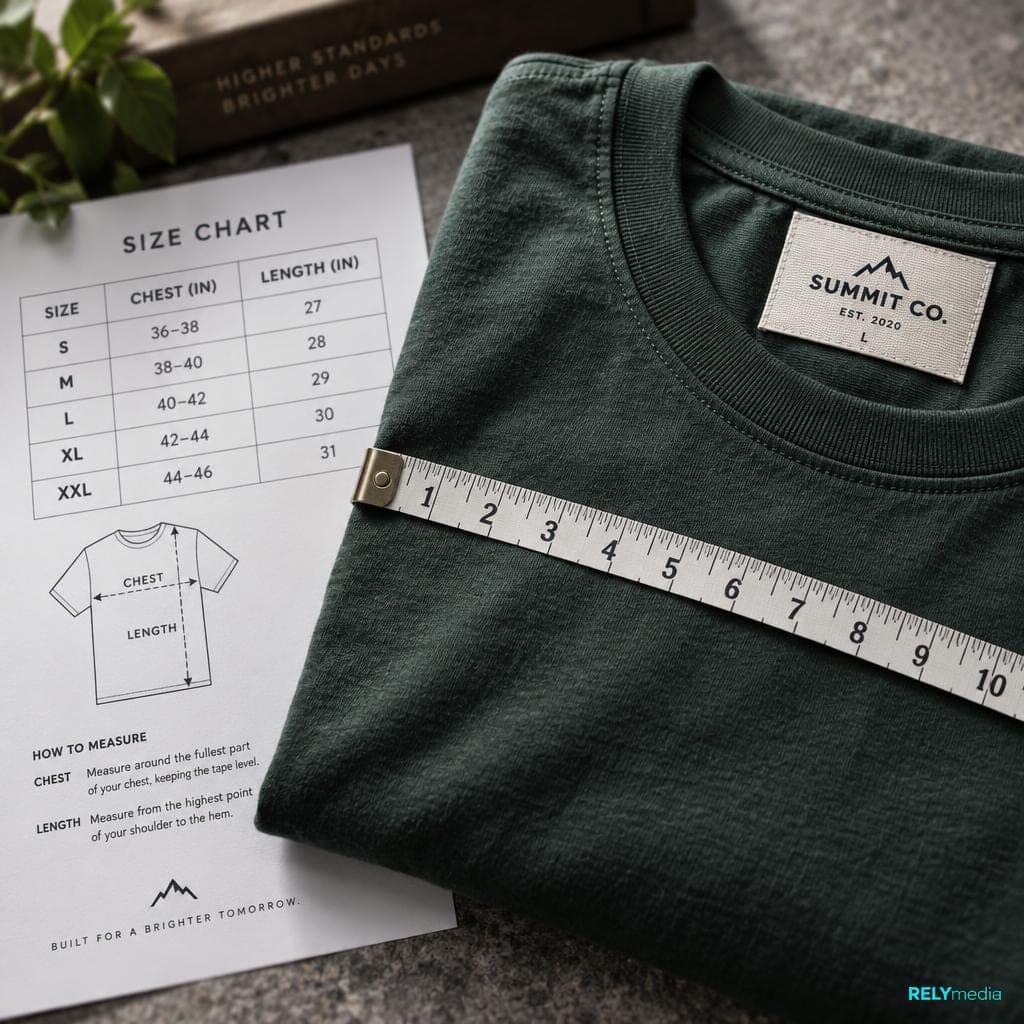
Before you can build a smart size breakdown, you need to know what each size actually covers. Chest measurements vary a bit by brand, but here's a standard t-shirt sizing guide you can count on for most adult t-shirts.
| Size | Also Called | Chest (inches) | Common In Bulk Orders |
|---|---|---|---|
| S | Small, size S | 34–36 | Roughly 5–8% of most orders |
| M | Medium, size M | 38–40 | One of the top three sizes ordered |
| L | Large, size L | 42–44 | Usually the single most-ordered size |
| XL | Extra Large, size XL, XLarge | 46–48 | A close second or third most common |
| 2XL | XXL, size 2XL, 2X | 50–52 | Growing share of most group orders |
| 3XL | XXXL, 3X | 54–56 | Smaller share, but rarely zero |
Small, Medium, and Large Sizes Explained
Size small and size medium shirts fit slimmer builds and shorter torsos best. Medium-sized shirts sit right in the middle of most t-shirt size charts, which is why a medium-sized shirt often becomes the starting point brands use to size everything else up or down. Large sizes step up from there, adding a couple of inches through the chest and shoulders. In most adult T-shirt orders, size L is the most popular size, so never skimp on large T-shirt counts. Ask ten people what shirt size M or shirt size large means, and you'll get ten different answers, which is why a real chest measurement always beats a guess.
What Is XL Size? XL vs. XXL Explained
So, what is XL size, exactly? An XL T-shirt typically covers a 46- to 48-inch chest, one step up from a large. People often ask what the difference is between an extra-large and a regular large: usually two to four inches wider through the chest, depending on the brand. Whether someone searches “x large t-shirt size,” “what size is x large,” or “xl what is the size,” they're all asking the same question, and the chest measurement answers it, not the letter on the tag. When it comes to XL vs. XXL, think of XL as the bridge size, fitting broader builds without the extra room a 2XL provides.
What Is 2XL Size? 2XL vs. XXL Explained
A 2XL shirt (also written as XXL) usually covers a 50- to 52-inch chest. Naming gets messy here: some brands print “2XL,” others “XXL,” and a few write it as “2X” or “2 XL.” That's the short answer to what 2XL is and what size 2XL is. Comparing 2XL vs. XL, the jump adds real room through the shoulders and sleeves, not just the waist. If you spot a tag reading “2EG” on an older catalog, that's almost always a scanning error for 2XL, not a separate size.
Extra-Large and Beyond: 3XL and Bigger
Extended sizes like 3XL, 4XL, and beyond cover chests from 54 inches and up. If someone on your list needs a 10X, plan for a specialty order since most standard programs cap out around 5XL or 6XL. An adult large shirt fits the middle of most groups fine, but don't forget the ends of the range. Some brands print “1X” instead of XL on women's-specific charts, so a 1XL shirt and a women's XL are usually the same garment. Dress shirts use a different system entirely, sized by neck and sleeve length (like a 16/32-33), which has nothing to do with letter sizing. Kids' sizes work differently too, often numbered like a youth 10-12, so never mix an adult chart with a children's order.
Quick Answers to Common Sizing Questions
A few of these come up on nearly every group order, so here they are in one place.
What size is a large shirt?
42 to 44 inches through the chest on almost every standard adult chart.
M is what size, exactly?
Just below large, usually 38 to 40 inches, and the size most brands build their chart around.
How big is 2XL?
50 to 52 inches through the chest, roughly four inches wider than a large.
How big is a 10X shirt?
Big enough that most standard programs don't stock it; plan on a specialty order.
How do shirt sizes work in a bulk order?
Multiply headcount by percentage to get a count per size, rather than ordering one of everything.
Does size distribution change based on the group?
Yes. A construction crew and a yoga studio skew toward opposite ends of the chart, even with identical headcounts.
The Most Common T-Shirt Size Distribution for Group Orders
“A shirt that runs a little big still gets worn. A shirt that runs small ends up in a drawer.”
That's the golden rule behind most T-shirt size distribution planning, and it's held up across thousands of RELYmedia orders. When in doubt, round up.
Size Breakdown for Large Group Orders
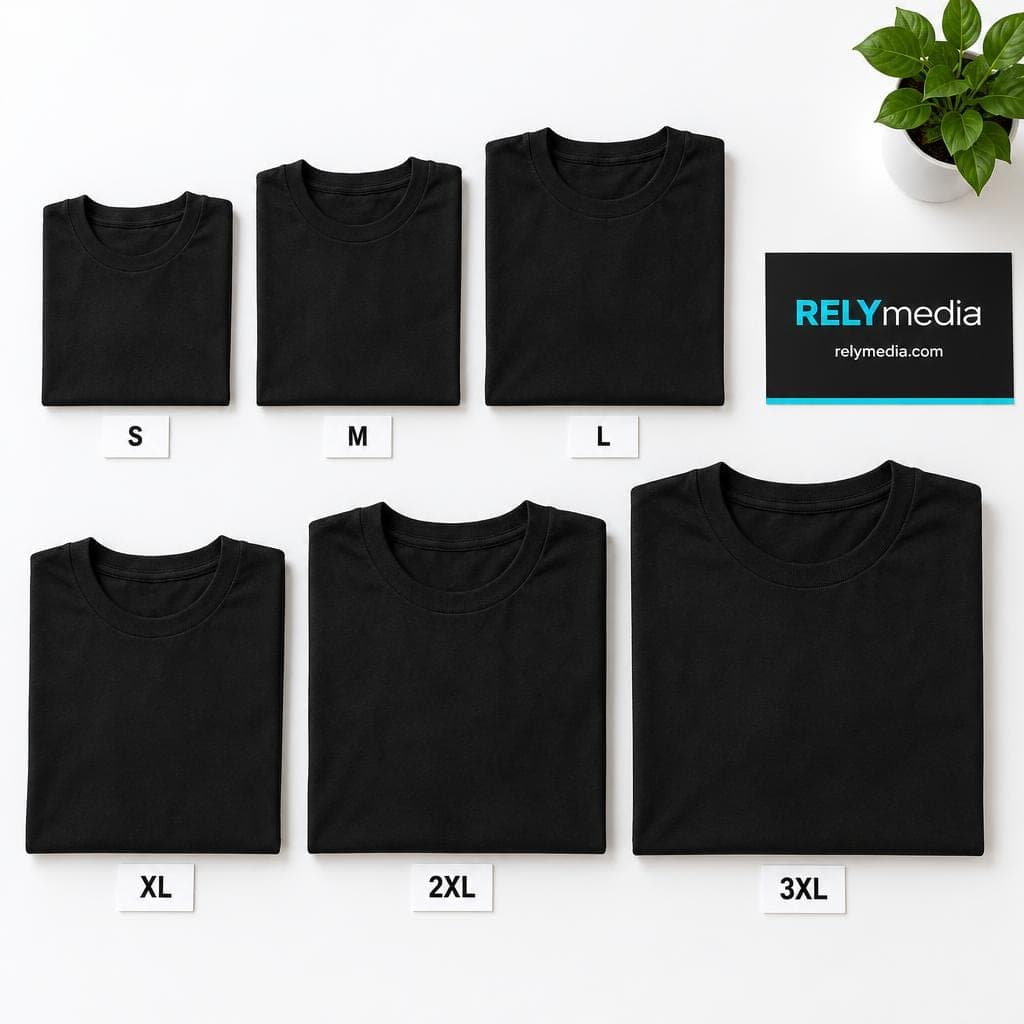
For orders of 100 pieces or more, this size breakdown calculator approach works well as a starting point:
| Size | Percentage of Order |
|---|---|
| S | 6% |
| M | 22% |
| L | 30% |
| XL | 24% |
| 2XL | 12% |
| 3XL | 6% |
Multiply your total headcount by each percentage to get a rough count per size. Order 200 shirts, for example, and you'd land around 44 mediums, 60 larges, and 48 extra-larges. This same approach works whether you're sizing group clothing for a 200-person conference or a 50-person warehouse crew.
Size Breakdown for Small Group Orders
Smaller teams don't always need every size in the chart. For groups under 25 people, a simplified Ratio works better:
- Small: 1 shirt per 10 people
- Medium: 2 shirts per 10 people
- Large: 3 shirts per 10 people
- XL: 3 shirts per 10 people
- 2XL: 1 shirt per 10 people
That gives you a fast, easy-to-scale formula without overordering sizes nobody on your roster needs.
Factors That Affect Your T-Shirt Size Distribution
The numbers above are a solid baseline, but a few real-world factors shift things.
Order Size and Group Type
Smaller orders skew toward the middle sizes since there's less room to spread risk across the full range. Larger group orders can support the full spectrum, from small to 3XL, since the volume justifies every size.
Fabric and Shrinkage: Cotton vs. Polyester vs. Blends
Why do wholesale T-shirts shrink after printing? Heat. The curing process used in screen printing can cause 100% cotton shirts to shrink by roughly 2%. Poly-cotton blends and tri-blend shirts shrink far less, and 100% polyester barely shrinks at all. Polyester apparel and cotton apparel behave very differently under heat, so if your group is ordering pure cotton clothing, size up slightly. Preshrunk cotton, shrink-resistant fabric, and moisture-wicking blends solve most of this if comfort and durability matter for your event, and for everyday clothing or casual wear, a standard-cut cotton blend shirt forgives a size guess that's slightly off.
The Event or Occasion
Different events pull the size chart in different directions:
| Group or Event Type | What It's Usually Called | Sizing Tendency |
|---|---|---|
| Company outing or trade show | corporate apparel, corporate uniforms, workplace apparel, business promotional products | Standard distribution, skews business casual |
| Staff or team rollout | staff shirts, staff apparel, employee shirts, employee uniforms, team shirts, team uniforms, uniform shirts | Sized to actual staff measurements |
| Nonprofit or charity event | volunteer shirts, volunteer t-shirts, charity event shirts, fundraiser shirts, fundraiser t-shirts, nonprofit apparel | Runs a size larger for giveaways |
| School or reunion | school shirts, school spirit shirts, class reunion shirts, family reunion t-shirts, reunion t-shirts | Wide age and size range |
| Conference or trade show booth | conference shirts, conference apparel, trade show shirts, giveaway t-shirts | Sized larger, one-size-fits-most |
| Club or organization | club apparel, organization shirts, organization apparel, organization branding | Matches core membership sizing |
| Band or festival | band shirts, band t-shirts, festival shirts, festival t-shirts | Looser, relaxed fit preferred |
Notice a pattern? Group clothing and group merchandise almost always take their cue from the event itself, whether that's a group T-shirt order for twelve coworkers or a group shirt order for five hundred conference attendees. Company event apparel and employee appreciation gifts mirror your workplace's everyday dress code, while branded event clothing and branded giveaways handed out at a booth run a size bigger on purpose, since organizers want maximum reach across a crowd of strangers. Work T-shirts for men on a job site also tend to be larger and sturdier.
Unisex vs. Men's vs. Women's Sizing
This is where a lot of group orders go wrong. Unisex sizing and men's sizing run almost identically, with only small brand-to-brand variation. A men's t-shirt sizing guide rarely lines up with a women's chart: men's small vs women's small can differ by a couple of inches through the shoulder, and the gap only grows comparing men's large vs women's large. Women's cuts run narrower through the shoulders, more contoured through the torso, and shorter in the sleeve. Most suppliers group these into three fit types: slim fit (fitted through the body), semi-fitted (a middle ground), and standard fit (the classic boxy cut). If a meaningful share of your group is women, don't just order a smaller unisex size; look for a supplier with inclusive sizing and an extended size range, including plus-size t-shirts, rather than one fashion-forward apparel cut for everyone.
How to Collect Accurate Sizes From Your Group
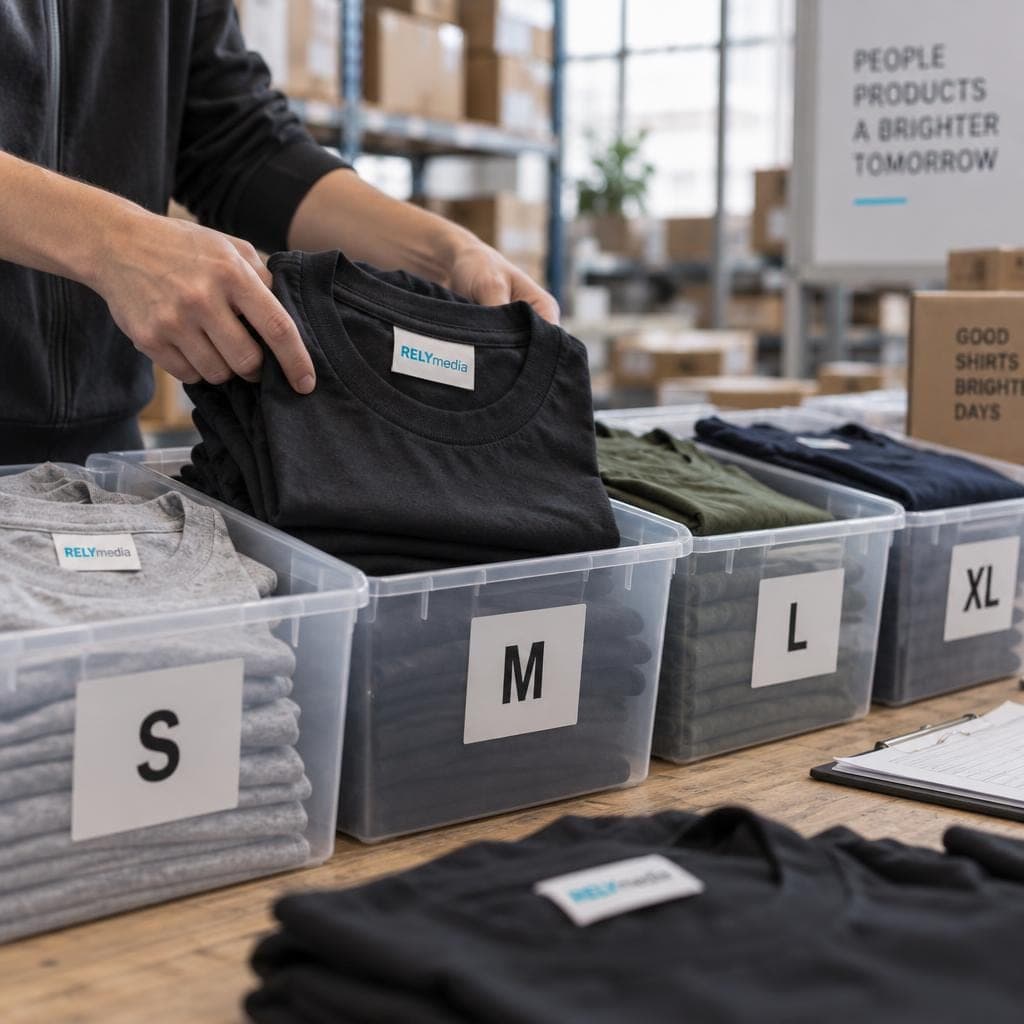
Skip the guesswork by asking your group directly. A quick size-chart poll, sent by email or text, takes five minutes and saves you from ordering blind against a list of clothing sizes nobody confirmed. A few tips that work well:
- Share the actual chest-measurement chart, not just letter sizes, since people size themselves inconsistently.
- Keep one or two spare shirts in the most common sizes for stragglers who never respond.
- Order slightly larger if you're unsure, since an oversized shirt still looks good.
- Budget one or two extra shirts in your top sizes, since a late addition to the group shouldn't mean a reorder.
For what it's worth, the average person only owns a handful of everyday T-shirts in regular rotation, so getting the size right on a group shirt matters more than you'd think. It's often the one that outlasts the rest of the wardrobe.
Need help setting up a sizing survey for your team?
RELYmedia's account managers build these for clients every week, matching the survey to your headcount and event type, and we're happy to set one up for yours at no extra cost.
Choosing the Right T-Shirt for Bulk and Custom Orders
Once you've nailed the size breakdown, the next call is style.
Fabric and Comfort Considerations
For everyday comfort, soft cotton T-shirts or a cotton blend win for most groups. Lightweight t-shirts work well for summer events and festivals, while heavier, durable, and premium t-shirts hold up better as work shirts and long-term staff apparel. If your event runs outdoors, a moisture-wicking blend keeps everyone more comfortable than plain cotton. Relaxed-fit and athletic-fit shirts both make solid everyday t-shirts, delivering better clothing comfort and garment durability than a bargain blank tee. Wearable fit matters more than logo size, since wearable merchandise only works if people actually wear it.
Popular Styles for Company, Team, and Event Shirts
Three styles consistently perform well across bulk and custom orders: the Gildan SoftStyle for a soft, retail-quality feel at a budget price, the Next Level Cotton Blend for a tailored, premium fit, and the Hanes Perfect-T for a reliable, everyday staple. All three work well as blank t-shirts for custom screen printing or as finished custom-printed shirts and custom-printed apparel from a t-shirt printing service.
Whether you need custom company shirts, branded clothing, branded uniforms, or branded apparel for a workplace rollout, or business logo shirts and custom logo apparel for a school reunion, these three styles cover almost every use case. Wholesale t-shirt and apparel pricing usually drops sharply after 100 pieces, making bulk custom apparel and t-shirts far cheaper per piece than a small custom clothing order. Most suppliers also offer custom uniforms and full apparel customization, from garment printing to embroidered logos.
Building a Repeatable Apparel Ordering Checklist
Whether this is your first custom apparel guide or your fiftieth reorder, the same short process keeps every order on track:
- Apparel planning and selection: Lock in headcount and budget, then compare apparel brands for the right style.
- Apparel sizing (with an apparel size chart on hand): Run a quick poll instead of guessing.
- Apparel purchasing and purchase planning: Confirm the size breakdown against supplier minimums first.
- Apparel procurement and inventory planning: Build in a buffer, then keep spares in your top sizes.
- Apparel distribution: Hand out shirts by size, not by request, to avoid a scramble on delivery day.
- Apparel quality, durability, and fit: Ask for a sample before committing to the full order.
A good shirt ordering guide also includes size recommendations, a shirt quantity plan, and a clear return policy for recipients who receive shirts outside their size allocation. Call it bulk ordering, bulk apparel ordering, or bulk order planning, the size Ratio and size percentages stay the same as the tables above; only shirt quantity planning shifts with headcount. RELYmedia handles bulk apparel solutions and custom apparel solutions for groups of every size, so custom clothing for groups and custom apparel for events never start from scratch.
Ready to print your team's name on premium apparel?
Fill in your details and a RELYmedia specialist will come back to you with a custom quote — fast turnaround, no obligation.
- ⚡Same-day response on business days
- 🎨Free design assistance included
- 🚚Rush order & fast delivery available
- 💰Price beat guarantee on every order
Shop custom t-shirts
See all custom t-shirts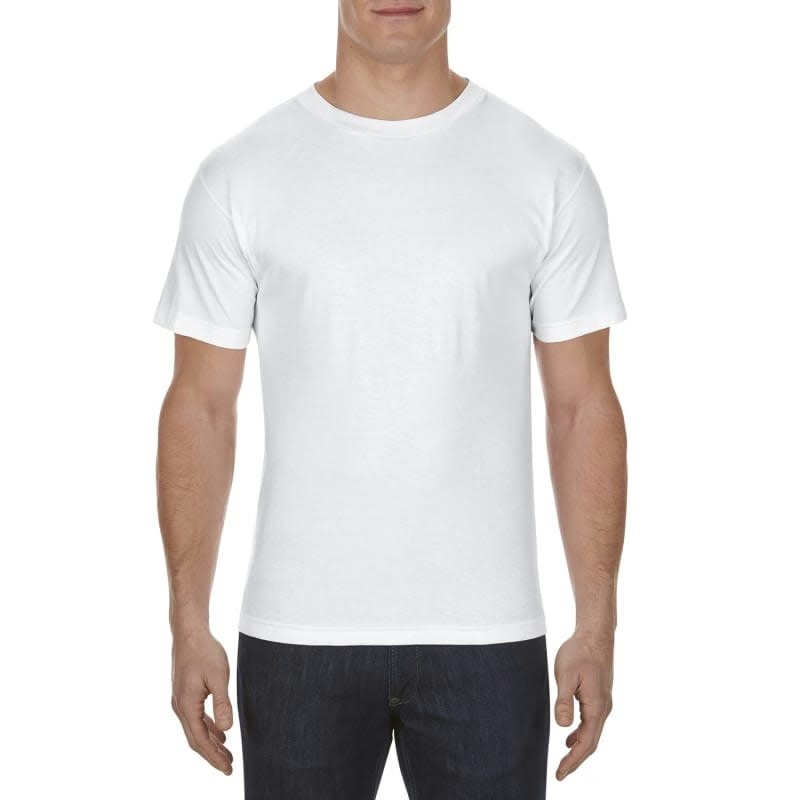
American Apparel Unisex Heavyweight Cotton T-Shirt
$8.90 - $10.90
View product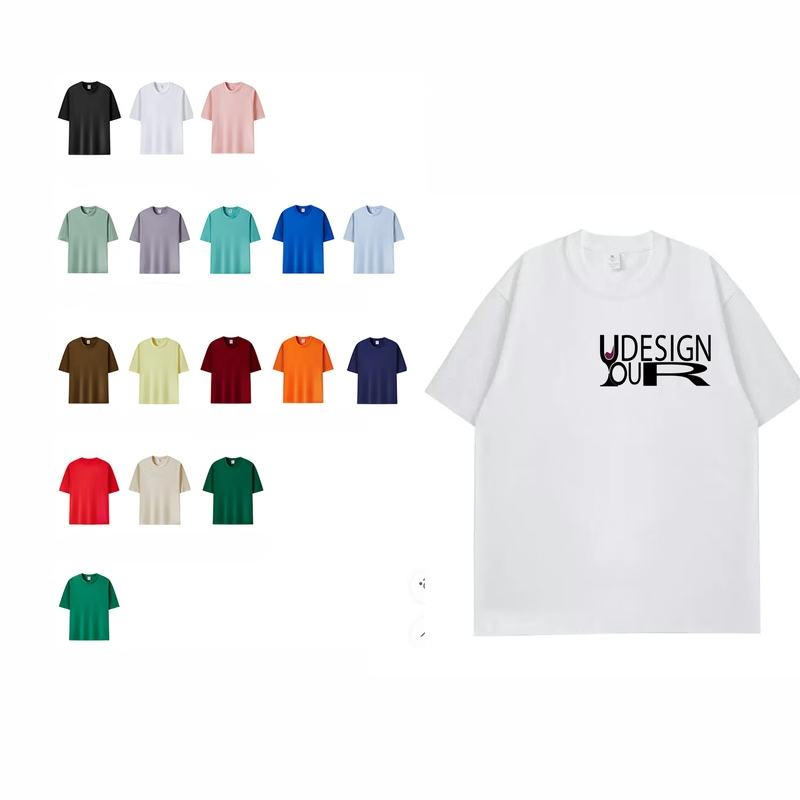
Custom Adult Unisex Cotton Short Sleeve T-Shirt MOQ 10pcs
$2.67 - $9.01
View product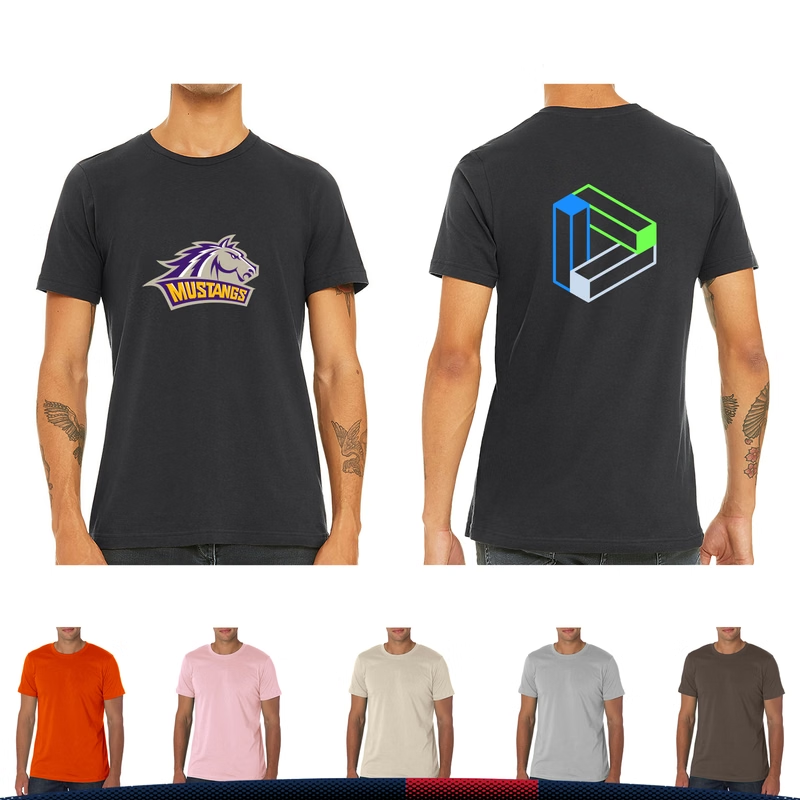
Bella Canvas® Unisex Cotton T-Shirts
$9.44 - $10.73
View product
Cotton T-Shirt: Gray
$20.00
View product
Cotnwell Men's Full Color 180g 100% Cotton T-Shirt
$5.23 - $8.27
View product
CloudHuggie Youth Full Color 230g 100% Cotton T-Shirt
$6.88 - $10.89
View product
Best Seller Custom Cotton T-Shirts - Men's & Ladies
$3.21 - $4.78
View product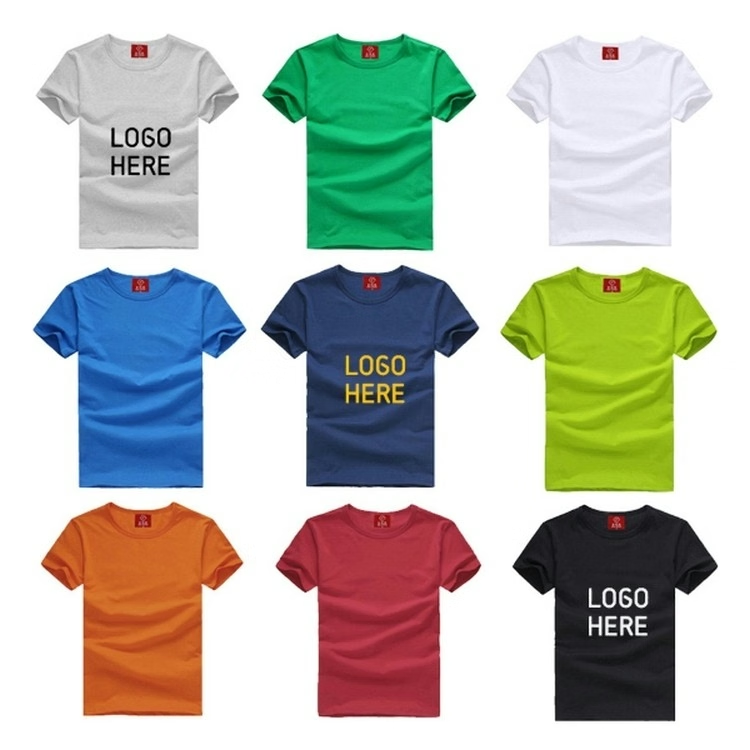
Cotton T-shirt
$6.65 - $8.91
View product
Ordering T-Shirts for Your Group Made Simple
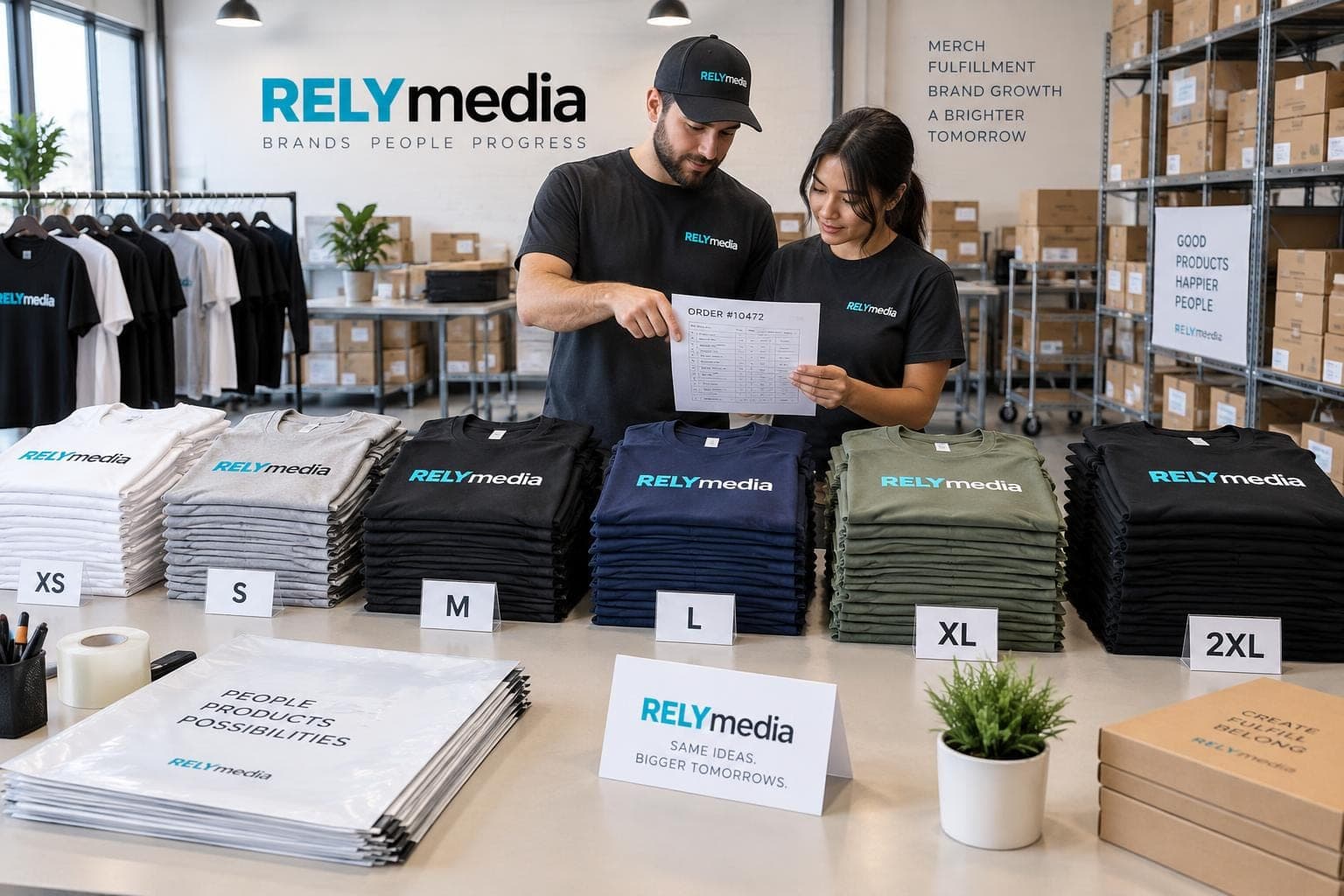
Ordering the right t-shirt sizes for a group doesn't have to be a guessing game. Start with the standard size chart, apply a distribution that matches your group size, and adjust for fabric, event type, and gender mix. Round up when unsure, and keep a few spares on hand.
RELYmedia has helped organizations of every size, from small nonprofits to national brands, get their bulk apparel orders right the first time. Our team handles the sizing math, the fabric questions, and the fast turnaround, so you don't have to.
Ready to place your group order?
Contact RELYmedia today for a free bulk quote, and let's get your group looking exactly the way you pictured it.
Frequently asked questions
What is the chart for t-shirt sizes?
Use a standard adult letter-size chart based on chest measurements, since brand tags vary. An XL typically fits a 46-48 inch chest, and a 2XL (XXL) typically fits a 50-52 inch chest. Extended sizes like 3XL and above generally start around a 54 inch chest. Do not mix adult charts with youth sizing.
Should you buy t-shirts a size bigger?
When sizing a group, sizing up is often safer than sizing down because a shirt that runs big still gets worn, while a shirt that runs small often does not. If you are ordering 100% cotton, expect roughly 2% shrinkage from the heat used in screen printing, so sizing up slightly can help.
What is the order of shirt sizes?
A typical adult size run starts at Small, then Medium, Large, XL, and 2XL (also written XXL), followed by extended sizes like 3XL and up. Some women’s charts may label an XL as 1X/1XL, and some suppliers cap standard programs around 5XL or 6XL, with larger sizes requiring specialty ordering.
How do you collect accurate shirt sizes for a group order?
Ask your group directly instead of guessing. A quick size-chart poll sent by email or text can be done in minutes and prevents ordering against unconfirmed sizes. Keep an adult size chart on hand, confirm whether you are ordering unisex, men’s, or women’s cuts, and plan a small buffer of spares in your most common sizes.
Shop this
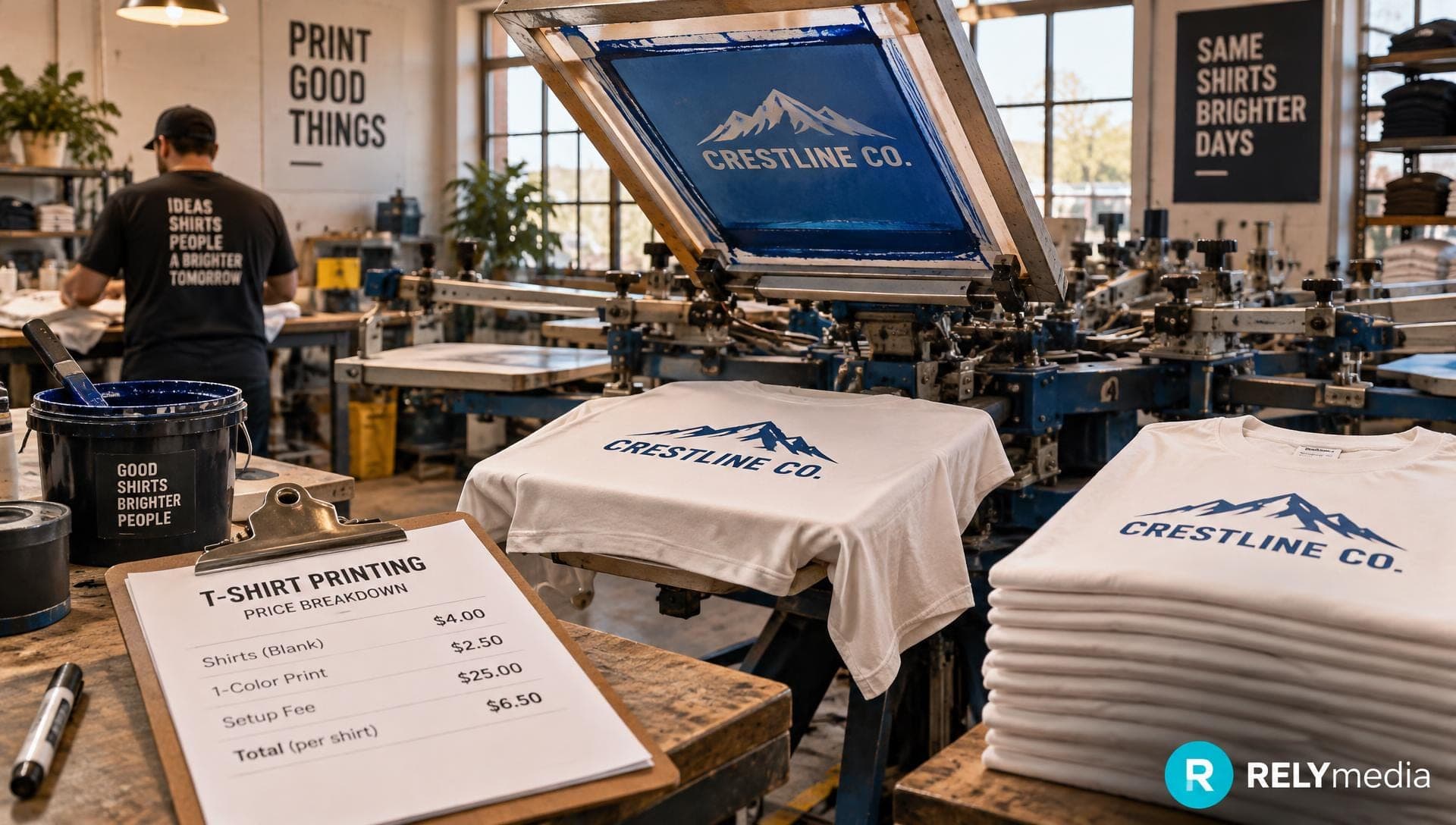
Need custom group t-shirts? We print them.
Bulk pricing, three free mockups, real quotes back the same business day.
Keep reading


Shop by category
Our Customer Feedback


Mike Larson
 (5)
(5)Unbelievable Turn-around
We are stunned with how quickly we received our order. It turned out perfect, and all of our interactions with staff have been fantastic. Thank you so much!
Jana
(5)Great customer service and on-time delivery with product as advertised!
The product arrived exactly as advertised and on time. This company was very easy to work with, and the price was great!
Sarah
(5)Quick Turn-Around and Immediate Communisaton
I've ordered a couple times from RELY. My initial order was not time sensitive so we had time to get it correct. We went back and forth with proofs until I felt comfortable. When I had a question, the sales team was very responsive. When it came to my re-order, I needed it fast. They responded and got it to me right on time.
Rob
(5)Fabulous experience, great suggestions from the staff!
The sales staff had great suggestions and were very helpful in the process to, in the end, get exactly what was necessary for our use!
Emily
(5)Great service!
Everything went well as anticipated, and as planned. Service was superb & shipment was expedited in a speedy fashion! Thank you for your service!
Freddy
(5)Thumbdrives
2nd time I have ordered from these guys and they have a good product for the price. The delivery time was as said with no troubles. Would recommend and will be reordering again.
Patty
(5)This is a top notch company. Awesome as what they do. Highly recommend.
If you are looking for a company that says what they do and then do what they say - RELYmedia is for you!!! We have done a couple critical orders with RELYmedia and they were ahead of schedule and the items were perfect. We will be utilizing their talents again!!!
Blanca
(5)Very responsive,
All my inquiries were handled in a very timely fashion. My contact was courteous and helpful. Items ordered were received very quickly. Thanks for the superior service!
Andrew
(5)Overall great experience.
They are friendly and knowledgeable. They are well priced, and ship fast.
Trusted By