Best Travel Power Bank US: Top Picks for 2026
October 27, 2026 · 10 min read
A dead phone can derail travel. Boarding passes vanish, maps stop loading, and the nearest outlet suddenly feels miles away. A reliable travel power bank solves that problem without much bulk.
For 2026, the best travel power bank should balance battery capacity, charging speed, portability, safety, and compliance with airline rules. The smartest power bank for traveling closely matches your devices. This guide explains US flight rules, USB-C Power Delivery, wireless charging, watt-hour limits, and how to choose the best power bank charger without paying for power you will never use.
What Makes the Best Travel Power Bank in 2026?
A good portable charger should disappear into your routine. You should not need three extra cables or wonder whether it can board the plane.
Prioritize:
- Useful battery capacity for your phone, tablet, or laptop.
- Fast charging through USB-C.
- Portable design for a cabin bag or daypack.
- Safe charging with dependable battery protection.
- Clear ratings for single-port output and total output.
- Travel-ready power with an easy-to-read watt-hour label.
The most powerful portable charger is not automatically best. A 300W output model can serve laptops well, yet it is excessive for everyday phone charging.
For frequent travelers, this balance matters. A charger that meets your phone, laptop, and airline needs is more useful than a heavier model with impressive specifications that your devices cannot fully use during ordinary trips anyway.
Best Travel Power Banks for Different Trips
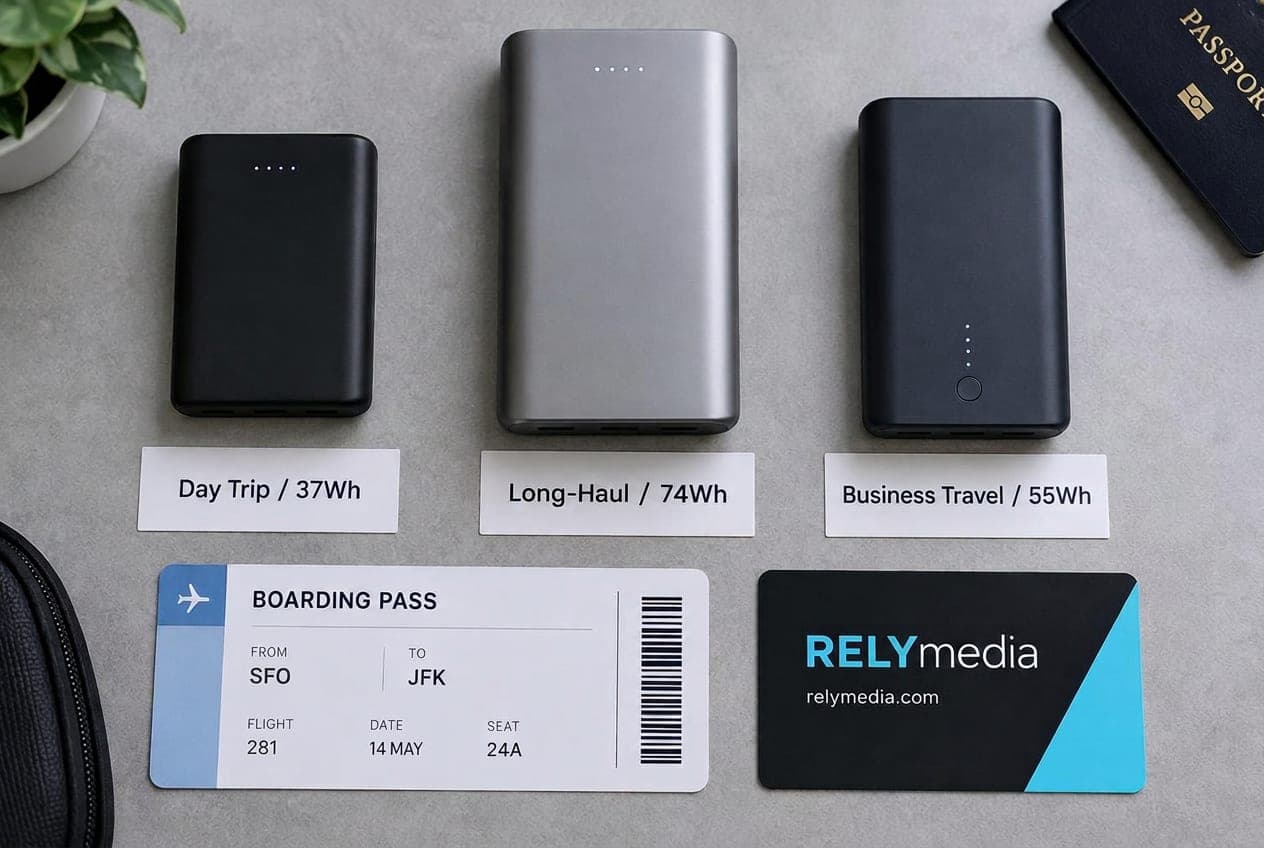
Best Compact Power Bank for Day Trips
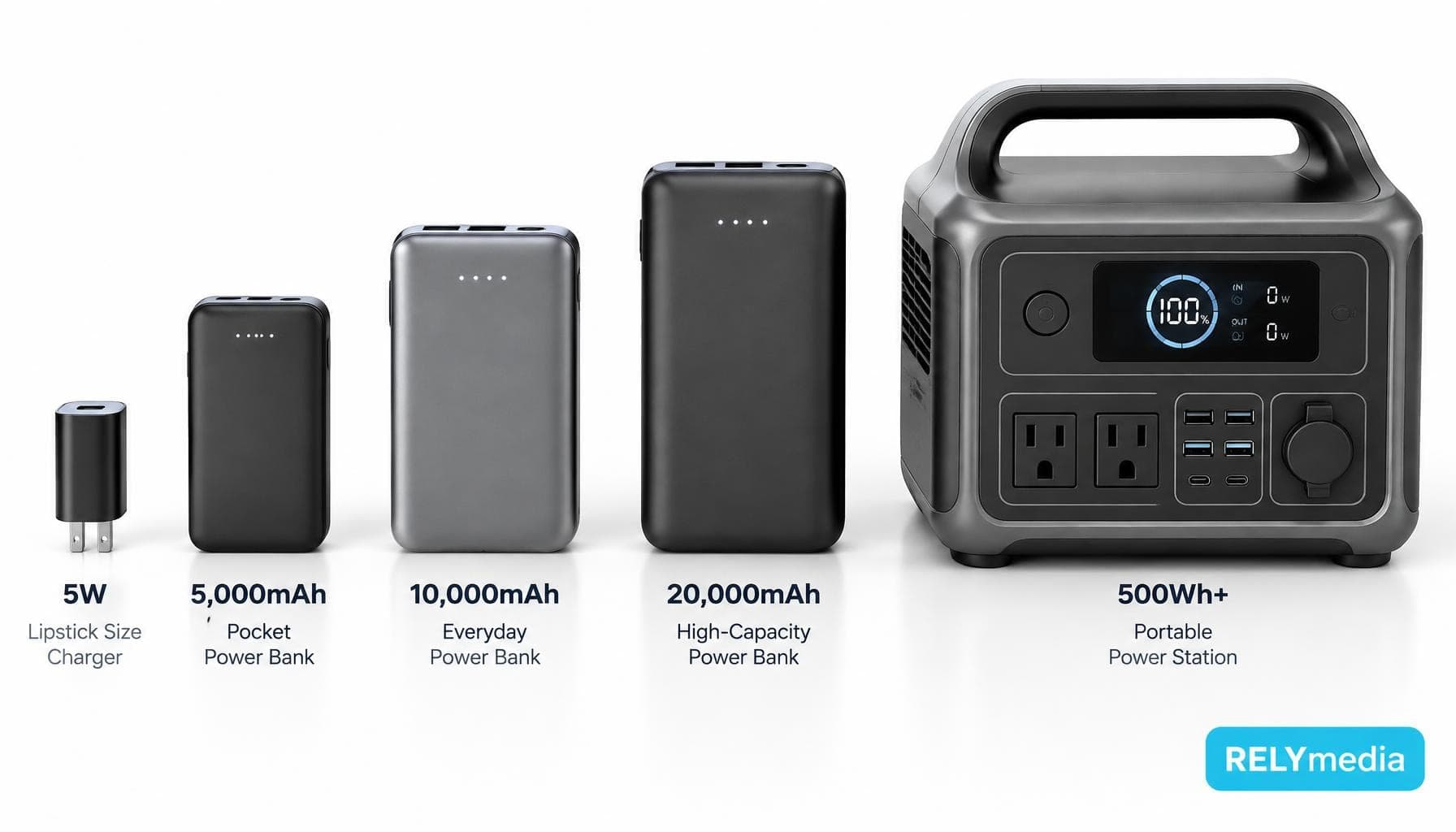
For city breaks, festivals, train travel, and airport travel, a 10,000mAh power bank is often enough. A compact power bank with 20W or 30W charging can handle charging smartphones and earbuds, as well as quick top-ups.
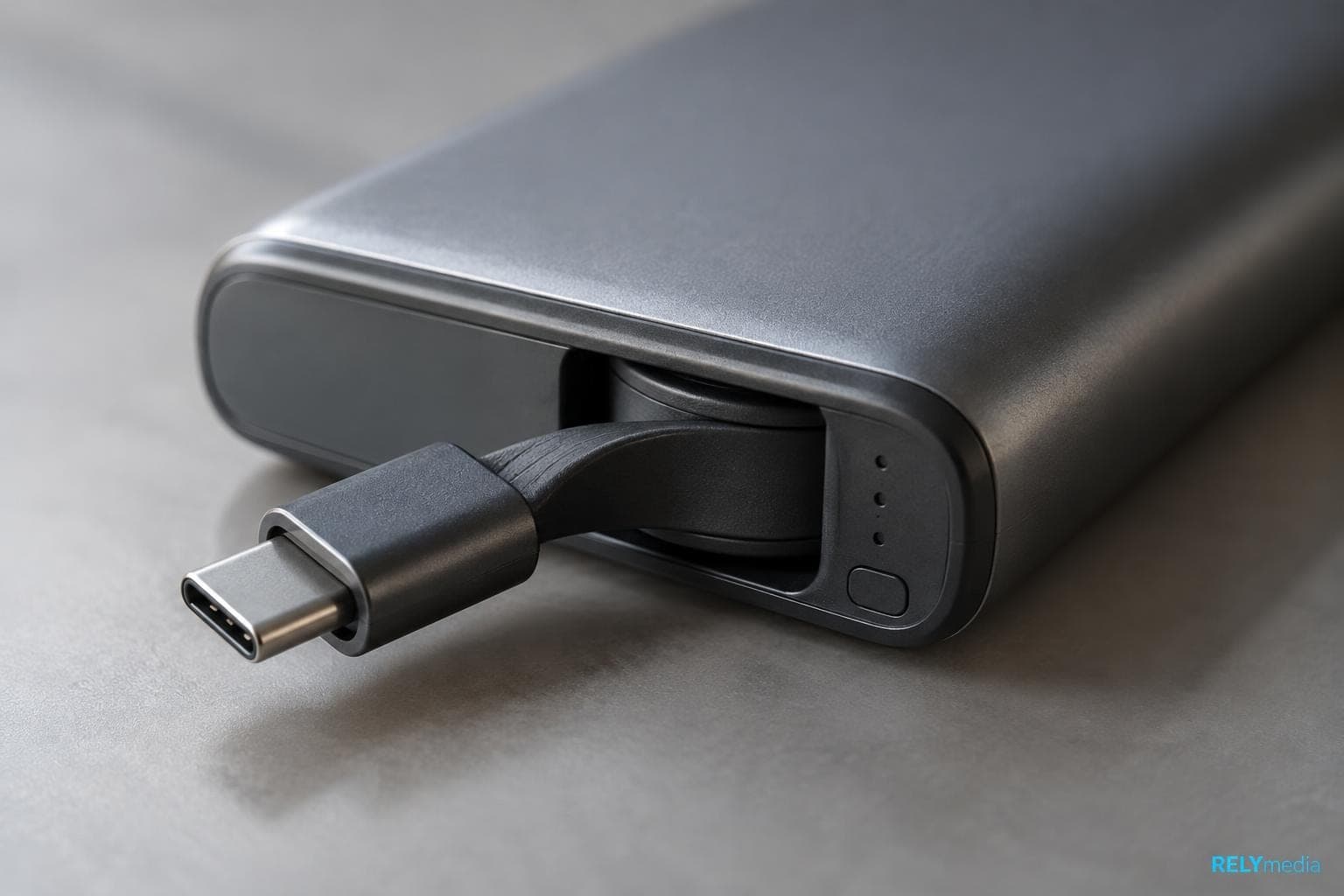
A slim power bank or lightweight power bank works well in small bags. A built-in charging cable or retractable USB-C cable also reduces clutter. This kind of everyday power bank provides portable power without turning your bag into a toolbox.
Best High-Capacity Power Bank for Long-Haul Travel
A 20,000mAh power bank or 25,000mAh power bank provides more emergency power for phones, tablets, cameras, and handheld consoles. A high-capacity power bank can support several battery top-ups between outlets.
More charging capacity usually means more weight. Compare the battery capacity rating, usable power, and watt-hours first. For several devices, a multi-device power bank with multiple charging ports may be better than carrying two batteries.
Best Laptop Power Bank for Business Travel
A laptop power bank should support USB-C Power Delivery and enough charging wattage for your computer. Many light laptops support 45W or 60W charging. Larger machines may need 100W charging or 140W charging.
A laptop-ready power bank should also show single-port output. A model advertised with 165W output may split that power when charging simultaneously.
Best Wireless or Magnetic Power Bank
A wireless power bank trades some charging efficiency for convenience. Qi2 charging and MagSafe compatibility can provide secure magnetic wireless charging on compatible phones.
A magnetic power bank is handy while walking or taking a train. Still, wired charging usually creates less energy loss. Choose a model offering both cable-free charging and a USB-C port.
Quick Travel Power Bank Comparison
| Travel need | Suggested capacity | Useful output | Priority |
|---|---|---|---|
| Day trips | 5,000–10,000mAh | 20W–30W | Compact design |
| Weekend trips | 10,000–15,000mAh | 30W–45W | Built-in cable |
| Long-haul travel | 20,000mAh | 45W–60W | High capacity |
| Laptop travel | 20,000–26,000mAh | 60W–140W | USB-C PD |
| Several devices | 20,000–25,000mAh | 100W+ total | Multi-port charging |
US Power Bank Flight Rules for 2026
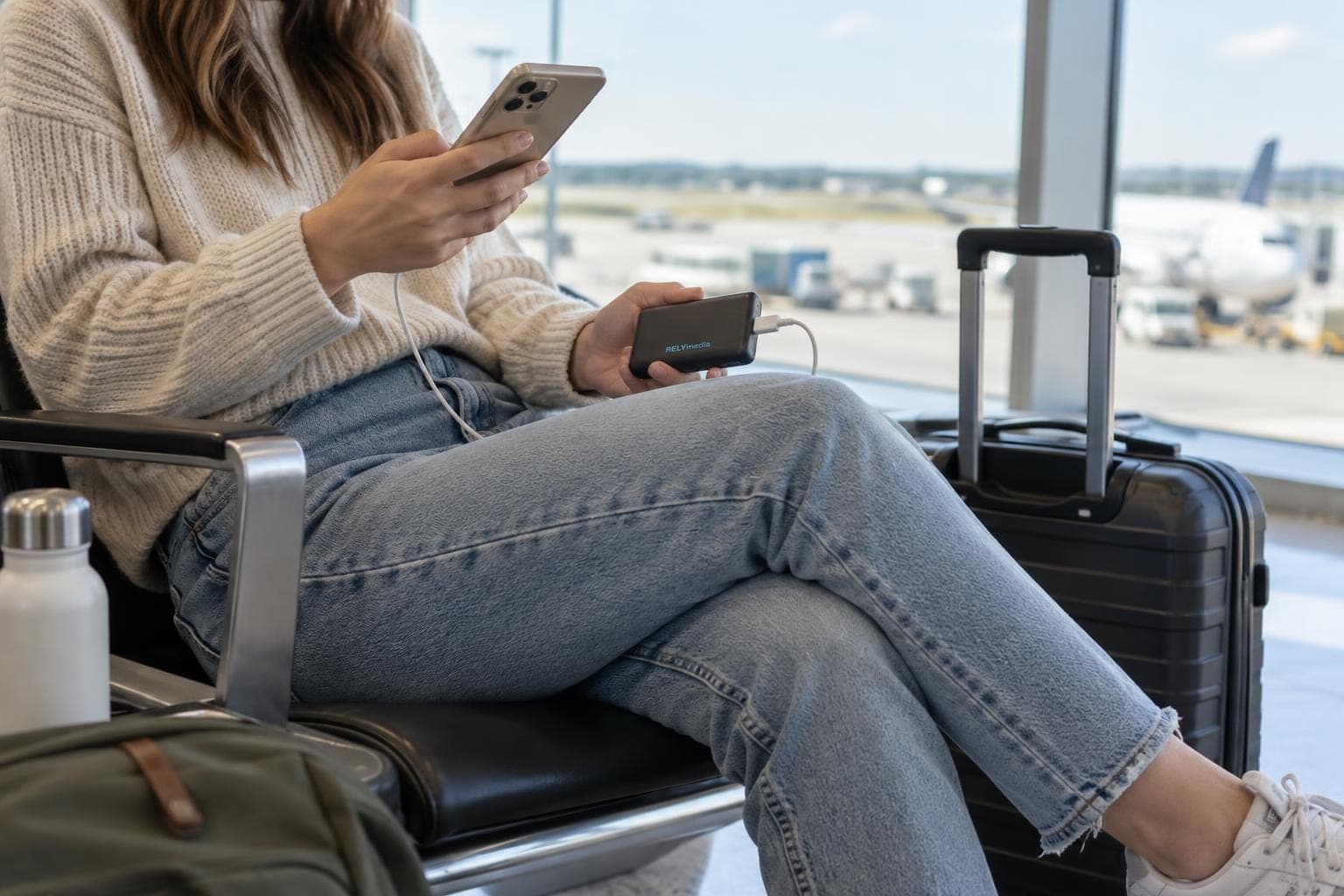
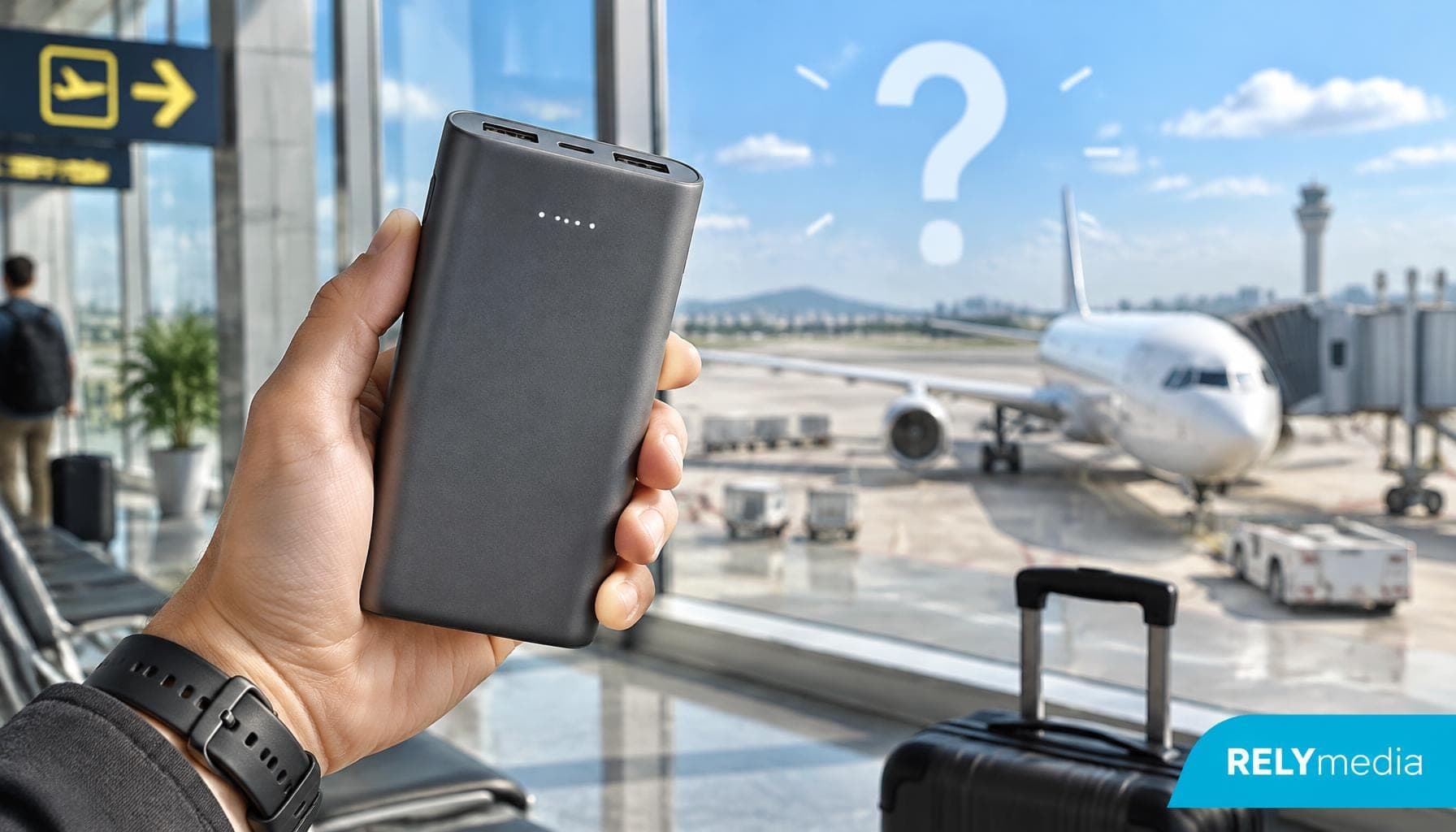
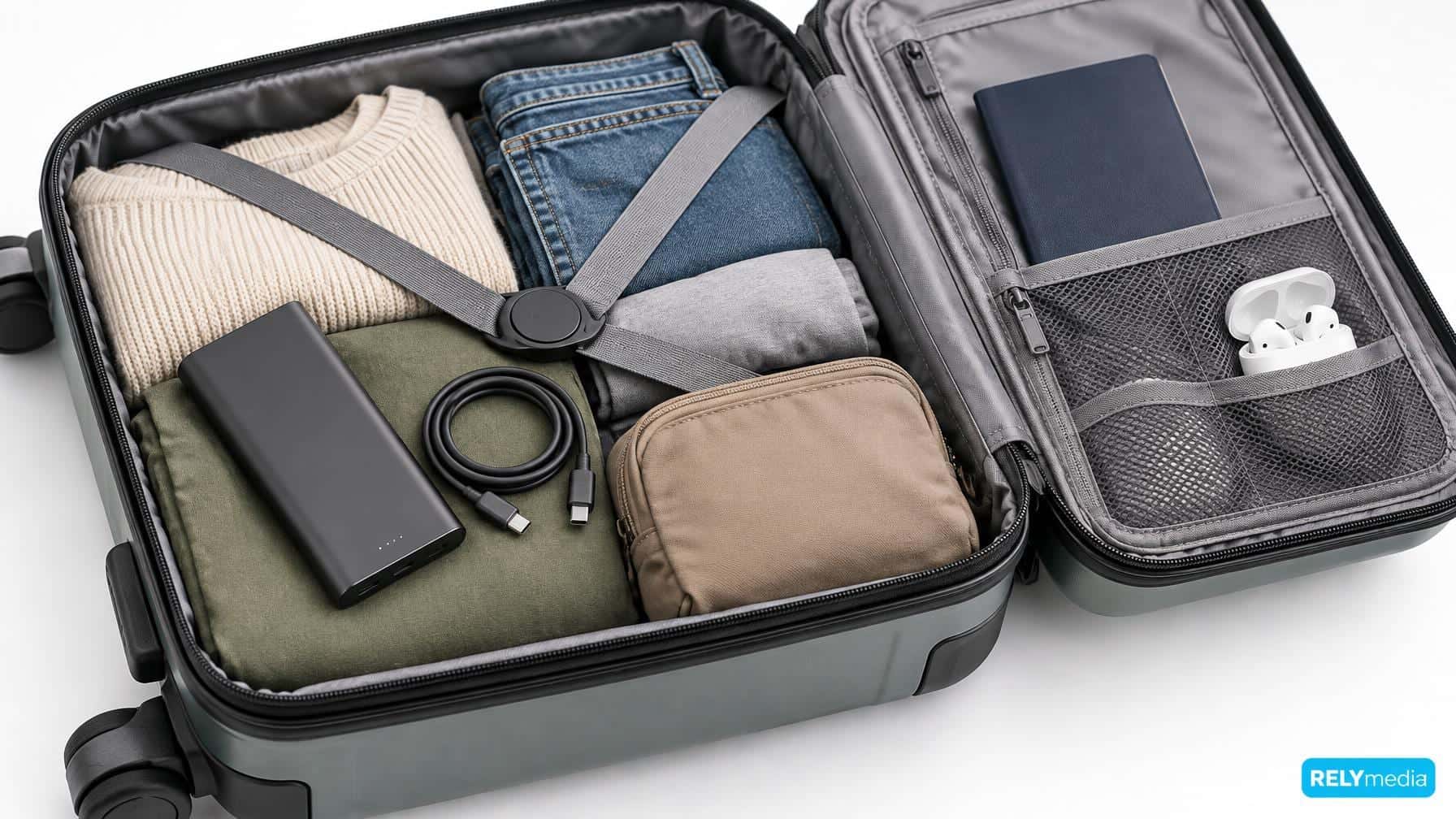
The Federal Aviation Administration (FAA) and TSA say passengers must keep power banks in carry-on luggage, not checked luggage. If a bag is gate-checked, take the power bank out and keep it with you in the cabin. Many US airlines now go further, limiting how many power banks you can bring and prohibiting recharging them onboard.
These airline restrictions exist because power banks contain lithium-ion batteries. If a thermal event occurs, cabin crew can respond more quickly if the battery remains accessible.
An airline-approved, flight-approved, or flight-safe power bank must still comply with your carrier's policy. Airlines may impose tighter battery limits than general aviation safety guidance.
Watt-Hour Limits for a Carry-On Power Bank
Under current FAA guidance, power banks up to 100Wh can travel without airline approval. Units above 100 Wh and up to 160 Wh require airline approval, with a limit of two per passenger. Power banks above 160 Wh are not allowed on passenger flights.
Wh = (mAh ÷ 1,000) × voltage
For a typical 3.7V lithium-ion battery:
| Capacity | Approximate rating |
|---|---|
| 10,000mAh | 37Wh |
| 15,000mAh | 55.5Wh |
| 20,000mAh | 74Wh |
| 25,000mAh | 92.5Wh |
| 26,000mAh | 96.2Wh |
Always use the printed rating when available. An airline-friendly power bank should make capacity and watt-hours easy to find.
Pack and Store the Battery Safely
Battery transport starts with simple habits. Keep the spare battery away from metal objects. Cover exposed terminals when needed, and store batteries safely inside your cabin bag.
Never carry a swollen, cracked, leaking, or overheating rechargeable battery. If an airline gate-checks your carry-on luggage, remove the portable battery first.
💡Practical rule: treat every power bank as a spare lithium-ion battery, even when packaging calls it a travel charger.
What Power Bank Capacity Do You Actually Need?
Battery capacity shows stored energy, not exact charge count. Some energy is lost to voltage conversion, heat, cables, and internal electronics. Usable power is therefore lower than headline capacity.
A 10,000mAh power bank is suitable for everyday charging. A 15,000mAh power bank adds room for weekend trips. A 20,000mAh power bank is well-suited for longer journeys and charging tablets. A 25,000mAh or 26,000mAh power bank makes more sense for laptop charging and supporting multiple devices.
A Real-World Capacity Example
If your phone has a 5,000mAh battery, a 10,000mAh battery pack will not always deliver two complete charges. Charging efficiency, device usage, temperature, and conversion losses reduce the amount of energy reaching your phone.
How Much Charging Wattage Do You Need?
Charging output affects speed, but the receiving device controls what it accepts.
- 20W charging: many smartphones.
- 30W charging: phones and small tablets.
- 45W charging: tablets and lighter laptops.
- 60W charging: many USB-C laptops.
- 100W charging: larger notebooks.
- 140W charging: supported high-power laptops.
USB-C Power Delivery, or USB PD, is a common fast-charge standard. The USB Implementers Forum explains that modern USB Power Delivery provides flexible power delivery over USB-C, with supported specifications reaching up to 240W.
Do not confuse input power with output power. Charging input controls battery replenishment. Output power controls device charging. A high-output charger may advertise 250W input or 300W output, so inspect maximum output and port limits before buying.
How to Choose the Best Power Bank for Traveling
Check Ports and Device Compatibility
USB-C should lead your shortlist. A modern USB-C charger can support phones, tablets, laptops, cameras, and other USB-enabled devices.
USB-A charging still matters for older gear. A USB-A port handles legacy accessories, while dual USB-C ports simplify multi-port charging. For several devices, look for multiple device support or four-device charging.
Compare Wired, Wireless, and Magnetic Charging
Wired charging usually delivers better charging efficiency. Wireless charging offers convenience. Magnetic charging keeps a compatible phone aligned while moving.
Qi2-certified charging improves standardized wireless power on supported devices. A magnetic charger with a strong magnetic hold stays attached while you check directions.
Check Recharge Speed and Charging Input
A portable battery charger is only useful if you can refill it quickly. Check the power bank's recharge rate, not just the device's output.
Fast recharge, rapid charging, or ultra-fast recharging can help during airport layovers. Some products support two-way fast charging. Pass-through technology may also allow simultaneous battery replenishment and device charging, although support varies by model.
Look for Useful Smart Features
Helpful features include:
- Smart display
- Intelligent display
- Battery display
- Charging status display
- Power-flow display
- Port status
- Battery level
- Remaining battery
- App control
- Smart charging
Battery Safety Should Never Be an Afterthought
A reliable travel battery charger needs short-circuit, overvoltage, overcurrent, and overtemperature protection, as well as temperature monitoring.
Thermal protection, temperature control, and heat management reduce stress on cells during high-output charging. For transport safety, UN38.3 certification is especially relevant. US hazardous materials regulations require lithium batteries and power banks to meet the requirements of the UN Manual of Tests and Criteria, Part III, subsection 38.3.
UL 2056 certification or FCC compliance may also apply depending on the product and market.
Do not treat certification marks as decoration. Verify documentation from a reputable manufacturer or supplier. Avoid damaged USB-C cables, exposed connectors, extreme heat, and questionable replacement cells. These habits improve the safety of lithium-ion batteries and protect battery-powered devices.
For corporate travel kits, ask RELYmedia for verified specifications before placing a bulk order.
Common Travel Power Bank Mistakes to Avoid
Avoid these common errors:
- Packing a power bank in checked luggage.
- Ignoring travel battery limits or airline restrictions.
- Buying a high-capacity charger without checking weight.
- Confusing total output with single-port charging.
- Forgetting charging compatibility.
- Relying only on wireless charging when speed matters.
- Ignoring battery recharge time.
- Carrying a damaged backup battery charger.
A travel-friendly power bank should simplify your trip, not add uncertainty.
Need a branded charging solution for an event or workforce?
Contact RELYmedia to discuss product options and deadlines.
Travel Power Bank Safety Checklist
- Confirm the watt-hour rating.
- Review current battery regulations.
- Keep the battery in carry-on luggage.
- Inspect it for swelling or heat damage.
- Protect exposed terminals.
- Pack the correct USB-C cable or USB-A cable.
- Confirm device charging requirements.
- Check the remaining battery.
- Follow airline instructions for safe travel.
Ready to print your team's name on premium apparel?
Fill in your details and a RELYmedia specialist will come back to you with a custom quote — fast turnaround, no obligation.
- ⚡Same-day response on business days
- 🎨Free design assistance included
- 🚚Rush order & fast delivery available
- 💰Price beat guarantee on every order
Shop custom power banks and chargers
See all power banks & charging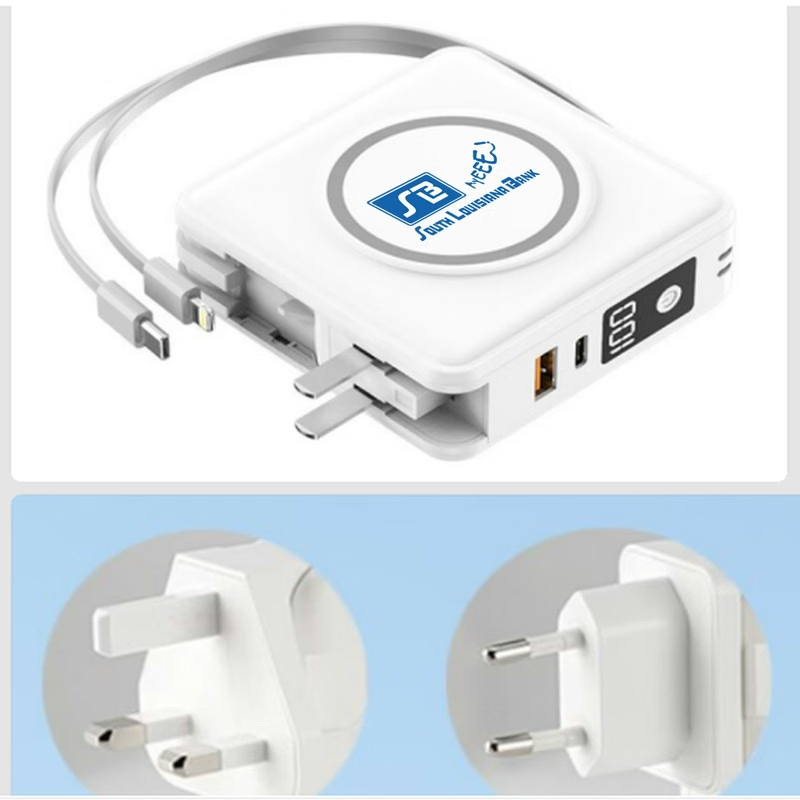
10,000 mAh Wireless Fast Charging Power Bank and 5IN1 Travel Charger w/Intl
$48.25 - $53.66
View product
In Charge PB200 UL Listed 2200 mAh Portable Lithium Ion Power Bank Charger PB1004
$7.03 - $7.91
View product
In Charge Alloy UL Listed Aluminium 2200 mAh Lithium Ion Portable Power Bank Charger
$7.57 - $8.85
View product10,000 mAh Energizer® Mag-N-Kick™ Wireless Charger Power Bank And Phone Stand
$34.39 - $52.31
View product10,000 mAh Wireless Charger Power Bank
$25.59 - $44.77
View product
10,000mAh Portable Charger Power Bank with Dual Flashlight
$7.63 - $12.53
View product
10,000 mAh Wireless Charging Power Bank
$11.58 - $25.35
View product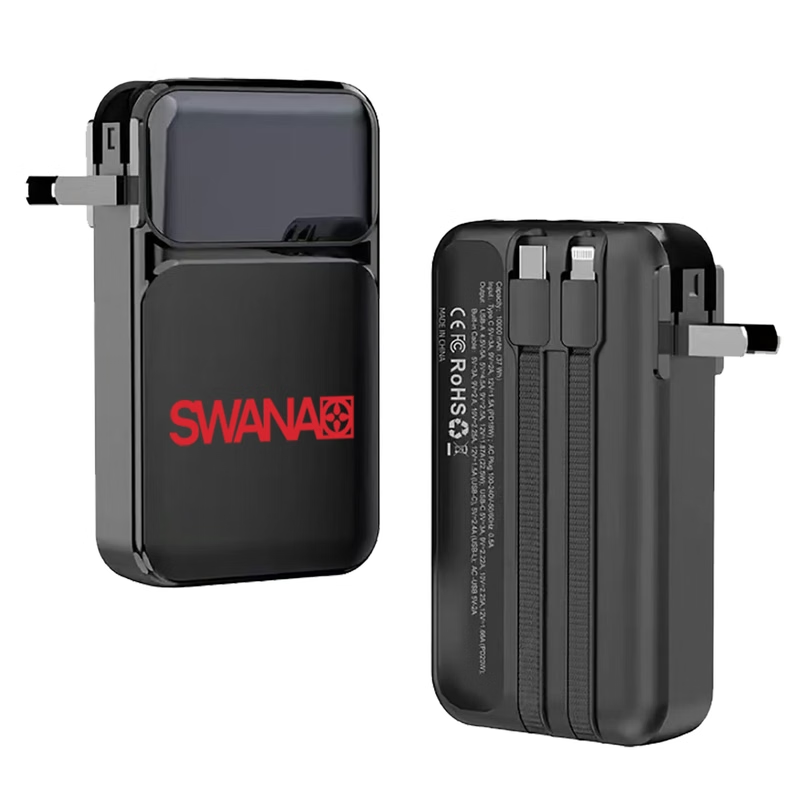
10,000 mAh Portable Charger w/Built In Wall Plug Power Bank
$27.43 - $32.36
View product
Conclusion
The best travel power bank US travelers can choose in 2026 is not simply the biggest rechargeable power bank or fastest-charging charger. The right model fits your devices, trip length, travel habits, and airline limits.
For most people, 10,000mAh to 20,000mAh provides a practical balance between portability and weight. Laptop users may need a high-output power bank with stronger USB-C Power Delivery. Phone-first travelers may prefer a pocket-friendly power bank, wireless charger, or magnetic option.
Whatever you choose, prioritize charging safety, charging efficiency, battery certification, and real device compatibility. Reliable power on the go should remove friction, not create it.
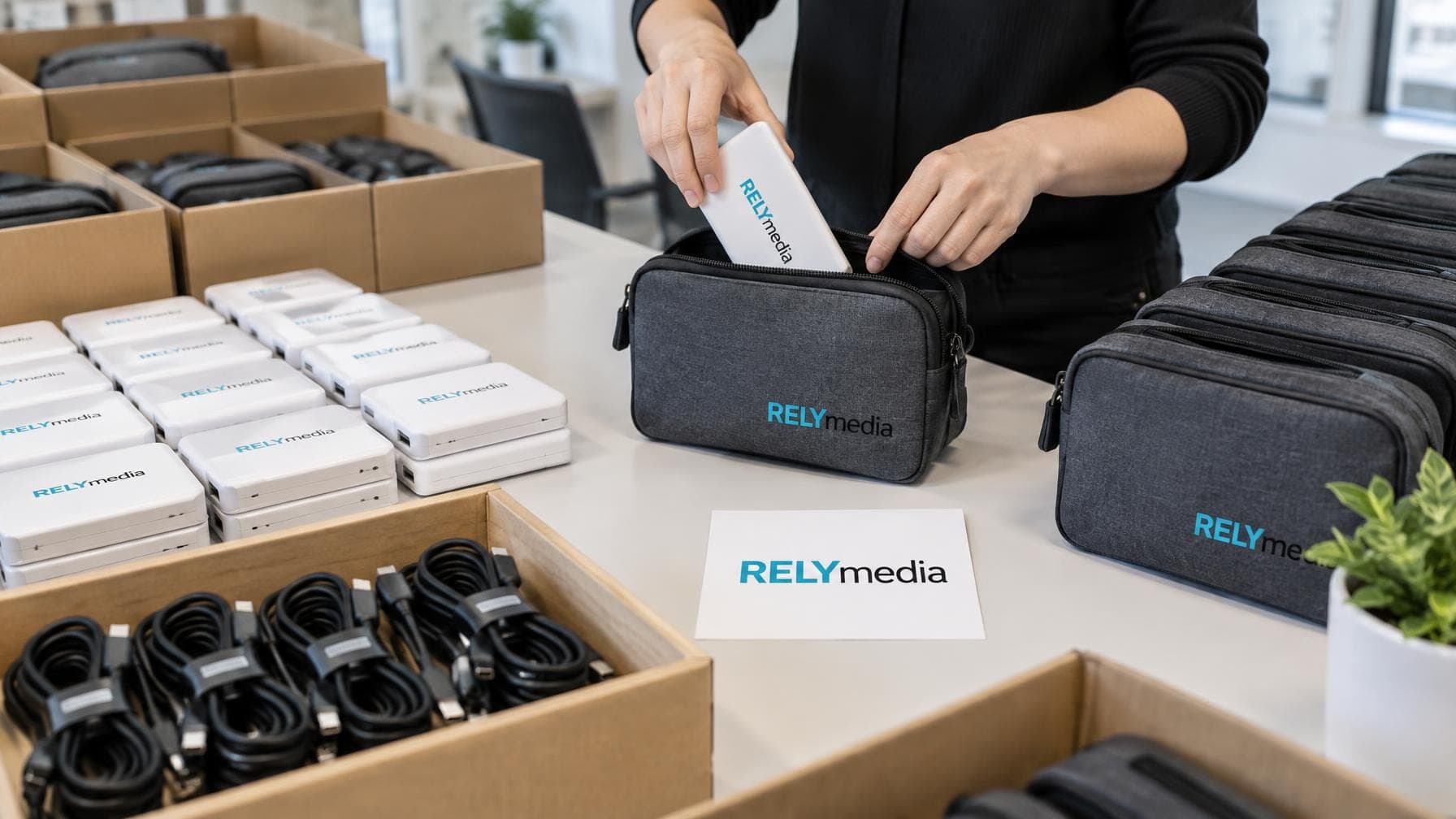
RELYmedia helps businesses and organizations turn useful promotional products into lasting brand touchpoints. For employee travel kits, customer gifts, events, or campaigns, practical charging accessories can keep a brand visible long after the journey ends.
Ready to source branded portable charging products?
Visit RELYmedia or request a custom quote for your next travel-focused campaign.
Frequently Asked Questions
What size power bank can I take on a plane in the US?
Current FAA guidance permits lithium-ion power banks up to 100Wh without airline approval. Keep them in carry-on luggage. Larger permitted batteries may require airline approval.
Is a 20,000mAh power bank enough for travel?
For many travelers, yes. It offers substantial backup power for charging smartphones and tablets while typically remaining below 100 Wh. Check the printed watt-hour rating.
Can I put a power bank in checked luggage?
No. FAA and TSA rules require power banks in carry-on luggage. Keep the portable battery accessible and protect it against short circuits.
What wattage do I need to charge a laptop?
Many USB-C laptops work with 45W to 100W charging. Higher-performance machines may use 140W charging. Match the laptop, USB-C cable, and charging standard.
Is wired or wireless charging better for travel?
Wired charging usually wins on speed and efficiency. Wireless charging wins on convenience. A power bank supporting both gives you a flexible travel charging solution.
Can I recharge a power bank during a flight in the US?
Many US airlines now prohibit recharging power banks onboard, and some restrict using them to charge other devices during the flight. Check with your airline before you fly, as carrier rules can be stricter than FAA guidance.
What safety features should a travel power bank have?
Look for short-circuit, overcurrent, overvoltage, and overtemperature protection, temperature monitoring, and clear battery certification.
Shop this
Need custom travel power banks? We print them.
Bulk pricing, three free mockups, real quotes back the same business day.