How Does a Power Bank Work? A Beginner’s Guide
October 25, 2026 · 10 min read
A dead phone rarely picks a convenient moment. It often happens during travel, work, or a long commute. That is why a power bank has become so useful.
A power bank is a rechargeable portable power source that stores electrical energy for later use. You charge the unit first, then connect a smartphone, tablet, laptop, or another compatible device when no wall outlet is nearby. Inside, a battery, charging circuit, and power-management system store, convert, and transfer energy safely.
For businesses building practical promotional kits, RELYmedia can help source branded charging accessories that people can actually use.
What Is a Power Bank?
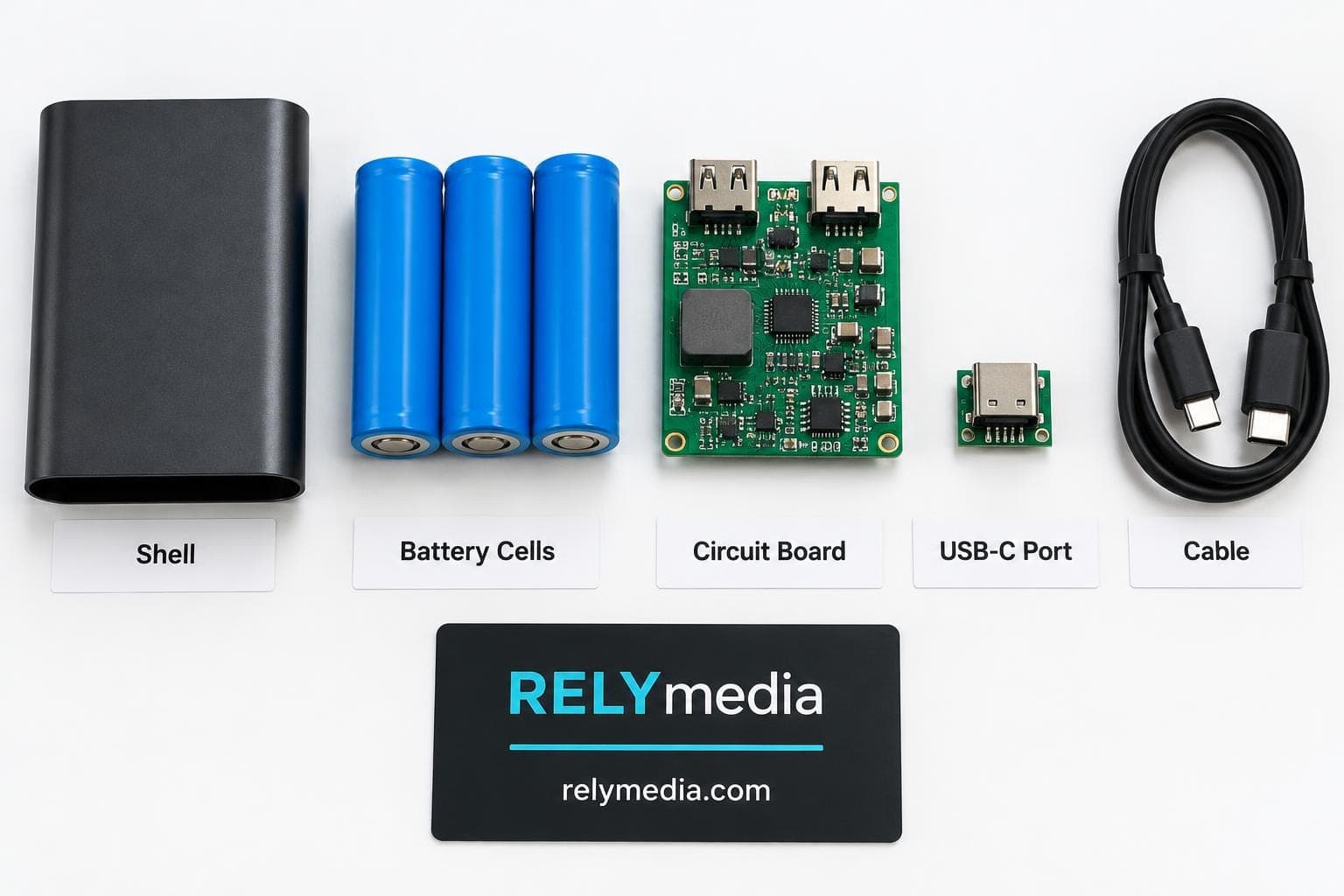
A power bank, portable phone charger, portable charger, power pack, battery pack, or external battery is a rechargeable energy-storage device. Its job is simple: provide mobile power away from a wall socket.
Most models contain battery cells, input and output ports, a control circuit, and protection electronics. Some add a digital display, LED indicators, built-in cables, or wireless charging.
Common uses include:
- Daily device charging
- Travel and commuting
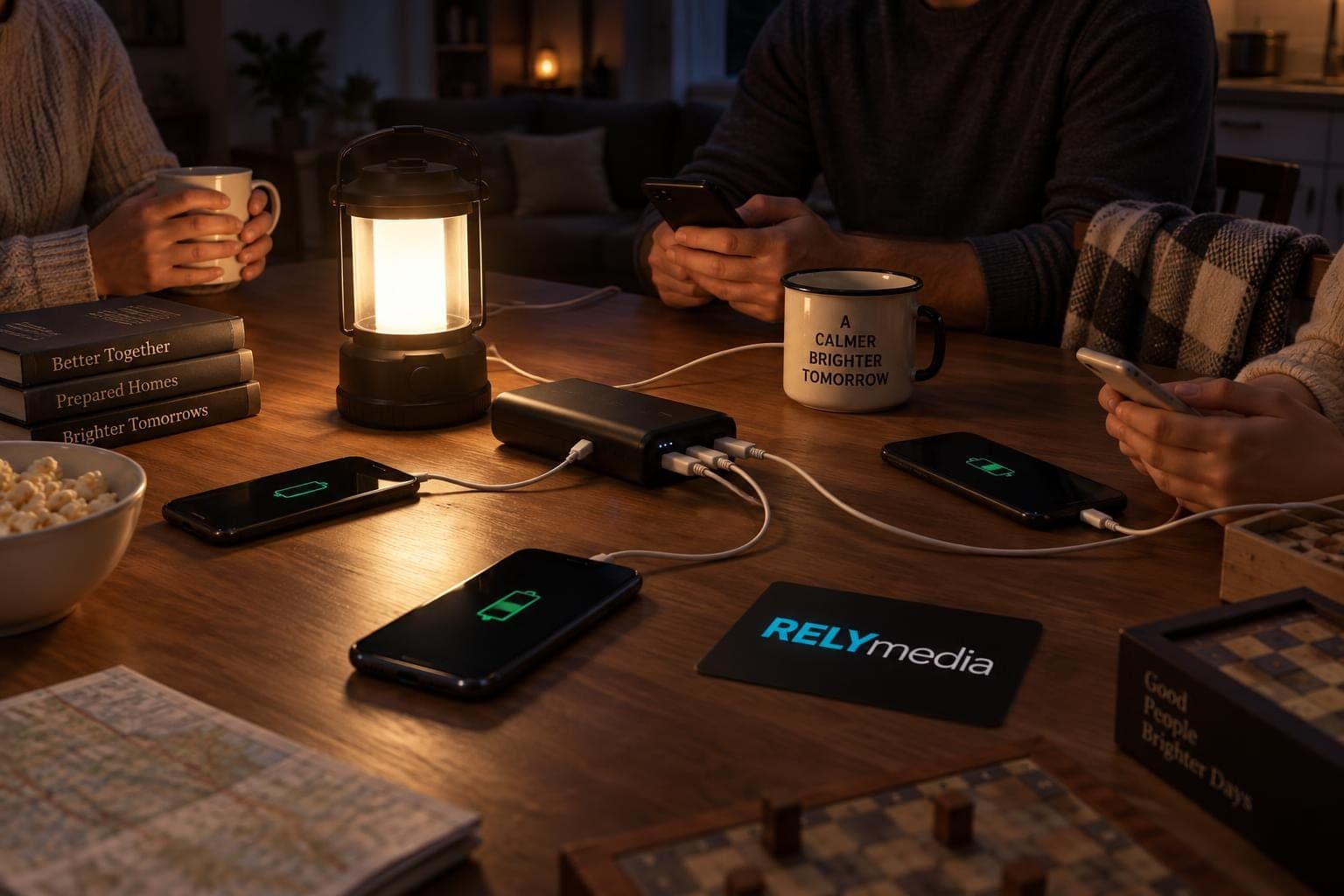
- Emergency charging
- Outdoor use and off-grid charging
- Power outage preparedness
- Mobile productivity
- Smartphone, tablet, and laptop charging
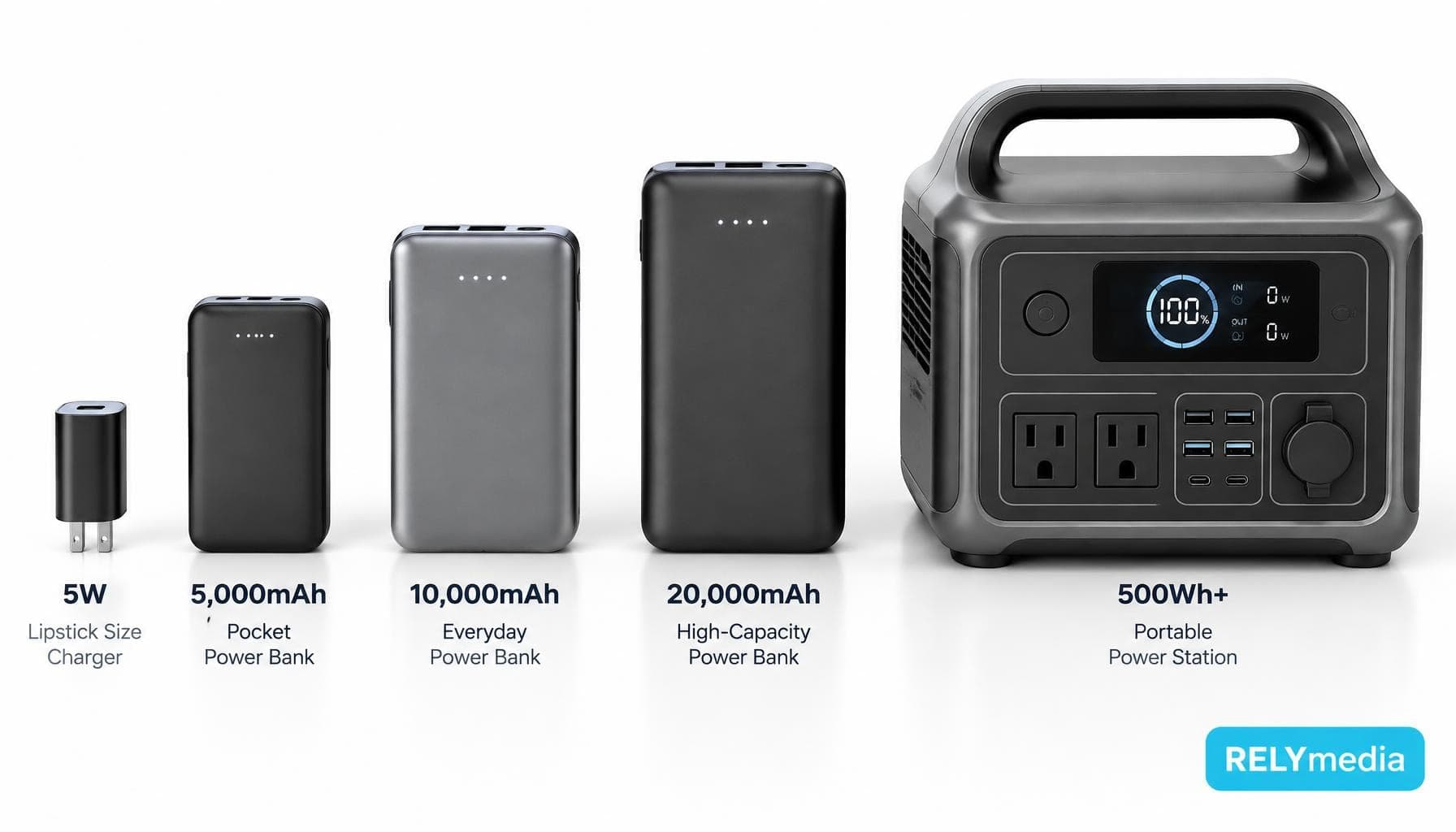
Smaller models favor portability, while high-capacity versions trade extra size for more backup power.
How Does a Power Bank Work?
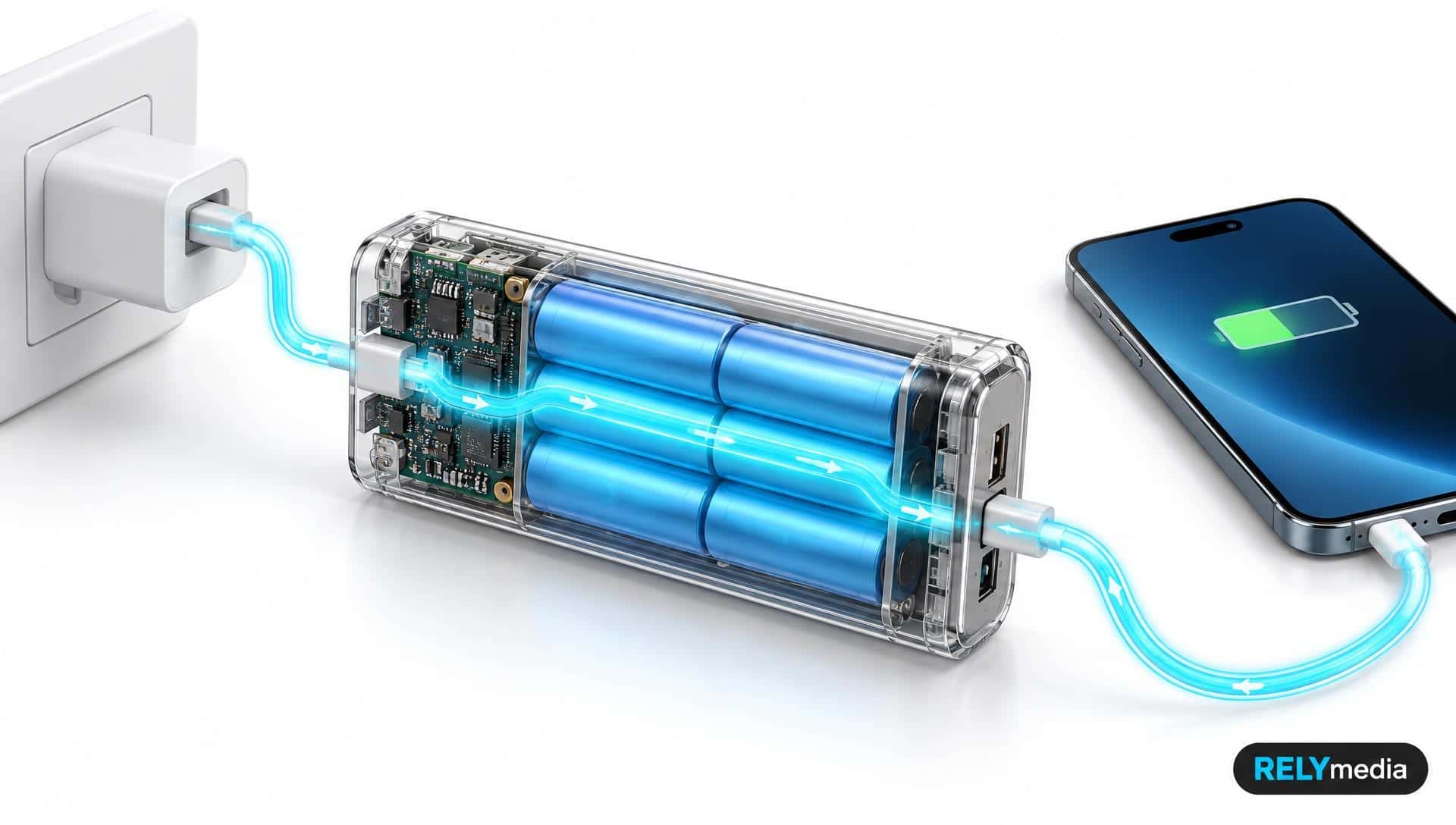
A power bank performs four core functions: charging, energy storage, power conversion, and energy transfer.
The Power Bank Takes In Electrical Power
Connect the power bank to an electrical outlet with a compatible charger and cable. Power usually enters through USB-C or another charging port. The input circuit controls voltage and current for the battery.
The Battery Stores Energy
The rechargeable battery converts incoming electrical energy into stored chemical energy. Most portable chargers use lithium-based battery technology because it offers useful capacity in a compact design.
Battery capacity is commonly expressed in mAh (milliamp-hours). A higher mAh rating generally indicates more stored energy, although usable charge capacity depends on other factors as well.
The Control Circuit Manages Power
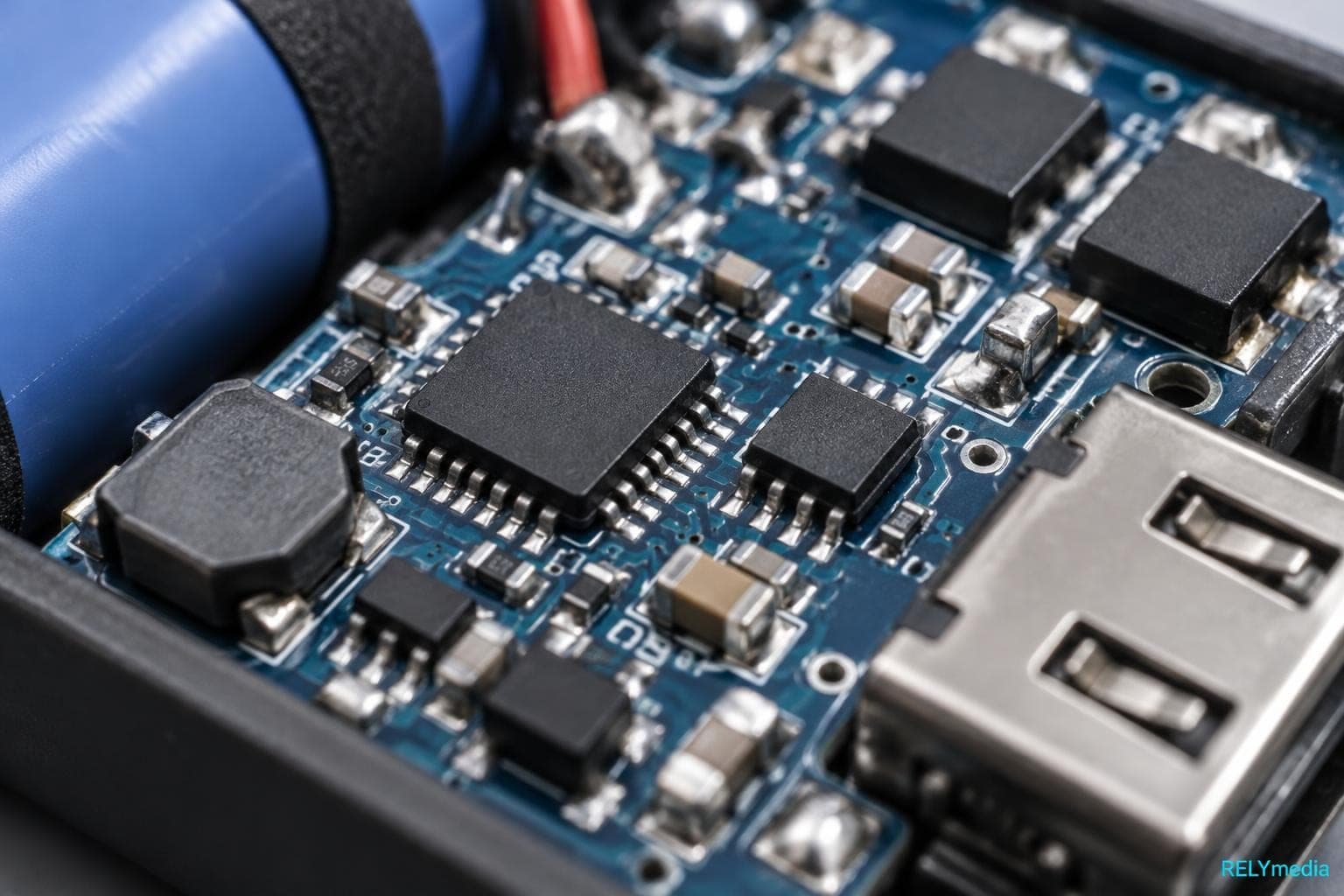
Its battery management system monitors charging status, voltage, current, temperature, charge level, and discharge. Protection circuits help guard against overcharging, short circuits, and overheating.
The Power Bank Converts and Sends Energy
A power-conversion circuit adjusts stored battery energy into a suitable output for the connected device.
With USB-C Power Delivery, compatible devices can negotiate power requirements across the same connection. USB-IF states that USB Power Delivery can support up to 240W with appropriately rated USB Type-C hardware.
Finally, energy exits through an output port, a cable, or a wireless system. Your device manages that incoming power through its own charging circuit.
Energy flow:Wall outlet → power input → charging circuit → battery → power conversion → output → device charging circuit → device battery
What Do mAh, Watts, Voltage, and Current Mean?
Four measurements explain most power bank specifications.
| Term | Meaning | Why it matters |
|---|---|---|
| mAh | Battery capacity | Estimates how much charge the battery stores |
| Volts | Electrical potential | Helps determine device compatibility |
| Amps | Electrical current | Influences charging rate |
| Watts | Power output | Helps determine charging speed |
What Is Power Bank mAh?
The milliamp-hour capacity tells you how much electrical charge the battery can store. Common sizes include 9,600mAh, 10,000mAh, 20,000mAh, 24,000mAh, and 25,000mAh power banks.
A 10,000mAh model often balances portable energy and weight. Larger batteries suit longer travel, multiple devices, or laptops.
Why Wattage Matters
Wattage describes the rate of power delivery. Phones may need relatively modest output power, while laptops can require much higher wattage.
Modern chargers may advertise 100W, 140W, or 165W charging. Actual speed still depends on the device, cable, port, and charging protocol.
Why Doesn't a 10,000mAh Power Bank Deliver Exactly 10,000mAh?
The simple math can be misleading.
A 10,000mAh power bank cannot deliver every advertised milliamp-hour to your phone. Voltage conversion, heat, cable resistance, and internal electronics consume some energy.
Real charging performance depends on:
- Battery capacity and condition
- Charging efficiency
- Voltage conversion
- Cable quality
- Charging speed
- Device use during charging
- Battery temperature
- Power consumption
Watt-hours provide a more consistent measure of energy across different voltages.
How Many Times Can a Power Bank Charge Your Phone?
Start with both battery capacities, then account for conversion losses.
A 10,000mAh battery may provide several phone charges, but real-world efficiency reduces the theoretical total.
Results also change with battery age, phone use, charging habits, and temperature.
When buying a phone backup charger, focus on your actual charging needs, not the largest number printed on the package.
RELYmedia can help businesses compare practical promotional power products rather than choosing solely based on headline specifications.
How Long Does a Power Bank Take to Charge?
Recharge time depends on battery capacity and input power.
A large battery paired with a weak adapter may take hours to charge. Higher compatible USB-C input power can shorten recharge time.
Key factors include:
- Power bank capacity
- Input specifications
- Charger wattage
- USB-C charging support
- Charging cable capability
- Battery temperature
- Remaining battery level
- Fast-charge capability
Rapid charging only works when every part of the charging chain supports it. One weak component becomes the bottleneck.
How to Use a Portable Charger
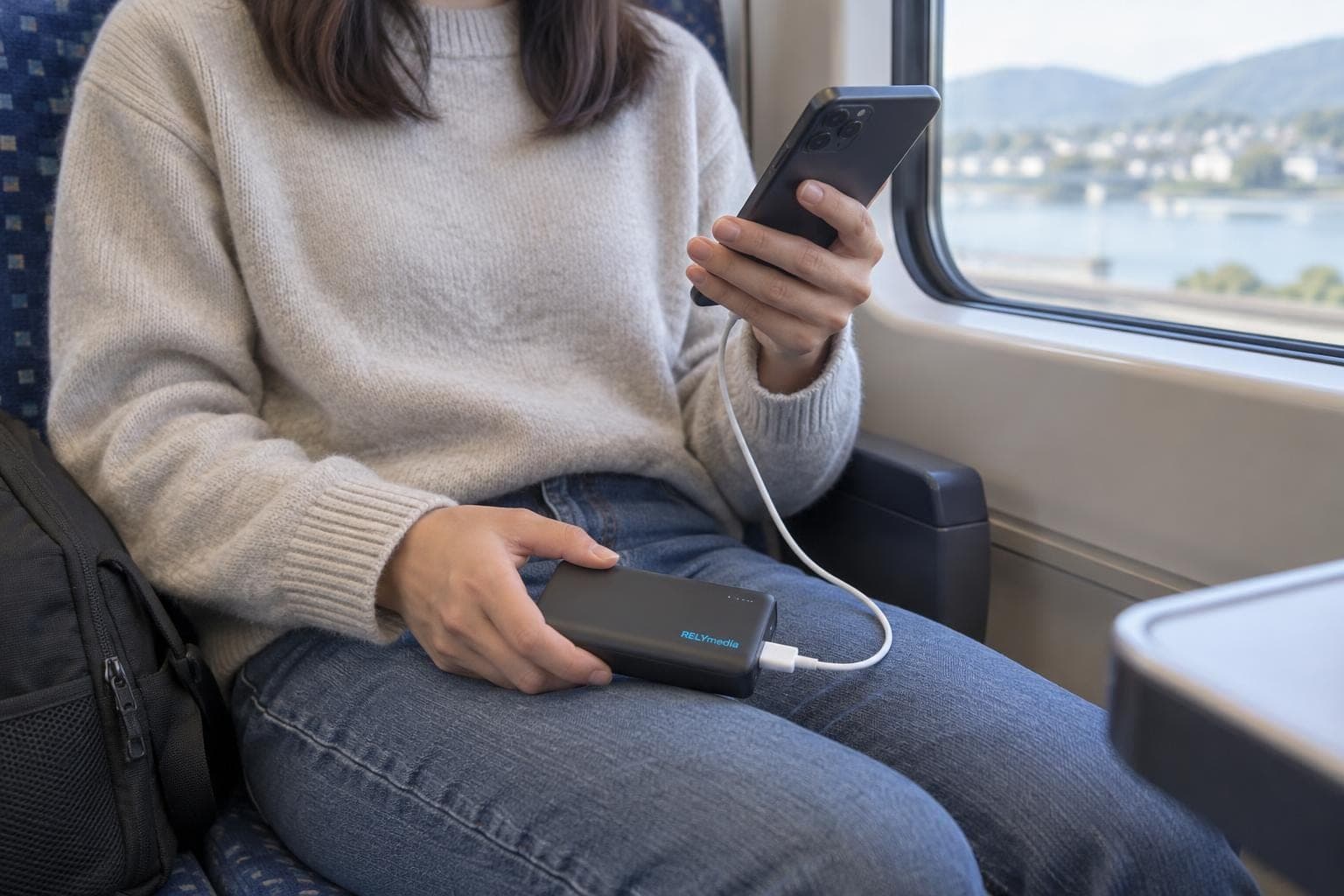
Using a portable charger is straightforward.
Recharge the power bank through its input port. LED indicators or a digital display usually show the remaining battery level.
Then connect your phone, tablet, laptop, or another USB-enabled device. Many models start automatically; others use a power button.
Modern units may support:
- Multiple device charging
- Simultaneous device charging
- USB-C ports
- A USB-A port
- Multiple charging ports
- Built-in cables
- A retractable charging cable
- Wireless charging
Some models support pass-through charging, allowing them to receive power while supplying another device. Check manufacturer specifications because support varies.
Different Types of Power Banks
Standard, Compact, and Lightweight Power Banks
A standard power bank handles everyday needs. Compact, lightweight, or pocket-sized models suit commuting and short trips.
High-Capacity and Laptop Power Banks
A high-capacity charger stores more energy. A portable laptop charger may add high wattage and USB Power Delivery for compatible notebooks and MacBooks.
Wireless Power Banks
A wireless power bank uses inductive charging between aligned coils. Cable-free charging adds convenience, though wired charging often wastes less energy.
Solar Power Banks
A solar-powered charger uses solar panels to turn sunlight into electricity. It can help outdoors or off-grid, but small panels recharge slowly. Treat solar charging as supplemental power.
For branded travel chargers or portable electronics accessories, RELYmedia can help you select options suited to your campaign goals.
Fast Charging vs. Standard Charging
Fast charging increases power transfer when the charger, cable, and device support compatible charging technology.
USB-C Power Delivery allows devices to negotiate appropriate voltage and current levels. A high-wattage power bank does not simply force maximum power into your phone. Compatible electronics manage what they can accept.
When evaluating fast-charging technology, check:
- Output rating
- USB Power Delivery support
- Device compatibility
- Cable rating
- Port specifications
- Maximum input and output power
This matters especially for high-speed laptop charging and multi-device power.
Advantages and Disadvantages of Portable Phone Chargers
| Advantages | Disadvantages |
|---|---|
| On-the-go charging | Requires recharging |
| Emergency power source | Adds weight |
| Convenient mobile charging | Capacity declines with age |
| Supports several device types | Charging rate varies |
| Useful during power outages | Compatibility differs |
| Provides travel backup power | Low-quality units create safety risks |
Every rechargeable battery still loses capacity gradually through age, heat, and charge cycles.
How to Choose the Right Power Bank
Start with your actual power needs.
Choose capacity based on daily charging needs, travel duration, and the number of devices you carry. Then check power output compatibility. A phone-compatible charger anda a laptop-compatible power bank may require very different wattages.
Also consider:
- USB-C and USB-A charging
- Power Delivery
- Charging specifications
- Multi-port charging
- Built-in charging cables
- Portability
- Charger durability
- Water resistance
- Overheating protection
- Overcharge protection
- Product quality
A travel-friendly charger should solve your power needs without becoming dead weight.
One useful buying rule is to match the charger to the hardest device you carry. A phone may charge from a basic unit, whereas a laptop may require higher power delivery. If you carry several devices, multiple ports may matter more than maximum capacity. Also check input specifications. A power bank that recharges slowly can become inconvenient even when its output performance looks excellent.
Need a practical customer giveaway?
Ask RELYmedia about branded portable power options.
RELYmedia can help businesses select useful promotional charging solutions that balance branding, portability, and everyday value.
How to Make a Power Bank Last Longer
Good battery care supports long-term performance.
Avoid excessive heat and repeated deep battery depletion. Keep the power bank in suitable storage conditions, especially during long periods without use. Recharge it periodically according to the manufacturer's guidance.
Use compatible cables and charging accessories. Damaged connectors can reduce charging efficiency and create a safety risk.
Battery preservation also depends on sensible charging frequency. Lithium batteries naturally lose capacity with age, so even careful maintenance cannot completely prevent battery degradation.
How Long Does a Power Bank Last?
Power bank lifespan can mean runtime per charge or total service life.
Runtime depends on the charging capacity and the device's power needs. Lifespan depends on battery chemistry, charging cycles, temperature, storage, and usage.
A charge cycle represents a cumulative discharge of roughly 100% of capacity. Two separate 50% uses can add up to one full cycle.
Signs of declining battery health include reduced capacity, slow charging, unreliable output, unusual heat, or swelling. Stop using any swollen or damaged rechargeable battery.
Are Power Banks Safe?
Quality power banks include battery protection and intelligent power management, but damaged or defective lithium batteries can still create hazards.
The FAA warns that lithium-ion batteries can overheat and enter thermal runaway, especially when damaged, overheated, overcharged, or improperly packed.
Never use a power bank that is swollen, punctured, leaking, recalled, or unusually hot. Keep charging ports free from debris and use compatible accessories.
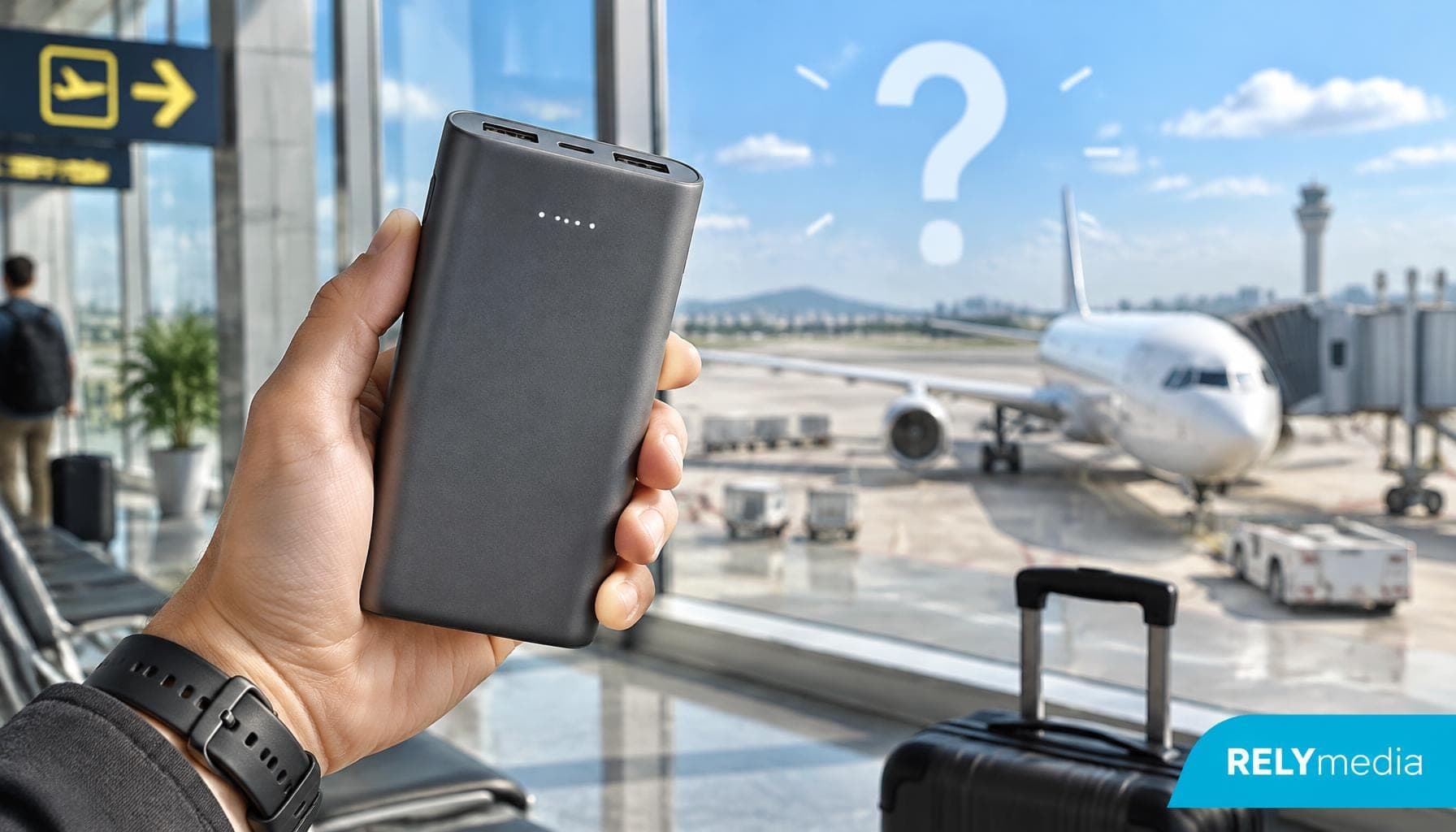
Are Power Banks Allowed on Planes?
Yes, but battery regulations apply.
Under current FAA guidance, power banks count as spare lithium batteries and must remain in carry-on baggage. Lithium-ion power banks rated at 100Wh or less are generally permitted for personal use. Units above 100Wh and up to 160Wh require airline approval, with limits on larger spare batteries. Power banks above 160Wh are prohibited on passenger aircraft.
The FAA also recommends checking with with your airline, as carriers may impose stricter quantity or capacity limits. IATA similarly advises travelers to keep power banks and spare lithium batteries in hand baggage rather than checked baggage.
To calculate watt-hours when needed:
Wh = Voltage × Amp-hours
If capacity appears in mAh, divide it by 1,000 first to convert to amp-hours.
Ready to print your team's name on premium apparel?
Fill in your details and a RELYmedia specialist will come back to you with a custom quote — fast turnaround, no obligation.
- ⚡Same-day response on business days
- 🎨Free design assistance included
- 🚚Rush order & fast delivery available
- 💰Price beat guarantee on every order
Shop custom power banks and chargers
See all power banks & charging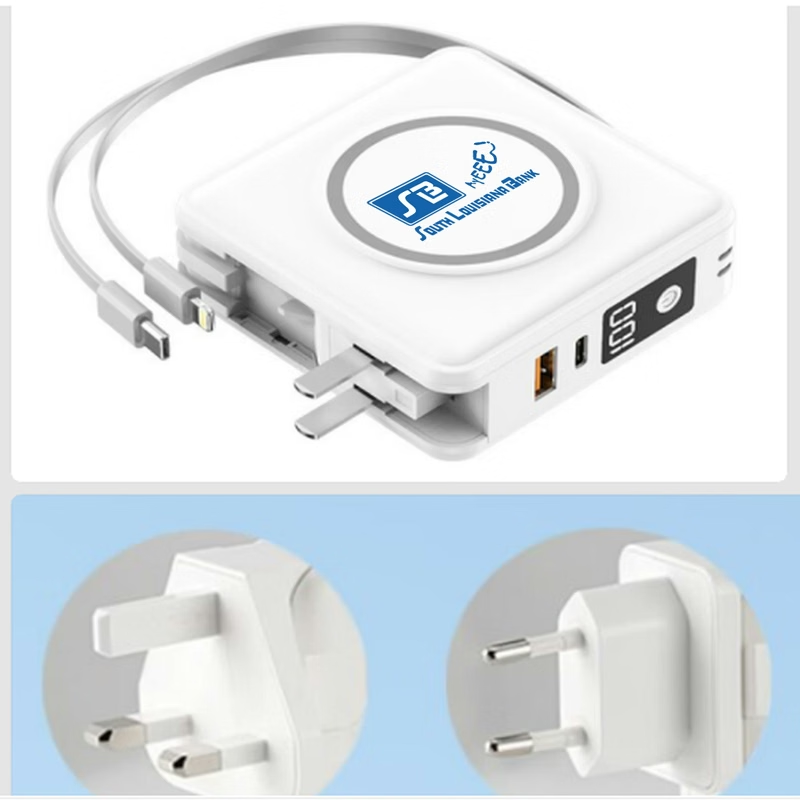
10,000 mAh Wireless Fast Charging Power Bank and 5IN1 Travel Charger w/Intl
$48.25 - $53.66
View product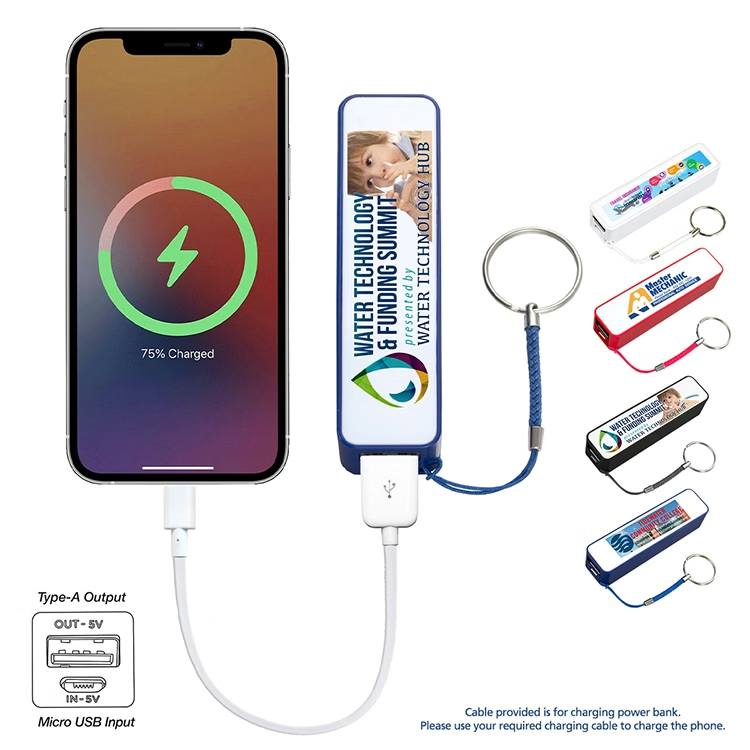
In Charge PB200 UL Listed 2200 mAh Portable Lithium Ion Power Bank Charger PB1004
$7.03 - $7.91
View product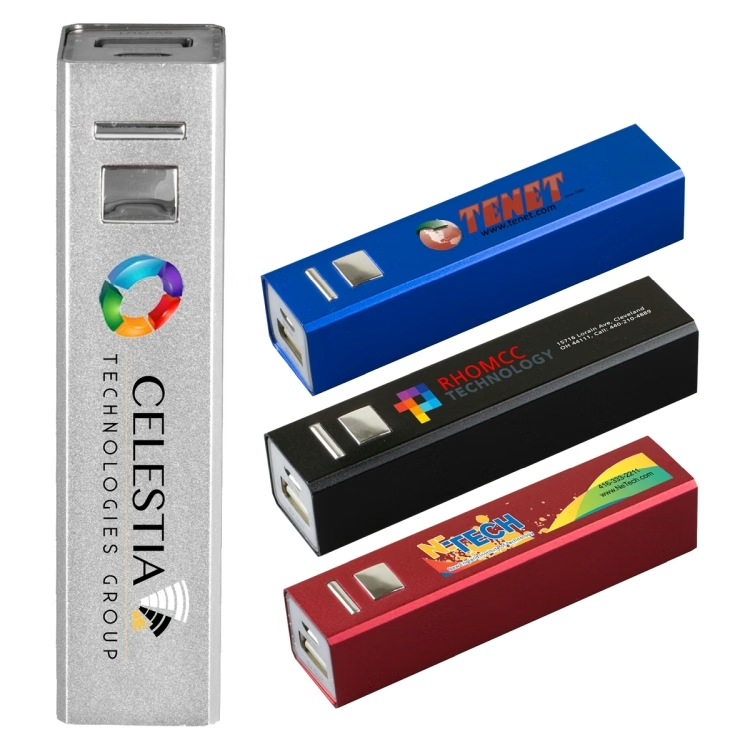
In Charge Alloy UL Listed Aluminium 2200 mAh Lithium Ion Portable Power Bank Charger
$7.57 - $8.85
View product10,000 mAh Energizer® Mag-N-Kick™ Wireless Charger Power Bank And Phone Stand
$34.39 - $52.31
View product10,000 mAh Wireless Charger Power Bank
$25.59 - $44.77
View product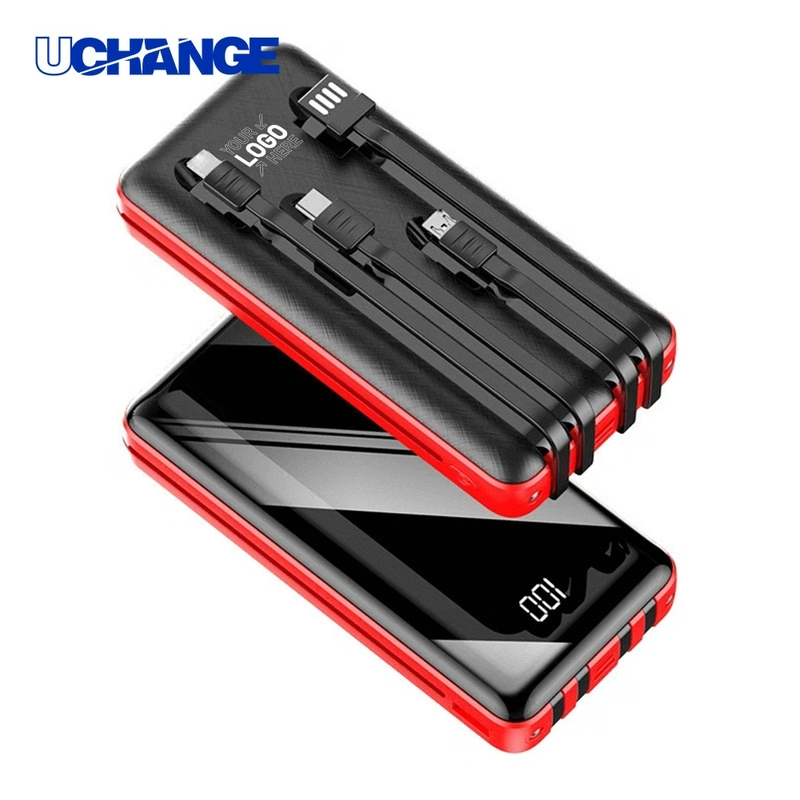
10,000mAh Portable Charger Power Bank with Dual Flashlight
$7.63 - $12.53
View product
10,000 mAh Wireless Charging Power Bank
$11.58 - $25.35
View product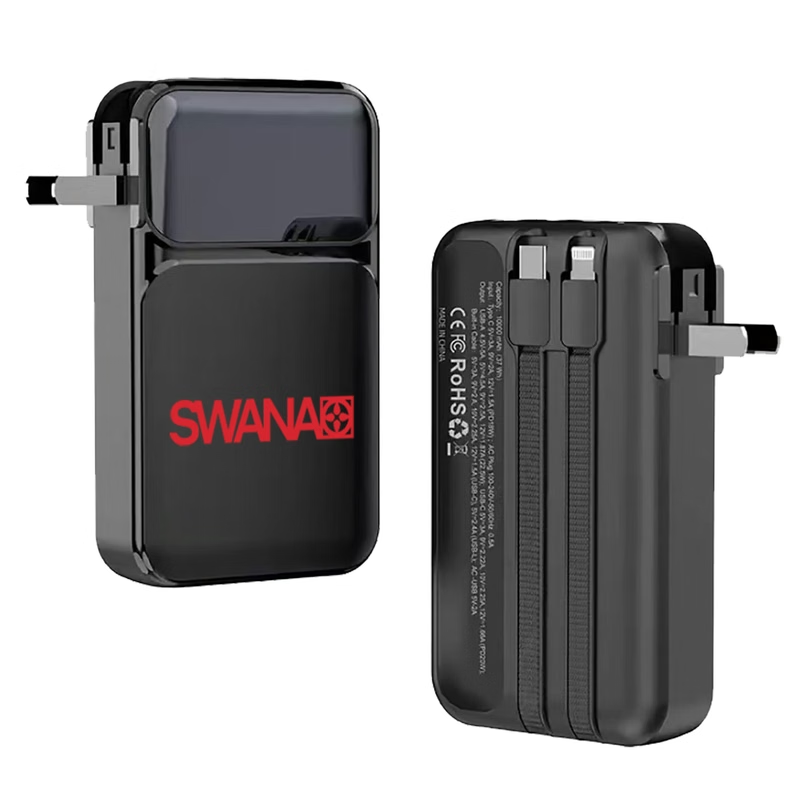
10,000 mAh Portable Charger w/Built In Wall Plug Power Bank
$27.43 - $32.36
View product
Frequently Asked Questions
Is a Power Bank the Same as a Portable Charger?
Usually, yes. Both commonly describe a rechargeable battery for mobile electronics.
Are Portable Chargers Lithium Batteries?
Most consumer power banks use lithium-based rechargeable batteries. Check specifications for the exact chemistry.
Should You Fully Drain a Power Bank?
Usually not. Repeated full depletion can stress lithium batteries. Follow the manufacturer's guidance.
Can a Power Bank Charge a Laptop?
Yes, if the power bank provides sufficient compatible USB-C power and wattage.
Does a Solar Power Bank Really Work?
Yes, but small solar panels usually recharge batteries much slower than an electrical outlet.
What Size Power Bank Do I Need?
Choose a small model for everyday phone charging and greater capacity for travel, multiple devices, tablets, or laptops.
Conclusion
So, how does a power bank work? It receives electrical power, stores that energy inside a rechargeable battery, manages it through control electronics, converts it to a suitable output, and transfers that power to your device.
The best portable charging solution is not automatically the largest battery. Capacity, wattage, compatibility, safety, portability, and charging technology all matter.
For businesses, that usefulness can also turn a power bank into a strong branded touchpoint. RELYmedia helps organizations choose promotional products that support real customer needs while reinforcing their brand through practical everyday use.
Ready to turn portable power into a useful branded experience?
Contact RELYmedia to explore promotional charging products built around your audience, message, quantity, and deadline.
Shop this
Need custom power banks? We print them.
Bulk pricing, three free mockups, real quotes back the same business day.