Power Bank Airline Rules: What US Travelers Need to Know in 2026
October 27, 2026 · 10 min read
Power banks are easy to forget about until airport security makes them important. Most contain lithium-ion batteries, so aviation safety rules apply.
For US travelers, the key rule is simple: keep your power bank in carry-on baggage, not checked baggage. The FAA allows rechargeable lithium-ion batteries of 0–100 Wh on passenger aircraft. Batteries rated at 101–160 Wh require airline approval, while batteries over 160 Wh are generally forbidden.
International travel can be stricter. IATA’s 2026 guidance says power banks must remain in carry-on baggage, cannot be recharged onboard, and are limited to two per person.
💡Quick rule: Check the watt-hour rating, pack the power bank in your carry-on, inspect its condition, and verify your airline’s policy.
Check your power bank label before leaving home. A clear Wh rating can prevent confusion at the security checkpoint.
Are Power Banks Allowed on Planes?
Yes. Power banks are allowed on many flights when their battery capacity, quantity, condition, and packing meet applicable airline regulations. In the United States, a power bank counts as a spare battery because it stores battery energy and supplies power to another device.
The same category may include a portable charger, portable battery, battery pack, external battery, rechargeable power bank, or travel power bank.
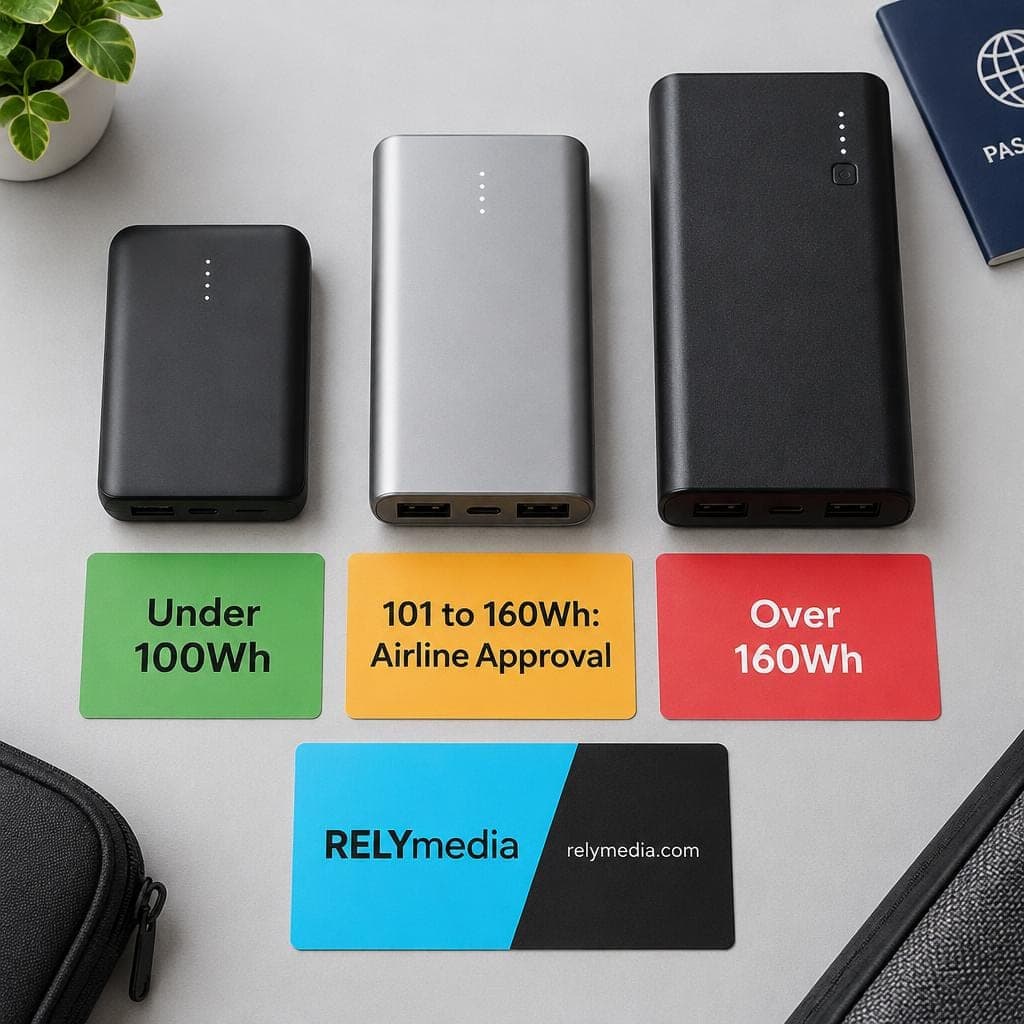
| Power bank rating | Typical US status | What travelers should do |
|---|---|---|
| Under 100Wh | Usually allowed | Carry it in cabin baggage |
| 101–160Wh | Approval required | Contact the air carrier first |
| Over 160Wh | Generally prohibited | Do not bring it on a passenger flight |
These limits follow the current FAA framework for rechargeable lithium-ion batteries carried by airline passengers.
TSA, FAA, and Airline Power Bank Rules
The TSA manages airport security screening. The FAA regulates hazardous materials aboard US aircraft. Airlines can add airline-specific rules, power bank quantity limits, baggage restrictions, or in-flight charging restrictions.
Save your airline’s current battery policy before departure.
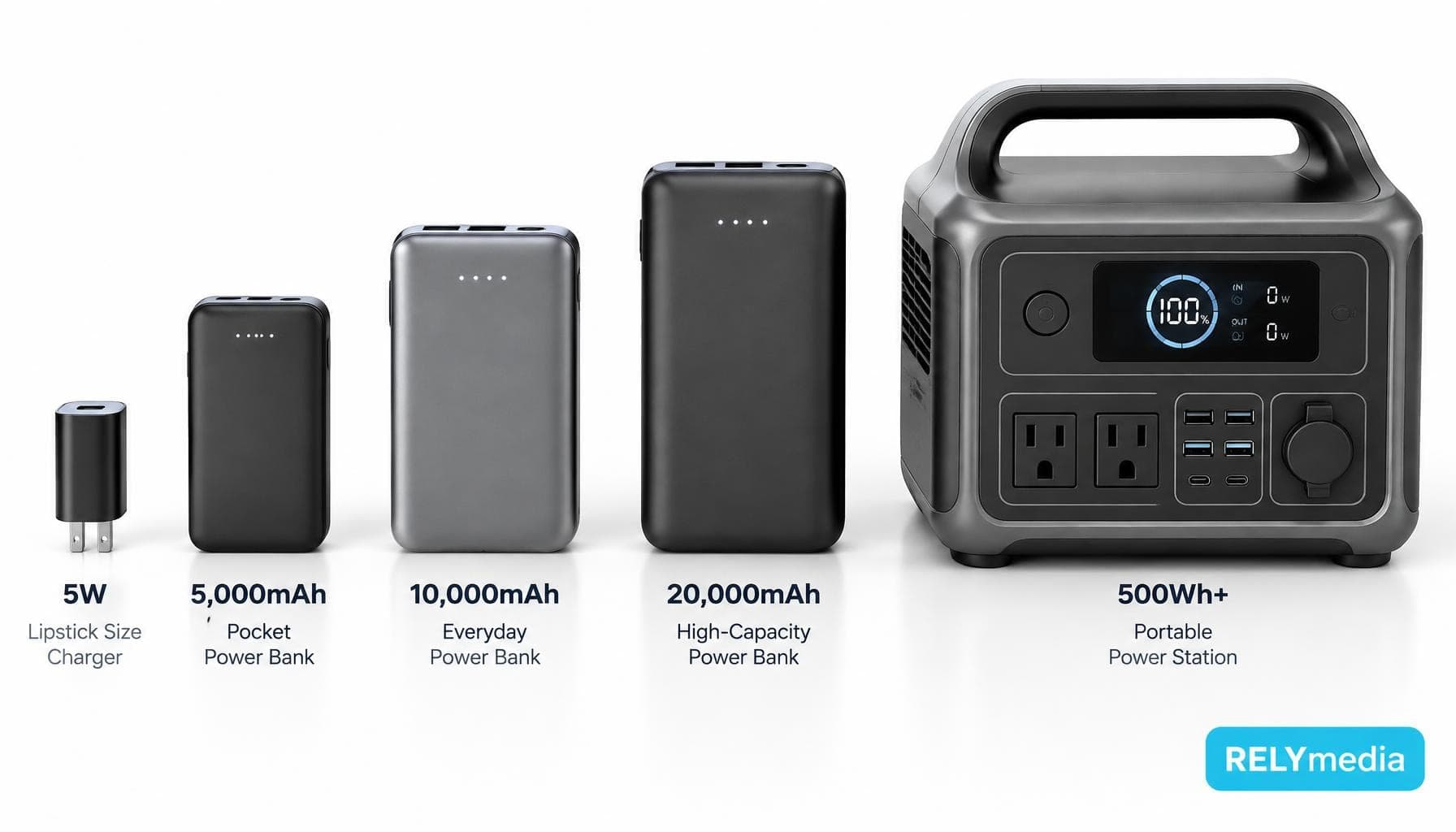
Power Bank Capacity Limits: 100Wh, 160Wh, and mAh
Battery capacity is often expressed in mAh (milliamp-hours), while aviation regulations use Wh (watt-hours).
Use this formula:
Wh = (mAh ÷ 1,000) × voltage
A 20,000 mAh power bank with a nominal battery voltage of 3.7V has a capacity of about 74 Wh.
| Advertised capacity | Approximate energy at 3.7V | Typical category |
|---|---|---|
| 5,000mAh | 18.5Wh | Under 100Wh |
| 10,000mAh | 37Wh | Under 100Wh |
| 20,000mAh | 74Wh | Under 100Wh |
| 25,000mAh | 92.5Wh | Under 100Wh |
| 30,000mAh | 111Wh | 101–160Wh |
| 50,000mAh | 185Wh | Over 160Wh |
This mAh-to-Wh conversion explains why 10,000- and 20,000-mAh power banks usually fall within US power bank limits. A 30,000mAh power bank may require airline permission. A 50,000mAh unit often exceeds the maximum capacity for passenger baggage.
What If the Watt-Hour Rating Is Missing?
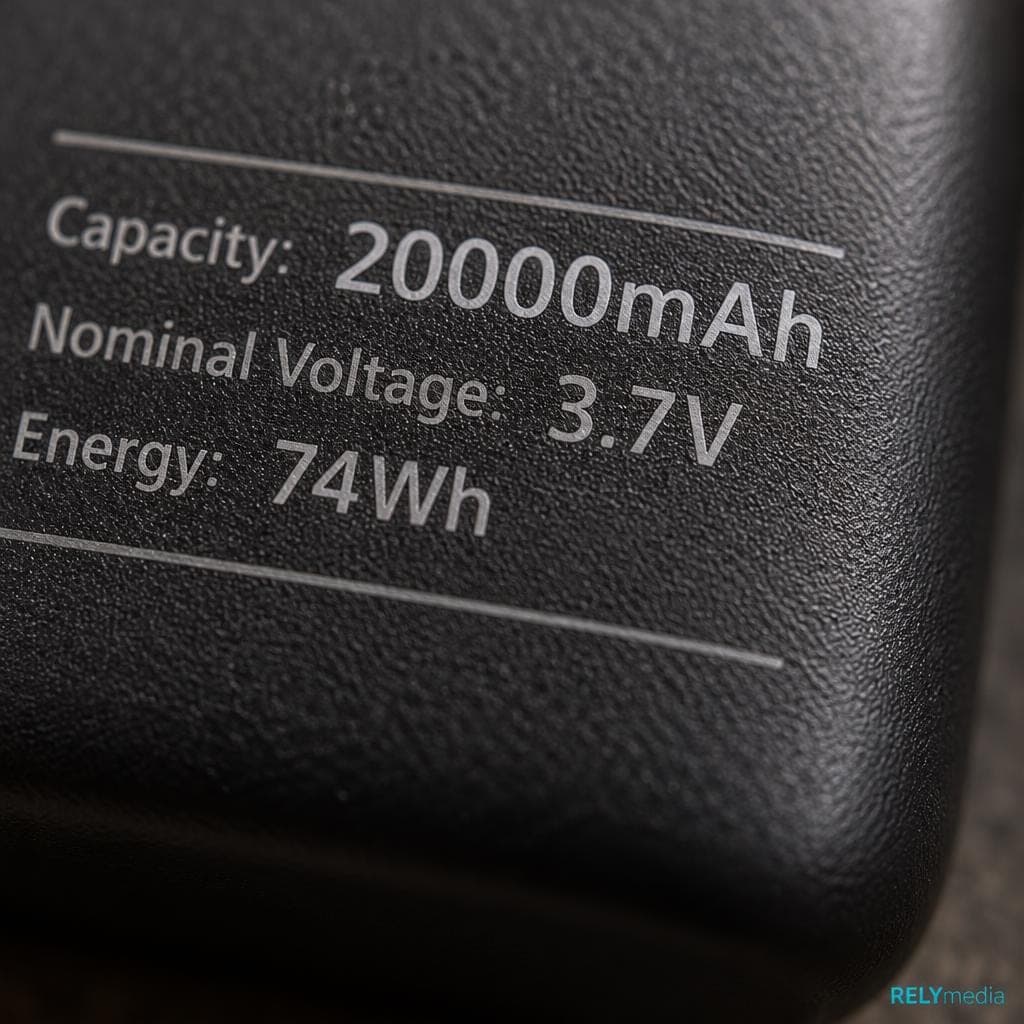
Look for the printed watt-hour rating, battery voltage, capacity, model number, and battery labeling. If Wh is absent, use reliable manufacturer specifications for the watt-hour calculation.
The FAA advises travelers to determine the watt-hour rating when it is not marked on a lithium-ion battery.
Power Bank in Carry-On or Checked Baggage?
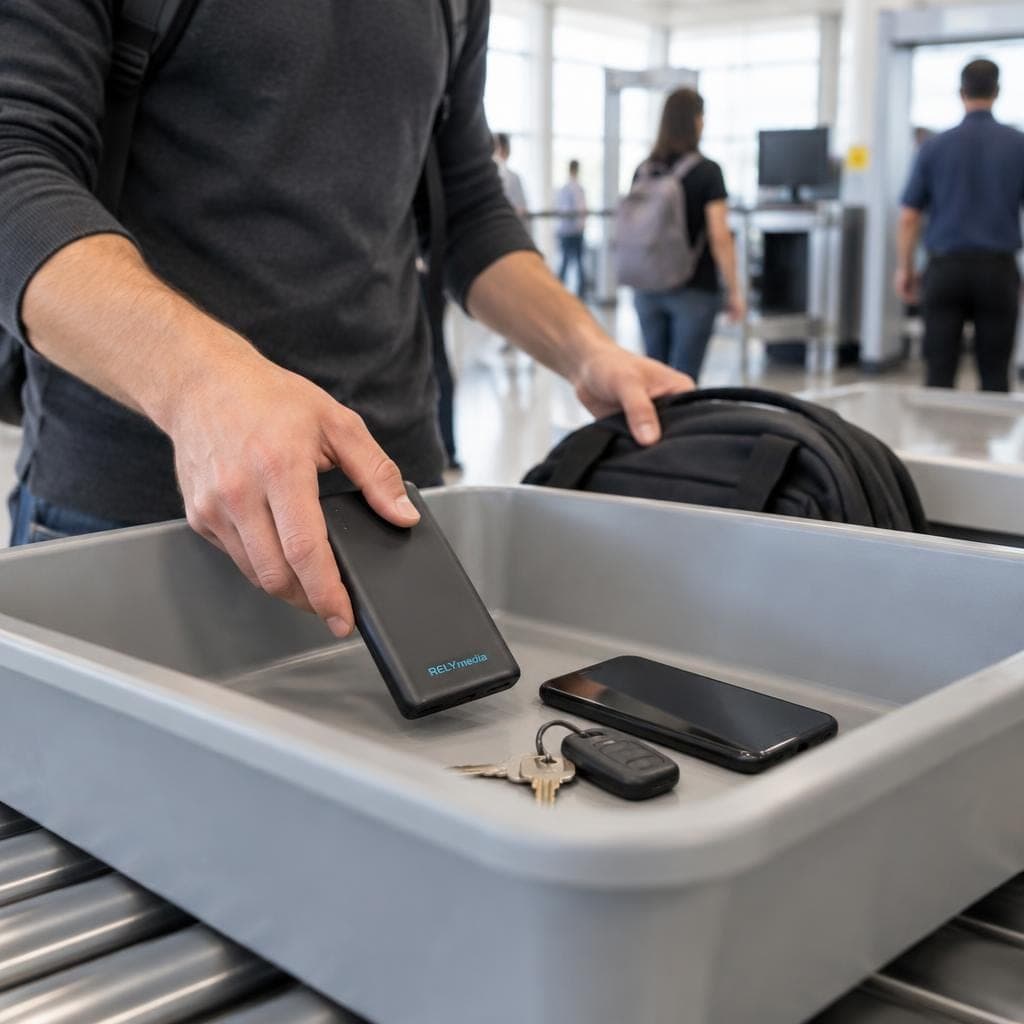
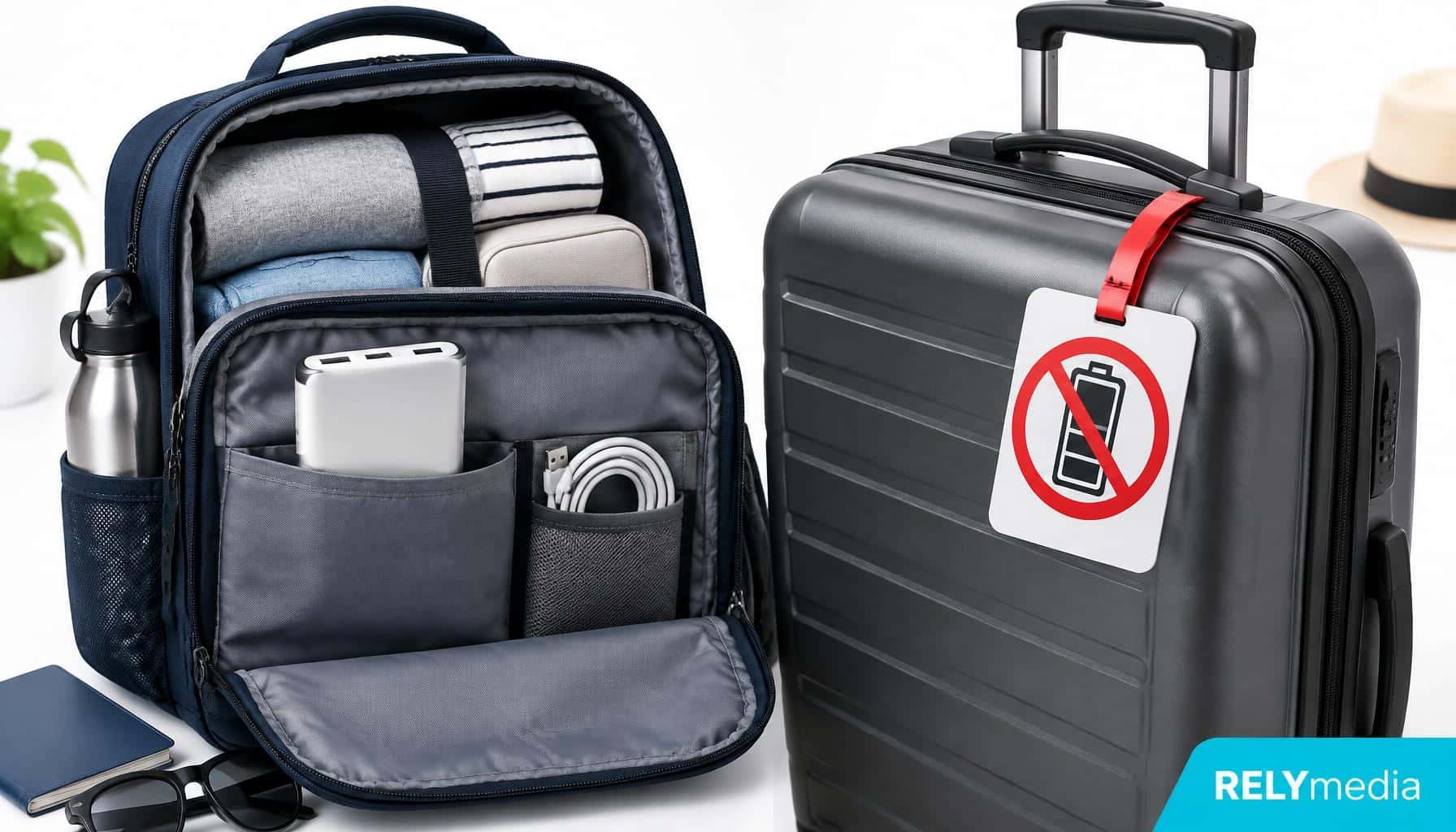
A power bank belongs in carry-on luggage or cabin baggage. Spare lithium batteries, including portable chargers, cannot be transported in checked baggage under FAA regulations.
The reason is fire safety. A damaged lithium-ion battery can overheat, fail, smoke, or enter thermal runaway. Cabin crews can detect and address those problems faster than if the battery sits in the cargo hold.
If your carry-on is gate-checked, remove all power banks and spare batteries first.
How to Pack a Power Bank Safely
- Keep charging ports and battery terminals away from loose metal.
- Use protective packaging or an individual pouch.
- Prevent crushing, punctures, and accidental activation.
- Keep the watt-hour label readable.
- Never travel with a swollen or defective battery.
- Keep power banks accessible in the cabin.
Separate batteries with exposed contacts may need terminal protection through original packaging, a battery case, or nonconductive tape.
Inspect your battery condition before every trip. Cracking, swelling, leakage, unusual heat, or a recall are reasons to stop using it.
Can You Use a Power Bank During a Flight?
Possibly, but in-flight use depends on the airline and route. A power bank allowed on a plane is not automatically approved for charging during flight.
IATA’s 2026 guidance says power banks must not be recharged onboard. It also recommends against using them to recharge portable electronic devices onboard. Some operators enforce stricter power bank charging rules.
USB charging, USB-C, wireless charging, an AC outlet, or faster charging speed does not change the battery restrictions. Keep the power bank accessible and follow cabin crew instructions.
How Many Power Banks Can You Bring on a Plane?
Under FAA rules, rechargeable batteries under 100Wh do not have a general numerical limit when carried for personal use. Airlines can still impose stricter restrictions on battery allowance and quantity.
For spare rechargeable lithium-ion batteries rated at 101–160 Wh, the FAA permits no more than two per person with carrier approval. IATA’s 2026 requirements limit passengers to no more than two power banks per person.
Verify the power bank allowance with your operating carrier, especially when traveling internationally with multiple power banks.
When Do You Need Airline Approval?
Under US flight regulations, rechargeable lithium-ion batteries between 101 Wh and 160 Wh require approval from the air carrier. This can include some laptop batteries, high-capacity power banks, camera batteries, drone batteries, and tool batteries.
Before requesting approval, collect:
- Manufacturer and model
- Power bank capacity
- Printed Wh rating
- Battery voltage
- Number of batteries
- Flight details
Ask for proof of approval in writing when possible. Approval requirements can differ between carriers.
Contact the airline before traveling with any item over 100 Wh. The departure gate is a poor place to solve a battery compliance problem.
Domestic and International Power Bank Rules
Domestic flights in the United States generally follow FAA battery travel limits, but airlines can impose stricter rules. International travel is more complex because aviation authorities, transportation regulations, country-specific rules, and operator policies may overlap.
For multi-airline itineraries, check every operating carrier. The strictest applicable rule may determine restrictions on capacity, cabin storage, quantity, and charging during flight.
Searches for a United power bank policy, Delta power bank rules, Alaska Airlines power bank policy, Frontier Airlines power bank policy, Volaris portable charger mAh limit, Aeromexico battery limits, or Jetstar powerbank rules should always lead to direct airline verification.
Other Batteries and Battery-Powered Devices
Not every battery-powered device follows the exact spare battery rules. A battery installed inside a laptop differs from a loose spare battery. The same distinction applies to camera, drone, cordless tool, and other device batteries.
FAA guidance allows some lithium battery-powered devices in checked luggage when fully powered off and protected from accidental activation. Spare lithium batteries still stay in carry-on baggage.
LiFePO4, Non-Lithium Batteries, and Battery Chemistry
Lithium iron phosphate, or LiFePO4, uses a different battery chemistry from many common lithium-ion cells. That difference does not automatically exempt it from aviation regulations.
Non-lithium batteries can have separate rules. Identify the chemistry, battery size, battery energy, and whether the battery is installed or spare.
Smart Luggage, AirTags, and Specialty Chargers
Smart luggage or a smart suitcase may contain removable batteries. Check the airline’s smart-bag policy before checking it.
Bluetooth trackers such as an AirTag contain much smaller batteries than a full-size external battery. A wireless, solar, or laptop power bank is a form of portable energy storage. Solar charging, wireless charging, a charging port, or an AC outlet does not override its Wh rating.
Medical Device and Mobility Batteries
Medical device batteries and mobility device batteries are subject to specialized requirements. Do not apply ordinary power bank capacity limits without checking the correct rule.
The FAA permits certain wheelchair and mobility batteries beyond standard portable charger limits. Depending on design, one spare lithium battery up to 300Wh or two spares up to 160Wh each may be permitted under specific conditions.
Travelers using mobility devices should contact their airline early, as additional handling or check-in arrangements may be required.
Battery Safety: Never Fly With a Damaged Power Bank
Battery inspection should happen before every trip. Warning signs include:
- Swelling or case separation
- Cracks, dents, or punctures
- Unusual heat
- Smoke or burnt odor
- Damaged ports
- Leakage
- A manufacturer recall
Battery damage can increase the risk of overheating and battery failure. If a battery emergency occurs during flight, tell cabin crew immediately.
Good battery protection supports electrical safety, lithium battery safety, fire prevention, and safer battery transportation.
Power Bank Disposal and Battery Recycling
A worn-out rechargeable battery does not belong in household waste or normal curbside recycling. The EPA warns that lithium-ion batteries can be damaged during waste handling, creating a fire hazard.
Use a battery recycling program, an e-waste recycling service, a retailer take-back option, a battery collection site, or a household hazardous-waste facility. Protect exposed terminals and follow the recycling facility’s instructions.
Trains, Buses, and Ferries
Air travel rules do not automatically apply to other transportation systems. Train, bus, ferry, and local operator battery rules can differ.
High-capacity energy storage deserves a direct policy check before the trip.
Choosing a Travel-Friendly Promotional Power Bank
A useful promotional power bank should do more than carry a logo. Travelers notice battery capacity, charging speed, portability, connector compatibility, build quality, and clear labeling.
For branded portable charging products, businesses should review the actual watt-hours, voltage, and charging capacity, as well as the documentation, rather than relying on mAh alone.
RELYmedia helps organizations choose promotional products around real use cases. With portable charging, consider the audience, devices, travel habits, and product specifications.
Talk with RELYmedia about custom power banks for your next campaign
and choose practical promotional technology that fits your audience.
Power Bank Preflight Checklist
Before leaving for the airport:
- Confirm the power bank watt-hours.
- Check its battery condition.
- Review airline regulations.
- Put it in carry-on baggage.
- Remove it from gate-checked luggage.
- Protect it from damage and short circuits.
- Keep required proof of approval.
- Follow in-flight charging restrictions.
- Check operating carriers.
Ready to print your team's name on premium apparel?
Fill in your details and a RELYmedia specialist will come back to you with a custom quote — fast turnaround, no obligation.
- ⚡Same-day response on business days
- 🎨Free design assistance included
- 🚚Rush order & fast delivery available
- 💰Price beat guarantee on every order
Shop custom power banks and chargers
See all power banks & charging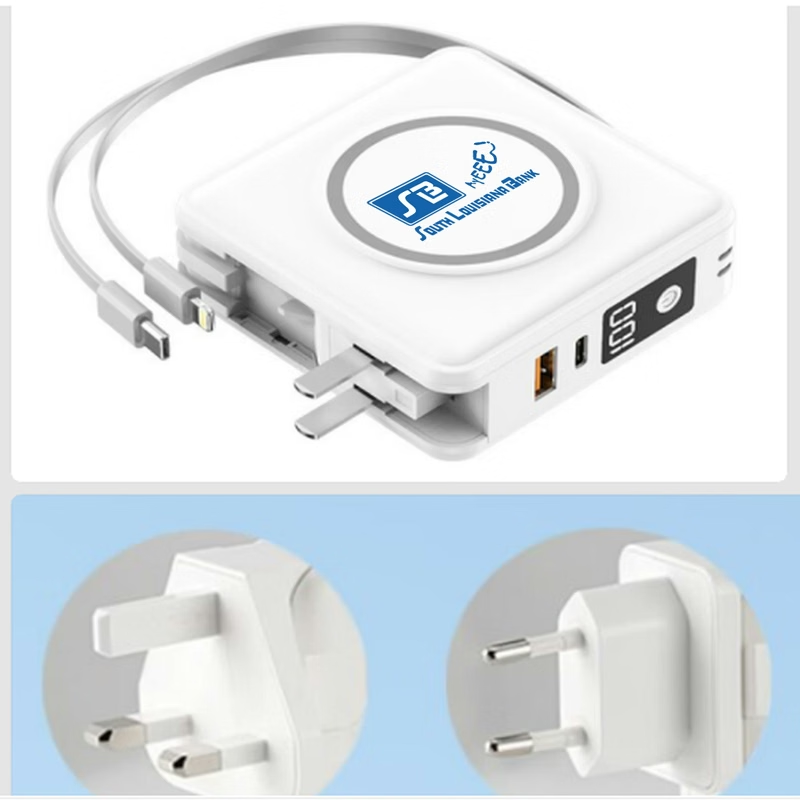
10,000 mAh Wireless Fast Charging Power Bank and 5IN1 Travel Charger w/Intl
$48.25 - $53.66
View product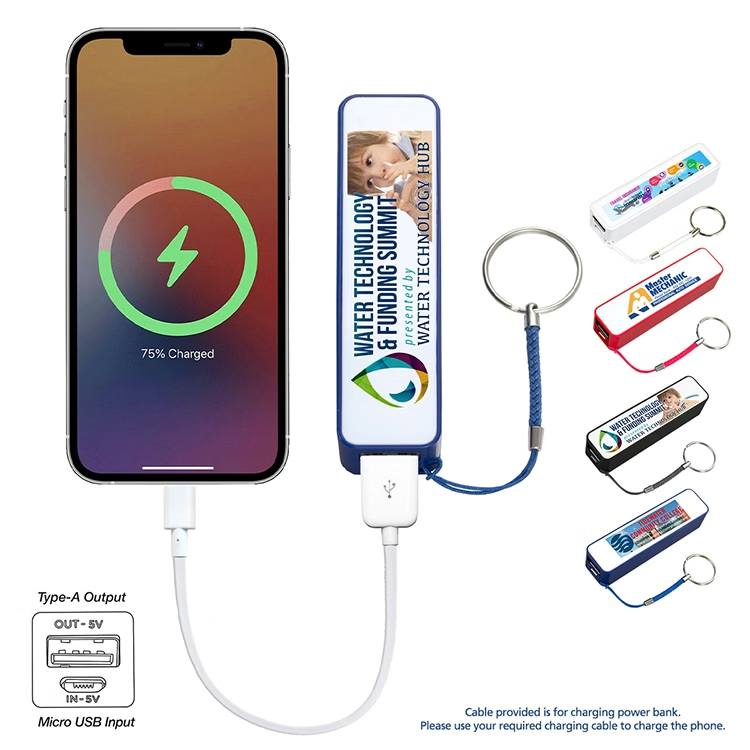
In Charge PB200 UL Listed 2200 mAh Portable Lithium Ion Power Bank Charger PB1004
$7.03 - $7.91
View product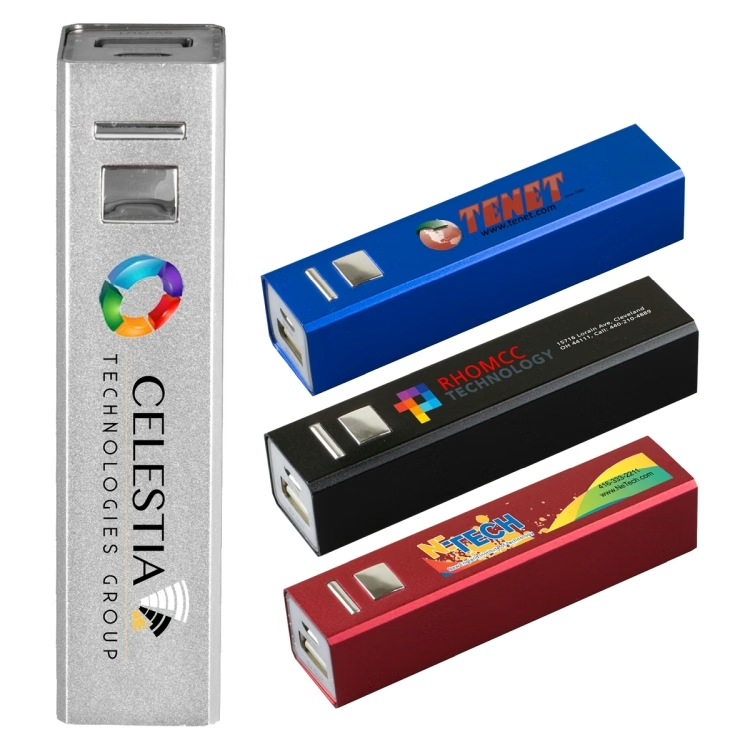
In Charge Alloy UL Listed Aluminium 2200 mAh Lithium Ion Portable Power Bank Charger
$7.57 - $8.85
View product10,000 mAh Energizer® Mag-N-Kick™ Wireless Charger Power Bank And Phone Stand
$34.39 - $52.31
View product10,000 mAh Wireless Charger Power Bank
$25.59 - $44.77
View product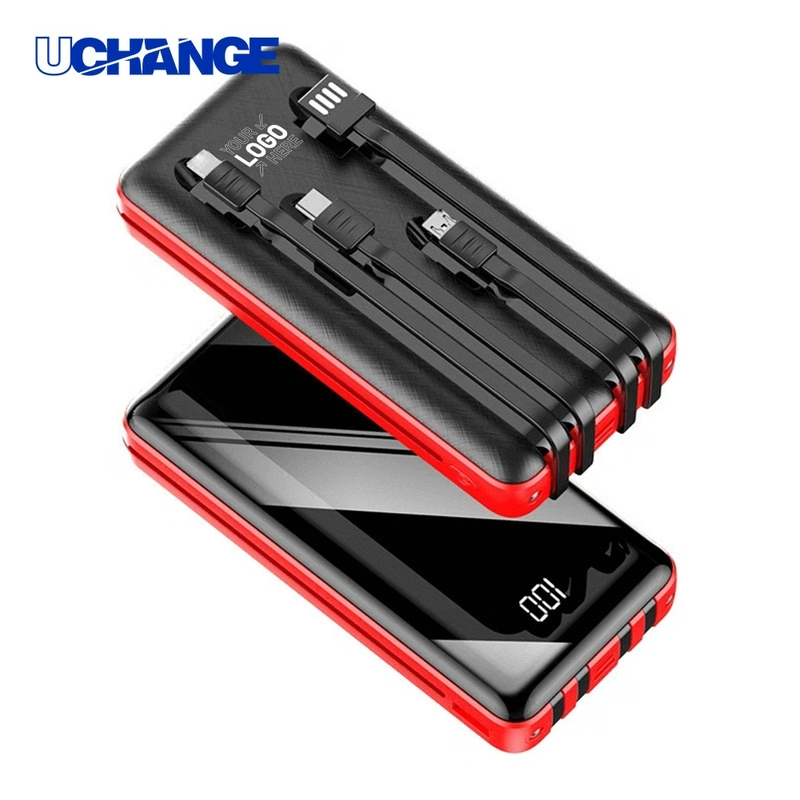
10,000mAh Portable Charger Power Bank with Dual Flashlight
$7.63 - $12.53
View product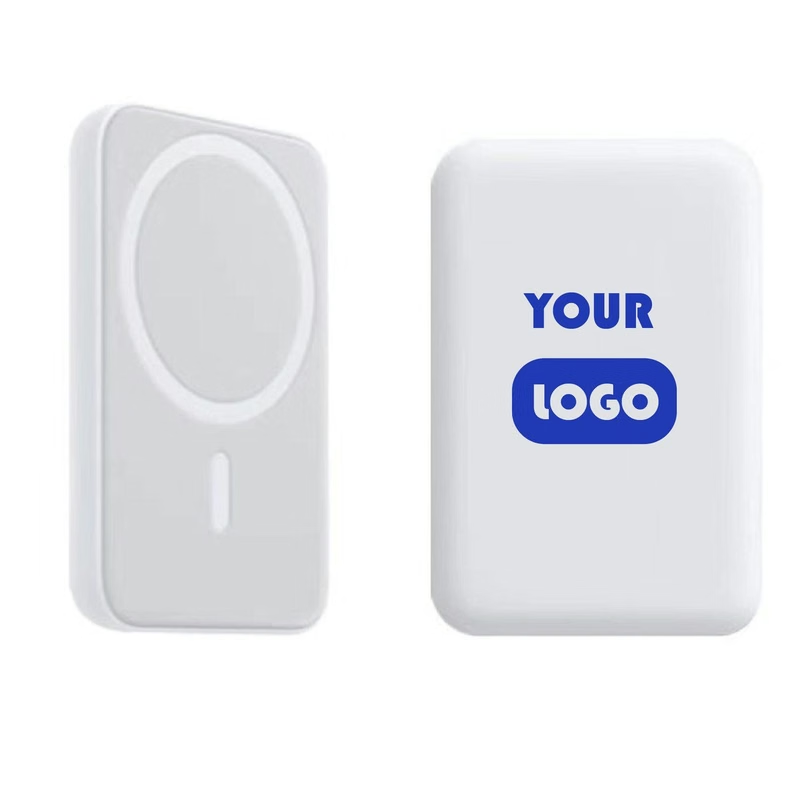
10,000 mAh Wireless Charging Power Bank
$11.58 - $25.35
View product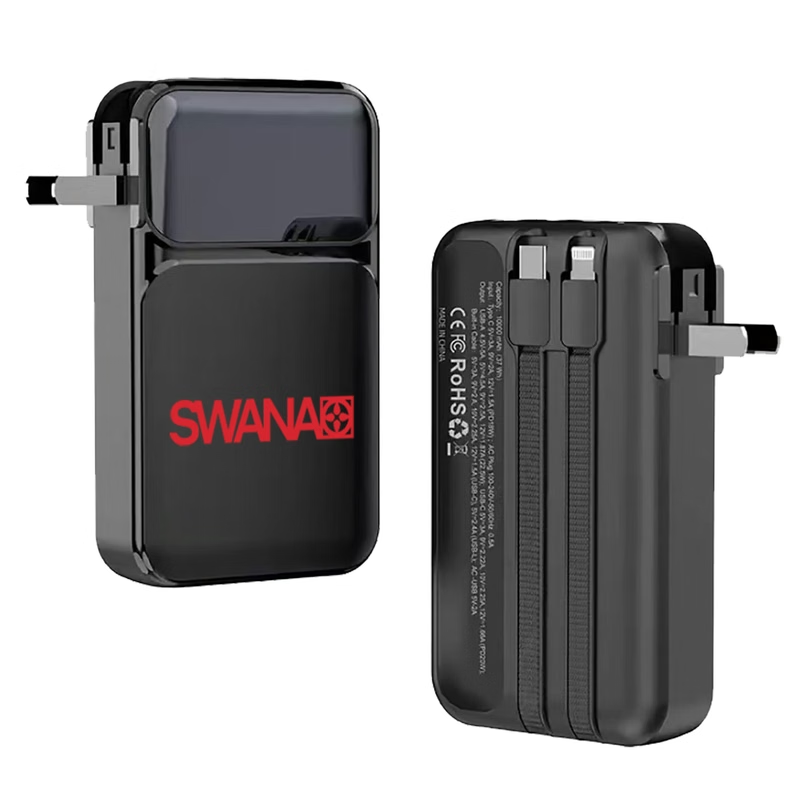
10,000 mAh Portable Charger w/Built In Wall Plug Power Bank
$27.43 - $32.36
View product
Frequently Asked Questions About Power Banks on Planes
Is a 10,000mAh power bank allowed in flight?
Usually, yes. At 3.7V, it equals about 37 Wh, below the US 100 Wh limit.
Is a 20,000mAh power bank allowed on a plane?
Usually. At 3.7V, it equals about 74Wh. Airline-specific rules can still apply.
Is a 30,000mAh power bank allowed?
At 3.7V, it equals roughly 111Wh. Under FAA rules, airline approval is required.
Is a 50,000mAh power bank allowed in flight?
At 3.7V, it is about 185Wh, above the general 160Wh passenger-aircraft limit.
Can power banks go in checked luggage?
No. Under FAA rules, spare lithium-ion power banks must remain in carry-on baggage.
Can I carry two power banks in flight?
Often, yes, but capacity and carrier policy matter. IATA’s 2026 requirements limit passengers to two power banks.
What size power bank is allowed on a plane?
For US passenger flights, up to 100Wh is generally allowed without airline approval. Batteries from 101–160Wh need approval.
Can you use portable chargers on planes?
Sometimes. Rules vary by carrier. Current IATA guidance prohibits recharging power banks onboard and recommends against using them to recharge devices onboard.
What if my power bank has no Wh label?
Use reliable voltage and capacity information to calculate Wh. A carrier may still refuse a battery whose rating cannot be verified.
Conclusion: Travel With Power Banks the Smart Way
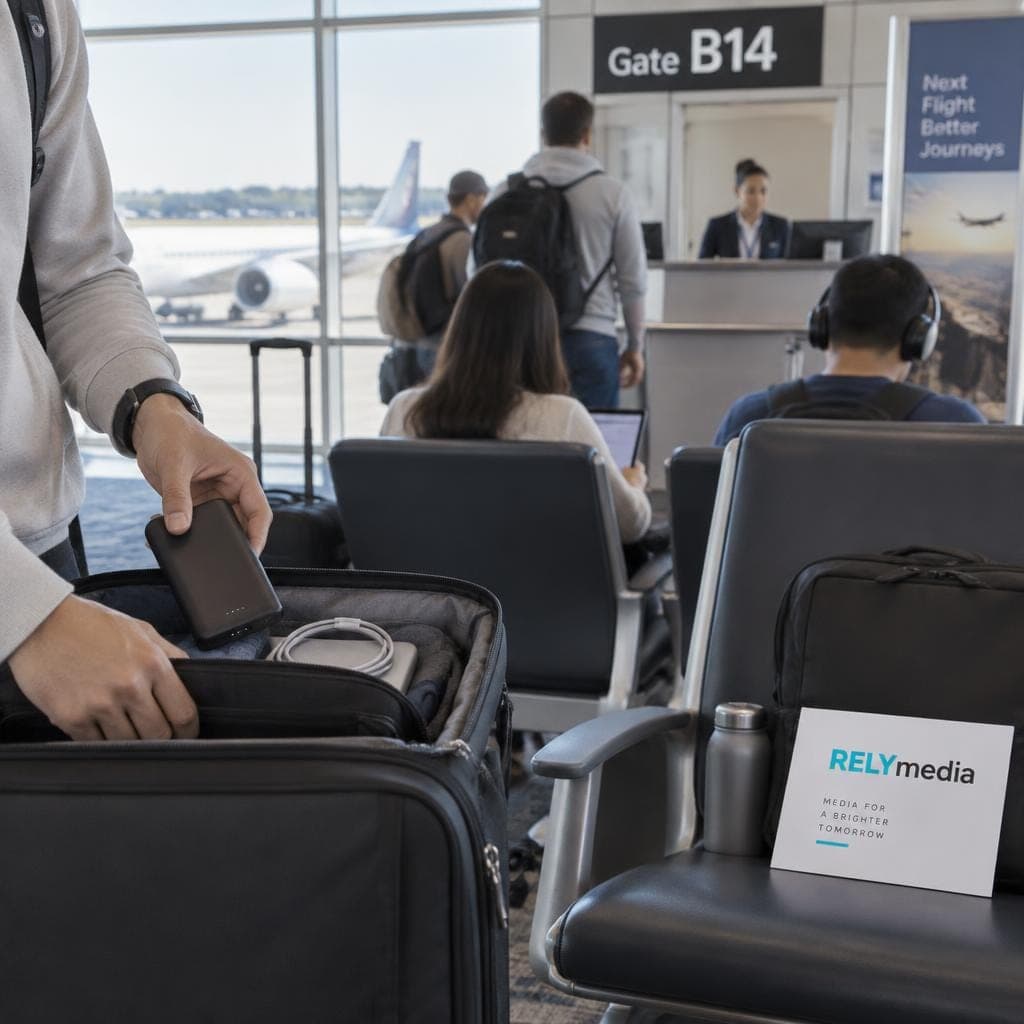
Flying with a power bank becomes simple when you focus on four things: watt-hours, carry-on placement, battery condition, and airline-specific rules.
For US air travel, keep spare lithium batteries and power banks in your carry-on. Units under 100Wh generally fit the standard FAA allowance. Batteries rated 101–160Wh need carrier approval. Anything over 160Wh is generally prohibited on passenger flights.
International rules can be stricter, so check every operating carrier.
RELYmedia brings the same practical thinking to branded power banks and promotional technology. The goal is not simply to print a logo on a charger. Choose a reliable, useful product with clear specifications that people will actually keep and use.
Explore custom power bank options with RELYmedia,
branded charging products built for real-world use, quality, and lasting visibility.
Shop this
Need custom travel power banks? We print them.
Bulk pricing, three free mockups, real quotes back the same business day.