The Best Power Banks for Travel, Work, and Emergency Charging — Tested in the Real World
October 27, 2026 · 10 min read
A dead phone is inconvenient. During a flight, workday, road trip, or blackout, it can become a real problem. The best power bank is not simply the model with the largest battery. It is the one that matches your devices, travel habits, charging needs, and daily routine.
For most people, the key factors are battery capacity, charging speed, portability, USB-C Power Delivery, device compatibility, and recharge time. Travelers also need to consider watt-hours and airline rules. Laptop users need enough output power. Emergency users need reliable backup power.
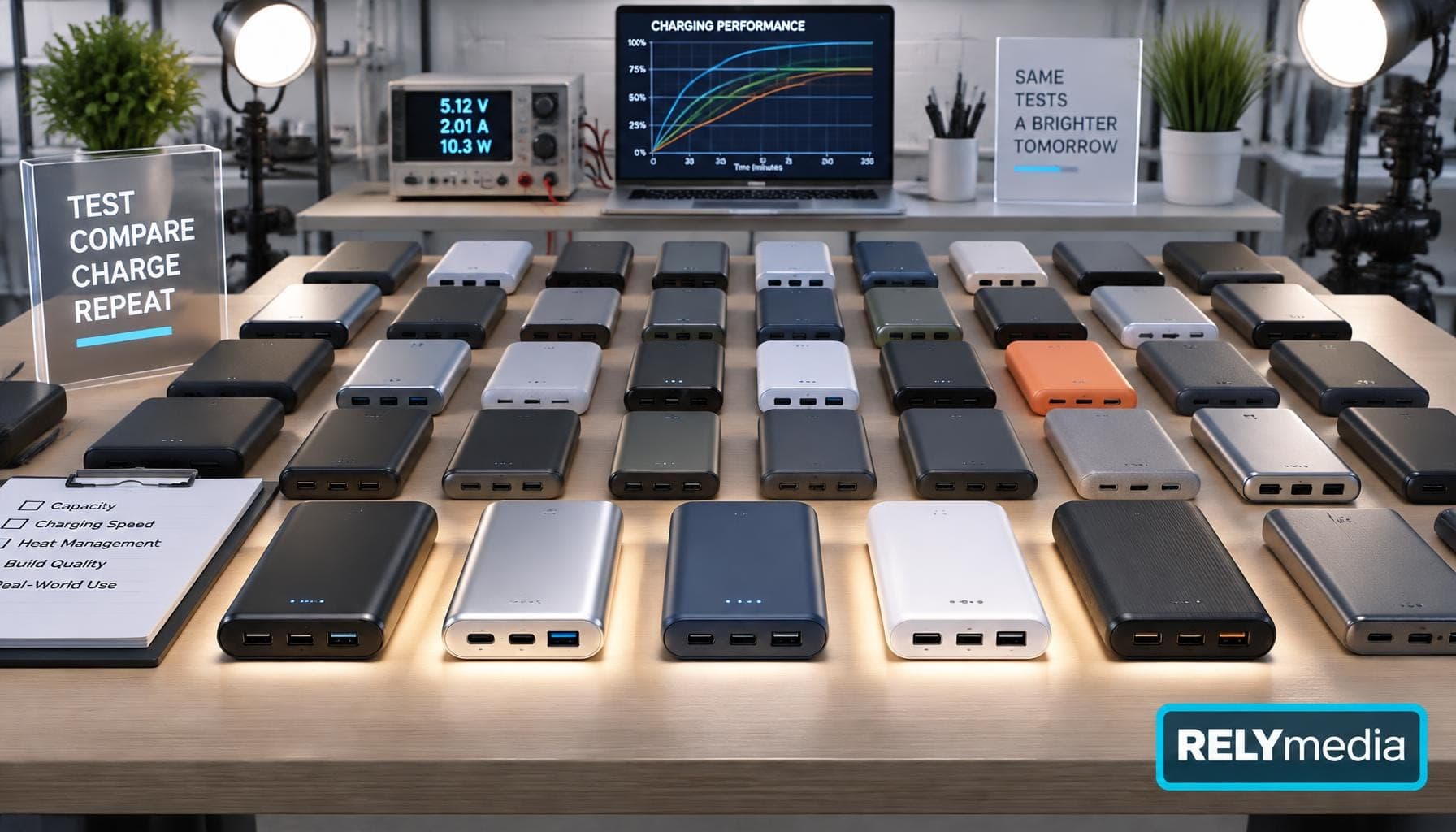
RELYmedia has not personally lab-tested every model; this guide uses verified specifications and practical criteria to evaluate portable charging performance, portability, compatibility, and everyday usefulness.
Best Power Banks at a Glance
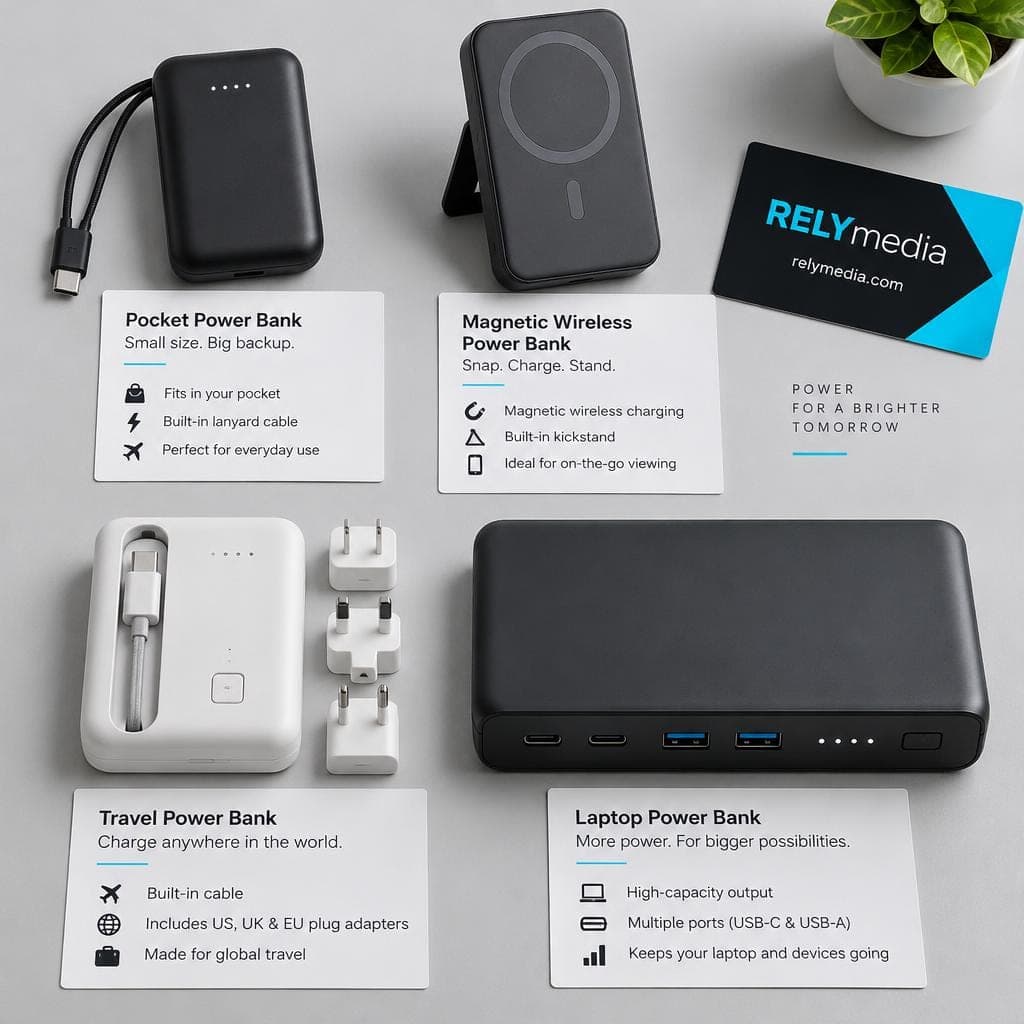
| Power bank | Capacity | Maximum output | Best for |
|---|---|---|---|
| CUKTECH 30 | 40,000mAh, 141–144Wh | 300W total, 140W USB-C | Heavy work and multiple devices |
| UGREEN Nexode | 12,000mAh, 44.4Wh | 100W USB-C | Work and laptop top-ups |
| Statik SmartCharge Pro | 15,000mAh, 54Wh | 60W USB-C | International travel |
| INIU Pocket Rocket P50 | 10,000mAh | 45W | Compact everyday carry |
| SHARGE ICEMAG 2 | 10,000mAh, 36Wh | 30W wired, 15W Qi2 | Magnetic wireless charging |
| Anker 521 PowerHouse | 256Wh | 300W AC | Camping and emergency backup |
How We Evaluate a Portable Charger
A good portable battery charger needs more than a high mAh number. Start with capacity, then consider how efficiently stored energy reaches your device.
mAh, or milliamp hours, describes charge capacity. Wh, or watt-hours, describes stored energy. Watt-hours are useful for comparing batteries or checking airline limits. Real usable capacity will be lower than the headline number because voltage conversion, heat, cables, and charging electronics consume energy.
Charging power matters too. A 20W phone charger and a 100W USB-C power bank can have similar capacity yet perform differently with laptops.
Key factors include:
- USB-C and USB-A port selection
- maximum charging output
- input power and recharge speed
- wired and wireless charging
- simultaneous charging
- pass-through charging
- battery level display
- thermal management
- weight and pocketability
- built-in cable quality
Best Power Bank Overall: CUKTECH 30
The CUKTECH 30 sits between a traditional battery bank and a small power station. It has a 40,000 mAh battery, two USB-C ports, two USB-A ports, wireless charging, and supports up to 5 devices.
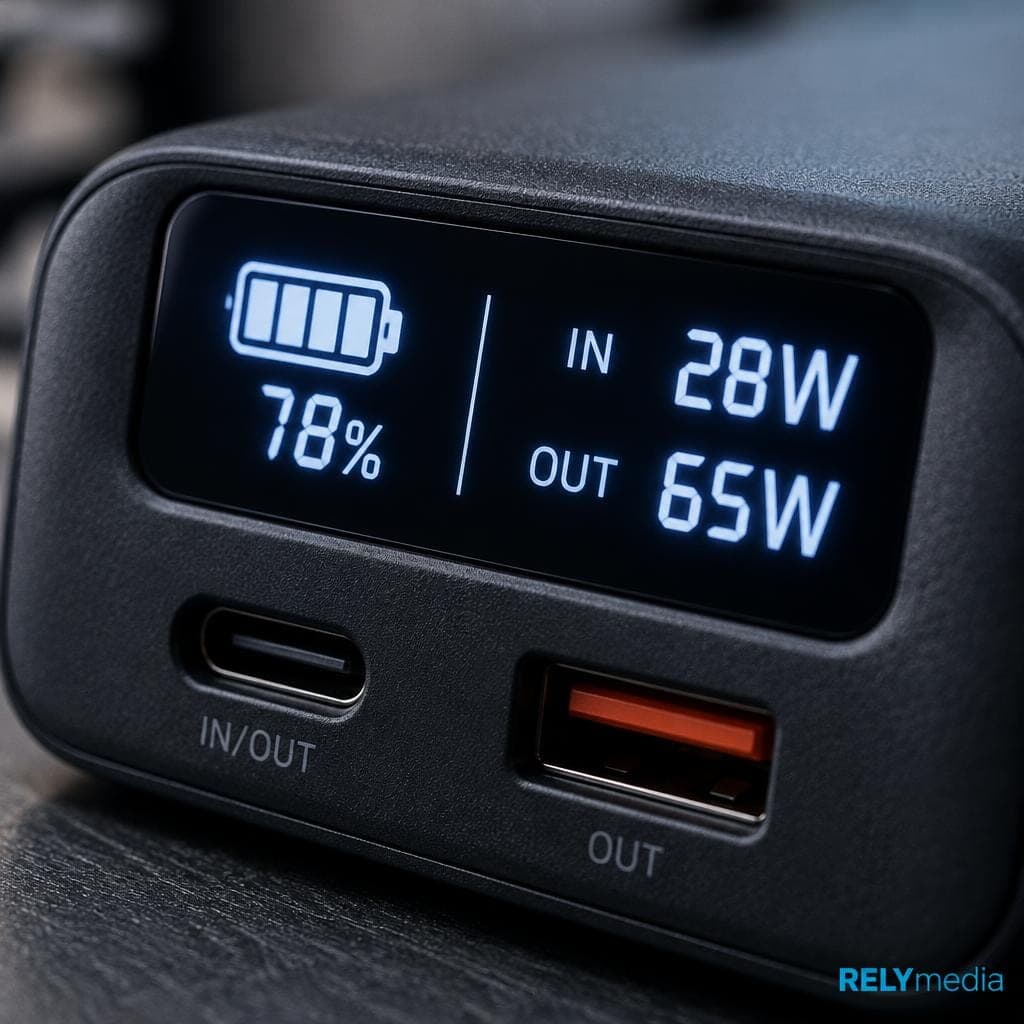
Its strongest USB-C port delivers up to 140W, while the total output can reach 300W under supported conditions. That makes it useful as a power bank for charging laptops, phones, cameras, tablets, and other electronics. A display shows remaining battery, input power, output power, and charging status.
The main drawback is air travel. Its battery is rated at around 141–144 Wh. Under current FAA rules, batteries from 101 Wh to 160 Wh require airline approval. Power banks must also remain in carry-on baggage.
Best for: creators, remote workers, photographers, and people needing high-capacity power for multiple devices.
Best Power Bank for Work: UGREEN Nexode 12,000mAh
For a smaller power bank for laptop and phone use, the UGREEN Nexode offers a strong balance. Its 44.4Wh battery is easier to carry than a large-capacity power bank, yet its main USB-C output reaches 100W.
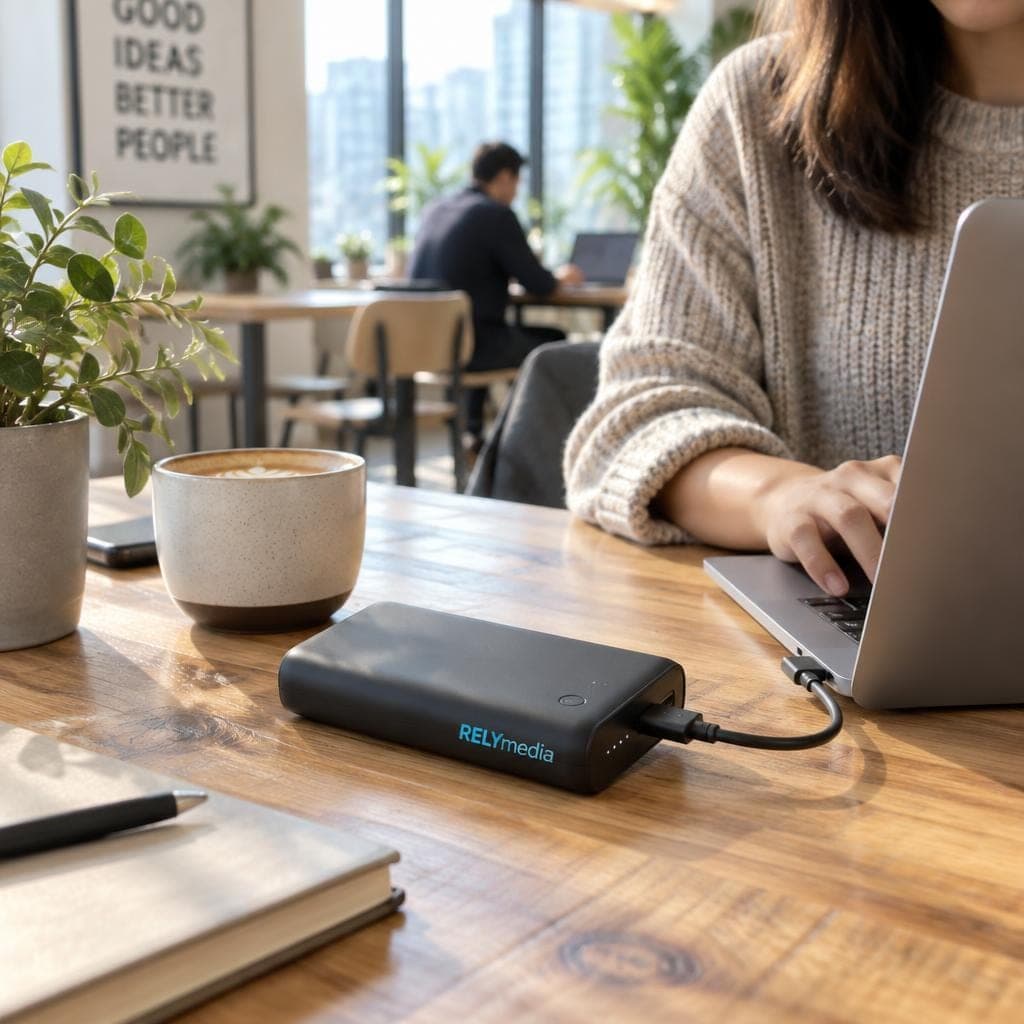
UGREEN lists two USB-C ports, one USB-A port, 65W maximum input, and an LED display. That setup supports fast portable charging during commutes, meetings, business trips, or long days away from power outlets.
Maximum output can change when charging multiple devices simultaneously. Check the port combination before assuming every connection provides its headline wattage.
Need a branded power bank for employee kits or client gifts?
RELYmedia can help choose practical products for real workdays.
Best Power Bank for Travel: Statik SmartCharge Pro
A good travel charger reduces clutter. The Statik SmartCharge Pro combines a 15,000mAh battery, built-in USB-C cable, USB-C and USB-A outputs, Qi2 wireless charging, and international plug adapters.
The battery stores 54Wh. In battery mode, the built-in USB-C cable and USB-C port provide up to 60W Power Delivery. Statik also lists pass-through charging, allowing the battery to recharge while powering compatible devices.
That makes it a useful portable charger with a built-in cable for airports, hotels, long-haul flights, and international travel. At about 370 grams, it is bag-friendly rather than truly pocketable.
Best Compact Portable Charger: INIU Pocket Rocket P50
The INIU Pocket Rocket P50 suits people who want a small portable charger without sacrificing useful power. It packs 10,000 mAh into a body measuring about 3.3 by 2.0 by 1.0 inches and weighs roughly 5.6 ounces.
It supports up to 45W from a single USB-C output, provides two USB-C ports and one USB-A port, and includes a detachable USB-C lanyard cable. A digital display shows the battery percentage. Pass-through charging is supported.
Output drops when several ports work together. That is common with compact power banks, but it matters for multi-device charging.
This pocket-sized power bank works well for commuting, concerts, weekend travel, or an emergency phone top-up.
Best MagSafe-Style Power Bank: SHARGE ICEMAG 2
The SHARGE ICEMAG 2 combines a 10,000mAh battery with Qi2 magnetic charging, 30W two-way USB-C charging, active cooling, and a folding kickstand.
Its wireless charging pad delivers up to 15W to compatible Qi2 devices. Active cooling addresses a common problem in wireless charging: heat. Better thermal management can support more stable charging performance during longer sessions.
You can use wired and wireless charging simultaneously. Pass-through charging also lets you refill the battery while charging another device.
A wireless power bank is less efficient than wired charging because some energy is lost as heat. Choose wired charging when speed and charging efficiency matter most.
Best Emergency Power Station: Anker 521 PowerHouse
A portable power station is different from a pocket power bank. The Anker 521 PowerHouse stores 256Wh and supplies up to 300W, making it better suited to camping power, blackout backup, and off-grid use.

It includes AC, USB-C, USB-A, and car charging connections. Its LFP battery is rated for more than 3,000 cycles. At roughly 3.7 kilograms, however, it is not an everyday carry charger.
Think of it as an emergency backup power source for routers, lights, phones, tablets, and supported camping equipment. It can also work with compatible solar charging equipment.
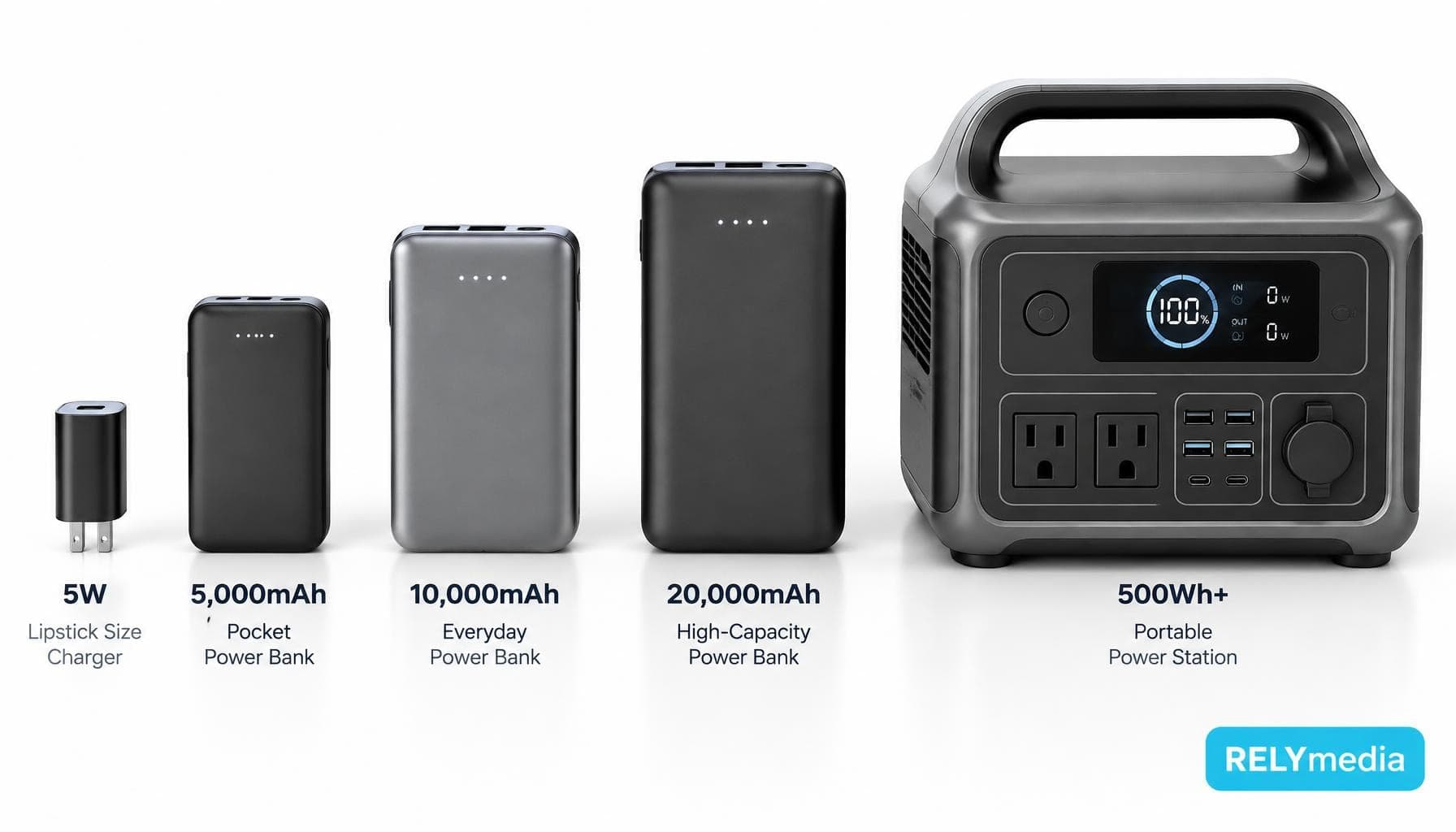
What Size Power Bank Do You Need?
| Capacity | Best use | Typical user |
|---|---|---|
| 5,000mAh | Emergency top-up | Light phone user |
| 10,000mAh | Everyday charging | Commuter or traveler |
| 20,000mAh | Multiple-device charging | Heavy phone and tablet user |
| 25,000mAh+ | Laptop charging | Remote worker or creator |
A 10,000mAh mobile battery will not transfer every advertised milliamp-hour to your phone. Conversion losses reduce usable power. That is why a 10,000mAh battery pack does not equal two full charges for every smartphone.
When charging a laptop, check watt-hours, USB Power Delivery, and the wattage your computer requires. High capacity alone does not guarantee fast laptop charging.
How to Choose a Portable Charger Without Overbuying
Match Battery Capacity to Your Routine
Choose enough battery reserve to reach your next reliable power source. Commuters may prefer a small power bank. Travelers and field workers may need high-capacity power banks.
Match Wattage to the Device
Phones usually need less power than laptops. Check the device's charging standard and select an output that supports full-speed charging.
Prefer USB-C Power Delivery
USB-C alone does not guarantee fast charging. Look for Power Delivery support, suitable wattage, and a cable rated for that power.
Check Multiple Ports
A multi-device portable charger needs the right mix of USB-C ports, USB-A ports, wireless power, or built-in cables. More ports help only when shared output remains adequate.
Consider Pass-Through Charging
A power bank with pass-through charging can refill while powering another device. This works well in hotels, offices, and travel setups with limited outlets.
Balance Capacity and Portability
The biggest portable charger is rarely the best everyday choice. A lightweight power bank that stays in your bag often provides more value.
Flying With a Power Bank
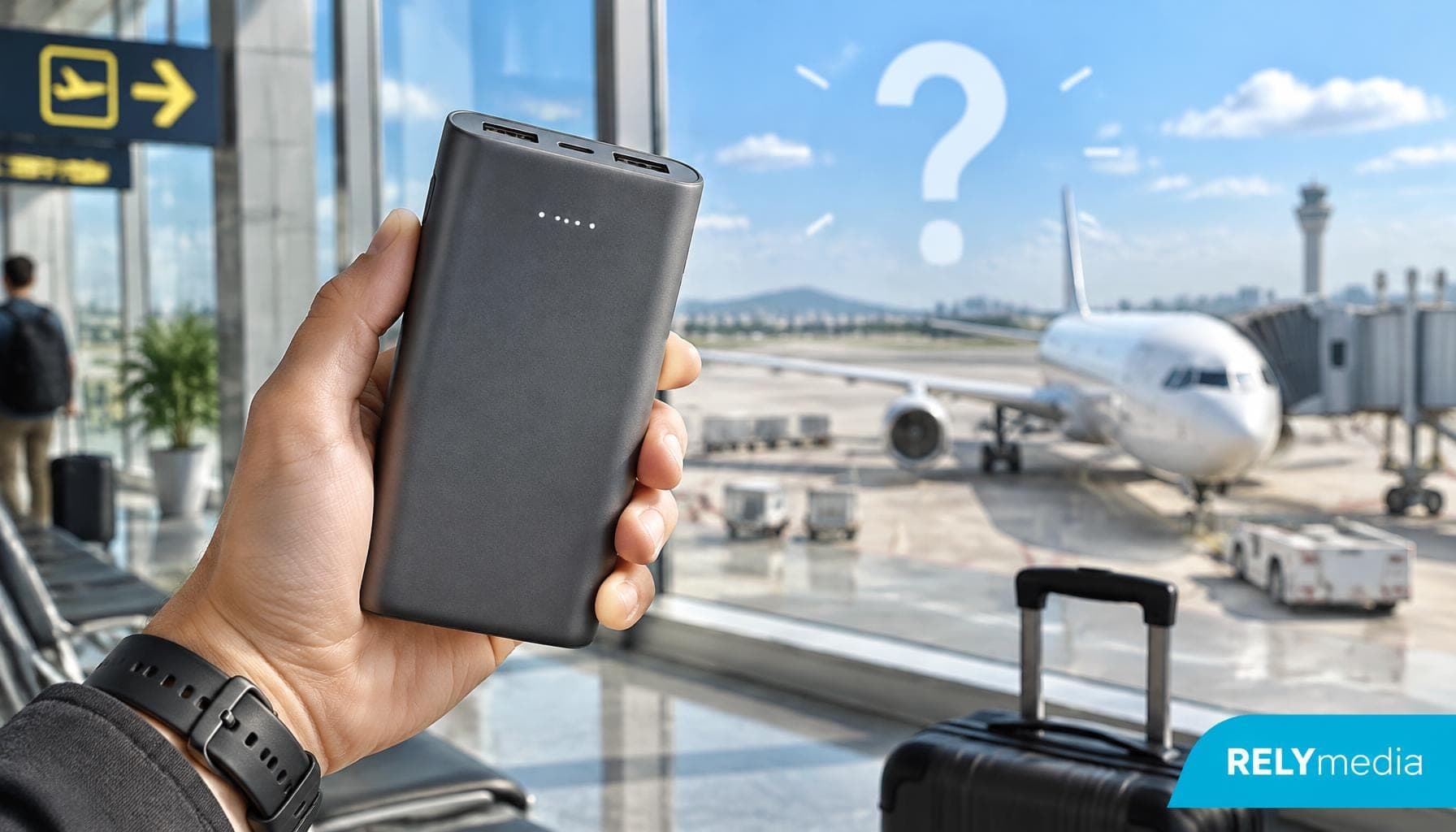
People often search for a TSA-approved power bank, but watt-hour rating and airline rules matter more.
The FAA says spare lithium batteries, including portable chargers, must travel in carry-on baggage. Batteries up to 100Wh are generally allowed. Batteries from 101Wh through 160Wh require airline approval, with limits on larger spares. Batteries above 160Wh are forbidden on passenger aircraft.
Calculate watt-hours with:
Wh = volts × amp-hours
If capacity appears in mAh, divide by 1,000 first.
For international travel, check your airline and destination rules. A power bank for international travel should clearly display its Wh rating.
Power Bank Safety, Heat, and Battery Life
A rechargeable battery may feel warm during fast charging. Excessive heat, swelling, smoke, odor, damaged ports, or abnormal charging are warning signs.
Good charging protection depends on battery quality, thermal management, cables, and internal protection circuits.
For safer use:
- avoid extreme heat
- use compatible charging cables
- protect ports from damage
- stop using swollen batteries
- avoid crushing battery cells
- check product recalls
- store backup batteries in a cool, dry place
Never fly with a damaged or recalled lithium power bank.
Power Bank vs. Portable Power Station
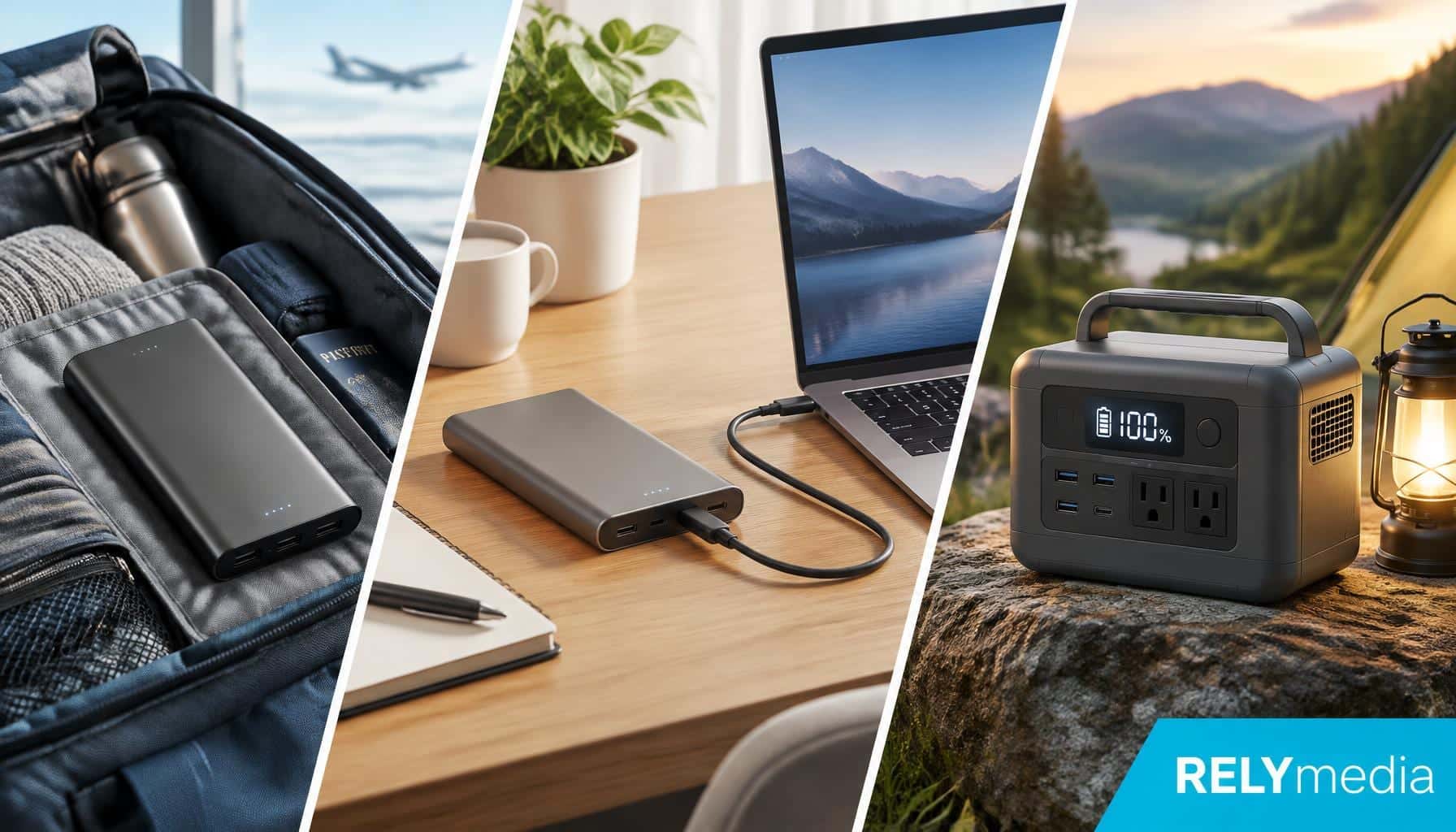
Choose a portable power bank for phones, tablets, laptops, commuting, flights, and everyday mobile charging.
Choose a portable power station when you need AC power, camping power, household backup, solar charging, or a larger emergency power reserve.
One prioritizes mobility. The other prioritizes stored energy and higher-output equipment.
Ready to print your team's name on premium apparel?
Fill in your details and a RELYmedia specialist will come back to you with a custom quote — fast turnaround, no obligation.
- ⚡Same-day response on business days
- 🎨Free design assistance included
- 🚚Rush order & fast delivery available
- 💰Price beat guarantee on every order
Shop custom power banks and chargers
See all power banks & charging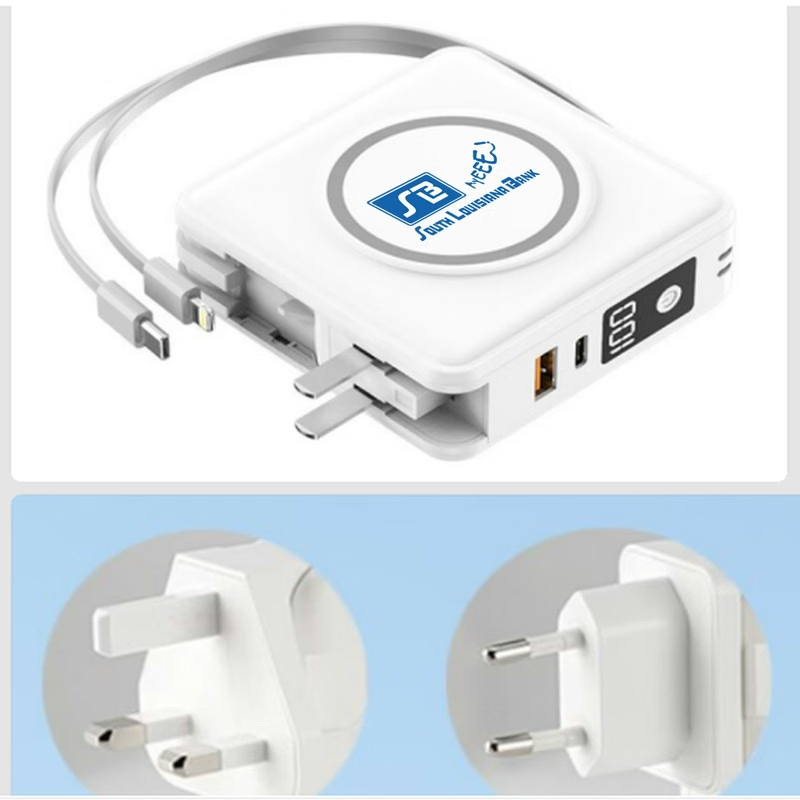
10,000 mAh Wireless Fast Charging Power Bank and 5IN1 Travel Charger w/Intl
$48.25 - $53.66
View product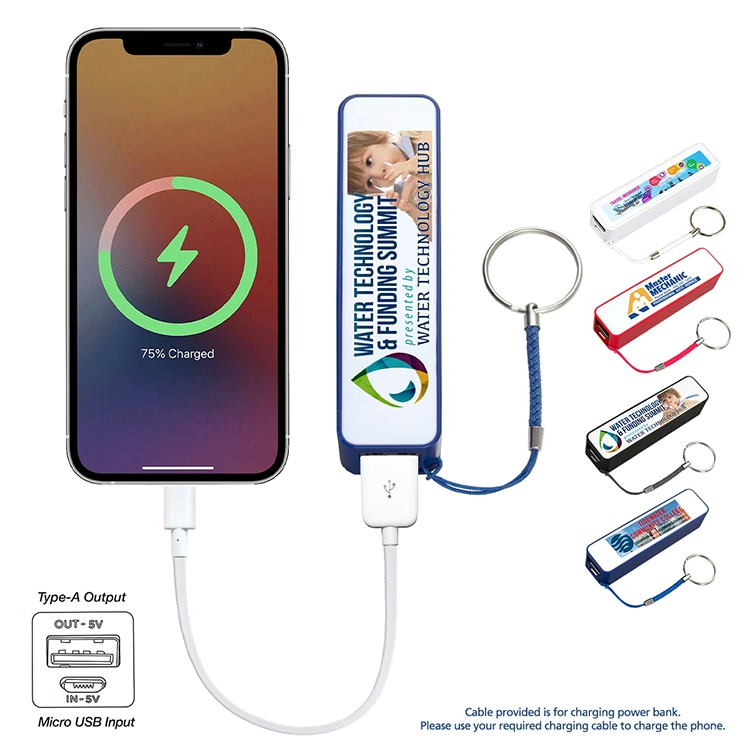
In Charge PB200 UL Listed 2200 mAh Portable Lithium Ion Power Bank Charger PB1004
$7.03 - $7.91
View product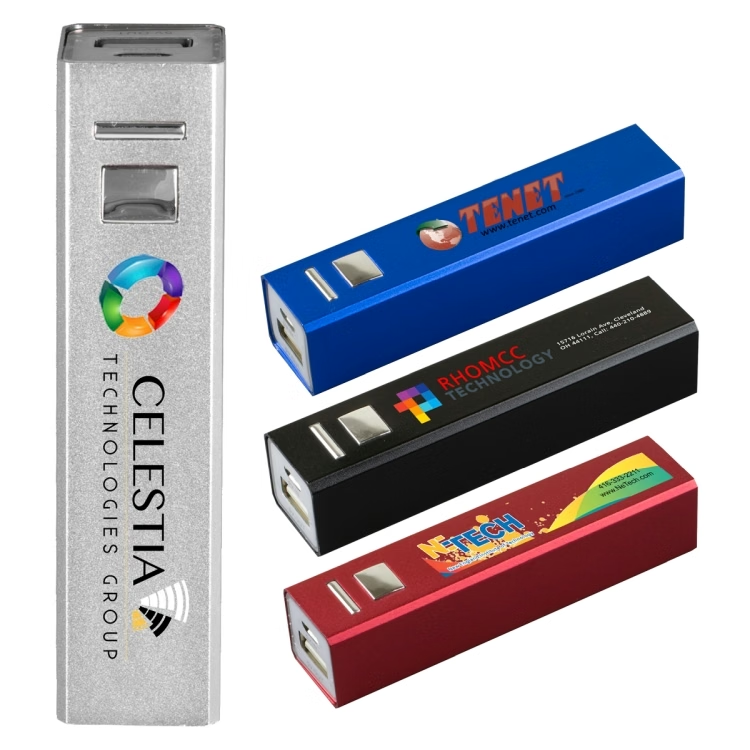
In Charge Alloy UL Listed Aluminium 2200 mAh Lithium Ion Portable Power Bank Charger
$7.57 - $8.85
View product10,000 mAh Energizer® Mag-N-Kick™ Wireless Charger Power Bank And Phone Stand
$34.39 - $52.31
View product10,000 mAh Wireless Charger Power Bank
$25.59 - $44.77
View product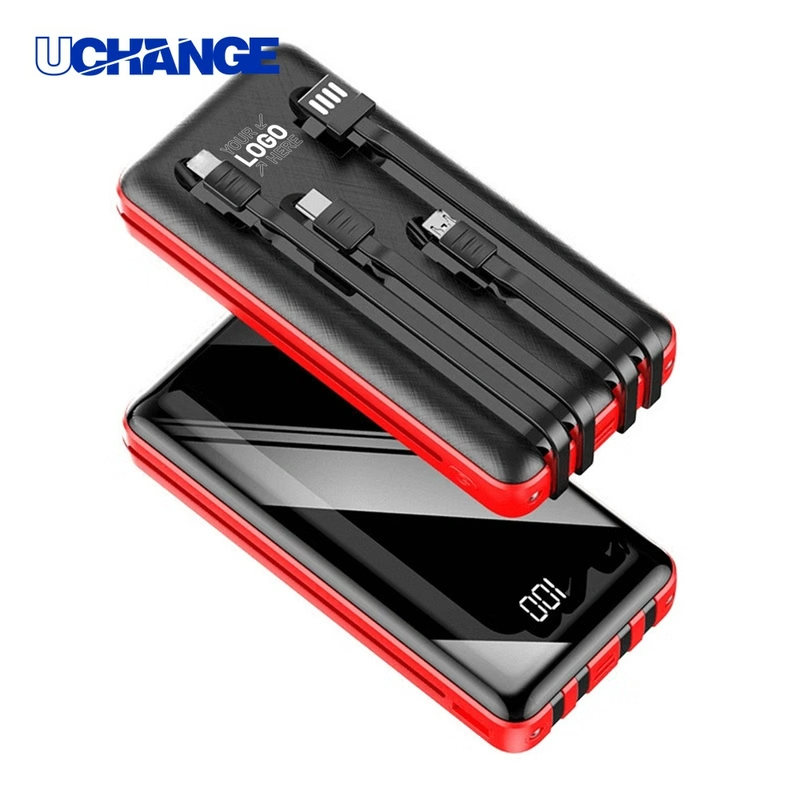
10,000mAh Portable Charger Power Bank with Dual Flashlight
$7.63 - $12.53
View product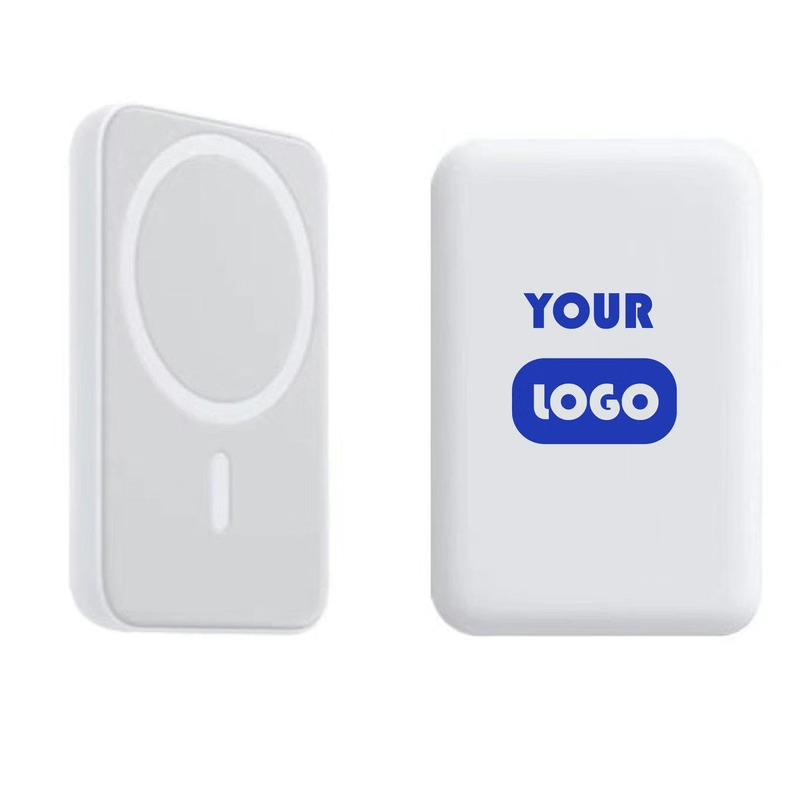
10,000 mAh Wireless Charging Power Bank
$11.58 - $25.35
View product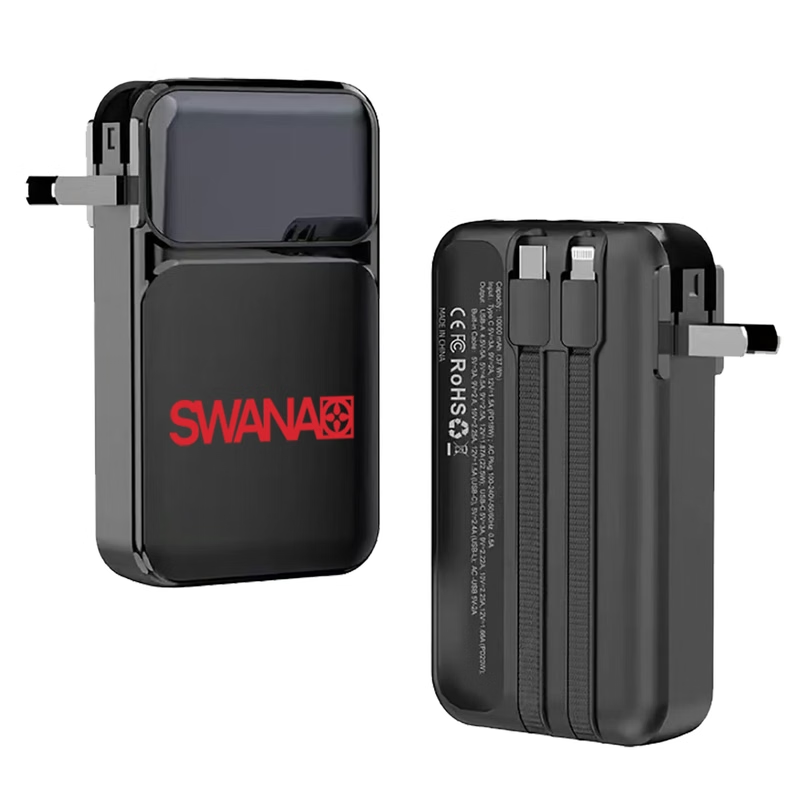
10,000 mAh Portable Charger w/Built In Wall Plug Power Bank
$27.43 - $32.36
View product
Frequently Asked Questions About Power Banks
What Is a Portable Power Bank?
It is a rechargeable external battery that stores energy and powers compatible phones, tablets, laptops, and other devices away from an outlet.
Is 10,000mAh Good for a Portable Charger?
Yes. For many users, 10,000 mAh strikes a balance among charging capacity, compact design, and weight.
Can a Power Bank Charge a Laptop?
Yes, if the laptop accepts USB-C charging and the power bank provides enough Power Delivery wattage.
What Is the Best Power Bank for Travel?
Look for a travel-friendly power bank that meets airline limits, has sufficient capacity, supports USB-C fast charging, is lightweight, and has clear Wh labeling.
Can I Have a Portable Charger in My Carry-On?
Yes, subject to battery limits and airline rules. Spare lithium power banks belong in carry-on baggage, not checked luggage.
Does USB-C Always Mean Fast Charging?
No. Charging speed depends on the charger, cable, protocol, and receiving device.
How Long Do Portable Chargers Last?
Battery lifespan depends on chemistry, charging cycles, heat, storage conditions, and build quality. Capacity falls gradually as the rechargeable battery ages.
Is Wired Charging Better Than Wireless Charging?
Wired charging is usually faster and more efficient. Wireless and magnetic charging offer extra convenience for phone top-ups.
Conclusion: Choose Portable Power for Real Life
The best portable charger is the one that meets your charging requirements without becoming a burden.
For travel, prioritize portability, watt-hour labeling, recharge speed, and airline compatibility. For work, focus on USB-C Power Delivery, laptop charging, multiple ports, and reliable performance. For emergencies, prioritize battery reserve, device compatibility, durable construction, and dependable backup power.
RELYmedia helps businesses and organizations turn useful products into memorable brand experiences. Based in Eagan, Minnesota, the company supports custom promotional programs with fast turnaround, quality-focused service, and solutions tailored to each audience.
A branded power bank works best when recipients actually want to carry it. Choose useful capacity, sensible charging technology, and the right form factor first.
Ready to create branded portable charging products your audience can use every day?
Contact RELYmedia to build a charging solution around your goals, budget, and timeline.
Shop this
Need custom portable chargers? We print them.
Bulk pricing, three free mockups, real quotes back the same business day.